
- Top Pick: ASUS Prime GeForce RTX 5060 Ti 16GB GDDR7 Gaming Graphics Card
- Best Value: ASUS Dual GeForce RTX 5060 Ti 16GB GDDR7 OC Edition Gaming Graphics Card
- Premium Choice: ZOTAC Gaming GeForce RTX 5060 Ti 16GB Twin Edge OC White Edition DLSS 4 16GB GDDR7 128-bit 28 Gbps PCIE 5.0 Gaming Graphics Card, IceStorm 2.0 Cooling, SFF-Ready, ZT-B50620Q-10M
RTX 3080 vs 5060 Ti 16GB is the classic upgrade dilemma: a powerful former flagship against a modern mid-range card with more memory and newer features. If you own an RTX 3080 and wonder whether the 5060 Ti 16GB is a real upgrade, or you are choosing between them on the used and new markets, you want the numbers and the verdict — not a long video. This comparison lays out specs, 1440p frame rates, features, and pricing side by side, then tells you which card makes sense for your situation.

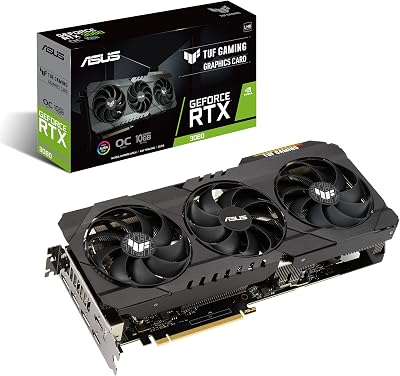

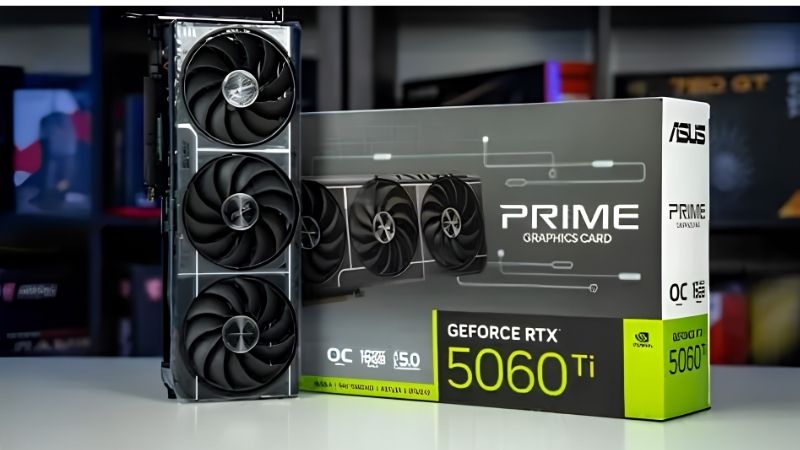
RTX 3080 vs 5060 Ti 16GB — Quick Verdict and Specs
Most buyers weighing this matchup want the answer first, so here it is: the two cards trade blows in raw performance, but the RTX 5060 Ti 16GB wins on VRAM, efficiency, and modern features like DLSS 4, while the RTX 3080 counters with strong raw power and a wider memory bus. This section backs that with the full spec table and the architectural context.
As an Amazon Associate we earn from qualifying purchases at no extra cost to you.


The Quick Verdict for Busy Buyers
Choose the RTX 5060 Ti 16GB if you want DLSS 4 multi-frame generation, more VRAM, far better efficiency, and the newer feature set. It is the modern, future-facing choice.
Choose the RTX 3080 if you find one at a good used price and want its strong raw rasterization and wide memory bandwidth, accepting older features and higher power draw in exchange.
The tension is old flagship power versus new mid-range features. For upgraders the RTX 3080 vs 5060 Ti 16GB decision often favors the newer card for its VRAM and DLSS 4, unless a cheap used 3080 tips the value scales.
Head-to-Head Specs Comparison Table
The table below lays out the specs that drive this old-versus-new decision.
| Spec | RTX 3080 | RTX 5060 Ti (16GB) |
|---|---|---|
| Architecture | Ampere | Blackwell |
| Memory | 10GB GDDR6X | 16GB GDDR7 |
| Memory bus | 320-bit | 128-bit |
| Bandwidth | ~760 GB/s | ~448 GB/s |
| Board power | 320W | 180W |
| Upscaling | DLSS 3 (Super Res) | DLSS 4 + Multi-Frame Gen |
| Ray tracing | 2nd-gen (Ampere) | Improved (Blackwell) |
| Typical price | Used market | ~$429 new |
The trade-offs are striking. The RTX 3080 has a much wider memory bus and higher bandwidth but only 10GB of VRAM and a huge 320W power draw. The RTX 5060 Ti 16GB has more capacity, DLSS 4, and half the power draw, on a narrower bus.
If the spec sheet already tilts you one way, it is worth checking each card’s live listing before pricing shifts again.
Ampere vs Blackwell — What the Architecture Means
The RTX 3080 runs on Ampere, a powerful architecture that made it a 4K-capable flagship at launch. It remains strong in rasterization but supports only DLSS 3-era features and second-generation ray tracing.
The RTX 5060 Ti 16GB uses Blackwell, Nvidia’s newest architecture, bringing DLSS 4 multi-frame generation, improved ray-tracing cores, and dramatically better efficiency. It trades the 3080’s raw brute force for modern features and finesse.
For buyers, the key point is that this is a genuine old-flagship-versus-new-mid-range clash. The 3080 has power but aging features; the 5060 Ti 16GB has newer features and more VRAM but a narrower bus. How you weigh those defines your pick.
Deep Dive Face-Off — Performance, Features, and Efficiency
Specs set expectations; frame rates, features, and efficiency decide satisfaction. This section compares the two on the criteria that matter for an upgrade decision: 1440p performance, upscaling and VRAM, and the efficiency gap that affects your whole system.
1440p Gaming Performance
At 1440p, these cards are surprisingly close in raw rasterization. The RTX 3080’s strong compute and high bandwidth keep it competitive, while the RTX 5060 Ti 16GB’s newer architecture lets it match or trade blows depending on the title.
The picture changes with DLSS 4 enabled, where the RTX 5060 Ti’s multi-frame generation can push frame rates well beyond what the RTX 3080’s DLSS 3 delivers in supported games. In those titles, the newer card pulls clearly ahead.
The practical conclusion is that for pure rasterization the two are close, but the RTX 5060 Ti 16GB’s DLSS 4 gives it a meaningful edge in the growing library of games that support it. Raw power meets modern software, and software increasingly wins.
This is why a straight benchmark comparison can mislead. A chart showing the two cards trading blows in raw frames understates the newer card’s real-world advantage in any title that supports DLSS 4, where the gap can widen substantially.
DLSS 4, VRAM, and Ray Tracing
Features tilt this matchup toward the newer card. The RTX 5060 Ti 16GB’s DLSS 4 with multi-frame generation is a significant advantage over the RTX 3080’s older DLSS, and its 16GB buffer exceeds the 3080’s 10GB — useful headroom for modern textures at 1440p.
In ray tracing, the RTX 5060 Ti’s improved Blackwell cores handle ray-traced effects more efficiently than the 3080’s second-generation units, despite the 3080’s higher raw power. Newer RT hardware matters here.
The forward-looking angle is that DLSS 4 support expands over time and the 16GB VRAM guards against future memory demands, so the newer card’s feature and memory advantages should grow more valuable as its 10GB rival ages.
The 3080’s 10GB buffer is the quiet concern here. It was generous at launch but is now merely adequate, and in the most demanding modern titles at high textures it can become a limiting factor — exactly where the 5060 Ti’s 16GB provides reassuring headroom.
Efficiency and System Impact
Efficiency is a decisive practical gap. The RTX 3080 draws a hefty 320W and typically demands a strong 750W power supply, while the RTX 5060 Ti 16GB sips just 180W and runs comfortably on a 550W unit. That is a massive difference in power, heat, and running cost.
For anyone upgrading, this matters beyond the electricity bill. The efficient newer card runs cooler and quieter and fits more easily into compact or modest builds, whereas the 3080 needs serious cooling and a capable PSU.
The practical read is that the RTX 5060 Ti 16GB is far kinder to your whole system. If you are building around the card or reusing a modest PSU, that efficiency advantage carries real weight in the decision.
Over years of ownership, the efficiency gap also translates into lower running costs and less heat pumped into your room. For gamers who play long sessions, a card that draws well under half the power of the alternative is a quiet but genuine ongoing benefit.
Price, Timing, and the Final Recommendation
Performance is half the decision; price and timing are the other half, and the current market context genuinely rewards buying deliberately. This section covers the pricing climate, the honest pros and cons, and a clear who-buys-what verdict, plus an alternative pick.
Is Now the Right Time to Buy?
Pricing context shapes this matchup, since the RTX 3080 lives mainly on the used market while the RTX 5060 Ti 16GB is a new card. Component and laptop prices have been trending upward, with memory a major driver, and that pressure feeds into both new card prices and used-market values, keeping the 3080 firmer than a five-year-old card would normally hold.
The positive news is real but weak and distant. Prices have stopped climbing as steeply as they did in late 2025, and the market has entered a period of relative stability, though analysts still warn of ongoing volatility. “Stable” here means plateaued, not falling — the sharp increases paused, but a broad price cut has not started.
New supply is opening the long-term relief valve: OEMs can source DDR5 from Chinese suppliers such as CXMT, and Micron is building two plants in Idaho. The catch is timing — those fabs are not expected online until 2027–2028. For a buyer today, the conclusion is blunt: meaningful relief is years away, so waiting for a dramatic 2026 discount is a weak plan. Buying a well-matched card during a stable window beats gambling on a drop the supply data says will not arrive soon. It is worth locking in a fair current price before the next swing.
Pros and Cons of the RTX 3080 and RTX 5060 Ti 16GB
RTX 3080 strengths: strong raw rasterization, wide 320-bit memory bus, high bandwidth, and potential value on the used market. Its trade-offs: only 10GB of VRAM, a huge 320W power draw, older DLSS 3 features, weaker ray-tracing efficiency, and used-market condition risk.
RTX 5060 Ti 16GB strengths: 16GB VRAM, DLSS 4 multi-frame generation, excellent 180W efficiency, improved ray tracing, and new-card reliability with a warranty. Its trade-offs: a narrower 128-bit bus, lower raw bandwidth, and a cost that a cheap used 3080 might undercut.
The pattern is clean: the RTX 3080 competes on raw power and used-market value, the RTX 5060 Ti 16GB on features, VRAM, and efficiency. Whichever set fits your priorities should decide the pick.
The Alternative Pick and Final Verdict — Who Buys What
If you want more raw power than either while keeping modern features, the RTX 5070 is the natural step up, offering higher performance and DLSS 4 for a higher price — a sensible option if the 5060 Ti 16GB feels too modest and the 3080 too old.
For the final call: buy the RTX 5060 Ti 16GB if you want modern features, more VRAM, efficiency, and new-card reliability. Buy the RTX 3080 only if you find one at a genuinely cheap used price and value raw rasterization over features and efficiency.
One last consideration for existing RTX 3080 owners: if you already have the card and it still runs your games well, the 5060 Ti 16GB is a sidegrade in raw power rather than a dramatic leap, so the upgrade makes most sense if you specifically want DLSS 4, more VRAM, or lower power draw.
For most upgraders in 2026, the RTX 5060 Ti 16GB is the recommendation — its DLSS 4, 16GB VRAM, and vastly better efficiency make it the smarter long-term buy, with the RTX 3080 worth it only as a bargain used pickup. Ready to choose? Compare today’s live prices on both and grab the card that fits your situation.
See More:
- 3060 Ti vs 9060 XT
- Nvidia Shield TV Pro
- RTX 5070 vs RX 9060 XT
- RTX 3090 24GB
- Nvidia price prediction
Conclusion
The RTX 3080 vs 5060 Ti 16GB decision pits old flagship power against new mid-range features. The RTX 5060 Ti 16GB wins on VRAM, DLSS 4, and dramatically better efficiency, making it the smarter long-term buy for most upgraders. The RTX 3080 stays relevant only as a cheap used pickup for those who value raw rasterization and can supply its heavy power needs. For anyone wanting more headroom, the RTX 5070 is the step up. With pricing stable but real relief years away, buying a well-matched card now is the rational move. Check the current listings and secure the GPU that fits your situation today.
Frequently Asked Questions
Which card is faster in games?
The RTX 3080 is still the stronger raw performer, with 8704 Ampere cores and a 320-bit GDDR6X bus delivering around 760GB per second, so it typically leads at 1440p and 4K in rasterised titles. The 5060 Ti closes in when DLSS 4 and frame generation are enabled, and can exceed it in memory-limited scenarios.
Is 10GB on the 3080 a real limitation compared with 16GB?
Increasingly yes. Several recent titles exceed ten gigabytes at 4K with high textures and ray tracing, causing stutter or automatic texture downgrades on the 3080. The 5060 Ti never hits that wall, so despite being slower on paper it can feel smoother in the exact scenarios where the older flagship struggles.
How different are power and PSU requirements?
Very different. The RTX 3080 is rated at 320W, wants two eight-pin connectors and a 750W supply, and produces notable transient spikes that have tripped weaker units. The 5060 Ti draws around 180W on a single eight-pin and runs comfortably on 550W to 600W, cutting both electricity cost and case heat substantially.
Does the 3080 miss out on DLSS 4 features?
It supports DLSS super resolution and ray reconstruction, including the newer transformer model, so image quality features are shared. What it cannot do is frame generation of any kind, and multi frame generation is Blackwell exclusive. That means published frame rate comparisons often flatter the newer card considerably.
Is a used RTX 3080 a smart buy?
Only at a substantial discount, and with caution. Many were used for mining or ran hot GDDR6X memory for years. Weigh no warranty, higher power draw, more heat and the 10GB buffer against a new 5060 Ti with full warranty and lower running costs. If prices are close, buy new.


Write Your Review
No reviews yet. Be the first to share your experience!