
- Top Pick: ASRock Radeon RX 9070 Challenger 16GB OC Graphics Card, RDNA 4, 2520MHz Boost, 16GB GDDR6 256-bit, PCIe 5.0, Triple Fans, 0dB Silent, LED Indicator
- Best Value: ASUS ATS Radeon RX 9070 GRE 12GB GDDR6 OC Edition Gaming Graphics Card
- Premium Choice: GIGABYTE Gaming Radeon RX 9070 GRE 12GB GDDR6 PCI Express 5.0 ATX Graphics Card GV-R907GREGAMING OC-12GD
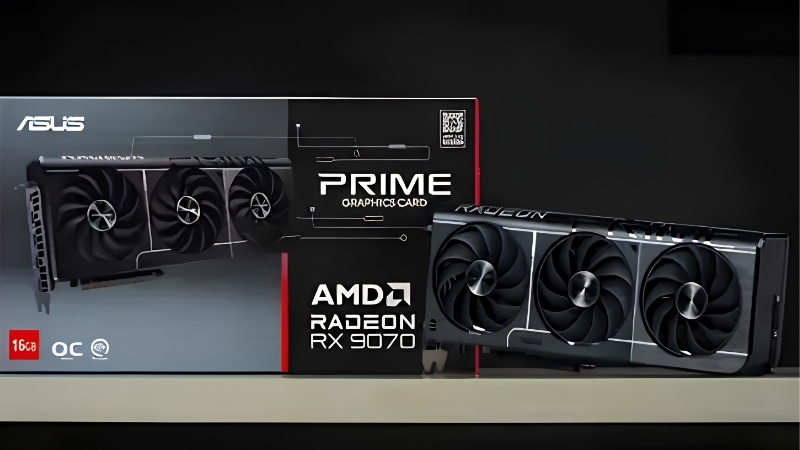
RX 9070 is the card a lot of mid-range buyers have been waiting for, because it is the first time in years AMD has launched a new architecture that closes the gap with NVIDIA on the two things that mattered most: ray tracing and upscaling. If you are reading this, you probably want a straight answer on whether RDNA 4 actually delivers, how the 9070 performs at 1440p and 4K, and whether it is the smarter value than the RTX cards it sits between. This review focuses on measurable performance, the practical build details, and the new-architecture features that decide whether the RX 9070 is worth your money.
RX 9070 Performance: What RDNA 4 Brings to 1440p and 4K
The headline with the RX 9070 is not just raw speed, it is balance. Built on RDNA 4 with 16GB of GDDR6 on a 256-bit bus and a board power around 220W, it lands in the high-1440p and capable-4K tier, but the bigger story is how much closer RDNA 4 gets to NVIDIA on ray tracing and AI upscaling. Below the performance is broken down the way a value-focused buyer evaluates a new card: rasterized frame rates, the ray-tracing and FSR 4 stack, and what early owners actually report.
As an Amazon Associate we earn from qualifying purchases at no extra cost to you.


1440p and 4K Frame Rates
At 1440p the RX 9070 is comfortably a high-refresh card, clearing 100 FPS in most modern titles at high settings and leaving headroom for 1440p 144Hz panels in all but the heaviest games. The 16GB frame buffer is the right amount for this resolution and removes the VRAM anxiety that haunts 8GB and 12GB cards in newer releases.
At 4K it shifts from “max everything” to “smart settings plus upscaling.” Native 4K is playable in many titles, and with FSR enabled it becomes a genuinely usable 4K card rather than a 4K-on-paper one. That makes it a strong fit for a 1440p main display or a 4K screen where you are willing to lean on upscaling.
The practical read: this is a card sized for the resolution most gamers actually use. You are not paying for 4K headroom you will not tap, and you are not stuck at 1080p either.
That positioning also makes it a smart upgrade target. If you are coming from a card a generation or two old at 1440p, the 9070 represents a large, noticeable jump rather than a marginal one, and the 16GB buffer means you are unlikely to feel VRAM-limited for years. It is the kind of upgrade that changes how a game feels rather than just nudging the frame counter.
Ray Tracing and FSR 4 Upscaling
This is where RDNA 4 changes the conversation. Ray-tracing throughput per compute unit takes a large step up over RDNA 3, so the 9070 stays playable in ray-traced titles where older Radeon cards fell apart. The gap to NVIDIA is no longer a chasm; it is a margin.
The bigger experimental leap is FSR 4, AMD’s AI-based upscaling that runs on RDNA 4 hardware. It closes much of the image-quality gap to DLSS that earlier FSR versions could not, and because it is a software stack, the supported-game list and quality should keep improving over the card’s life through driver updates.
For a buyer who once dismissed Radeon purely on ray tracing and upscaling, the 9070 is the first card that makes those features a reason to consider AMD rather than a reason to avoid it.
What Early Owners Praise and Criticize
Synthesizing early feedback, the praise clusters around value and the RDNA 4 feature jump: owners highlight strong 1440p performance, the generous 16GB VRAM, much-improved ray tracing, and FSR 4 image quality that finally feels competitive. Efficiency and quiet operation also come up often.
The criticisms are honest and worth weighing. Street prices have sometimes drifted above the intended MSRP, FSR 4 is still expanding its game support, and a handful of owners note that AMD’s driver software and day-one stability, while improved, can still trail NVIDIA in polish. None of these are dealbreakers, but they shape expectations.
| Strengths | Trade-offs |
|---|---|
| Strong 1440p, capable 4K with upscaling | Street price can exceed MSRP |
| 16GB VRAM with no future-proofing worry | FSR 4 game support still growing |
| Big RDNA 4 ray-tracing improvement | Driver polish still slightly behind NVIDIA |
| FSR 4 finally competitive with DLSS | Not a true native-4K-max card |
RX 9070 Build Fit: Power, Size and Efficiency
One of the quiet advantages of RDNA 4 is efficiency, which makes the 9070 an easy card to build around. Still, a smart buyer confirms three things before checkout: how much power it draws and what PSU it needs, whether the specific model fits the case, and how it handles heat and noise. Each is covered below so your build comes together without surprises.
Power Draw and PSU Requirements
With a board power around 220W, the RX 9070 is notably efficient for its performance class, drawing less than the older high-end Radeon cards it replaces. A quality 650W power supply is a sensible floor, and 750W gives comfortable headroom for a strong CPU pairing.
That modest draw has real-world benefits beyond the electricity bill: less heat in the case, easier cooling, and compatibility with the kind of mid-wattage PSU many existing builds already have. For anyone upgrading without swapping the power supply, this is a friendly card.
Card Size and Case Compatibility
Because the 9070 is not a power-hungry flagship, partner models tend to be reasonably sized rather than enormous. Most land in the standard 2.5 to 3-slot range and fit comfortably in mid-tower cases, though dimensions vary by brand, so check the exact length against your chassis.
If you are building in a smaller case, look for the more compact dual or triple-fan designs rather than the largest overclocked variants. The efficiency of RDNA 4 means even modest coolers handle this card well, so you are not forced into a giant model to keep temperatures in check.
Cooling, Noise and Temperatures
Thanks to the lower power draw, the 9070 runs cool and quiet on most partner coolers, with fan-stop keeping it silent at idle and on the desktop. Under sustained gaming load it stays well within comfortable thermals without ramping fans to distracting levels.
For the noise-sensitive, a mild undervolt squeezes out even lower temperatures and quieter fans with negligible performance loss, a tweak that RDNA 4 responds to well. Out of the box, though, most buyers will find the card quiet enough to leave alone.
RX 9070 Pricing, Value and When to Buy
The RX 9070’s whole pitch is value, so price is central to the verdict, and the current component market is part of that calculation. This section covers where prices sit today, how the 9070 stacks up against its NVIDIA rivals, and exactly which buyer it suits.
Where Prices Stand Right Now
Context matters for a value card. PC component prices have broadly trended upward, driven largely by memory costs, and that pressure touches graphics cards and the parts around them. The encouraging news is real but modest: the steep climb of late 2025 has cooled, and some makers, Framework among them, have reported a relatively stable recent stretch while still warning of further swings.
New supply is coming but not soon. OEMs can now source DDR5 from suppliers like CXMT, and Micron is building two fabs in Idaho, yet those plants are not expected to come online until 2027–2028. The honest reading: prices have stopped spiking rather than started falling, so meaningful relief is still some way off.
For a 9070 buyer, the takeaway is to judge it on its live price against MSRP rather than waiting for a near-term drop. If you find it close to its intended price, it is a strong buy; if it is heavily inflated, the value case weakens and a rival may make more sense on the day.
RX 9070 vs the Competition: Is It the Value Pick?
Against NVIDIA’s mid-range Blackwell cards, the 9070 competes on raster performance and VRAM while trailing slightly on upscaling polish, though FSR 4 narrows that gap considerably. At or near MSRP it often offers more raw performance and more VRAM per dollar than the comparable RTX option.
The decision usually comes down to priorities: if you weight rasterized value and 16GB VRAM, the 9070 is the smarter buy; if DLSS and the broadest ray-tracing support are paramount, the NVIDIA side still has an edge. For most 1440p gamers, the 9070 lands as the better-value choice.
It also helps to think about the whole package rather than a single benchmark. The 9070 bundles strong raster, a generous frame buffer, competitive upscaling, and genuine efficiency into one card, which means fewer compromises than buyers used to accept from a mid-range Radeon. That breadth is a big part of why it has been received as the most well-rounded AMD option in years rather than a card that wins one chart and loses three.
Who Should Buy the RX 9070
Buy it if you game at 1440p or step up to 4K with upscaling, want 16GB of VRAM for longevity, and care about getting strong performance per dollar from an efficient, easy-to-cool card. This is the mainstream sweet spot the 9070 was designed for.
Look elsewhere if you specifically need the absolute best ray tracing and the widest DLSS support, or if street pricing in your region has pushed the card far above MSRP. If it is sitting near its intended price and fits your resolution, check the current price and availability for the RX 9070 through the link here before you buy, since the best-value listings tend to sell through quickly. It is also worth setting a price alert if the card is currently inflated, so you are ready to move the moment it returns to a fair level.
See More:
- Colorful iGame RTX 4090
- Founders Edition vs AIB
- Best RTX 4080 Super card
- Best RTX 5080 AIB
- Best RTX 5070 Ti card
Conclusion: Is the RX 9070 Worth It?
The RX 9070 is the most convincing mainstream Radeon in years, pairing strong 1440p performance and 16GB of VRAM with the RDNA 4 features, much-improved ray tracing and competitive FSR 4, that finally make AMD a serious choice rather than a compromise. It is efficient, easy to build around, and priced to deliver real value when it sits near MSRP. With component prices stabilizing rather than falling, there is little reason to wait, so if the RX 9070 matches your resolution and lands at a fair price, it is one of the easiest mid-range recommendations to make today, and the kind of card you can buy with confidence and keep for years.
Top-Rated Picks


Best Seller
GIGABYTE Gaming Radeon RX 9070 GRE 12GB GDDR6 PCI Express 5.0 ATX Graphics Card GV-R907GREGAMING OC-12GD


| Product | Brand | Rating | Reviews | Price |
|---|---|---|---|---|
| ARCTIC MX-4 (4 g) – Premium Performance Thermal Paste… | ARCTIC | ★ 4.8 | 104k | $4.99 |
| ARCTIC MX-4 (incl. Spatula, 4 g) – Premium Performanc… | ARCTIC | ★ 4.8 | 71.9k | $5.49 |
| Crucial 8GB DDR4 RAM 3200MHz (PC4-25600), Downclockab… | Crucial | ★ 4.8 | 62.8k | $74.99 |
| AMD Ryzen 5 5600X 6-core, 12-thread unlocked desktop … | — | ★ 4.8 | 30.2k | $177.60 |
| NVIDIA Shield Remote; Voice Search, Motion-Activated,… | — | ★ 4.7 | 10.6k | $25.99 |
Frequently Asked Questions
How much slower is the RX 9070 than the 9070 XT?
The plain 9070 uses 56 compute units against 64 on the XT and runs at lower clocks with a 220W board power instead of roughly 304W. Real-world performance typically lands about 10 to 15 percent behind, for meaningfully less power and often a noticeably lower price.
What PSU does it need?
At 220W the 9070 is easy to power. Most partner cards use dual 8-pin connectors, and AMD suggests a 650W unit. If you are upgrading an older mid-range build with a quality 600W supply and a six or eight core CPU, this card is one of the simpler high performance drop-ins.
Is 16GB of VRAM enough for 1440p and 4K?
Yes. 16GB on a 256-bit bus is comfortable for 1440p ultra including ray tracing, and holds up at 4K with sensible texture settings. It is one of the reasons this card ages better than 12GB competitors, since running out of buffer causes stutter that no amount of shader power fixes.
Does the RX 9070 support FSR 4 and improved ray tracing?
It does. As an RDNA 4 card it runs the FSR 4 machine learning upscaler, which is a large image quality improvement over FSR 3.1, and it benefits from redesigned ray accelerators that close much of the historic gap with GeForce. Adrenalin can also upgrade existing FSR 3.1 games to FSR 4.
Who should buy the 9070 instead of the XT?
Anyone building in a compact case, running a 650W supply, or targeting 1440p rather than 4K. The efficiency advantage translates into lower temperatures and quieter operation. If you game at 4K or want maximum headroom for ray traced titles, the extra spend on the XT is justified.



Write Your Review
No reviews yet. Be the first to share your experience!