
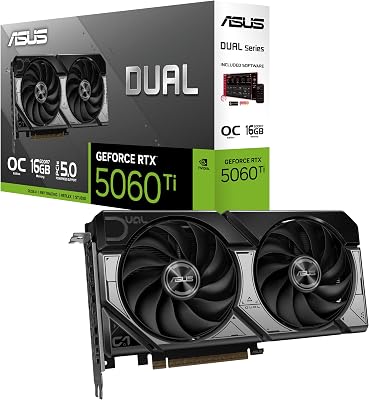
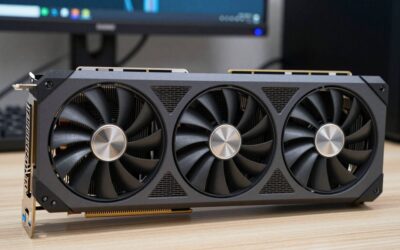
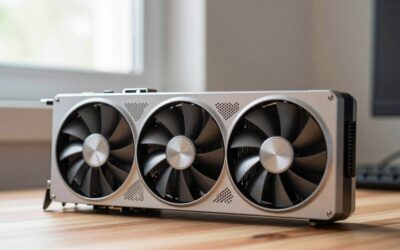
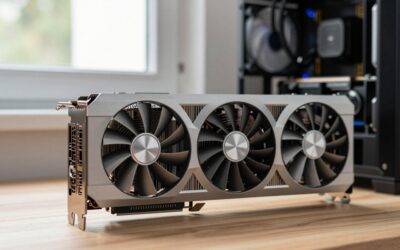
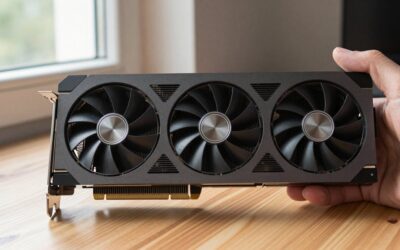
- Top Pick: ASUS Dual GeForce RTX 5060 Ti 16GB GDDR7 OC Edition Gaming Graphics Card
- Best Value: ASUS Prime GeForce RTX 5060 Ti 16GB GDDR7 Gaming Graphics Card
- Premium Choice: GIGABYTE GeForce RTX 5060 Ti WINDFORCE OC 8G Graphics Card, 8GB 128-bit GDDR7, PCIe 5.0, WINDFORCE Cooling System, GV-N506TWF2OC-8GD Video Card
RTX 5060 Ti vs RTX 5060 is the decision facing almost every budget-minded PC gamer shopping Nvidia’s latest Blackwell lineup in 2026. Both cards promise modern features and strong 1080p gaming, but the gap between them — in speed, in memory, and in price — is bigger than the similar names suggest. This comparison cuts straight to what matters: a quick verdict for the impatient, a clear spec table, a detailed face-off including the crucial 8GB versus 16GB memory question, the real pricing picture, and a plain recommendation on who should buy which. No hype, just the guidance you need to spend wisely.


RTX 5060 Ti vs RTX 5060: Quick Verdict and Specs
If you only remember one thing, remember this: the RTX 5060 Ti is the faster, more future-proof card thanks to more performance and a 16GB memory option, while the RTX 5060 is the cheaper entry point for solid 1080p gaming. Which one is right for you depends on your budget, your target resolution, and how long you want the card to last — and the sections below break that down in detail so you can decide with confidence rather than guesswork. The reassuring news is that there’s no bad choice here; both are current-generation cards with the same modern feature set, so the decision is about matching a tier to your needs rather than avoiding a weak product.
As an Amazon Associate we earn from qualifying purchases at no extra cost to you.




The Quick Verdict for Busy Buyers
For most buyers who can stretch their budget slightly, the RTX 5060 Ti is the smarter long-term buy, especially the 16GB version, which offers meaningfully more performance and memory headroom for newer games. It’s the card that will age more gracefully.
The RTX 5060 still makes strong sense for tight budgets and pure 1080p gaming, where its lower price is the headline appeal. If you play esports titles or less demanding games at 1080p, it delivers the modern Nvidia feature set for less money.
So the honest quick answer is this: buy the 5060 Ti if you can afford the step up and want longevity, and the 5060 if value at 1080p is your priority. Both are capable; they simply target slightly different buyers. A useful way to frame it is to ask how long you intend to keep the card — if the answer is a year or two of 1080p gaming, the 5060 is fine, but if you want it to stay comfortable for several years and the odd jump to 1440p, the extra you spend on the 5060 Ti buys real peace of mind.
Head-to-Head Comparison Table
Before the deep dive, here’s a side-by-side look at the core specifications that separate these two Blackwell cards and shape how they perform in real games.
| Specification | RTX 5060 Ti | RTX 5060 |
|---|---|---|
| Architecture | Blackwell | Blackwell |
| Memory options | 8GB or 16GB GDDR7 | 8GB GDDR7 |
| Relative performance | Faster (more cores) | Entry-level of the pair |
| Upscaling | DLSS 4 (incl. Multi Frame Generation) | DLSS 4 (incl. Multi Frame Generation) |
| Best resolution | Strong 1080p, capable 1440p | Excellent 1080p |
| Typical positioning | Better value over time | Lowest entry price |
On paper the two share the same architecture and the same DLSS 4 feature set, so the real differences come down to raw performance and — most importantly — the memory choice, which is where the 5060 Ti’s 16GB option becomes a genuine talking point.
Where the Two Cards Sit in Nvidia’s Lineup
Both cards occupy the budget-to-mainstream tier of Nvidia’s Blackwell generation, designed to bring modern features like DLSS 4 to affordable price points. They’re the cards most first-time builders and upgraders will actually consider.
The 5060 is the entry model, aimed at delivering a great 1080p experience for the lowest possible cost. The 5060 Ti sits a step above, offering more performance and the option of double the memory for buyers who want more headroom.
Understanding this positioning helps frame the whole comparison. This isn’t a battle of rivals so much as a choice between two rungs on the same ladder, where the question is simply how far up to reach. Because both cards come from the same generation and share Nvidia’s software stack, the differences are cleanly defined — more cores and more memory on the Ti, a lower price on the standard 5060 — which makes the decision unusually easy to reason about once you know your priorities.
RTX 5060 Ti vs RTX 5060: The Detailed Face-Off
With the specs established, the interesting part is how these cards differ where it counts. This face-off compares them on real gaming performance, the pivotal memory decision, and the shared features that both bring to the table. Rather than crowning a blanket winner, it’s more useful to see how each card behaves in the situations you’ll actually encounter, because the right pick shifts depending on your resolution, your budget, and how long you plan to keep the card.
Gaming Performance at 1080p and 1440p
At 1080p, both cards deliver a smooth, modern gaming experience, and the RTX 5060 will happily power most titles at high settings. For players who live at 1080p and favor esports or less demanding games, it’s more than enough.
The RTX 5060 Ti pulls ahead as games get more demanding and as you push toward 1440p, where its extra performance provides valuable breathing room. That headroom is what lets it stay comfortable in situations where the 5060 starts to strain.
So the performance story is about ambition. If you never plan to leave 1080p and lighter games, the 5060 satisfies; if you want 1440p or future-proofing against heavier titles, the 5060 Ti’s extra muscle is worth the premium. It’s worth being honest with yourself about which camp you’re in, because buying the cheaper card and constantly wishing for more headroom is a false economy, just as paying for the Ti and never leaving 1080p esports is money you didn’t need to spend.
The 8GB vs 16GB VRAM Decision
The single most important difference in this matchup is memory. The RTX 5060 comes with 8GB, while the RTX 5060 Ti is available in both 8GB and 16GB versions — and that 16GB option is a genuine game-changer for longevity.
Modern games increasingly demand more video memory, especially at higher texture settings, and 8GB can become a bottleneck sooner than raw performance would suggest. The 16GB 5060 Ti sidesteps that worry, comfortably loading high-resolution textures that can trip up 8GB cards.
For buyers planning to keep their card for several years, the 16GB 5060 Ti is the standout choice precisely because of this headroom. If budget forces an 8GB card, it remains perfectly good for 1080p today, but the memory question is the one to weigh most carefully. Memory is also the hardest limitation to work around later — you can lower settings to cope with a slower GPU, but you cannot add VRAM to a card you already own, which is why so many buyers treat the 16GB option as insurance against the future.
DLSS 4, Features, Power, and Thermals
Both cards share Nvidia’s full Blackwell feature set, including DLSS 4 with Multi Frame Generation, which can dramatically boost frame rates in supported games. This is a major point in both cards’ favor and a real advantage of choosing the current generation.
Because the features are shared, they don’t separate the two cards — instead they make both attractive. Whichever you pick, you get access to Nvidia’s latest upscaling and frame-generation technology, which stretches performance further than raw specs imply.
On the practical side, both are efficient, approachable cards that don’t demand an enormous power supply, though you should still check your PSU and case clearance before buying. Neither is difficult to run, which adds to their appeal for mainstream builders. This efficiency also makes both cards easy recommendations for first-time builders or for dropping into an older system, since they rarely force a costly power-supply upgrade the way higher-end GPUs can.
Price, Alternatives, and the Final Verdict
A budget comparison lives or dies on value, so money and context matter as much as raw specs. This section covers the 2026 pricing climate, a sensible alternative if neither card fits, and the final recommendation on who should buy which. For budget buyers especially, the price gap between these two cards is often the deciding factor, so understanding the wider market forces behind that gap helps you judge whether stepping up to the Ti is worth it right now.
Pricing in the 2026 Market
Pricing is central to the RTX 5060 Ti vs RTX 5060 decision, and the market backdrop rewards careful shopping. Graphics-card and component prices have trended upward, and while the steep climb of late 2025 has cooled into relative stability, suppliers still warn the situation remains volatile rather than truly settled.
Fresh supply is on the way — memory makers such as CXMT can feed DDR5 into the market, and Micron is building two new plants in Idaho — but those facilities aren’t expected online until roughly 2027 to 2028. In plain terms, prices have plateaued rather than fallen, and real relief is still years away.
The practical read is to buy on value, not on hope. Since the market isn’t poised for a sudden drop, the smart move is to pick the card that fits your needs and budget now, weighing the 5060’s lower price against the 5060 Ti’s better longevity rather than waiting for a crash that the supply data doesn’t support.
The Alternative if Neither Fits
If the 5060 Ti stretches your budget but you’re worried the 8GB 5060 won’t last, there are sensible middle paths. A previous-generation card with more memory can sometimes offer better value, keeping strong performance while trimming the price.
Alternatively, waiting to save for the 16GB 5060 Ti can be wiser than settling for an 8GB card you’ll outgrow, since memory headroom is the hardest thing to add later. Patience occasionally beats compromise in this specific case.
Whichever direction you lean, you can compare current options and their prices through the links on this page to find the best balance of performance, memory, and value for your particular budget and games.
See More:
- AMD graphics driver download
- Is Nvidia American
- Nvidia 1080 Ti drivers
- Radeon graphics driver update
- Nvidia RTX 3060 drivers
Final Verdict: Who Should Buy Which
The clearest way to decide is by priority, so here’s a focused pros-and-cons summary of the two cards for the budget-conscious buyer.
| Card | Best For (Pros) | Watch-Outs (Cons) |
|---|---|---|
| RTX 5060 Ti (16GB) | More performance; 16GB longevity; capable at 1440p; DLSS 4 | Higher price than the 5060 |
| RTX 5060 (8GB) | Lowest entry price; excellent 1080p; full DLSS 4 features | 8GB may limit newer games sooner |
Buy the RTX 5060 Ti — ideally the 16GB model — if you can afford the step up and want a card that stays capable for years and handles 1440p. Buy the RTX 5060 if your priority is the lowest price for excellent 1080p gaming and you’re comfortable managing settings in the most demanding future titles.
In the RTX 5060 Ti vs RTX 5060 battle, the 5060 Ti is the stronger long-term investment thanks to its extra performance and the crucial 16GB memory option, while the 5060 wins on pure affordability for 1080p gamers. Match the card to your resolution, budget, and how long you want it to last, keep the flat-but-firm 2026 pricing climate in mind, and you’ll end up with a GPU you’re happy with. Compare the latest prices and availability for both cards through the links on this page to lock in the right choice for your build.
Frequently Asked Questions
How much faster is the 5060 Ti than the 5060?
The Ti has more shader cores and higher memory bandwidth on the same 128-bit bus, generally delivering somewhere between fifteen and thirty percent more frames depending on the title and whether VRAM is a limiting factor. The gap widens at 1440p and narrows in CPU-limited esports scenarios.
Should I take the 8GB or 16GB 5060 Ti?
Take the 16GB version if the premium is modest. Eight gigabytes is already tight at 1440p with ultra textures and ray tracing, and the 16GB card avoids the sudden frame time spikes that occur when memory is exhausted. The extra capacity also helps with video editing and local AI models.
What are the power supply differences?
The RTX 5060 sits around 145W and works with a 450W to 550W unit. The 5060 Ti is roughly 180W and is comfortable on 550W to 600W. Both use a single 8-pin PCIe connector on most partner designs, so neither requires a power supply upgrade in a typical modern build.
Which one suits a 1080p 144Hz monitor?
The plain 5060 is well matched to 1080p high refresh gaming and is the better value there. The Ti makes more sense if you plan to move to 1440p, run demanding single-player games at high settings, or keep the card for longer than a typical upgrade cycle.
Do both support DLSS 4 multi frame generation?
Yes, both are Blackwell cards with full DLSS 4 support including multi frame generation, transformer-model upscaling and Reflex. Feature parity means the decision comes down to raw performance, memory capacity and price rather than software capability, which simplifies the comparison considerably.
Ready to decide? Our #1 pick for 2026 is the Specification.
Live price & availability on Amazon.



Write Your Review
No reviews yet. Be the first to share your experience!