
Top Rtx 5060 4070 Which Mid Picks for 2026
Here are our current top rtx 5060 4070 which mid picks, compared on real Amazon owner reviews, price, and features. Live prices update below.


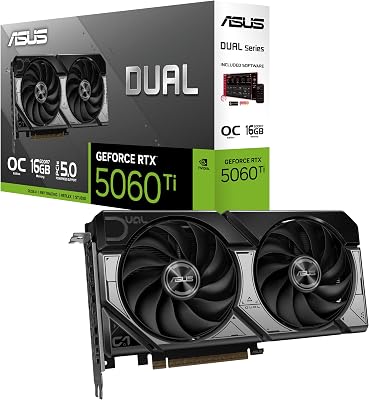

RTX 5060 Ti vs 4070 is one of the closest and most practical mid-range matchups in Nvidia’s current lineup, pitting a fresh Blackwell card against a proven Ada Lovelace favorite at a similar price point. The 4070 brings more cores, a wider memory bus, and a 12GB buffer, while the 5060 Ti counters with newer architecture, lower power draw, a 16GB option, and exclusive DLSS 4 Multi Frame Generation. For mainstream 1440p gamers trying to get the most performance per dollar, this is exactly the kind of decision that rewards a careful look at specs, real performance, and features rather than headline numbers alone.
As an Amazon Associate we earn from qualifying purchases at no extra cost to you. Product prices and availability are accurate as of the date shown and are subject to change.


Quick Verdict and Specifications
Here is the fast read on this tight mid-range contest, backed immediately by the spec sheet that shows where each card draws its strength.
The Bottom Line Up Front
The RTX 4070 generally holds a small edge in native rasterized performance thanks to its higher core count and wider memory bus, making it the steadier raw performer at 1440p. The RTX 5060 Ti answers with newer architecture, lower power draw, a 16GB memory option, and DLSS 4 Multi Frame Generation that the 4070 cannot access.
In practice the two are close enough that price, VRAM choice, and how much you value the newest features decide the winner. Neither is a clear knockout, which is what makes this comparison genuinely interesting.
For most buyers, the 5060 Ti’s lower price and modern feature set tip the balance, while gamers who prize native frames and proven bandwidth may still prefer the 4070.
Specifications Side by Side
The spec sheet frames a closer fight than usual between a new mid-range card and a previous-generation favorite.
| Spec | RTX 5060 Ti | RTX 4070 |
|---|---|---|
| Architecture | Blackwell | Ada Lovelace |
| CUDA cores | 4608 | 5888 |
| VRAM | 8GB or 16GB GDDR7 | 12GB GDDR6X |
| Memory bus | 128-bit | 192-bit |
| Total graphics power | 180W | 200W |
| Launch MSRP | $429 (16GB) | $549 |
| DLSS support | DLSS 4 (Multi Frame Gen) | DLSS 3 Frame Gen |
The 4070’s higher core count and 192-bit bus suggest a native-performance edge, while the 5060 Ti counters with a lower price, the option of a 16GB buffer, and exclusive DLSS 4 features.
Reading the Spec Gap
The 4070’s 5888 cores against the 5060 Ti’s 4608, plus the wider 192-bit bus, point to stronger native throughput and bandwidth. In pure rasterization without upscaling tricks, the 4070 tends to hold a measurable but modest lead.
The 5060 Ti’s narrower 128-bit bus is its main hardware limitation, partially offset by fast GDDR7 memory and Blackwell efficiency. The architecture extracts more from fewer cores than the raw count suggests, keeping the contest closer than the spec sheet first implies.
VRAM is the wildcard. The 12GB 4070 sits comfortably between the 8GB and 16GB 5060 Ti versions, so the 16GB 5060 Ti actually offers the most future-proof buffer of the group, while the 8GB version is the one most likely to feel constrained over time.
Performance Face-Off
The numbers predict a close native contest with a feature twist, and real behavior across resolutions confirms exactly where each card pulls ahead.
1440p Gaming Performance
At 1440p, the resolution both cards target, the 4070 generally posts slightly higher native frame rates in modern titles at high settings, leaning on its core and bandwidth advantage. The lead is real but rarely dramatic in everyday play.
The 5060 Ti stays right on its heels, delivering a thoroughly capable 1440p experience that most players would find indistinguishable from the 4070 without a frame counter on screen. For mainstream gaming at this resolution, both are comfortably sufficient.
At 1080p both cards are overpowered and trade blows freely, so the 1440p result is the one that should guide the decision for buyers targeting that increasingly standard resolution.
Ray Tracing and DLSS 4
In native ray tracing the cards are again close, with the 4070’s raw power giving it a slight baseline edge in heavier ray-traced scenes. The difference is modest and resolution-dependent rather than decisive.
The feature gap, however, favors the 5060 Ti clearly. It supports DLSS 4 with Multi Frame Generation, while the 4070 is limited to DLSS 3 Frame Generation, so in DLSS 4 titles the 5060 Ti can generate more on-screen frames and pull ahead in perceived smoothness.
This makes the choice partly about your outlook. If you value native performance and the broadest current support, the 4070 appeals; if you embrace the newest AI frame generation as games increasingly adopt it, the 5060 Ti’s exclusive features are the stronger draw.
Power, Heat, and Efficiency
The 5060 Ti’s 180W draw narrowly undercuts the 4070’s 200W, and combined with Blackwell efficiency it runs cool and quiet, slotting easily into compact cases and modest power supplies.
The 4070 is also efficient by high-end standards, so the practical difference is small, but the 5060 Ti edges it for the quietest, most compact builds. Neither card demands the heavy cooling or large power supplies that bigger GPUs require.
For builders prioritizing a tidy, low-noise system, both cards are friendly choices, with the 5060 Ti holding a slight advantage in the most space- and power-constrained setups.
Value, Alternatives, and Market Forces
With performance running close, price and the broader market become the deciding factors for most buyers.
Price and Value per Frame
At a $429 MSRP for the 16GB model against the 4070’s $549, the 5060 Ti starts from a stronger value position, offering similar performance and more VRAM for less money in that configuration. On cost per frame at 1440p, it usually comes out ahead.
If neither fits perfectly, a sensible alternative is a 4070 Super for more raw performance at a higher price, or the 8GB 5060 Ti only for the tightest 1080p budgets. Match the choice to your resolution and how long you plan to keep the card.
Resale and longevity slightly favor the 5060 Ti thanks to its newer architecture and DLSS 4 support, though the 4070’s proven bandwidth and 12GB buffer keep it relevant too. Both protect your investment, just in different ways.
Rising Prices and Why Timing Matters
Laptop and PC-component prices are trending upward and are expected to keep rising. For value-focused buyers, that makes securing a mid-range card at today’s price more appealing than waiting and risking a higher cost later.
This trend modestly favors the better-value 5060 Ti for budget-conscious gamers, while also meaning that any genuine discount on the 4070 is worth grabbing quickly before pricing drifts upward across the board.
The reliable approach is to decide your resolution and budget first, then buy the card that fits when a fair price appears, rather than trying to time a market that is moving in the wrong direction for buyers.
Nvidia’s AI Focus and GPU Supply
The U.S. recently cleared Nvidia to sell its H200 AI chips to China. The H200 is a data-center accelerator, not a GeForce card, so it does not directly change how either of these mid-range gaming cards performs.
The indirect effect is on supply and pricing: sustained heavy demand for Nvidia’s AI products can keep its capacity and attention tilted toward accelerators, which historically firms up consumer GPU prices and slows discounts across the stack.
That context reinforces buying at a fair price rather than waiting for steep cuts, since the broader market pressure makes meaningful price drops on either card less likely in the near term.
Final Verdict: Which Should You Buy?
This is a genuinely close call, so the decision rests on your VRAM needs, feature priorities, and budget.
Buy the RTX 5060 Ti if…
Choose the 5060 Ti, especially the 16GB version, if you want the best value, the largest memory buffer, low power draw, and access to DLSS 4 Multi Frame Generation for future titles. It is the forward-looking pick at a lower price.
For most mainstream 1440p gamers building a fresh, efficient system, this is the more sensible modern choice, delivering near-equal performance to the 4070 while costing less and offering newer features.
Buy the RTX 4070 if…
Choose the 4070 if you prioritize native rasterized performance, value its wider memory bus and proven 12GB buffer, and prefer the broadest current feature support over the newest frame-generation tricks.
It suits gamers who want a steady, well-understood performer and can find it at a competitive price, particularly if a good discount narrows the gap to the cheaper 5060 Ti.
Pros and Cons Recap
Here is the concise trade-off summary for both cards.
RTX 5060 Ti pros: lower price, 16GB option, very efficient at 180W, DLSS 4 Multi Frame Generation. Cons: narrow 128-bit bus, fewer cores, 8GB base model can constrain. RTX 4070 pros: stronger native raster, wider 192-bit bus, solid 12GB buffer. Cons: higher price, no DLSS 4 Multi Frame Generation, slightly higher power draw.
Frequently Asked Questions
Quick answers to the questions buyers most often ask when choosing between the RTX 5060 Ti and the RTX 4070.
Is the RTX 5060 Ti better than the RTX 4070?
In native rasterization the 4070 usually holds a small edge, but the 5060 Ti counters with DLSS 4 Multi Frame Generation, a 16GB option, and a lower price.
For value and future features the 5060 Ti often wins, while the 4070 appeals to those who prioritize raw native frames.
For most buyers the choice comes down to price and VRAM, where the 16GB 5060 Ti tends to make the stronger overall case.
Which has more VRAM?
The 16GB version of the 5060 Ti has the most, ahead of the 4070’s 12GB, while the 8GB 5060 Ti has the least.
For longevity and texture-heavy games, the 16GB 5060 Ti is the most future-proof of the three configurations.
If you anticipate texture-heavy games or longer ownership, that extra capacity is the safest bet for staying comfortable.
Do both cards support DLSS 4?
Only the 5060 Ti supports DLSS 4 with Multi Frame Generation, as a Blackwell card.
The 4070 supports DLSS 3 Frame Generation but cannot access the newer Multi Frame Generation feature.
In games that support DLSS 4, that exclusive capability can meaningfully widen the 5060 Ti’s effective performance lead.
Conclusion
In the RTX 5060 Ti vs 4070 comparison, the result is close enough that there is no single right answer, only the better fit for your priorities. The 4070 edges ahead in native rasterized performance and bandwidth, while the 5060 Ti counters with a lower price, a 16GB memory option, lower power draw, and exclusive DLSS 4 Multi Frame Generation. With component prices trending upward, the practical move is to buy the card that matches your resolution and budget at a fair price, and for most value-focused 1440p gamers in 2026, the 16GB RTX 5060 Ti is the slightly smarter long-term pick.










Write Your Review
No reviews yet. Be the first to share your experience!