
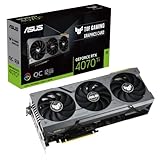
- Top Pick: ASUS Dual GeForce RTX 5060 Ti 16GB GDDR7 OC Edition Gaming Graphics Card
- Best Value: ASUS Prime GeForce RTX 5060 Ti 16GB GDDR7 Gaming Graphics Card
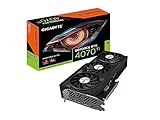
- Premium Choice: Gigabyte GeForce RTX 4070 Ti WINDFORCE OC 12G Graphics Card, 3X WINDFORCE Fans, 12GB 192-bit GDDR6X, GV-N407TWF3OC-12GD Video Card
Top Rtx 4070 5060 Used Power Picks for 2026
Here are our current top rtx 4070 5060 used power picks, compared on real Amazon owner reviews, price, and features. Live prices update below.
- Top Rtx 4070 5060 Used Power Picks for 2026
- RTX 4070 vs 5060 Ti: Quick Verdict and Specifications
- Deep Dive Face-Off: Speed, Memory, and the Years Between
- The 2026 Market: Why This Pair’s $50 Gap Is Shrinking
- Final Verdict: Who Should Buy Which Card?
- Conclusion
- Related Guides
- Frequently Asked Questions
- Related Articles


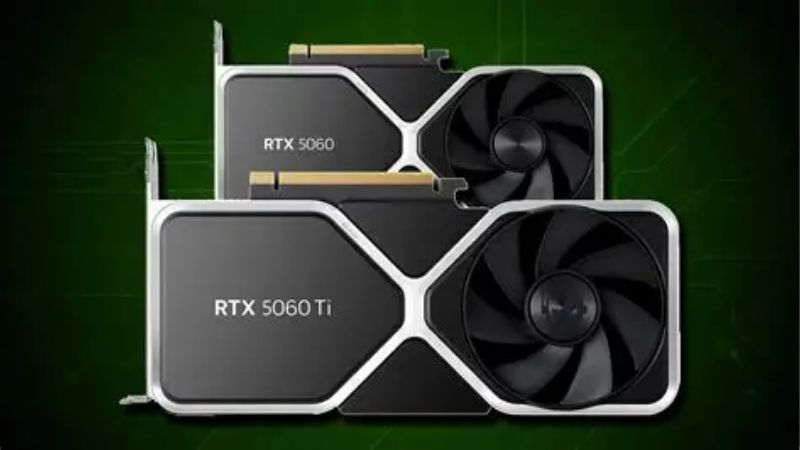
RTX 4070 vs 5060 Ti is 2026’s most evenly matched mid-range dilemma, because each card holds exactly one decisive advantage over the other. The used RTX 4070 — 2023’s mainstream workhorse, now trading at $360 to $400 — is simply faster, by 10 to 15 percent in raw raster. The new RTX 5060 Ti 16GB at $429 counters with a third more memory, DLSS 4 Multi Frame Generation, lower power, and a warranty. Speed against longevity, proven against fresh, used against new: this comparison weighs both cases with benchmarks, memory math, and the price boundaries that flip the verdict — then names the winner for each kind of buyer.
As an Amazon Associate we earn from qualifying purchases at no extra cost to you. Product prices and availability are accurate as of the date shown and are subject to change.




RTX 4070 vs 5060 Ti: Quick Verdict and Specifications
When the faster card and the better-equipped card are different cards, the spec sheet becomes the argument map. Here is the answer up front, then the numbers each side argues from.
The Quick Verdict for Busy Buyers
The RTX 5060 Ti 16GB wins for most buyers. Its raster deficit of 10 to 15 percent is the smallest meaningful gap in this guide’s category, while its advantages — 16GB of GDDR7 against 12GB, Multi Frame Generation against single-frame DLSS 3, 180W against 200W, and a full warranty against used-market risk — compound over every year of ownership.
The used 4070 takes the verdict only below $360 with a return window, where its speed premium finally costs less than the features it lacks. At typical $380-400 listings, the $30 to $50 saved buys too little. Check the 5060 Ti 16GB’s live Amazon price first — at $429, this comparison leans new from the opening paragraph.
Specification Comparison Table
The table shows two different design eras solving the mid-range differently: more compute on one side, more memory and newer features on the other.
| Specification | RTX 4070 | RTX 5060 Ti 16GB |
|---|---|---|
| Architecture | Ada Lovelace (2023) | Blackwell (2025) |
| CUDA Cores | 5,888 | 4,608 |
| VRAM | 12GB GDDR6X | 16GB GDDR7 |
| Memory Bandwidth | 504 GB/s | 448 GB/s |
| Board Power | 200W | 180W |
| DLSS Support | DLSS 3 (Frame Generation) | DLSS 4 (Multi Frame Generation) |
| Price in 2026 | ~$360-400 used | $429 new |
Twenty-eight percent more cores against 33 percent more memory is the whole matchup in two lines — and the near-equal bandwidth figures mean GDDR7’s efficiency, not raw throughput, carries the newer card’s memory case.
Pros and Cons of Each Card
A genuinely close matchup deserves columns without thumb on the scale.
RTX 4070 pros: 10 to 15 percent faster raster — visible on high-refresh 1440p panels; mature, post-mining-era used market with modest wear risk; excellent 200W efficiency for its speed; deep listing supply keeps prices honest. Cons: 12GB is the spec aging first at this tier; single-frame generation forever; no warranty; its fair window sits within $70 of the new alternative.
RTX 5060 Ti 16GB pros: 16GB at $429 — unmatched memory per dollar anywhere new; DLSS 4 Multi Frame Generation and the Blackwell runway; 180W on virtually any power supply; warranty and clean history; compact designs fit everything. Cons: the slower card in pure raster; 448 GB/s shows in the heaviest native-resolution scenes; an 8GB variant shares its name and must be avoided — verify “16GB” before checkout.
Deep Dive Face-Off: Speed, Memory, and the Years Between
Each card’s single advantage deserves measurement rather than slogan. Four sections test the speed gap, the memory gap, the ownership costs, and the math that converts them into one number.
1440p Gaming: How Much 15 Percent Feels Like
At 1440p high settings, the used 4070 posts 80 to 110 fps in demanding AAA titles; the 5060 Ti 16GB lands at 70 to 95 fps in the same suite. On a 144Hz panel the older card dips below refresh less often — a real, perceptible edge in the heaviest scenes, and the entire substance of its case.
Esports flattens the gap into irrelevance: both cards exceed 200 fps in competitive staples, leaving high-refresh 1080p and competitive 1440p builders free to decide on the other criteria entirely.
Frame generation then reverses the scoreboard in supported titles: Multi Frame Generation lifts the 5060 Ti’s presented rates 50 to 80 percent past what DLSS 3 gives the 4070, meaning the slower card frequently shows more frames on screen. Base render still governs latency — the 4070 keeps the better competitive feel — but for visual smoothness, the newer card’s software tier outruns the older card’s silicon edge.
The Memory Question: 12GB vs 16GB Over Time
This is the comparison’s longest lever. Today, 12GB handles 1440p high settings comfortably and the 4070 concedes nothing; the divergence is the trend line, with game memory budgets rising every year of this console generation and several recent releases already brushing 12GB at maximum textures.
The 16GB card never enters that negotiation: maximum textures remain a default through the card’s realistic lifespan, light creative and local-AI work fits where the 12GB card declines it, and resale in 2029 will reflect the same buffer logic buyers apply today. For three-year owners this section is nearly moot; for five-year owners it is the verdict — which is exactly how the final recommendation splits.
Power, Risk, and the Ownership Ledger
System demands favor the newer card by a comfortable margin: 180W on a single 8-pin-friendly connector against 200W with the 16-pin adapter most 4070s carry, and both run on power supplies that any build from the last eight years provides. Thermals and acoustics are excellent on each — this tier’s heat is easy money for modern coolers.
The risk column is where used and new diverge structurally: the 4070’s post-2022 manufacturing makes it the used market’s safest tier, but safest is not safe — no warranty, unknown hours, and a first-week stress test as the only recourse window. The 5060 Ti arrives with multi-year coverage and zero history. At a $30-50 price gap, that column weighs more than any benchmark in this guide.
Both demand one verification each: the exact Ada model on the used side, the 16GB suffix on the new side. This tier’s naming traps catch hurried buyers in both directions.
Value per Frame: The Cost Math
The arithmetic lands closer than any matchup in this series. A used 4070 at $380 averaging 95 fps in a 1440p suite costs $4.00 per frame; the 5060 Ti 16GB at $429 averaging 83 fps costs $5.17 — the used card is about 23 percent cheaper per day-one frame, its largest single argument stated at full strength.
The horizon does its usual work: warranty, the frame-generation tier, four extra gigabytes, and fresher silicon stretch the new card’s comfortable service roughly two years past the used one’s, and per comfortable year the totals converge to near parity — with the 5060 Ti holding the tiebreakers that never appear in math: recourse, history, and resale story.
The boundary, stated for shopping: under $360 with returns, the 4070’s speed is honestly cheap; $360 to $400 is the new card’s territory on features; above $400, the used listing has priced itself out of its own argument.
The 2026 Market: Why This Pair’s $50 Gap Is Shrinking
The narrow spread deciding this comparison is under active compression from the same two industry forces moving every tier — landing here on the exact price points both cards defend.
The H200 China Approval Pressures the New Card’s Shelf
The United States has approved Nvidia selling the H200 — one of its most powerful AI accelerators — to China, releasing data-center demand that competes with GeForce production for memory, packaging, and wafer allocation. Volume mid-range cards like the 5060 Ti historically drift above MSRP first when allocation tightens, because demand at $429 never thins and retailers face no pressure to discount what sells through regardless.
The signal to watch is simple: when clean $429 listings shorten from days to hours, the window logic of this guide activates — buy inside it.
Rising Component Prices Hold the Used Card’s Floor
Simultaneously, laptop and PC component prices are climbing industry-wide, led by memory costs, and the squeeze has frozen used-GPU depreciation across the board: the 4070’s band has traded flat for consecutive quarters instead of sliding toward the low $300s as normal cycles predicted.
A used discount that stops growing against a new card under upward pressure is a discount on borrowed time — which is why this comparison’s used lane narrows each quarter, and why its boundary prices deserve action rather than observation.
Buy Now or Wait?
Decide the lane first, execute inside today’s numbers: a 5060 Ti 16GB at $429-449 or a used 4070 under $360 with returns are both fair purchases the trend threatens rather than promises to improve.
Amazon alerts on both, the 16GB suffix double-checked, first clean trigger wins — the prepared buyer’s routine that has beaten patience at this tier for two straight years.
Final Verdict: Who Should Buy Which Card?
One genuine advantage per side produces one clean profile per side — plus the tier-up answer for buyers whose hesitation reveals a different need.
Who Should Buy the RTX 4070
Buy the used 4070 under $360 with a return window if peak frame rate on a 144Hz-plus 1440p panel is your actual priority and your upgrade cycle runs three years or shorter. Inside that lane, its speed premium is honestly the cheapest in the mid-range.
Run the full first-week checklist — stress test, outputs, temperatures — and let the return window function as the warranty it temporarily is.
Who Should Buy the RTX 5060 Ti 16GB
Everyone else: the five-year owners, the prebuilt upgraders, the texture maximalists, and anyone for whom a warranty quietly matters. At $429 it is the most complete value package in the new mid-range, and this comparison’s recommendation for the majority.
Verify the 16GB model in the Amazon listing title and buy inside MSRP windows — its 8GB twin exists specifically to catch the inattentive.
The Alternative: RTX 5070
Buyers stretching toward $500 should price the RTX 5070 at $549 before settling: it beats the 4070’s speed and the 5060 Ti’s features simultaneously — 20-plus percent faster than the used card with the full DLSS 4 tier and warranty.
The $120 step dissolves this entire dilemma for anyone who can take it; Amazon’s live listings make the three-way check a five-minute exercise worth running first.
See More:
Conclusion
The RTX 4070 vs 5060 Ti matchup ends in the mid-range’s most instructive verdict: the used card’s 10 to 15 percent speed edge is real and honestly priced below $360, but the new card’s 16GB, DLSS 4 Multi Frame Generation, 180W draw, and warranty win the years that follow day one — making the 5060 Ti 16GB the answer for most buyers at $429. With the H200 export approval pressuring new MSRP availability and rising component prices freezing the used discount, the $50 gap deciding this comparison is shrinking from both directions. Settle your side of the RTX 4070 vs 5060 Ti question by your panel and your horizon, check both live prices on Amazon, and buy inside your boundary while it still exists.
Frequently Asked Questions
What is the best rtx 4070 5060 ti in 2026?
The best rtx 4070 5060 ti depends on your budget and how you plan to use it. The options compared above are our top-rated picks based on real customer ratings, build quality, and overall value — start with the highest-rated model that fits your budget.
How much should I expect to spend on a rtx 4070 5060 ti?
Prices vary by brand and features. Budget options cover the essentials, while mid-range and premium models add durability, performance, and extra features. Compare the prices in the list above to find the best value for your needs.
What should I look for when buying a rtx 4070 5060 ti?
Focus on what matters most for your use case — build quality, compatibility, performance, warranty, and verified customer reviews. Every pick above is selected to balance these factors.
Are budget rtx 4070 5060 ti options worth it?
Yes. For most people a well-reviewed budget or mid-range rtx 4070 5060 ti delivers excellent value. You only need to spend more if you specifically require premium materials or top-tier performance.
How did we choose these rtx 4070 5060 ti picks?
We compare current Amazon ratings, review counts, key features, and price to surface the options with the best real-world value. The list is refreshed as ratings and availability change.










Write Your Review
No reviews yet. Be the first to share your experience!