
The GeForce RTX 2060 launched in January 2019, with NVIDIA announcing it at CES that month and the cards reaching stores shortly afterward. It was the most affordable member of the first Turing-based RTX lineup, which had debuted in September 2018 with the RTX 2080 and 2080 Ti, and it brought hardware ray tracing and DLSS-capable tensor cores to a mainstream desktop card for the first time.
Since then, the 2060 has gained a Super refresh in July 2019 and a surprise 12GB revival at the end of 2021, and it has been succeeded by the RTX 3060 and later generations. This guide lays out the launch timeline, the key launch specs, what followed, and whether the card still makes sense today.
RTX 2060 Launch Timeline
The 2060 was the last of the original RTX 20 series desktop cards to arrive in its first form. The 2080 and 2080 Ti came first in September 2018, the 2070 followed in October 2018, and the 2060 closed out the lineup in January 2019. For exact day-level details and regional availability, check NVIDIA’s announcement archive.
| Milestone | Timing | What happened |
|---|---|---|
| Turing architecture launch | September 2018 | RTX 2080 and 2080 Ti introduce the RTX 20 series |
| RTX 2070 release | October 2018 | Mid-high card arrives, the 2060’s older sibling |
| RTX 2060 6GB release | January 2019 | Entry RTX card announced at CES and released that month |
| GTX 16 series | Early 2019 | Turing without RT cores arrives below the 2060 |
| RTX 2060 Super release | July 2019 | Faster Super refresh with more memory bandwidth |
| RTX 3060 release | February 2021 | Ampere successor at this tier |
| RTX 2060 12GB | Late 2021 to early 2022 | Revised card with more memory, aimed at tight supply |
What the RTX 2060 Launched With
The original card is based on the TU106 Turing chip and shipped with 6GB of GDDR6 memory on a 192-bit bus. NVIDIA specified 1920 CUDA cores, along with tensor and ray tracing cores that gave it access to DLSS and real-time ray tracing. The card used a single 8-pin power connector and a board power in the 160W class, with NVIDIA recommending a system power supply in the 450W range.
Two points defined its launch positioning. First, it replaced the GTX 1060 6GB in NVIDIA’s lineup while delivering performance closer to the older GTX 1070 Ti class in many games, according to the figures cited at the time. Second, it was the first mainstream card to carry the RTX label, which meant buyers were paying for forward-looking features as well as raw speed. In practice, ray tracing on this card was limited, and DLSS became the more useful of the two features as upscaling matured over the following years.
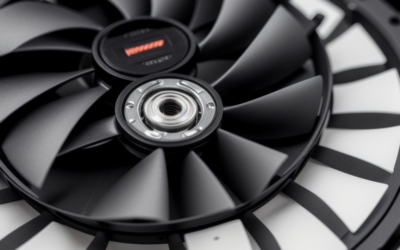
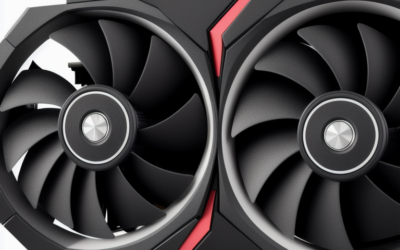
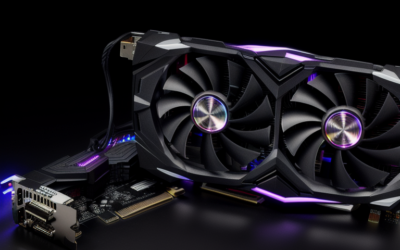
Founders Edition cards used a dual-fan design, while partner cards varied widely in cooling, clocks and size. Display outputs on reference-style cards typically included DisplayPort, HDMI and, on many models, a DVI connection, though partner layouts differ.
What Came Next
The 2060’s family expanded quickly:
- RTX 2060 Super (July 2019): a response to AMD’s competing cards, moving to 8GB of memory and a wider bus for a clear step up.
- RTX 3060 (2021): the Ampere successor, which came with 12GB of memory and newer tensor and ray tracing cores.
- RTX 2060 12GB (late 2021): a revised version with a larger memory pool and a modestly higher core count, released while supply for newer cards was constrained.
- RTX 4060 and later: subsequent generations continued the tier, and current-generation cards in the same price tier outperform the 2060 and add newer features.
The practical result is that the 2060 is two to three generations behind today’s equivalent tier. Owners considering an upgrade often compare it with the RTX 3060 or RTX 4060, with the guides on this site covering those head-to-head matchups.
Why the RTX 2060 Mattered at Launch
Before Turing, ray tracing in games was a demo-stage idea that required very expensive hardware. The 2060 changed the entry point by putting dedicated RT cores and tensor cores on a card that a mainstream buyer could consider. That did not make ray-traced games smooth on it, and launch-era reviews and NVIDIA’s own materials pointed to DLSS as the way to recover frame rates, but it did establish the RTX badge as something that reached the middle of the market.
The card also arrived with an unusual amount of debate. Some buyers felt the jump in launch positioning over the GTX 1060 was steep for a card whose headline features had few supporting games in early 2019. Others valued the performance gain over the older GTX 10 series and the promise of DLSS and ray tracing arriving in more titles. The Super refresh in July 2019 and the GTX 16 series below it were partly responses to that tension, and they explain why the 2060 had such a crowded neighborhood in NVIDIA’s lineup within its first year.
The card’s relationship to the 12GB revision is also worth understanding. When NVIDIA reintroduced the name in late 2021 with a larger memory pool, it was an answer to a market short on new cards, not a new design. The silicon stayed in the Turing family, so owners and buyers should treat the 6GB original, the Super and the 12GB version as three distinct products that share a name and an architecture.
Is the RTX 2060 Still Relevant Today?
As of late 2026, the 2060 remains a functional 1080p card for many games at moderate settings, especially esports titles and older releases. Its 6GB memory is the main constraint, since newer games with high-resolution textures can exceed it, forcing lower texture settings. DLSS support helps stretch performance in titles that offer it, and the card’s ray tracing hardware is real but limited.
Driver support is another factor to verify. Turing cards have continued to receive current drivers so far, but NVIDIA changes its support lists over time, so check NVIDIA’s driver notes for the current status. Used 2060 cards are widely available, and age matters: fans, thermal paste and thermal pads on a card from 2019 may need attention.
For esports and light gaming, a used 2060 can still serve. For new builds aimed at longer-term gaming, newer cards with more memory and newer upscaling and frame generation features are the safer pick.
Who Should Buy or Skip It
Budget 1080p and esports players
If you play esports titles and older games at 1080p, a used 2060 in good condition can still deliver smooth results. Just verify the card’s condition and keep expectations in line with its 6GB memory.
Upgraders from GTX 10 series
If you are coming from a GTX 1060 or older, the 2060 brings DLSS and a noticeable performance gain, but compare against newer used cards that may cost similar amounts and offer more memory.
New builders targeting modern games
If you want to play new releases at high settings for years, skip it. The 6GB memory and age make newer cards a better investment.
Buying Checklist
- Confirm the exact model: 2060 6GB, 2060 Super or 2060 12GB.
- Check the seller’s photos of the label and the card’s condition.
- Test the card for temperatures and artifacts during the return window.
- Verify your power supply has an 8-pin connector and enough capacity.
- Check NVIDIA’s driver notes for current support.
- Compare with newer used cards in the same budget.
Frequently Asked Questions
When did the RTX 2060 come out?
NVIDIA announced it in January 2019 at CES and released it that month. It was the last of the first wave of RTX 20 series cards to arrive.
Is the RTX 2060 still good today?
It still handles 1080p gaming at moderate settings, especially in esports and older titles. Newer games may push past its 6GB memory.
What replaced the RTX 2060?
The RTX 3060 was the direct Ampere successor in 2021, and newer generations have continued the tier since then. The 2060 Super and 2060 12GB were variants of the Turing card itself.
Did the RTX 2060 ever get a 12GB version?
Yes, NVIDIA released a 12GB revision in late 2021 with a modestly higher core count. It is a different card from the original 6GB version, so check the listing carefully.
Related Guides
- RTX 2060 Super Review: Is This Turing GPU Worth It in 2026?
- RTX 4060 vs 2060: Less Bandwidth, More Frames, Explained
- RTX 2060 vs 5050: Is This Upgrade Really Worth It in 2026?
- RTX 2060 Drivers: Best Setup, Fixes & DLSS Explained
Write Your Review
No reviews yet. Be the first to share your experience!