
- Top Pick: GeForce NOW Cloud Gaming
- Best Value: Gigabyte NVIDIA GeForce RTX 3050 OC Low Profile 6G Graphics Card – 6GB GDDR6, 96-bit, PCI-E 4.0, 1477MHz Core Clock, 2X DP 1.4, 2 x HDMI 2.1, GV-N3050OC-6GL
- Premium Choice: Gigabyte NVIDIA GeForce RTX 3060 Gaming OC V2 Graphics Card – 12GB GDDR6, 192-bit, PCI-E 4.0, 1837MHz Core Clock, RGB, 2X DP 1.4, 2X HDMI 2.1, NVIDIA Ampere – GV-N3060GAMING OC-8GD
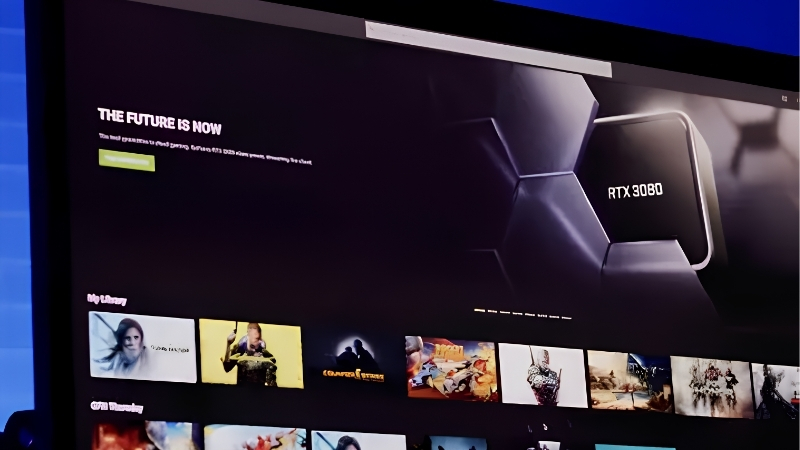
NVIDIA GeForce Now lets you play demanding PC games on a laptop, phone, or budget machine you would never expect to run them, by doing the heavy lifting on a powerful cloud GPU and streaming the result to your screen. For anyone who cannot justify or afford a high-end gaming PC, especially with hardware prices where they are, it is a genuinely tempting alternative. This review explains how GeForce Now works, what the membership tiers cost and offer, how it performs, and whether cloud gaming is worth it right now, weighing it honestly against buying a PC in today’s market.
What GeForce Now Is and How It Works
GeForce Now is NVIDIA’s cloud gaming service. Instead of running games on your own hardware, it runs them on NVIDIA’s servers, powerful remote PCs with high-end GPUs, and streams the video to your device while sending your inputs back. The result is that a modest laptop or even a phone can play games that would normally require an expensive graphics card. Understanding this streaming model is essential, because its strengths and weaknesses both flow directly from it. Here is how the service actually works and what it offers.
As an Amazon Associate we earn from qualifying purchases at no extra cost to you.



How Cloud Gaming Streams to Your Device
When you launch a game on GeForce Now, a remote server renders each frame and streams it to you like a video, while your mouse, keyboard, or controller inputs travel back to the server. All the demanding work happens in the cloud, not on your device.
This means your local hardware only needs to decode a video stream and send inputs, tasks even a weak device can handle. The heavy GPU load lives entirely on NVIDIA’s end.
The trade-off is that everything now depends on your internet connection, since the game is effectively being streamed in real time. That dependency shapes the entire experience, for better and worse.
The Membership Tiers and What They Offer
GeForce Now offers a free tier and paid tiers that differ in session length, performance, and priority access. Higher tiers give longer sessions, better GPU performance including RTX features, and priority so you are not waiting for a slot.
| Tier | Typical offering | Best for |
|---|---|---|
| Free | Basic access, shorter sessions, queues | Trying the service |
| Performance | Higher-end GPU, RTX on, longer sessions | Regular players |
| Ultimate | Top-tier GPU, highest resolution and frames, priority | Serious gamers |
The paid tiers are a monthly or period subscription rather than a one-time cost, which is central to the value comparison against buying hardware. You rent performance instead of owning it.
Which Games and Devices Are Supported
GeForce Now works differently from some rivals: you generally play games you already own on stores like Steam or Epic, streaming your existing library rather than buying into a closed catalog. Support covers a large and growing list of titles, though not every game is included due to publisher decisions.
On the device side, it runs on Windows and Mac, Android and iOS through the browser or app, smart TVs, and streaming devices. That breadth is a major draw, since almost any screen you own can become a gaming machine.
Before committing, it is worth checking that the specific games you play are supported, since availability depends on each publisher opting in.
Is GeForce Now Worth It Right Now
The core question is whether streaming performance is good enough and whether renting beats buying, and the answer has shifted as hardware prices climbed. GeForce Now looks more attractive precisely when a capable gaming PC is expensive and hard to justify. This section covers the real performance you can expect, how cloud gaming compares to buying a PC in the current market, and the honest trade-offs, so you can judge whether it fits your situation.
Performance, Latency, and Image Quality
On the higher tiers with a strong internet connection, GeForce Now performance is genuinely impressive: high frame rates, RTX features, and image quality that can rival a good local PC. For single-player and many multiplayer games, it is more than good enough.
The unavoidable caveat is latency. Because inputs travel to a server and back, there is added input lag compared to local play. On a fast, wired connection it is minor and most players adapt quickly; on a poor connection it becomes noticeable and, in twitchy competitive shooters, potentially a disadvantage.
Image quality also depends on your bandwidth, since the stream compresses to fit your connection. A strong connection looks excellent; a weak one shows compression artifacts. Your internet, not NVIDIA’s servers, is usually the limiting factor.
The top Ultimate tier is worth singling out because it changes the calculation. It runs on server hardware equivalent to a very high-end graphics card, streams at high resolutions and refresh rates, and enables the full suite of RTX features like ray tracing and DLSS. In practice this means a cheap laptop on the Ultimate tier can display games with visual settings its own hardware could never produce locally, which is the clearest demonstration of what cloud gaming makes possible. For someone weighing the cost of that same experience as a physical PC, the gap is striking.
Cloud Gaming vs Buying a PC in Today’s Market
This comparison has become sharper because building or buying a capable gaming PC has grown more expensive. Component prices have been trending upward, and while the steepest increases of late 2025 have eased, the market has stabilized rather than fallen. If you have been waiting for a gaming PC to get cheaper before buying, the honest picture is that meaningful relief is not imminent.
Memory is a large part of that story. Prices rose sharply, and although new supply is on the way, DDR5 sourcing from manufacturers like CXMT and Micron’s two new plants under construction in Idaho, those facilities are not expected to be running until 2027 to 2028. Added capacity is real, but it is years out, not months, which keeps upward pressure on the cost of the RAM and graphics cards a gaming PC depends on.
Against that backdrop, GeForce Now’s value proposition strengthens: instead of paying a high and not-falling price for a full gaming rig, you pay a modest recurring subscription and let NVIDIA absorb the hardware cost. For someone who cannot or does not want to spend heavily on a PC right now, cloud gaming is a way to play current games at high settings without buying into an expensive, and not-cheapening, hardware market. The genuinely positive signs, prices stabilizing and some manufacturers reporting relative calm, are modest and far off, so waiting for a PC price collapse is unlikely to pay off before those new fabs come online. That makes renting performance through the cloud a rational near-term choice rather than a compromise, particularly for players whose usage does not justify a major hardware investment.
Pros and Cons Users Report
Since GeForce Now is a subscription with real trade-offs, the honest question is who it suits. Weighing the praise against the complaints clarifies whether it fits you.
What users like: playing demanding games on weak or portable hardware, no upfront cost for a gaming rig, streaming games they already own, and impressive quality on the top tiers with good internet. For the hardware-limited, it feels transformative.
What users criticize: a hard dependence on internet quality, added input latency that hurts competitive play, occasional queues and session limits, and games missing due to publisher choices. It is excellent when the conditions are right and frustrating when they are not.
Getting the Best Cloud Gaming Experience
GeForce Now lives or dies on your setup, so a little attention to internet and accessories makes the difference between a great experience and a laggy one. This final section covers the connection and setup you need, the accessories that meaningfully improve cloud play, and the bottom line on whether the service is worth it for you.
Internet and Setup Requirements
A stable, fast connection is non-negotiable. NVIDIA recommends a solid broadband speed, and just as important is a low-latency, consistent connection, ideally wired ethernet rather than Wi-Fi, since wireless adds variability that shows up as stutter and lag.
If you must use Wi-Fi, a strong 5GHz signal close to the router helps, but a wired connection is the single biggest improvement most people can make. Latency and consistency matter more than raw peak speed here.
Getting the connection right is what turns GeForce Now from a frustrating experiment into a genuinely good way to play, so it is worth prioritizing before judging the service.
Accessories That Improve Cloud Gaming
A few inexpensive accessories noticeably lift the experience. A good game controller makes cloud gaming comfortable across phones, tablets, and TVs, and a proper ethernet cable or adapter delivers the stable, low-latency connection the service depends on far better than Wi-Fi.
For mobile play, a phone controller mount or a lightweight travel setup turns any device into a portable console, which is one of GeForce Now’s best use cases. These small purchases do more for enjoyment than any settings tweak.
Headphones matter too, and they are easy to overlook. A decent wired or low-latency wireless headset keeps audio in sync with the streamed video and immerses you without the delay some cheap wireless options add. Paired with a controller and a wired connection, they complete a setup that feels far closer to local play than most first-time users expect.
If you want cloud gaming to feel its best, compare current prices on game controllers, ethernet adapters, and mobile gaming accessories through the links on this page.
See More:
- NVIDIA Broadcast vs OBS
- RTX HDR settings
- NVIDIA App download
- NVIDIA RTX Video Super Resolution
- GeForce Experience alternative
Final Verdict
GeForce Now is worth it for players with limited or portable hardware and a strong internet connection, especially now that buying a capable gaming PC is expensive and not getting cheaper soon. As a way to play demanding games without a big hardware outlay, it is genuinely compelling.
It is less ideal for hardcore competitive players sensitive to every millisecond of latency, or anyone with an unreliable connection. Match it to your situation, and for many it is the smartest way to game in the current market.
In the end, NVIDIA GeForce Now turns almost any device into a capable gaming machine by streaming from powerful cloud GPUs, and its appeal is strongest right now while PC hardware prices remain high and slow to fall. Choose a tier that fits your play, secure a fast wired connection, and it delivers high-end gaming without the high-end purchase. To make cloud play feel its best, check the recommended controllers and networking accessories through the links here.
Top-Rated Picks


| Product | Brand | Rating | Reviews | Price |
|---|---|---|---|---|
| ARCTIC MX-4 (4 g) – Premium Performance Thermal Paste… | ARCTIC | ★ 4.8 | 104k | $4.99 |
| ARCTIC MX-4 (incl. Spatula, 4 g) – Premium Performanc… | ARCTIC | ★ 4.8 | 71.9k | $5.49 |
| Crucial 8GB DDR4 RAM 3200MHz (PC4-25600), Downclockab… | Crucial | ★ 4.8 | 62.8k | $74.99 |
| AMD Ryzen 5 5600X 6-core, 12-thread unlocked desktop … | — | ★ 4.8 | 30.2k | $177.60 |
| NVIDIA Shield Remote; Voice Search, Motion-Activated,… | — | ★ 4.7 | 10.6k | $25.99 |
Frequently Asked Questions
What internet connection does GeForce Now need?
NVIDIA recommends roughly 15-25 Mbps for 1080p60, 35 Mbps for 1440p120 and about 45 Mbps for 4K120 on the top tier. Just as important is latency and jitter: a wired Ethernet connection under about 40ms to the nearest datacentre feels far better than a faster but unstable Wi-Fi link.
Do I have to rebuy my games?
No, and that is the key difference from other cloud services. GeForce Now streams games you already own on Steam, Epic, Ubisoft Connect, Battle.net, GOG and Xbox, provided the publisher has opted in. The catch is that not every title in your library is supported, so check the list before subscribing.
How does it compare to owning a gaming PC?
For casual and single-player play on a laptop, TV or handheld it is remarkably close to local hardware, with the Ultimate tier providing RTX-class rendering, DLSS and ray tracing. Competitive shooters still feel better locally because streaming adds encode, network and decode latency that no server-side optimisation fully removes.
What are the session limits and queues?
Free membership imposes short sessions and a waiting queue, Performance tier offers longer sessions with RTX features at 1440p, and Ultimate provides the longest sessions, priority access and the highest resolutions and frame rates. Sessions end when the timer expires, though your game save persists in the cloud storefront account.
Is it worth it in 2026?
It makes strong financial sense if your alternative is spending heavily on a new GPU you would use a few hours a week, or if you play on a Mac, older laptop or handheld. It makes less sense if you play many unsupported titles, mod heavily, or already own a capable desktop.

Write Your Review
No reviews yet. Be the first to share your experience!