
- Top Pick: 51RISC GeForce GTX 1660 Ti Graphics Card, 6GB GDDR6 192bit Video Card for Gaming GPU PCIe 3.0 x16 DP HDMI DVI 1080P 2K Game PC Card 1660ti 4K 8K Display (GTX 1660 Ti – Red)
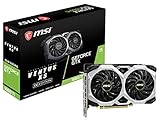
- Best Value: MSI Gaming GeForce GTX 1660 Ti 6GB GDRR6 – 192-bit HDMI/DP, Dual Fan, VR Ready, OC Graphics Card for Gaming PC, NVIDIA Video Card GPU (GTX 1660 TI Ventus XS 6G OC) Computer Graphics Cards (Renewed)
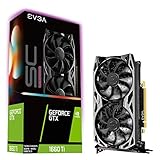
- Premium Choice: EVGA 06G-P4-1667-KR GeForce GTX 1660 Ti SC Ultra Gaming, 6GB GDDR6, Dual Fan (Renewed)
GTX 1660 Ti sat at the top of Nvidia’s GTX 16-series as the fastest card of the family, and in 2026 it remains a capable budget 1080p performer on the used market. The key question for buyers is simple: with the very similar GTX 1660 Super often selling for less, is the 1660 Ti worth seeking out? This review covers what the GTX 1660 Ti delivers today, how it compares to its close sibling, and whether it is the right budget card for your 1080p build.
As an Amazon Associate we earn from qualifying purchases at no extra cost to you.




What the GTX 1660 Ti Offers in 2026
The GTX 1660 Ti is the flagship of Nvidia’s Turing-based GTX line, offering the strongest 1080p performance of the 16-series. Understanding how narrowly it leads the cheaper 1660 Super is the key to deciding whether to pay any premium for it today.
Turing Specs and 6 GB GDDR6
The GTX 1660 Ti pairs 1,536 CUDA cores with 6 GB of GDDR6 memory, giving it the most compute of the GTX 16-series. That core-count edge is what places it at the top of the family, if only by a modest margin over the 1660 Super.
Like all GTX cards, it lacks RT and Tensor cores, so there is no ray tracing or DLSS. At this budget and performance level that omission is expected, and the card’s focus is strong, consistent 1080p rasterized performance.
The analytical point is that the 1660 Ti and 1660 Super are genuinely close, since the Super’s faster memory offsets much of the Ti’s extra cores. The 6 GB buffer both share is what gives them lasting 1080p comfort over 4 GB cards.
For buyers, that shared 6 GB is more decisive than the Ti’s core-count edge. In the games most likely to strain a budget card, having enough memory matters more than a few extra cores, which is why the two 1660 cards feel so alike in practice.
Gaming Performance at 1080p
At 1080p, the GTX 1660 Ti is a strong performer, running esports titles at very high frame rates and handling modern games at high settings. It delivers the best 1080p experience the GTX 16-series offers.
In practice, its lead over the GTX 1660 Super is small, often just a few percent, which is rarely noticeable in real gameplay. Both cards deliver a similar, satisfying 1080p experience, with the Ti holding a slight edge on paper.
The honest framing is that the GTX 1660 Ti is an excellent 1080p card whose main challenge is its own cheaper sibling. On performance alone it is the better card; on value the gap is narrow enough that price decides the winner.
That makes the 1660 Ti unusual among flagships: its toughest competition is the cheaper card just below it. On a pure spec sheet the Ti leads, but in the wallet-versus-frames calculation that budget buyers actually run, the margin rarely justifies a premium.
How It Compares to the GTX 1660 Super
Against the GTX 1660 Super, the 1660 Ti is marginally faster thanks to its higher core count, but the Super’s faster memory narrows that gap considerably. In most games the difference is small enough to be academic.
Because the 1660 Super often sells for less, the value verdict usually favors it, and the 1660 Ti only makes clear sense when you find one at a similar or lower price. At equal prices, the Ti is the better buy; at a premium, the Super wins.
Choosing correctly is therefore mostly about price. Both are strong 6 GB 1080p cards, so the smart move is to buy whichever of the two is cheaper at the moment you shop, since their real-world performance is so close.
This turns the buying decision into a simple price check rather than a performance debate. Since a few frames per second separate the two, the disciplined move is to let the current price, not the model name, choose the card for you.
The GTX 1660 Ti in Real Use
The GTX 1660 Ti’s value shows in how well it serves everyday 1080p gaming rather than in any dramatic advantage. Across popular titles, real builds, and secondary tasks, it proves a capable and durable budget card.
Esports and Popular Games
For esports, the GTX 1660 Ti is comfortably overqualified, delivering very high frame rates in competitive titles at 1080p with maximum settings. Players get smooth, responsive gameplay with headroom to spare.
In AAA and mid-tier games, it handles 1080p at high settings well, and its 6 GB memory keeps recent titles running smoothly where 4 GB cards begin to struggle. This makes it a dependable all-rounder for 1080p play.
Owners rate the GTX 1660 Ti highly for 1080p gaming, with the main point of discussion being its closeness to the cheaper 1660 Super. The lack of ray tracing is expected and largely irrelevant at this level.
Set against its price and era, that omission bothers almost no one. Buyers of a card like the 1660 Ti are not shopping for ray tracing; they want dependable 1080p frames, and on that measure the card continues to satisfy.
That focus keeps expectations healthy. Approached as a strong 1080p card rather than a gateway to modern effects, the 1660 Ti rarely disappoints, and owners who bought it for what it is report lasting satisfaction.
Power, Size, and PC Compatibility
The GTX 1660 Ti draws around 120 watts and requires a power connector, so a power supply with the right cabling and adequate wattage is needed. These are modest requirements that most builds satisfy without trouble.
It fits standard cases easily, with compact dual-fan models available for smaller builds. While it needs a connector unlike some entry cards, it remains an easy upgrade for the great majority of systems.
The practical advice is to confirm your power supply and case clearance before purchase. For a card that tops the GTX 16-series in performance, those modest requirements are well worth meeting.
For nearly all builds, meeting them is straightforward, since any capable modern power supply provides the connector and wattage. The 1660 Ti installs as easily as any mainstream card in a properly equipped system.
Its efficient power profile also means modest heat and noise, so the card runs quietly in most builds. For a system used for both work and play, that composed operation adds to the appeal beyond the raw frame rates.
Beyond Gaming: Streaming, HTPC, and Light Creative
The GTX 1660 Ti handles video encoding, playback, and streaming capably through its Turing media engine, making it a strong choice for a versatile budget PC that does more than game.
For light to moderate creative work, its performance and 6 GB memory support smooth photo and video editing that comfortably outpaces integrated graphics. It is a capable all-purpose card at its price point.
The experimental extra worth noting is driver features such as Nvidia Image Scaling that can improve effective performance in supported games. These add modest value on top of an already well-rounded card.
Buying the GTX 1660 Ti in 2026: Value, Market, and Pros and Cons
The GTX 1660 Ti makes the most sense when its price is competitive with the 1660 Super, and the 2026 market shapes what you should pay. Understanding both helps you decide between the two close siblings with confidence.
Where to Buy and What to Pay
The GTX 1660 Ti is now found mainly on the used market, where it is available at budget-friendly prices. A tested unit from a reputable seller with clear return terms is usually the best value, especially given how close it is to the 1660 Super.
The single most important buying tip is to compare its price directly against the 1660 Super at the time you shop. Because their performance is so similar, the cheaper of the two is almost always the smarter purchase.
As an older but capable card, its used prices have held up reasonably well, reflecting steady demand from budget 1080p builders who value the 6 GB memory and strong performance.
Because both 1660 cards sold in large numbers, the used market offers steady supply and frequent deals. Patient comparison shopping between the Ti and the Super is the single best way to ensure you pay for performance rather than for a name.
Pairing either 1660 card with a 1080p monitor is the sensible match, since that is where both excel. Combine the right card, a 1080p display, and realistic settings, and you get the smooth experience the GTX 16-series was built to provide.
Why Prices Stay Firm
Even top budget cards feel the memory market. Component and memory prices climbed steeply through late 2025 before merely leveling off, which is relief but not a price cut, so the GTX 1660 Ti holds its value more than its age suggests.
New supply is coming, with OEMs able to source memory from vendors such as CXMT and Micron building two Idaho plants, but those fabs will not reach volume production until 2027 to 2028. In short, waiting for a broad price collapse is optimistic.
For a budget buyer, the takeaway is that if the GTX 1660 Ti fits your games and PC at a good price, buying now is sensible, since the market is unlikely to offer a meaningfully cheaper equivalent any time soon.
GTX 1660 Ti Pros and Cons
The ownership picture distilled for a fast decision.
Pros: fastest of the GTX 16-series; 6 GB GDDR6 for lasting 1080p comfort; strong all-rounder for gaming and everyday use; modest power needs at around 120 watts; excellent when priced near the 1660 Super.
Cons: only marginally faster than the cheaper 1660 Super; no ray tracing or DLSS; not built for 1440p or the heaviest AAA titles; poor value if it costs noticeably more than the Super.
See More:
Final Verdict: Is the GTX 1660 Ti Worth It?
For budget gamers who want the fastest GTX 16-series card for smooth high-settings 1080p play, the GTX 1660 Ti is a genuinely capable choice, delivering strong performance and 6 GB of memory that keeps it comfortable in modern games. The catch is its own sibling: unless you find the 1660 Ti at a price close to the 1660 Super, the cheaper Super usually offers better value for nearly identical performance.
If the GTX 1660 Ti fits your games and comes at a competitive price, a firm memory market means waiting is unlikely to save you much. Check the latest GTX 1660 Ti pricing against the 1660 Super through the link below and buy whichever delivers the better deal.
Top-Rated Picks

Save $61.89

Save $220.00


| Product | Brand | Rating | Reviews | Price |
|---|---|---|---|---|
| ARCTIC MX-4 (4 g) – Premium Performance Thermal Paste… | ARCTIC | ★ 4.8 | 104k | $4.99 |
| ARCTIC MX-4 (incl. Spatula, 4 g) – Premium Performanc… | ARCTIC | ★ 4.8 | 71.9k | $5.49 |
| Crucial 8GB DDR4 RAM 3200MHz (PC4-25600), Downclockab… | Crucial | ★ 4.8 | 62.8k | $74.99 |
| AMD Ryzen 5 5600X 6-core, 12-thread unlocked desktop … | — | ★ 4.8 | 30.2k | $177.60 |
| NVIDIA Shield Remote; Voice Search, Motion-Activated,… | — | ★ 4.7 | 10.6k | $25.99 |
Frequently Asked Questions
Is the GTX 1660 Ti faster than the GTX 1660 Super?
Barely. The GTX 1660 Ti has more CUDA cores but the 1660 Super uses faster 14Gbps GDDR6 memory, so the two land within a few percent of each other in most 1080p games. The 1660 Super typically launched cheaper, which made it the better value of the pair.
What power supply does the GTX 1660 Ti need?
It draws about 120W with a single 8-pin PCIe connector on most partner cards, so a quality 450W to 500W supply is sufficient for a mainstream build. Low power draw also means modest heat output, which suits compact cases and quieter cooling setups.
Is 6GB of VRAM still adequate for 1080p?
For most titles yes, but a growing number of recent releases exceed 6GB at ultra textures even at 1080p, producing stutter rather than a smooth frame rate drop. Dropping textures one setting usually fixes it. Avoid ultra texture packs and heavy modding on this card.
Does the GTX 1660 Ti support DLSS or ray tracing?
No. Despite being a Turing card, TU116 omits both RT cores and tensor cores, so DLSS and hardware ray tracing are unavailable. It does include the full Turing NVENC encoder, which makes it a solid streaming and recording card despite lacking the RTX feature set.
Which should I buy used, the 1660 Ti or the 1660 Super?
Buy whichever is cheaper, since real-world performance is nearly identical. Check cooler quality, fan noise and thermal history instead, because at this age the condition of the specific card matters far more than the small architectural differences between the two models.




Write Your Review
No reviews yet. Be the first to share your experience!