
- Top Pick: ASUS Dual GeForce RTX 4060 Ti EVO OC Edition 8GB GDDR6 (PCIe 4.0, 8GB GDDR6, DLSS 3, HDMI 2.1a, DisplayPort 1.4a, Axial-tech Fan Design, Auto-Extreme Technology), 3 Year Warranty
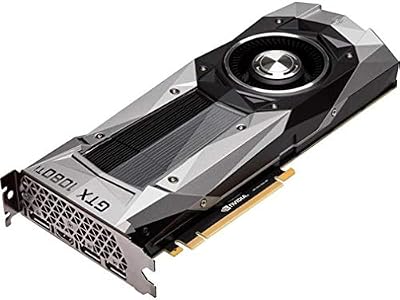
- Best Value: Nvidia GeForce GTX 1070 Founders Edition (Renewed)
- Premium Choice: EVGA GeForce GTX 1070 SC GAMING ACX 3.0 Black Edition, 8GB GDDR5, LED, DX12 OSD Support (PXOC) 08G-P4-5173-KR (Renewed)



Prime
Top Rated
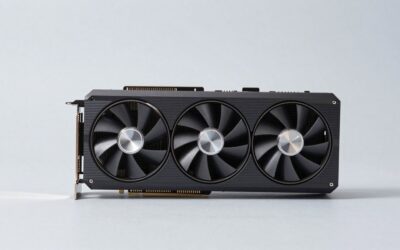
Gigabyte GeForce RTX 4060 AERO OC 8G Graphics Card, 3X WINDFORCE Fans, 8GB 128-bit GDDR6, GV-N4060AERO OC-8GD Video Card

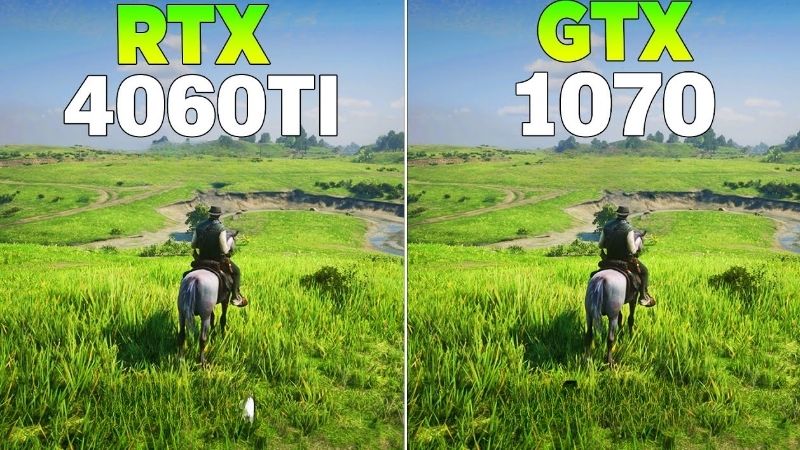
GTX 1070 vs RTX 4060 is the comparison a very large number of people are quietly running right now, because the GTX 1070 was one of the best-selling cards Nvidia ever made and its owners have been holding on for seven years. The spec sheets make it look close — the 1070 even wins the bus width comparison outright. It is not close, and the reason is a piece of architecture nobody puts on a box. There is also a deadline attached to this decision that most 1070 owners have not heard about.
The Quick Verdict
The RTX 4060 wins comfortably — roughly 20–30% in rasterization, and the gap becomes a chasm the moment DLSS enters. It also draws 35W less. But the decisive factor is not performance: the GTX 1070 is Pascal, and Nvidia ended Game Ready driver support for Pascal in October 2025.
As an Amazon Associate we earn from qualifying purchases at no extra cost to you.




What the Deadline Actually Means
Your 1070 now receives quarterly security updates only, running through October 2028. No new game profiles, no driver-level optimisation for new titles, no new features. The card works. It has stopped improving, permanently.
The Spec That Misleads Everyone
The GTX 1070 has a 256-bit bus. The RTX 4060 has 128-bit — half as wide. On paper the 2016 card wins the memory subsystem. It does not, and understanding why is the whole of this comparison.
Comparison Table
Seven years and three architectures separate these cards. The table shows how strange the result is.
| Spec | GTX 1070 (2016) | RTX 4060 (2023) | Note |
|---|---|---|---|
| Architecture | Pascal (GP104) | Ada Lovelace (AD107) | Three generations |
| CUDA cores | 1,920 | 3,072 | 4060, +60% |
| RT cores | None | Yes (3rd gen) | 4060 only |
| Tensor cores | None | Yes (4th gen) | 4060 only |
| L2 cache | 2MB | 24MB | 4060, 12x |
| VRAM | 8GB GDDR5 | 8GB GDDR6 | Same capacity |
| Bus width | 256-bit | 128-bit | 1070, 2x wider |
| Bandwidth | 256 GB/s | 272 GB/s | 4060, barely |
| TDP | 150W | 115W | 4060, −35W |
| Upscaling | FSR / XeSS only | DLSS 4.5 | 4060 |
| Frame generation | No | Yes (FG, not MFG) | 4060 |
| Driver status 2026 | Legacy | Full support | 4060 |
| Launch MSRP | $379 | $299 | 4060 |
The L2 Cache Row Explains Everything
Look at the cache line. The GTX 1070 has 2MB of L2. The RTX 4060 has 24MB — twelve times as much.
This is Ada’s central architectural bet, and it is why a 128-bit bus works at all. A large L2 means most memory requests never reach the VRAM — they are served from cache at a fraction of the latency and none of the bandwidth cost. Nvidia narrowed the bus and compensated with cache, which is cheaper to manufacture and, at 1080p, works.
So the 1070’s wider bus and near-equal bandwidth are real numbers that describe a problem the 4060 mostly does not have. Bandwidth matters when you have to go to memory. Ada goes less often.
The caveat is honest: this bet gets weaker as resolution climbs. At 4K the working set outgrows even 24MB and the narrow bus starts to show. The RTX 4060 is a 1080p card partly for this reason. But against a 1070, you are not comparing 4K performance — neither card does that.
Deep Dive Face-Off
Four criteria, from where it is closest to where it stops being a comparison.
Rasterization: A Real 20–30%
In pure rasterization the RTX 4060 leads by roughly 20–30% depending on the title. That is 60% more cores plus three architectural generations, moderated by memory that barely improved.
Honest framing: this is not a spectacular generational leap. The RTX 4060 was criticised at launch for exactly that — a 128-bit bus and 8GB on a card replacing a 192-bit predecessor. Seven years of progress delivering 20–30% is a poor showing for the industry.
It is still a meaningful gain, and it is not where this comparison is decided.
Features: Where It Stops Being Close
The GTX 1070 has no RT cores and no Tensor cores. That means no DLSS in any form, no ray tracing, no frame generation — permanently, because these are hardware requirements rather than driver features.
The RTX 4060 runs DLSS 4.5, which Nvidia says draws 23 of every 24 pixels on screen, plus Frame Generation. It does not get Multi Frame Generation, which is RTX 50 only, and DLSS 5 — arriving this autumn with real-time neural rendering — is expected to require RTX 50 silicon.
In titles supporting DLSS, the effective difference is not 20–30%. It is multiples. Modern games are increasingly designed assuming upscaling is available, with performance targets set on that basis, and the 1070 is running at native resolution in a world tuned for reconstruction.
The 1070 does get something. Intel’s XeSS in DP4a mode runs on Pascal in titles that support it, and FSR 1, 2, and 3 are hardware-agnostic. Neither matches DLSS, and when AMD brought FSR 4.1 to older cards in May 2026 it reached RX 6000 and 7000 — nothing in that wave reaches a 2016 Nvidia card.
Drivers: The Deadline You Have Not Heard About
This is the criterion that should settle it, and it is invisible on every spec sheet.
Nvidia ended Game Ready driver support for Maxwell, Pascal, and Volta after a final release in October 2025. Those cards moved to quarterly security updates through October 2028. The 580/581 family was the last full-feature branch for them.
On Linux it went further — the 590 driver arrived in December 2025 and community testing found a number of Pascal cards no longer enumerating correctly with it. Distributions have adapted with legacy driver paths, but the direction is clear.
The RTX 4060 is Ada, on the supported branch, receiving day-zero profiles. That gap compounds every year and does not reverse.
Power and Practical Fit
The friendliest part of this comparison. The RTX 4060 draws 115W against the 1070’s 150W, and it is a compact card. If your seven-year-old PSU ran a 1070, it will run a 4060 with more headroom than before.
That matters because on a machine of this vintage, the power supply is as old as the card and capacitors age. An upgrade that reduces power demand rather than raising it is the rare one where the PSU is not a hidden second purchase.
The 1070 is also physically longer than most RTX 4060 models, so case clearance is not a concern in this direction. That is unusual and worth knowing if your build is tight.
The Alternative
The RTX 4060 is the obvious comparison, and in 2026 it may not be the right buy.
The RTX 5060: The Better Version of This Upgrade
At $299 MSRP with 3,840 Blackwell CUDA cores, 8GB of GDDR7 at 448 GB/s and 145W, the RTX 5060 beats the 4060 on every axis: 25% more cores, 67% more bandwidth, and Multi Frame Generation, which the 4060 does not have.
It has also held nearest to list of anything in the current lineup, trading around $339 as of July 2026 — frequently at or below what a new RTX 4060 costs, since the older card is now in short supply rather than on clearance.
For a 1070 owner, this is the upgrade rather than the 4060. Same power envelope, same physical class, more of everything, and a longer runway including DLSS 5 this autumn.
The RTX 5060 Ti 16GB: If 8GB Worries You
Both cards in this comparison have 8GB, and it is the specification aging worst. At $429 MSRP the 5060 Ti 16GB doubles it.
Two caveats. It runs a 128-bit bus at 448 GB/s, so it is a 1080p gaming card with lots of VRAM rather than a 1440p one. And board partners reported it end of life at CES 2026 while Nvidia disputed the claim — availability is the constraint, not price.
The Used Market for This Tier
Worth naming because it is where many 1070 owners look first. A used RTX 3060 Ti or 3070 sits in similar money to a new RTX 5060, offers comparable rasterization, and comes with no warranty and 8GB.
The argument against is the runway. Ampere is still on the supported branch, but it has no Frame Generation and no Multi Frame Generation, and DLSS 5 this autumn is expected to need RTX 50. You would be buying a five-year-old card to escape a nine-year-old one, and repeating the decision in three years.
Keeping the 1070
Legitimate if you play esports or older titles. A 1070 still delivers fine frame rates in CS2, Valorant, and anything from before roughly 2020, and no driver change alters that.
The counter is the trajectory. You are on a legacy branch permanently, locked out of the entire modern feature stack, and the gap widens with every release rather than holding steady.
What the 2026 Market Means for the Timing
The driver cutoff is the signal. The market decides whether acting on it now makes sense.
Waiting Has Stopped Being Free
Component pricing has continued trending upward, memory foremost. The positive news is real but weak: the steep late-2025 climb has flattened, and Framework has reported a stretch of relative stability while still warning that volatility remains. New supply is opening — OEMs can source DDR5 from Chinese suppliers such as CXMT, and Micron is building two Idaho fabs — but neither produces until 2027–2028.
It has also become more selective. At CES 2026, board partners reported the RTX 5070 Ti and RTX 5060 Ti 16GB as end of life while Nvidia disputed it, and Nvidia’s allocation has visibly shifted toward 8GB parts. For a 1070 owner shopping the entry tier, that is actually the good news — the tiers still in normal supply are the ones you were looking at.
What This Means Practically
Prices stopped rising sharply and have not fallen. The supply that would push them down is three years out. The cards on shelves now are approximately the cards on shelves in 2028, at approximately these prices.
Meanwhile your card is on a driver branch that stopped receiving optimisation nine months ago, and every new title ships tuned for hardware you do not have.
If your 1% lows have fallen below comfortable in the games you actually play, the arithmetic is unsentimental: there is no correction coming and no driver is going to help. It is worth comparing what the RTX 5060 and 5060 Ti actually cost today — they are the two tiers nearest list price and the two Nvidia is clearly still making.
See More:
- Nvidia beta
- Nvidia CUDA 11.8
- Check CUDA version
- Nvidia GPU for gaming
- PNY GeForce RTX 5080 16GB OC review
Final Verdict and Recommendation
The GTX 1070 vs RTX 4060 verdict inverts the spec sheet twice over. The 1070 has a bus twice as wide and nearly equal bandwidth, and loses by 20–30% anyway — because Ada’s 24MB of L2 cache against Pascal’s 2MB means the 4060 goes to memory far less often. Bandwidth matters when you have to use it.
But the performance gap is not what decides this. The GTX 1070 is Pascal, and Nvidia ended Game Ready support for Pascal in October 2025 — quarterly security patches through 2028 and nothing more. No DLSS, no ray tracing, no frame generation, no new optimisation, permanently.
Do not buy an RTX 4060. Buy an RTX 5060 instead: 25% more cores, 67% more bandwidth, Multi Frame Generation, and it has held nearer to list than the older card. Keep the 1070 if you play esports and your frame rates are fine — that is a real answer and nobody should spend $339 for frames they cannot perceive. But if modern titles are stuttering, no driver is coming to help, the feature gap widens every year, and the market has stopped rewarding patience.
Frequently Asked Questions
Is the RTX 4060 really an upgrade if raw specs look similar?
Yes, though the margin is smaller than the generational gap suggests. In pure rasterisation the 4060 is roughly twenty to thirty percent ahead of the GTX 1070 at 1080p. The real upgrade is the feature set: DLSS super resolution, frame generation, and functional ray tracing hardware, none of which Pascal can access at any settings.
What about VRAM, since the 1070 has 8GB too?
Both carry 8GB, so the buffer size is a wash. The 1070 uses GDDR5 on a 256-bit bus for around 256GB per second, while the 4060 uses GDDR6 on a 128-bit bus with a large L2 cache. In practice the 4060 keeps up in bandwidth limited scenes, but neither card has spare capacity for 1440p ultra textures.
Does driver support make the decision for me?
It is a strong factor. Pascal has been moved to a legacy driver branch that receives security updates but no new game optimisations or features. The 4060 is Ada and will keep receiving current Game Ready releases for years. If you plan to keep the card a long time, that difference compounds.
Will the 4060 fit my existing power supply?
Almost certainly. The 1070 draws around 150W and the 4060 only about 115W, so you are moving to a lower power card. A single 8-pin PCIe connector is all it needs and a decent 450W unit is comfortable. This is one of the easiest upgrades to drop into an ageing prebuilt.
Should I consider a used higher tier card instead?
A used RTX 3060 Ti or 3070 offers similar or better rasterisation for the money but lacks frame generation and burns significantly more power. If you value DLSS frame generation, low power draw, and a warranty, the 4060 is the sensible pick. If you only care about raw frames per pound, used Ampere is competitive.
Ready to decide? Our #1 pick for 2026 is the Architecture.
Live price & availability on Amazon.




Write Your Review
No reviews yet. Be the first to share your experience!