
Best thermal paste for GPU searches usually start with one frustration: your card is hotter than it should be, and you suspect the dried, cracked stock compound is the reason. Replacing it is the cheapest meaningful cooling upgrade you can make, often worth a 5–10°C drop on the core. But not every paste is suited to a high-power graphics die, where heat density and long-term pump-out resistance matter far more than they do on a CPU. Below you will find quick picks for busy readers, a side-by-side spec comparison, honest reviews built from real owner feedback, and a buying guide so you choose the right compound the first time and keep your card cool for years.
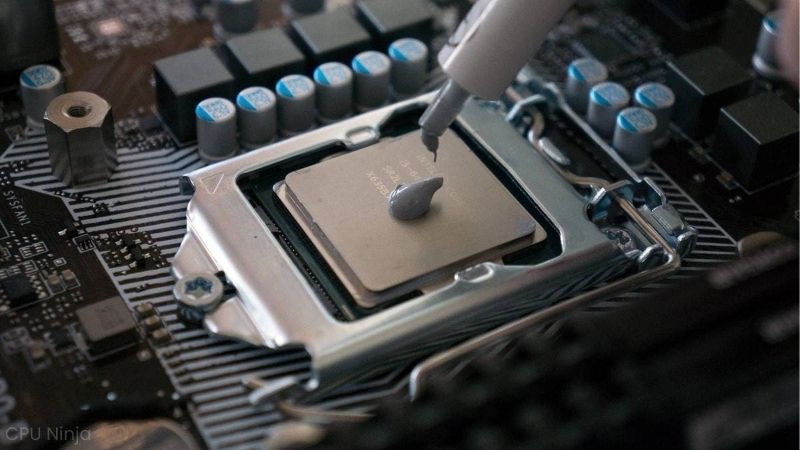
Quick Picks and Comparison for the Best Thermal Paste for GPU
If you only have a minute, the table and quick picks below give you a decision without scrolling through every review. We selected these compounds based on measured thermal conductivity where published, real-world results on high-power Nvidia cards, pump-out resistance over time, and how easy they are to apply without making a mess on nearby components.
As an Amazon Associate we earn from qualifying purchases at no extra cost to you.


Quick Picks at a Glance
Best Overall: Thermal Grizzly Kryonaut — a high-conductivity standard that performs reliably on hot GPU dies. Best Value: Arctic MX-6 — excellent results for the price and beginner-friendly to apply. Best Premium / Long-Life: Noctua NT-H2 — outstanding longevity and consistency for users who do not want to reapply soon.
Each of these is non-conductive or low-risk for accidental shorts, which matters on a crowded GPU PCB. If you are unsure, the value pick covers the vast majority of users without overspending.
Comparison Table of Top GPU Thermal Pastes
The table below puts the core specs side by side. Conductivity is listed only where the manufacturer publishes a verifiable figure; some brands have stopped quoting W/mK because the number is easy to misread out of context, so we judge those on results instead.
| Product | Type | Conductivity | Approx. Price | Best For |
|---|---|---|---|---|
| Thermal Grizzly Kryonaut | Non-conductive ceramic | ~12.5 W/mK (published) | $10–13 | Best overall performance |
| Arctic MX-6 | Non-conductive | Not officially quoted | $8–10 | Best value, easy apply |
| Noctua NT-H2 | Non-conductive | Not officially quoted | $13–15 | Longevity / set-and-forget |
Prices are approximate and shift with stock and region. Treat them as a guide, not a quote, and check the current listing before you buy.
How We Chose the Best GPU Thermal Paste
A great GPU paste has to handle higher sustained heat than a typical CPU job, so we weighted pump-out resistance and consistency heavily. A compound that tests well on day one but dries out in six months is a poor choice for a card you do not want to open often.
We also prioritized non-conductive formulas. Liquid-metal compounds can outperform on paper, but the short-circuit risk around dense GPU components makes them a bad fit for most owners. Application difficulty rounded out the criteria, since a paste you can spread cleanly is one you will use correctly.
Finally, we cross-checked each pick against the pattern of owner reviews rather than a single benchmark. A compound can win one lab test and still disappoint over months of real use, so consistency across many users carried more weight than a headline number. That approach is what separates a paste that is genuinely reliable on a hot card from one that simply looks good in a chart.
Detailed Reviews of the Top GPU Thermal Pastes
Here we go deeper on each pick, blending published specs with the pattern of real owner feedback across high and low ratings. The goal is to tell you not just that a paste is good, but who it is good for and where it falls short, so your expectations match reality before the tube arrives.
A quick note on reading reviews: the loudest complaints often come from application errors rather than the compound itself, so we filtered for issues that show up repeatedly across many users. A single one-star review about a dried tube means little; a recurring theme about pump-out after months of heat is the signal that actually shapes our ranking.
Best Overall: Thermal Grizzly Kryonaut
Kryonaut is the reference point most people compare against. Its published 12.5 W/mK conductivity translates into consistently strong core temperature drops on hot Nvidia cards, and four- and five-star reviews repeatedly cite stable temperatures under long gaming sessions and reliable results after a careful reapplication.
The honest negatives from lower-star reviews are worth knowing. Some users report it can dry out faster under very high sustained heat than premium long-life pastes, and the small standard tube does not stretch far if you have multiple components to do. A few note the consistency is slightly stiff to spread in a cold room.
Pros: top-tier conductivity, proven on high-power GPUs, non-conductive. Cons: pump-out under extreme heat over time, small tube, firmer to apply when cold.
Best Value: Arctic MX-6
MX-6 is the pick that wins on price-to-performance. Owner reviews consistently praise how forgiving it is to apply, its low cost, and temperature results that land within a degree or two of premium compounds in normal use. For a first-time paste swap, it removes most of the chance of error.
On the critical side, Arctic does not publish a headline W/mK figure, which frustrates spec-focused buyers, and a minority of reviews mention the larger value tubes can be inconsistent if not stored well. Curing also takes a few heat cycles before temperatures fully settle, which surprises some users expecting day-one numbers.
Pros: excellent value, beginner-friendly, non-conductive. Cons: no published conductivity, short curing period, occasional storage sensitivity.
Best Premium / Long-Life: Noctua NT-H2
NT-H2 is the choice for people who hate reapplying. Its reputation rests on longevity and consistency rather than a chart-topping conductivity number, and long-term reviews repeatedly highlight stable temperatures many months after application, which is exactly what you want on a card you would rather not open again.
The trade-offs are mild. It costs a little more than the value option, and absolute peak performance can sit just behind the very best conductivity-focused pastes in a single benchmark run. For everyday use that gap is negligible, and the durability advantage usually outweighs it.
Pros: excellent longevity, very consistent, safe and easy to use. Cons: higher price than value picks, not the outright conductivity leader.
Buying Guide, Pricing in 2026, and FAQs
Choosing paste is less about chasing the highest number and more about matching the compound to your card and habits. This section explains the criteria that actually move temperatures, places that advice in the current pricing climate, and answers the questions readers ask most before buying.
What Makes a Great GPU Thermal Paste
Prioritize three things: thermal conductivity, pump-out resistance, and safety. On a high-power Nvidia card, where the die runs hot and boost behavior pushes temperatures aggressively, a stable compound that resists drying out protects your performance over the whole ownership period, not just the first week.
Application also matters more than buyers expect. A paste you can spread evenly with no air gaps will beat a theoretically superior compound applied badly. For dense GPU PCBs, stick with non-conductive formulas and avoid liquid metal unless you are experienced and accept the risk.
Tube size is the quiet factor people forget. A GPU die plus a CPU refresh and a couple of laptops can drain a small tube quickly, so if you maintain several machines, the larger value tubes are cheaper per gram and save you reordering. For a single one-off job, the smallest tube is usually enough and avoids waste from a compound that may dry out before you use it again.
Thermal Paste Prices and Supply in 2026
Pricing context is useful before you buy. Through late 2025 and into 2026, PC component and accessory prices trended upward, and small items like thermal compound were not immune to that pressure. The practical implication is that waiting often costs you a little more rather than saving you money.
There is a more positive signal, though it is modest and not immediate. The steep increases at the end of 2025 have eased, and manufacturers such as Framework noted a period of relative stability while still cautioning that the market remains volatile. In short, prices stopped climbing sharply but have not actually fallen.
Looking further out, new memory and component supply is coming online, including DDR5 from Chinese suppliers like CXMT and two Micron plants being built in Idaho, but those facilities are not expected to run until 2027–2028. Real relief is years away, so for a low-cost item you need now, buying today is the sensible call rather than waiting for a discount the market is not promising.
Frequently Asked Questions
How often should I replace GPU thermal paste? For most cards, every three to five years, or sooner if temperatures climb noticeably. Is a pea-sized dot enough? Yes, a small dot or thin even spread is correct; too much paste oozes onto components and can reduce contact.
Can I use CPU paste on a GPU? A quality non-conductive CPU paste works fine on a GPU die. Just avoid liquid metal near dense components unless you are experienced and accept the short-circuit risk.
Will better paste lower my memory junction temperature? Paste mainly cools the core; memory junction temperature is driven more by the thermal pads. If your memory runs hot, pair a paste refresh with fresh pads for the biggest drop. Does paste need time to cure? Some compounds settle over a few heat cycles, so give temperatures a day or two of normal use before judging the final result.
If your card is running hot, the fastest, cheapest fix is fresh, high-quality compound. Choose the overall pick for maximum performance, the value pick to save money, or the premium pick if you never want to reapply.
See More:
- How to lower GPU temperature
- How to lower GPU hotspot temp
- How to increase GPU performance
- How to enable G-Sync
Conclusion
The best thermal paste for GPU cooling is the one that matches your card and your patience: top-tier conductivity for enthusiasts, unbeatable value for first-timers, or long-life consistency for set-and-forget owners. All three of our picks are non-conductive, proven on hot Nvidia dies, and easy enough to apply correctly. With prices flat rather than falling and real supply relief not arriving until 2027–2028, a small, needed tube is a smart purchase right now. Pick the compound that fits your needs through the links above and enjoy cooler, quieter, more stable performance.
Top-Rated Picks


Save $1.00

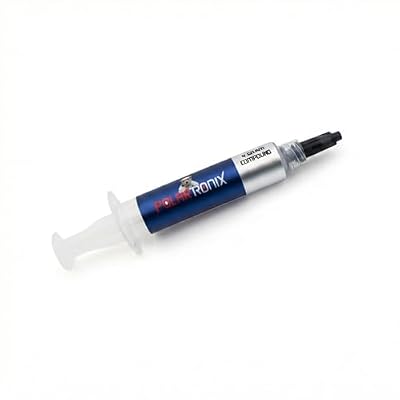

| Product | Brand | Rating | Reviews | Price |
|---|---|---|---|---|
| ARCTIC MX-4 (4 g) – Premium Performance Thermal Paste… | ARCTIC | ★ 4.8 | 104k | $4.99 |
| ARCTIC MX-4 (incl. Spatula, 4 g) – Premium Performanc… | ARCTIC | ★ 4.8 | 71.9k | $5.49 |
| Crucial 8GB DDR4 RAM 3200MHz (PC4-25600), Downclockab… | Crucial | ★ 4.8 | 62.8k | $74.99 |
| AMD Ryzen 5 5600X 6-core, 12-thread unlocked desktop … | — | ★ 4.8 | 30.2k | $177.60 |
| NVIDIA Shield Remote; Voice Search, Motion-Activated,… | — | ★ 4.7 | 10.6k | $25.99 |







Write Your Review
No reviews yet. Be the first to share your experience!