
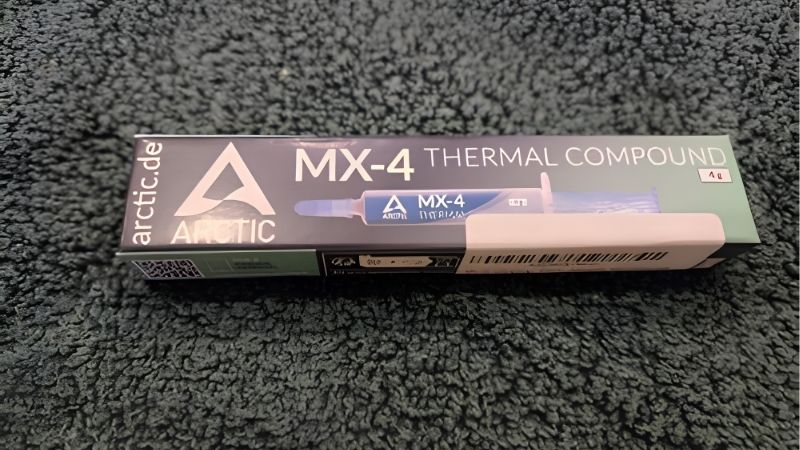
- Top Pick: ARCTIC MX-4 (4 g) – Premium Performance Thermal Paste for All Processors
- Best Value: ARCTIC MX-7 (4 g) – Ultimate Performance Thermal Paste, Long Durability
- Premium Choice: ARCTIC MX-6 (8 g) – Ultimate Performance Thermal Paste for CPU, Consoles, Graphics Cards, laptops, Very high Thermal Conductivity, Long Durability, Non-Conductive
Best thermal paste for 9800X3D choices matter more than on a typical eight-core chip, because this processor concentrates a 120W thermal load beneath a heat spreader while carrying stacked cache. Compound longevity and consistent contact matter far more here than any headline conductivity figure.
As an Amazon Associate we earn from qualifying purchases at no extra cost to you. Product prices and availability are accurate as of the date shown and are subject to change.


As an Amazon Associate we earn from qualifying purchases at no extra cost to you. Product prices and availability are accurate as of the date shown and are subject to change.
By Ryan Cole, PC hardware writer at NVIDIA Review.
How to Choose the Best Thermal Paste for 9800X3D
The 9800X3D runs eight cores and sixteen threads to 5.2 GHz within a 120W TDP, with 3D V-Cache beneath the compute die rather than above it. Four points shape the best thermal paste for 9800X3D cooling as a result.
The Cache Layout Improved Thermals, Not Eliminated Them
Moving the stacked cache below the cores means heat travels a shorter path to the heat spreader than on the previous generation. That is why this chip tolerates higher sustained loads than the 7800X3D did in the same cooler.
It still concentrates heat into a small area though. The die sits off-centre under the AM5 heat spreader, so full coverage of the contact surface matters more than it would on a processor with an evenly distributed load.
Cooler contact quality compounds that. A slightly uneven cold plate shows up faster on a chip with concentrated output, which is why remounting sometimes drops temperatures more than switching to a better compound would.
Longevity Beats Peak Conductivity Here
Repeated heating and cooling cycles push paste outward from the centre of the contact patch, a process known as pump-out. On a chip that runs warm under gaming loads, a compound resistant to that effect holds temperatures steadier over years.
Published conductivity numbers are not comparable between brands and rarely separate quality pastes by more than a couple of degrees. A paste that stays stable for three years beats one that runs marginally cooler for six months.
Viscosity Affects How Well You Apply It
Thicker compounds stay put during cooler mounting but need firmer pressure to spread properly. Thinner pastes spread easily but can migrate over time, particularly in a vertically mounted board where gravity works against them.
For a first application, a mid-viscosity paste is the forgiving choice. Warming the syringe in your hands for a minute makes stiffer compounds noticeably easier to dispense evenly across the heat spreader.
Cooler mounting pressure interacts with this. AM5 brackets tighten in a cross pattern, and going round evenly in stages spreads the compound far more consistently than fully tightening one screw before starting the next.
Skip Liquid Metal on a Standard Heat Spreader
Liquid metal delivers genuinely lower temperatures on bare dies, but the 9800X3D ships with a soldered heat spreader that already conducts well. The remaining gain is small relative to the risk involved.
That risk is real: liquid metal is electrically conductive, reacts with aluminium cooler bases and can damage components if it migrates. On a chip this valuable, a quality non-conductive paste is the sensible decision.
Warranty is worth considering as well. Any application involving delidding or liquid metal contact is likely to complicate a support claim, which is a poor trade for a few degrees on a processor you intend to keep for years.
Top Picks: Best Thermal Paste for 9800X3D Builds
The best thermal paste for 9800X3D depends on how often you plan to reapply it and how confident you are with application, so these six span forgiving pastes to a phase change pad. Figures are manufacturer claims where published.
| Compound | Type | Viscosity | Electrically Conductive | Best For |
|---|---|---|---|---|
| Arctic MX-6 | Non-curing paste | Thick | No | General use |
| Noctua NT-H2 | Non-curing paste | Medium | No | Fit and forget |
| Honeywell PTM7950 | Phase change pad | Pad | No | Pump-out resistance |
| Thermal Grizzly Kryonaut | Non-curing paste | Medium | No | Lowest peak temps |
| Arctic MX-4 | Non-curing paste | Medium | No | Value and bulk |
| Corsair XTM50 | Non-curing paste | Medium | No | First-time builders |
Arctic MX-6
MX-6 is the default recommendation for this processor. It is non-conductive, non-curing and dense enough to resist migration under repeated thermal cycling, which is exactly the property that matters on a chip running warm for hours.
Sizes up to 8g make it cheap per application. The drawback is viscosity, since it is stiffer than most alternatives and needs firm, even mounting pressure to spread fully across the AM5 heat spreader on a first attempt.
Noctua NT-H2
If the cooler is going on once and staying there, NT-H2 is the compound to choose. It is non-conductive, non-curing and rated for long service life, with a consistency that spreads predictably without demanding technique.
Noctua publishes no conductivity figure, arguing the metric is not comparable between manufacturers, which is a defensible position. The trade-off is price per gram, which sits above Arctic’s range for equivalent real-world results.
Honeywell PTM7950
PTM7950 is a phase change pad rather than a paste. It liquefies at operating temperature then stabilises, giving it strong resistance to the pump-out effect that degrades conventional compounds on chips with concentrated heat output.
For a processor you intend to keep for several years, that stability is the strongest argument here. The drawbacks are handling, since the pad must be cut and applied to a spotless surface, and a marketplace where counterfeit listings are common.
Thermal Grizzly Kryonaut
Kryonaut publishes a conductivity figure of 12.5 W/mK and spreads easily, which makes it popular for chips under sustained load. On the 9800X3D it typically sits at or near the front of conventional pastes in peak temperature.
It is the pick if you reapply regularly and want the lowest numbers today. The honest limitation is drying, since it degrades faster than competitors under prolonged heat, which works against a processor that runs warm during long sessions.
Arctic MX-4
MX-4 remains the value option and handles this chip perfectly adequately. It is non-conductive, forgiving of imperfect application and available in a 20g syringe that reduces the cost per use to almost nothing.
For anyone maintaining several machines it is the pragmatic choice. It runs marginally warmer than newer compounds under heavy load, though the difference is small enough to be invisible in normal gaming behaviour.
Corsair XTM50
XTM50 is the beginner-friendly option, supplied with an applicator card and a consistency that spreads without fuss. It is non-conductive and performs respectably on a 120W processor with a competent cooler above it.
For a first AM5 build it removes some anxiety from the process. The limitations are the small 3g tube and a price per gram that compares poorly against a larger Arctic syringe ordered at the same time as the rest of the build.
Where Cooling Spending Sits in the 2026 Market
Two market conditions make cooling and paste upgrades unusually sensible right now compared with larger component purchases.
Cooling Is the Upgrade That Still Pays Off
With graphics card pricing elevated, improving cooling is one of the few changes that delivers a measurable result for a small outlay. Fresh paste and better case airflow lower temperatures and reduce how hard every fan has to work.
On a 9800X3D specifically, lower temperatures translate into more consistent boost behaviour during long sessions. That is a real gain rather than a cosmetic one, and it costs a fraction of any component replacement.
Paste and Coolers Are Still Real Discount Categories
Advice to wait for seasonal sales does not hold for memory, storage or prebuilt systems this year, since those are built from components purchased at elevated contract prices. Cooling hardware sits outside that problem entirely.
Paste, coolers, fans, cases and power supplies remain categories where genuine discounts still appear during sale events. If reapplication is not urgent, this is one of the few places where waiting for a sale still makes sense.
Small Tubes Have Become Poor Value
Cooling hardware absorbed broader cost pressure this year, with cooler pricing up in the region of 6 to 8 percent and promotional pricing policies withdrawn in February 2026. Small single-use tubes felt that most sharply.
Compare price per gram rather than headline price. An 8g syringe covers several applications and usually costs less per use than two small tubes, which matters if you expect to remount the cooler during the system’s life.
Frequently Asked Questions
These questions come up most often from people fitting a cooler to this particular processor.
Does the 9800X3D run hotter than other eight-core chips?
It concentrates heat more than a standard eight-core part, though the second-generation cache layout improved this over the 7800X3D. With a competent tower cooler or a 240 mm AIO, temperatures stay within a comfortable range.
Should I use a pea or a spread application?
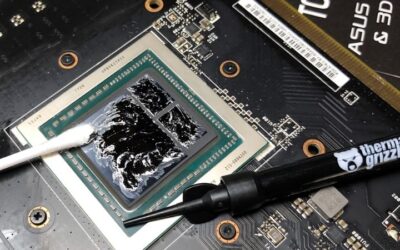
A pea-sized dot at the centre works well on AM5 because mounting pressure spreads it outward. A thin, even spread also works and gives more predictable coverage if you are using a thicker compound like MX-6.
Is the best thermal paste for 9800X3D worth more than the cooler choice?
No. Cooler capacity and case airflow determine temperatures far more than compound selection, which typically separates quality pastes by a couple of degrees. Fix cooling first, then choose paste for longevity rather than peak numbers.
How often should I reapply on this chip?
Every two to three years is reasonable for a non-curing compound, or sooner if temperatures creep upward with a clean cooler. A phase change pad like PTM7950 extends that interval considerably if you prefer not to revisit it.
See More:
- Best MSI motherboard
- Best motherboard processor combo for gaming
- Best B550 motherboard
- Best CPU for streaming
- What is the best AM4 CPU for gaming
Final Thoughts
The best thermal paste for 9800X3D is whichever compound stays stable longest on a chip that concentrates heat, not whichever claims the highest conductivity. MX-6 and NT-H2 cover most builds well, PTM7950 suits systems you want to leave alone for years, and liquid metal is unnecessary risk on a soldered heat spreader.



Write Your Review
No reviews yet. Be the first to share your experience!