
- Top Pick: Rosewill VMG 750W 80+ Gold, ATX 3.0 & 3.1 Compatible, Full Modular Low-Noise Power Supply, PCIe 5.1 12V-2×6 Connector, 100% Japanese Electrolytic Capacitor, 120mm FDB Silent Fan – 5 Year Warranty
- Best Value: Apevia ATX-PR850W PCIe 5.0 & ATX 3.0 Ready Prestige 850W 80+ Gold Certified, Gen 5 12VHPWR Connector, Active PFC ATX Gaming Power Supply
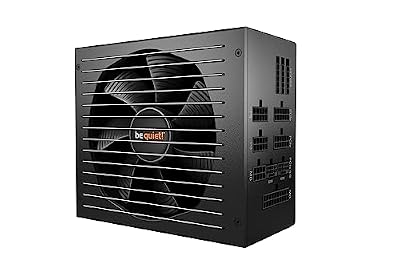
- Premium Choice: be quiet! Straight Power 12 1500W ATX 3.0 PCIe 5.0 80+ Platinum PSU
ATX 3.0 PSU for GPU setups have quickly become the sensible default for anyone running a modern, power-hungry graphics card, and for good reason. The ATX 3.0 standard was created specifically to handle the sharp power spikes and high wattage of today’s GPUs, and it ships with the native 16-pin cable those cards expect. Drawing on a synthesis of owner reviews and the engineering behind the standard, this review explains what an ATX 3.0 unit actually does for your graphics card, whether it is worth choosing, and how to pick the right one.
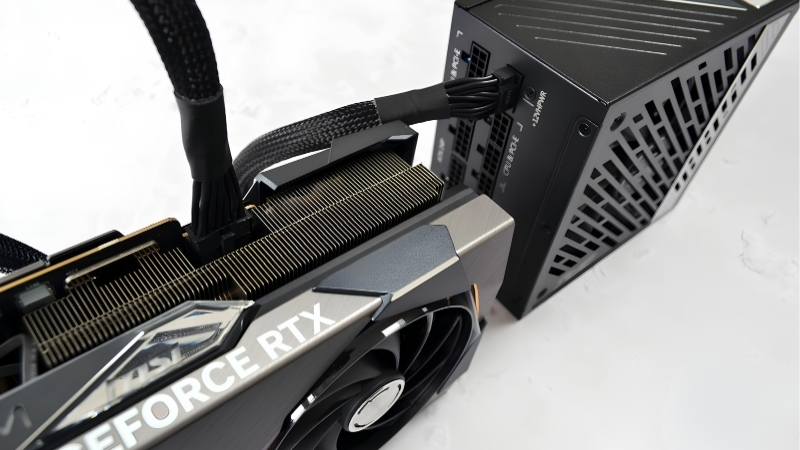
What an ATX 3.0 PSU Does for Your GPU
The quick verdict: an ATX 3.0 power supply is the right match for any recent high-end GPU because it is designed to absorb the brief power spikes those cards produce and includes a native 16-pin cable, removing the need for bulky adapters. It is not marketing fluff; the standard solves real problems that caused shutdowns on older units. The detail below explains exactly how.
As an Amazon Associate we earn from qualifying purchases at no extra cost to you.



Transient Spike Handling Explained
Modern graphics cards produce sharp transient spikes that last only milliseconds but can momentarily draw far more than their rated power. On an older power supply, these surges could trip the unit’s protection and shut the system down mid-game.
The ATX 3.0 standard requires units to tolerate power excursions well above their rated output, often up to double for short bursts. This is the single most important benefit for a GPU owner, because it eliminates the random shutdowns that plagued early high-end cards on older units.
In practice, this means a correctly sized ATX 3.0 unit simply rides out the spikes a modern card throws at it, keeping your system stable under load.
This is the difference owners notice most when upgrading. A system that randomly shut down during demanding games on an older unit typically becomes completely stable on a correctly sized ATX 3.0 supply, with no other changes.
For anyone who has lived with that frustration, it is a transformative upgrade. The card, the games, and the settings stay the same, yet the system finally behaves, which is exactly what the standard set out to achieve.
The Native 16-Pin Connector
ATX 3.0 units ship with a native 16-pin cable that plugs directly into modern cards, replacing the messy stack of 8-pin-to-16-pin adapters older units require. This is cleaner, tidier, and removes a common failure point.
A single native cable also routes more neatly inside the case and is less likely to cause the seating problems associated with adapters. For anyone running a card with a 16-pin input, this convenience alone is a strong reason to choose ATX 3.0.
The native cable also tends to be better matched to the unit’s internal voltage layout than a generic adapter, which contributes to cleaner, more reliable power delivery. It is a small detail that adds to the overall dependability.
ATX 3.0 vs Older Standards
Compared with the previous ATX 2.x standard, the headline differences are spike tolerance and the native connector. An older unit can still run a modern card if it is powerful enough and uses an adapter, but it offers no guarantee on the spikes.
This is why ATX 3.0 has become the default recommendation for new builds with high-end cards. It is not that older units cannot work, but that ATX 3.0 removes the uncertainty for very little extra cost.
For most buyers, that certainty is the deciding factor. Rather than calculating whether an older unit’s protection will tolerate a particular card’s spikes, an ATX 3.0 unit simply handles them by design, which is one less thing to worry about on an expensive build.
That simplicity is valuable in itself. Building a high-end system involves enough decisions without second-guessing whether the power supply can cope, and ATX 3.0 takes that particular question off the table.
Is an ATX 3.0 PSU Worth It? What Users Report
The engineering case is clear, but owner feedback is what confirms it in the real world, and the reviews of ATX 3.0 units are strongly positive among those running demanding cards. The pattern in the feedback lines up neatly with the standard’s design goals.
What 4-5 Star Owners Say
The majority of owners praise ATX 3.0 units for rock-solid stability with power-hungry cards. Buyers who had suffered shutdowns on an older unit frequently report that switching to ATX 3.0 cured the problem entirely.
The native cable also draws consistent praise for a cleaner build. Many reviewers specifically recommend ATX 3.0 as the safe choice for any recent flagship, citing both the stability and the tidier installation.
A recurring theme in these reviews is relief. Buyers who had spent hours troubleshooting shutdowns describe the switch to ATX 3.0 as the moment the problem simply disappeared, which is high praise for what is, at heart, a power supply standard.
What 2-3 Star Complaints Reveal
The smaller pool of critical reviews rarely concerns the standard itself. Instead, complaints tend to focus on cable stiffness, fan noise on specific models, or the usual reminders to seat the 16-pin connector fully.
That distinction is telling. When the main gripes are about a particular unit’s ergonomics rather than the ATX 3.0 capability, it suggests the standard is doing its job and the variation is down to individual models.
This is a useful reminder to read reviews of the specific unit, not just the standard. ATX 3.0 guarantees the spike handling and connector, but fan noise, cable quality, and build vary from model to model, so the unit you choose still matters.
Pros and Cons of ATX 3.0
Here is the balanced view drawn from the standard and owner feedback:
- Pros: excellent transient spike tolerance, a native 16-pin cable, guaranteed stability with modern cards, a cleaner build, and PCIe 5.0 readiness.
- Cons: it costs a little more than an equivalent older unit, and the newer ATX 3.1 revision now offers a slightly improved connector for similar money.
For a modern GPU, the pros are decisive; an ATX 3.0 unit removes the guesswork that older units leave on the table.
The small price premium is easily justified on a high-end build. Next to the cost of a modern flagship card, the difference between an older unit and an ATX 3.0 one is minor, while the stability it buys protects the whole system.
Choosing and Timing an ATX 3.0 PSU
If an ATX 3.0 unit is the right call, the remaining questions are what to look for and when to buy, since the hardware market has shifted recently. This section covers both, so you choose a quality unit and buy it at a sensible moment.
What to Look For
Aim for the right wattage for your card, an 80 Plus Gold rating or better, and a native 16-pin cable. A long warranty, often seven to ten years on quality units, signals the maker’s confidence in the product.
Fully modular cabling keeps the build clean and airflow clear, which matters with a hot card. The recommended ATX 3.0 units linked in this review are chosen for this balance of capacity, efficiency, and build quality.
Cable length is a small but real detail too. Make sure the native 16-pin cable reaches comfortably from the unit to the top of the card without strain, since a cable pulled tight can compromise the connection on this connector.
Buying in 2026: Timing Your Purchase
There is modestly good news on pricing in 2026. The steep increases seen at the end of 2025 have eased, and some hardware makers, including Framework, have noted a period of relative stability, even while warning that further fluctuation is still possible.
What this means in practice is that prices have stopped spiking rather than started falling. The market has reached a tentative plateau, not real relief, so the bargain some buyers are waiting for has not arrived and may not for a while.
Because prices have leveled off at a high point rather than dropping, there is little advantage in delaying a power supply you already need. A unit is also the most reusable part in your build, carried across multiple future cards, so buying a good one now spreads its cost over years.
Seen that way, an ATX 3.0 unit is one of the safer purchases to make now rather than later. It is unlikely to get meaningfully cheaper soon, and it will serve several graphics cards before you ever need to replace it.
ATX 3.0 vs 3.1 — Which to Buy
If you are choosing today, the newer ATX 3.1 revision is a small step up, refining the connector to the safer 12V-2×6 design for similar money. Where both are available, ATX 3.1 is the marginally better pick.
That said, a quality ATX 3.0 unit remains an excellent choice and will run any modern card cleanly. If you already own one or find a great deal on one, there is no need to feel you are missing out.
The two standards are close enough that either is a sound long-term buy. The connector aside, an ATX 3.0 unit delivers the same spike handling and stability, so the choice between them rarely needs to be agonised over.
In the end, an ATX 3.0 unit remains a thoroughly modern, capable choice. It powers the latest cards cleanly, and the arrival of ATX 3.1 does not diminish how well it does that job.
For the money, then, an ATX 3.0 unit is one of the most worthwhile upgrades a modern PC can have. It removes the single most common source of instability on high-end cards, leaves you with a cleaner build, and serves several graphics cards before it ever needs replacing, which is why many builders now treat it as the baseline.
An ATX 3.0 PSU is the dependable way to power a modern graphics card without shutdowns or adapter clutter. Whether you are building fresh or upgrading an older unit, take a look at the recommended ATX 3.0 power supplies linked throughout this review and pick the model that matches your card and case.
See More:
- How to clean a GPU heatsink
- GPU vertical mount thermals
- GPU thermal throttle temp
- What PSU for RTX 4090
- What PSU for RTX 5080
Conclusion
An ATX 3.0 PSU for GPU builds solves the two big problems modern cards create: it absorbs their transient spikes and includes the native 16-pin cable they expect. Owner feedback backs up the engineering, with stability and a cleaner build the recurring themes. With prices stable but still high, there is no reason to delay a unit you need, and the newer ATX 3.1 is only a minor step beyond it. Check the recommended ATX 3.0 power supplies above to give your graphics card a stable, modern foundation.
Top-Rated Picks

Save $25.00


Save $5.00

| Product | Brand | Rating | Reviews | Price |
|---|---|---|---|---|
| ARCTIC MX-4 (4 g) – Premium Performance Thermal Paste… | ARCTIC | ★ 4.8 | 104k | $4.99 |
| ARCTIC MX-4 (incl. Spatula, 4 g) – Premium Performanc… | ARCTIC | ★ 4.8 | 71.9k | $5.49 |
| Crucial 8GB DDR4 RAM 3200MHz (PC4-25600), Downclockab… | Crucial | ★ 4.8 | 62.8k | $74.99 |
| AMD Ryzen 5 5600X 6-core, 12-thread unlocked desktop … | — | ★ 4.8 | 30.2k | $177.60 |
| NVIDIA Shield Remote; Voice Search, Motion-Activated,… | — | ★ 4.7 | 10.6k | $25.99 |
Frequently Asked Questions
Why did ATX 3.0 matter for graphics cards?
Modern cards draw far more than their average rating for very short bursts as the boost algorithm reacts to load. ATX 3.0 required units to survive excursions up to 200 percent of rated output for 100 microseconds without tripping protection. That is why some older but otherwise good units shut down under Ada and Blackwell cards despite having adequate rated wattage.
Is an ATX 3.0 unit obsolete now that 3.1 exists?
Not at all. A good 3.0 unit remains fully capable and safe for current cards. The main difference is the connector revision, and many 3.0 units already shipped with cables that meet the newer 12V-2×6 terminal geometry. Check the manufacturer product page for your specific model rather than assuming based on the version number alone.
Can I use an ATX 3.0 unit with an older graphics card?
Yes, it is fully backward compatible. The 24-pin, EPS and PCIe 8-pin connectors are unchanged, so an older card installs exactly as it always did and the 16-pin cable simply stays in the box. Buying a 3.0 or 3.1 unit today is a reasonable way to future-proof a system you plan to upgrade later.
How much wattage headroom should I leave?
Add your card’s board power to your processor’s peak package power, then add roughly 100W for drives, fans, memory and motherboard. Choose the next standard size above that total. Running near fifty percent load keeps the unit in its efficient zone, keeps the fan slow, and leaves room for a future upgrade.
Does the ATX 3.0 badge guarantee quality?
No. The specification covers behaviour under transients and connector requirements, not build quality, capacitor grade or ripple performance. Two units can both claim compliance and behave very differently after three years of heat cycling. Look at the warranty length, the platform the unit is based on, and independent load testing before you buy.



Write Your Review
No reviews yet. Be the first to share your experience!