
amd anti-lag 2 is Radeon’s answer to the growing demand for lower input latency, and for competitive gamers it can matter more than a few extra frames per second. It reduces the delay between your mouse click and the on-screen result by intelligently pacing the work your CPU and GPU do, aiming to make aiming and reactions feel snappier. As a rebuilt, in-game version of AMD’s earlier latency tools, it also fixes a serious flaw that plagued its predecessor. This review covers how Anti-Lag 2 works, which games and GPUs support it, how it compares to Nvidia Reflex, and whether it justifies an AMD card in 2026.
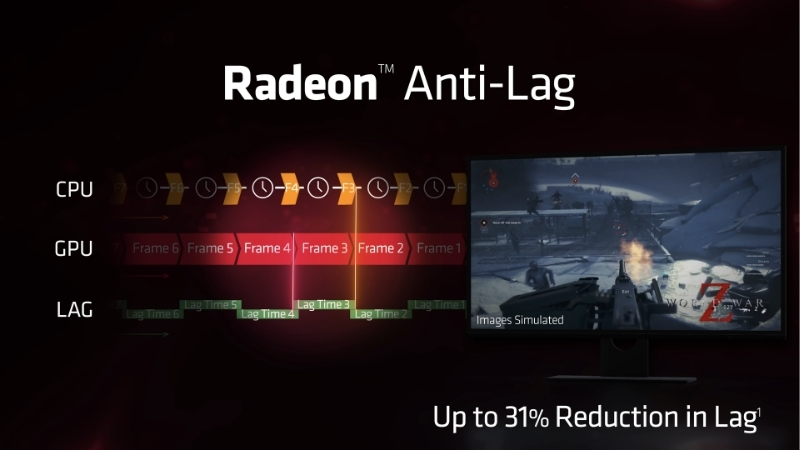
What AMD Anti-Lag 2 Is
Anti-Lag 2 is AMD’s latency-reduction technology, designed to shrink the input lag that builds up when your GPU falls behind your CPU. It is a key pillar of the Radeon software experience and part of the wider HYPR-RX feature set. Crucially, it is integrated directly into supported games rather than forced in at the driver level, a change that solves the biggest problem of the earlier approach. Understanding how it lowers latency, how it differs from Anti-Lag+, and where it is supported sets up a fair judgment of its worth.
As an Amazon Associate we earn from qualifying purchases at no extra cost to you.

![DisplayPort Cable 2FT,Display Port Cable 1.2, 4K@60Hz,2K@144Hz [1 Pack]](https://m.media-amazon.com/images/I/41xD9RzqYfL._SL160_.jpg)



How Anti-Lag 2 Reduces Input Latency
Input latency is the total time between your action and its appearance on screen, and much of it comes from frames queuing up when the GPU is the bottleneck. Anti-Lag 2 works by pacing CPU submission so frames are prepared closer to when the GPU is ready, cutting that queue and the delay it creates.
The effect is most pronounced when you are GPU-bound, which is common at higher settings or resolutions. In those scenarios the reduction in lag is measurable and, for sensitive players, noticeable in the responsiveness of aiming and movement.
Analytically, Anti-Lag 2 does not raise your frame rate; it makes the frames you already have feel more immediate, which is a different and complementary benefit to upscaling or frame generation.
This distinction is worth internalizing, because it shapes when the feature helps. Upscaling and frame generation change how many frames you see, while Anti-Lag 2 changes how quickly your input reaches the screen. The two solve different problems, and a well-tuned competitive setup often uses latency reduction while deliberately avoiding frame generation, since interpolated frames can work against the responsiveness a competitive player is chasing.
Anti-Lag 2 vs Anti-Lag+ and the Anti-Cheat Fix
The history here matters. AMD’s earlier Anti-Lag+ worked by modifying game code from the driver, which some anti-cheat systems flagged, leading to players being banned and the feature being pulled. It was a serious misstep.
Anti-Lag 2 fixes this by being integrated inside supported games through an official path, so it cooperates with anti-cheat rather than tripping it. This makes it safe to use in competitive titles, which is exactly where low latency matters most.
That redesign is the single most important improvement over the previous generation, transforming the feature from a risky driver hack into a legitimate, game-approved latency tool.
Supported GPUs and Games
Anti-Lag 2 runs on modern Radeon graphics cards and is enabled through the Adrenalin software, keeping it consistent with the rest of AMD’s feature suite. As with other Radeon technologies, having a supported GPU is the entry requirement.
The catch is that, because it is now integrated per game, its benefit is limited to titles that have added support. The list has grown to include major competitive games, but it is not universal the way a driver-level feature would be.
For a buyer, that means checking whether the specific competitive games you play support Anti-Lag 2 before counting on it, since coverage varies from title to title.
This per-game model is the direct consequence of the redesign that made Anti-Lag 2 safe with anti-cheat. The old driver-level approach could be applied broadly but caused the ban problems that ended it, whereas the new integrated method trades that breadth for safety and reliability. It is a sensible trade for competitive play, where being flagged by anti-cheat is a far worse outcome than a game lacking the feature.
The encouraging trend is that AMD has been steadily adding support for major esports and competitive titles, which are precisely the games where the feature matters most. So while coverage is not universal, it is concentrated where it counts, and the list continues to grow with each update.
Real-World Performance and User Impressions
Latency is partly measurable and partly felt, so a fair assessment combines the numbers with owner impressions. Blending the praise from enthusiastic 4-5 star users with the reservations in more critical 2-3 star reviews shows where Anti-Lag 2 delivers a genuine edge and where expectations need tempering. Here is the consistent pattern from both the data and the community.
Latency Gains in Competitive Games
In supported competitive titles, Anti-Lag 2 produces a real reduction in end-to-end latency when you are GPU-bound, and players describe the result as a crisper, more immediate connection between input and action.
The size of the improvement depends heavily on the scenario. When you are already CPU-bound or running at a very high frame rate, there is little queue to trim, so the gains shrink. The technology shines specifically when the GPU is the limiting factor.
For fast shooters and reaction-heavy games, even a modest latency cut can feel meaningful, which is why competitive players are the core audience for this feature.
It is worth setting realistic expectations, though: Anti-Lag 2 refines an already-fast pipeline rather than working miracles, so the improvement is best described as a consistent edge rather than a dramatic transformation. For players operating at a high level, that edge can still matter, but casual gamers may find the difference subtle compared with the more visible impact of a higher frame rate.
What 4-5 Star Users Praise
Positive reviewers value the snappier feel in supported games and appreciate that the technology is free on hardware they already own. Many specifically praise that Anti-Lag 2 is safe with anti-cheat, unlike the troubled Anti-Lag+ it replaced.
They also like its place within HYPR-RX, where it combines with upscaling and other tools in a single, simple toggle, lowering the barrier to getting a well-tuned competitive setup.
Enthusiasts who play a lot of the supported titles report that once they get used to the reduced latency, going back to it turned off feels noticeably sluggish, which is a strong endorsement of the effect being real rather than placebo.
Common Complaints from 2-3 Star Reviews
The main criticism is limited game support. Because Anti-Lag 2 is integrated per title, players are frustrated when a favorite competitive game is not on the supported list, leaving them without the benefit.
The second theme is variable, sometimes small gains. In CPU-bound scenarios or at very high frame rates, the improvement can be minimal, and some users expected a bigger difference than they experienced.
There is also lingering confusion from the Anti-Lag+ saga, with a few reviewers unsure whether the new version is safe. In practice Anti-Lag 2’s integrated design resolves the anti-cheat problem, but the earlier episode left a reputational mark.
Value, Comparison, and Buying Advice
A latency feature is only worth chasing if it beats the alternatives and the hardware behind it is a smart buy, so this section compares Anti-Lag 2 with Nvidia’s rival tool, lays out the pros and cons, and sets the decision against 2026’s GPU pricing. Because the feature needs a Radeon card, the buying question is partly about timing your purchase well.
Anti-Lag 2 vs Nvidia Reflex
The natural comparison is Nvidia Reflex, which pursues the same goal of lower input latency through similar CPU-GPU pacing. Reflex has a longer track record and broader game adoption, which is currently its main advantage.
Anti-Lag 2 is AMD’s competitive equivalent, and where both are supported, they deliver comparable benefits to the player. The practical difference tends to come down to which technology your specific games support rather than a large gap in capability.
For a Radeon owner, Anti-Lag 2 removes much of the latency argument that once favored switching to GeForce for competitive play, narrowing a gap that used to be one-sided.
The remaining edge for Reflex is breadth of support, since it has been available longer and appears in more titles. That advantage is real but shrinking as AMD expands Anti-Lag 2 integration. For a buyer deciding between the two ecosystems purely on latency, the smarter question is not which technology is better in the abstract, but which one is supported in the specific competitive games you actually play.
Pros and Cons of Anti-Lag 2
Here is the balanced summary based on the evidence and owner feedback.
Pros: genuinely reduces input latency when GPU-bound, safe with anti-cheat thanks to in-game integration, free on supported Radeon cards, part of the simple HYPR-RX toggle, and competitive with Nvidia Reflex where both exist.
Cons: limited to games that have added support, gains shrink or disappear when you are CPU-bound or already at very high frame rates, and residual confusion from the older Anti-Lag+ controversy persists.
Is a Radeon GPU Worth It for Anti-Lag 2 in 2026?
Because Anti-Lag 2 requires a supported Radeon card, accessing it can mean buying AMD, and 2026’s pricing is part of the calculation. Following the sharp increases at the end of 2025, GPU prices have flattened into a steadier period, but flat is not the same as falling, and some volatility remains.
Additional memory capacity is on the way, with OEMs able to source DDR5 from suppliers like CXMT and Micron constructing two Idaho plants, yet none of that output arrives until 2027–2028, so real relief stays years off.
For a competitive gamer who wants Anti-Lag 2, that makes waiting a weak plan. If a supported Radeon card fits your budget, check its current price through the link on this page and buy while the market is stable.
See More:
Conclusion
The verdict on amd anti-lag 2 is that it is a legitimate, well-executed latency tool that fixes the anti-cheat problem of its predecessor and gives Radeon owners a real competitive benefit in supported games. Its impact is clearest when you are GPU-bound and playing fast, reaction-driven titles, and it holds its own against Nvidia Reflex where both are available. The main limitation is per-game support rather than any flaw in the technology. For competitive players on AMD hardware, it is a valuable free addition — and with prices only holding steady rather than dropping, there is little reason to wait. Use the link above to compare live pricing on a supported Radeon card and secure yours today.
Top-Rated Picks


| Product | Brand | Rating | Reviews | Price |
|---|---|---|---|---|
| ARCTIC MX-4 (4 g) – Premium Performance Thermal Paste… | ARCTIC | ★ 4.8 | 104k | $4.99 |
| ARCTIC MX-4 (incl. Spatula, 4 g) – Premium Performanc… | ARCTIC | ★ 4.8 | 71.9k | $5.49 |
| Crucial 8GB DDR4 RAM 3200MHz (PC4-25600), Downclockab… | Crucial | ★ 4.8 | 62.8k | $74.99 |
| AMD Ryzen 5 5600X 6-core, 12-thread unlocked desktop … | — | ★ 4.8 | 30.2k | $177.60 |
| NVIDIA Shield Remote; Voice Search, Motion-Activated,… | — | ★ 4.7 | 10.6k | $25.99 |
Frequently Asked Questions
How is Anti-Lag 2 different from the original Anti-Lag Plus?
Anti-Lag Plus injected code into game executables, which anti-cheat systems flagged and led to bans in Counter-Strike 2 before AMD pulled it. Anti-Lag 2 is integrated by developers through an SDK instead, so it operates legitimately inside the game and cannot be mistaken for tampering by anti-cheat software.
How much input latency does it actually remove?
By keeping the CPU from running too far ahead of the GPU, it typically removes one full frame or more of queued latency. In GPU-bound scenarios AMD has shown reductions in the region of 30 to 40 percent of total click-to-photon time, which is comparable to what Nvidia Reflex achieves.
Which games and GPUs support it?
Support requires per-game integration, so the list is much shorter than driver-level Anti-Lag. Titles include several competitive shooters and popular single player releases. On the hardware side it runs on RX 6000, RX 7000 and RX 9000 cards. Games without integration fall back to the original driver-level Anti-Lag.
Should I use it if my frame rate is already very high?
The benefit shrinks as you become CPU-bound, because there is no long GPU queue to trim. If you are running 300 frames per second in an esports title, the reduction will be small. It matters most in demanding games where the GPU is saturated and the render queue is deepest.
Can I combine it with frame generation?
Yes, and you generally should. Fluid Motion Frames and in-game FSR frame generation both add latency, so pairing them with Anti-Lag 2 offsets part of that cost and keeps the experience closer to native responsiveness. For pure competitive play, use Anti-Lag 2 on its own with frame generation disabled.



Write Your Review
No reviews yet. Be the first to share your experience!