
radeon super resolution is one of the most convenient performance features AMD offers, because it can boost frame rates in almost any fullscreen game, even those with no built-in upscaling at all. Known as RSR, it works at the driver level inside the Adrenalin software, rendering your game at a lower resolution and upscaling the result to your monitor’s native resolution for extra frames. That universality is powerful, but the underlying technology has clear quality limits. This review explains how RSR works, which Radeon GPUs support it, what real users experience, and whether it is a reason to choose AMD in 2026.
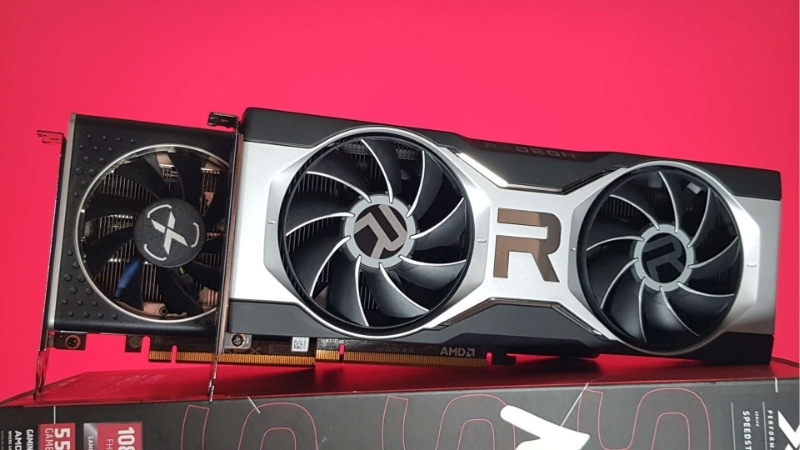
What Radeon Super Resolution Is
Radeon Super Resolution is a driver-level upscaling feature built on the original FSR spatial technology, applied globally through the Adrenalin software rather than integrated into each game. Its defining trait is reach: because it operates in the driver, it can upscale a vast number of fullscreen titles without any developer involvement. Understanding how that differs from in-game FSR, which cards support it, and what requirements it carries is the key to judging where RSR fits in your setup.
As an Amazon Associate we earn from qualifying purchases at no extra cost to you.




How RSR Upscales at the Driver Level
RSR renders the game at a lower internal resolution and then upscales the final image to your display’s native resolution using a spatial algorithm. Because it happens in the driver after the game has rendered, it needs no support from the game itself, which is its major selling point.
The downside of working this late in the pipeline is that RSR upscales the entire frame, including the heads-up display and text, since it cannot distinguish interface elements from the 3D scene. That is a fundamental limitation of the driver-level approach.
It is based on the first-generation FSR spatial method, so it lacks the temporal data that newer upscalers use, which caps its image quality relative to modern in-game solutions but keeps it simple and universally applicable.
This is the fundamental engineering trade AMD made with RSR: by keeping the technique simple and purely spatial, they made it possible to run in the driver on almost any game, at the cost of the sharper reconstruction that temporal methods achieve. It is a deliberate choice favoring reach over peak quality, and understanding that helps set the right expectations before you enable it.
RSR vs In-Game FSR
The most important distinction is between RSR and a game’s native FSR. In-game FSR, especially FSR 2 and later, uses temporal data and typically looks noticeably sharper, and it upscales only the 3D image while keeping the HUD crisp.
RSR is the universal fallback for the many titles that never added FSR at all. When a game offers native FSR, that is almost always the better choice; when it does not, RSR provides a boost the game would otherwise never deliver.
Seen this way, RSR is not a competitor to in-game FSR but a complement, extending upscaling to the long tail of games, including older ones, that developers never touched.
Supported GPUs and Requirements
Radeon Super Resolution is supported across a wide range of modern Radeon cards, from the RX 5000 series onward, and is enabled with a simple toggle in the Adrenalin software. That broad support means most recent AMD owners can use it immediately.
The key requirement to know is that RSR only works when the game runs in exclusive fullscreen mode at a resolution below your monitor’s native resolution. Borderless or windowed modes do not trigger it, which trips up some first-time users.
For a buyer, the practical entry point is simply owning a supported Radeon GPU, which links this free software feature directly to an AMD hardware purchase.
The exclusive-fullscreen requirement deserves emphasis because it is the single most common reason RSR appears not to work. Many modern games default to borderless windowed mode, which looks similar but does not let the driver intercept and upscale the image. Switching the game to true fullscreen and selecting a resolution below your monitor’s native setting is what actually activates RSR.
Once you understand that requirement, the feature is genuinely effortless to use, and it explains a large share of the confused early impressions from users who assumed it was broken when it simply had not been triggered correctly.
Real-World Performance and User Impressions
Numbers and lived experience both matter, so a fair review blends measured frame-rate gains with what owners report after using RSR day to day. Combining the enthusiastic 4-5 star feedback with the more critical 2-3 star reviews reveals where RSR earns its place and where its quality limits show. Here is the consistent pattern from both the data and the community.
FPS Gains and Image Quality
The performance benefit is real and often substantial, since rendering at a lower internal resolution frees up the GPU to push more frames. In demanding games, RSR can turn a borderline frame rate into a comfortably playable one.
Image quality is the trade-off. Because RSR uses a spatial-only method and upscales the whole frame, the result is softer than native and the HUD and text can look blurry, which is more noticeable the more aggressively you upscale.
The analytical sweet spot is a modest upscale, dropping only slightly below native resolution, which preserves much of the sharpness while still delivering a meaningful frame-rate gain. Aggressive upscaling maximizes frames but visibly softens the picture.
Your monitor’s resolution matters here too. On a high-resolution display such as 1440p or 4K, RSR has more pixels to work with, so a given upscale looks cleaner than the same setting would at 1080p. Higher-resolution gamers therefore tend to get a better quality-to-performance balance from RSR than those on a 1080p panel, where the softening is easier to notice.
What 4-5 Star Users Praise
Positive owners love the universality above all, praising RSR for adding a frame-rate boost to games that have no other upscaling option, including older titles they still play. That reach is its standout virtue.
They also appreciate the simplicity: a single global toggle in Adrenalin, free on hardware they already own, that requires no per-game setup. For casual users, that ease is a big part of the appeal.
Many note that used sensibly, with a light upscale, RSR strikes a good balance and lets an aging card keep up with newer, heavier games, extending the useful life of their hardware.
Common Complaints from 2-3 Star Reviews
The most frequent complaint targets image quality, specifically the blurry HUD and text that result from upscaling the entire frame. Players who read a lot of on-screen information find this particularly distracting.
The second common issue is the exclusive-fullscreen requirement, which surprises users whose games default to borderless windowed mode, leaving them wondering why RSR is not activating.
Some reviewers also point out that where native FSR exists, RSR is clearly the inferior option, so its value is really confined to unsupported games. These are fair criticisms that define the feature’s proper role rather than condemn it outright.
Value, Alternatives, and Buying Advice
A feature is only worth having if it beats the alternatives and the hardware behind it is a smart buy, so this section places RSR alongside AMD’s other tools, weighs the pros and cons, and sets the decision against 2026’s GPU market. Because RSR needs a Radeon card, the buying question is partly about timing your purchase in a shifting pricing landscape.
RSR Alongside AFMF and In-Game FSR
RSR does not exist in isolation within the Radeon toolkit. In-game FSR should be your first choice when a title supports it, AFMF adds driver-level frame generation on top, and RSR fills the gap for fullscreen games with no native upscaling.
Used together, these tools give Radeon owners a layered performance strategy: native FSR where available, AFMF for extra smoothness, and RSR as the universal upscaling fallback. That combination is a real ecosystem strength.
Knowing which tool to reach for in each situation is the key to getting the best result, and RSR’s specific role is the older or unsupported games that nothing else can accelerate.
That layered toolkit is genuinely a competitive advantage for the Radeon ecosystem, because it means very few games are left without some avenue for a performance boost. Between native FSR, driver-level AFMF, and RSR as the catch-all upscaler, an AMD owner almost always has a lever to pull, which is a practical, everyday benefit that pure specification comparisons tend to overlook.
Pros and Cons of Radeon Super Resolution
Here is the balanced summary based on the evidence and owner feedback.
Pros: works in almost any fullscreen game including older titles, delivers substantial frame-rate gains, is free on a wide range of Radeon cards, and is enabled with a single simple toggle.
Cons: spatial-only quality is softer than native, upscales the whole frame so the HUD and text can blur, requires exclusive fullscreen mode, and is clearly outclassed by native FSR where that exists.
Is a Radeon Card Worth Buying for RSR in 2026?
Since RSR requires a supported Radeon GPU, accessing it can mean buying AMD, and 2026’s market is part of the decision. After the steep rise at the end of 2025, graphics-card pricing has settled into a calmer phase, but calm here means flat rather than falling, and the market is still somewhat unpredictable.
Fresh memory supply is on the way, with OEMs able to source DDR5 from makers such as CXMT and Micron building two plants in Idaho, yet that capacity will not run until 2027–2028, so genuine price relief remains distant.
For a buyer drawn to RSR and the wider Radeon feature set, waiting through 2026 for a big drop is a weak strategy. If a supported Radeon card fits your budget, check its current price through the link on this page and buy while the market holds steady.
See More:
Conclusion
The verdict on radeon super resolution is that it is a genuinely useful, universal upscaling tool best understood for what it is: a driver-level fallback that boosts frame rates in almost any fullscreen game, including titles nothing else can help. Its spatial-only quality and whole-frame upscaling mean native FSR is the better pick when available, but for unsupported and older games RSR is a real asset, especially when used with a light upscale. As part of AMD’s layered feature set, it adds meaningful value to a Radeon card — and with prices only holding steady rather than dropping, there is little reason to wait. Use the link above to compare live pricing on a supported Radeon GPU and secure yours today.
Top-Rated Picks


Save $93.01


| Product | Brand | Rating | Reviews | Price |
|---|---|---|---|---|
| ARCTIC MX-4 (4 g) – Premium Performance Thermal Paste… | ARCTIC | ★ 4.8 | 104k | $4.99 |
| ARCTIC MX-4 (incl. Spatula, 4 g) – Premium Performanc… | ARCTIC | ★ 4.8 | 71.9k | $5.49 |
| Crucial 8GB DDR4 RAM 3200MHz (PC4-25600), Downclockab… | Crucial | ★ 4.8 | 62.8k | $74.99 |
| AMD Ryzen 5 5600X 6-core, 12-thread unlocked desktop … | — | ★ 4.8 | 30.2k | $177.60 |
| NVIDIA Shield Remote; Voice Search, Motion-Activated,… | — | ★ 4.7 | 10.6k | $25.99 |
Frequently Asked Questions
How is RSR different from FSR built into a game?
RSR runs in the driver and upscales the final rendered image, so it works in almost any game without developer support. In-game FSR has access to motion vectors and depth data, so it produces a cleaner result, especially on thin geometry and text. Use in-game FSR whenever a title offers it.
Which Radeon cards support RSR?
RSR requires RDNA architecture, so RX 5000 series and newer desktop cards plus supported Ryzen APUs. Older Polaris and Vega cards are excluded. It is enabled globally or per game in Adrenalin, and the driver applies it whenever the game runs at a lower resolution than your display in exclusive fullscreen.
Why is nothing happening when I enable it?
RSR only activates when the game runs in exclusive fullscreen at a resolution below your monitor native setting. Borderless windowed mode will not trigger it. Set the in-game display mode to fullscreen, pick 1080p on a 1440p monitor for example, and the Adrenalin overlay will confirm RSR is active.
How much performance can I expect to gain?
Rendering at 1080p and upscaling to 1440p cuts pixel count by about 44 percent, which typically yields 30 to 50 percent more frames on a GPU-bound workload. Gains shrink if your processor is the limiting factor, since upscaling only reduces GPU load and does nothing about CPU-bound frame times.
Does RSR hurt image quality much?
It is a spatial upscaler with sharpening, so it cannot reconstruct detail the way temporal methods do. Expect softer textures and some shimmer on fine edges, most visible on static screens. It also sharpens the HUD, which can look crunchy. For a driver-level fallback in unsupported games it remains a reasonable trade.




Write Your Review
No reviews yet. Be the first to share your experience!