
Nvidia HGX is the platform quietly powering most of the world’s AI servers, even though far fewer people can explain what it is than can name a DGX. HGX is the reference GPU baseboard that Nvidia’s partners build their systems around, and understanding it is essential for any architect choosing between a branded system and a custom or cloud-based build. This review explains what HGX actually is, how it differs from DGX, and whether building on the HGX platform is the right path for your AI infrastructure in 2026.
As an Amazon Associate we earn from qualifying purchases at no extra cost to you.





What the Nvidia HGX Platform Is
HGX is the building block beneath a huge share of AI infrastructure, yet it is rarely sold directly to end users. Understanding that it is a component platform for system builders, not a finished product you buy off a shelf, is the key to knowing where and how HGX fits into your options.
The GPU Baseboard Behind AI Servers
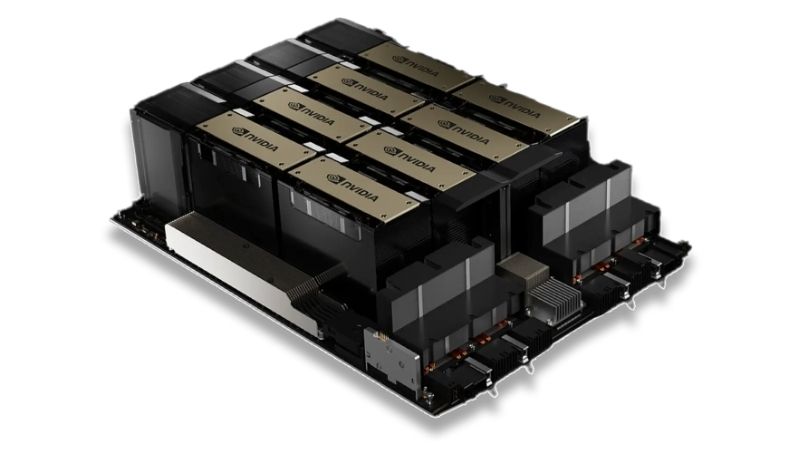
An HGX platform is essentially a validated baseboard carrying multiple SXM-form GPUs, most commonly eight, wired together with NVSwitch for high-bandwidth communication. It is the standardized foundation that server makers integrate into their own chassis, power, and cooling designs.
The reason it exists is consistency. By defining a proven GPU-and-interconnect module, Nvidia lets many partners build systems that all deliver the same core performance, which is why HGX-based servers from different vendors behave so similarly at the GPU level.
For an architect, that means HGX is where the real GPU performance comes from, while the surrounding server is the vendor’s contribution. Recognizing that split clarifies what you are actually choosing when you compare AI servers.
That clarity is genuinely useful when reading vendor marketing. Once you know the GPU performance is set by the HGX board, you can look past differing benchmark claims and focus on where systems truly differ, in engineering, support, and price.
NVSwitch and Multi-GPU Scaling
The defining feature of HGX is NVSwitch, which connects all the GPUs on the board at very high bandwidth so they behave far more like one large accelerator than eight separate cards. For large-model training, that interconnect is as important as the GPUs themselves.
This is what separates an HGX system from simply installing several PCIe cards in a server. The coherent, high-speed fabric lets big models and datasets span all the GPUs efficiently, which is impossible to replicate by bolting discrete cards together.
The analytical takeaway is that HGX buys you scaling efficiency, not just raw GPU count. When your workloads need many GPUs working as one, the NVSwitch fabric is precisely the value the platform delivers over a loose collection of accelerators.
For workloads that do not need all the GPUs acting as one, that fabric matters less, which is worth acknowledging. HGX earns its premium specifically on large, tightly coupled training and inference, not on embarrassingly parallel jobs a simpler server could handle.
HGX vs DGX: The Key Difference
The simplest way to understand HGX is by contrast with DGX. A DGX is Nvidia’s own finished, branded system built on an HGX baseboard, sold complete with software and support. HGX is that baseboard offered to partners to build their own systems around.
This means HGX-based servers come from OEMs and cloud providers, who add their own engineering, pricing, and support. You gain flexibility and often lower cost, but you take on the vendor’s integration quality rather than Nvidia’s turnkey guarantee.
The practical implication is that HGX suits organizations that want to choose their system vendor or build custom infrastructure, while DGX suits those who want Nvidia’s complete, supported package. Neither is universally better; they serve different buyers.
Cloud providers add a third path: renting HGX-based instances lets you use the platform without owning it at all. For many teams the practical question becomes not DGX versus HGX, but whether to own an HGX system, buy a DGX, or simply rent the same compute by the hour.
Nvidia HGX Performance and Deployment
HGX defines the compute core, but deployment happens inside a partner’s system, so real-world results depend on both. Across large-scale AI and HPC, the pattern is that HGX delivers the performance while the surrounding build determines reliability and cost.
Large-Scale AI Training and Inference
For training large models, HGX platforms are the workhorse of the industry. Eight top-tier GPUs joined by NVSwitch provide the coherent, high-bandwidth compute that modern training demands, and clusters of HGX systems form the backbone of the largest AI data centers.
For inference at scale, the same pooled GPU memory and fast interconnect let HGX systems serve very large models efficiently across all their GPUs. This is why cloud providers standardize so heavily on HGX-based servers for their AI offerings.
The consistent theme is that HGX provides frontier-class capability regardless of whose badge is on the chassis. What varies between vendors is the surrounding engineering, not the fundamental GPU performance the platform delivers.
This is reassuring for buyers worried about picking the wrong badge. Since the core compute is standardized, a mistake in vendor choice costs you on support and integration quality rather than on raw AI capability, which lowers the stakes of the decision.
Still, integration quality is not trivial, and a poorly engineered chassis can waste some of the platform’s potential through thermal throttling or unreliable operation, so the vendor choice deserves real diligence even when the compute itself is fixed.
Building or Buying an HGX System
Because HGX is a component platform, you acquire it inside a server from an OEM or through a cloud provider rather than buying a baseboard directly. That means your real choice is which partner’s system to trust with the integration.
The practical advice is to evaluate the vendor as much as the platform. Since the GPU performance is largely fixed by HGX, the differentiators are the server’s power delivery, cooling, networking, support terms, and price, which is where vendors genuinely diverge.
For organizations wanting control over their infrastructure, that flexibility is the point. HGX lets you match the surrounding system to your data center rather than accepting a single fixed design, provided you are equipped to judge the vendor’s engineering.
That last condition is the catch. HGX rewards organizations with the expertise to evaluate power delivery, cooling, and support terms; teams without that depth may find the flexibility becomes a burden and are often better served by a turnkey DGX instead.
Power, Cooling, and Data Center Fit
HGX systems are dense and power-hungry, with eight top-tier GPUs plus NVSwitch drawing many kilowatts, so they demand serious facility provisioning. Robust power and cooling must be in place before deployment, and the newest generations increasingly assume liquid cooling.
Because the exact power and thermal profile depend on the vendor’s chassis, confirm the specifications of the specific system you are buying rather than assuming a generic figure. This is where OEM designs differ meaningfully even on the same HGX board.
For cluster deployments, networking and facilities planning compound quickly. Treating an HGX rollout as a full data-center project, and involving facilities early, is how large deployments stay on schedule and run reliably once live.
Because vendor chassis differ, two HGX systems on the same board can behave differently under sustained load depending on cooling quality. Validating thermals on the specific system you intend to buy is a step that separates a smooth deployment from a throttled one.
For cluster-scale builds, that per-system diligence multiplies, and getting it right across many nodes is precisely the kind of work a branded DGX would otherwise handle on your behalf.
Adopting HGX in 2026: Market Forces and Verdict
The HGX decision is made against a live market, and two developments in 2026 shape both availability and cost. Both favor aligning your build with a real need rather than waiting for easier conditions that may not arrive.
How the H200-to-China Change Affects HGX Supply
The United States has moved to permit Nvidia to sell the H200, one of its most powerful AI chips, into China. Because HGX platforms are built on the same generation of GPUs and HBM, that shift adds a large new source of demand to the silicon your systems depend on.
For architects and procurement, the lesson is practical: when frontier GPUs gain a huge new market, assuming supply will loosen and prices will drop is a shaky basis for planning. Lead times on HGX-based systems can stretch, so build slack into your timeline.
The analytical read is that global demand for HGX-class compute is broad and rising, which rewards securing allocation early over waiting for a discount the supply picture does not support.
Memory Costs and Why Prices Stay Firm
The broader memory market is the second force. Component prices spiked through late 2025 and have since only leveled off, which is relief but not a cut, and HGX systems stacked with high-bandwidth memory are fully exposed to those costs.
New supply is coming, with OEMs able to source DDR5 from vendors such as CXMT and Micron building two Idaho plants, but those fabs will not reach volume until 2027 to 2028. In short, prices have stopped climbing while real relief remains years away.
For an HGX buyer, that argues against waiting on a price collapse. If your workloads justify the compute, securing systems now protects your schedule better than betting on savings the timeline does not promise.
Nvidia HGX Pros and Cons
The adoption picture distilled for a fast decision.
Pros: frontier GPU performance with NVSwitch scaling; flexibility to choose your OEM or cloud vendor; often lower cost than a branded DGX; the proven foundation beneath most AI data centers.
Cons: not a turnkey product, so you rely on the vendor’s integration and support; heavy power and cooling demands; requires expertise to evaluate systems well; supply and pricing pressured by strong global demand and a firm memory market.
See More:
Final Verdict: Is Nvidia HGX Worth It?
For organizations that want frontier AI compute with the flexibility to choose their system vendor or build custom infrastructure, the Nvidia HGX platform is the foundation to build on, delivering the same core performance behind the industry’s largest data centers, often at a lower cost than a branded system. If you would rather have a complete, supported package without evaluating vendors and integration, a DGX is the more turnkey choice.
If building on HGX fits your strategy, current supply pressure and a firm memory market both favor acting sooner rather than later. Check the latest Nvidia HGX systems, vendor options, and availability through the link below and align your build with your roadmap before demand tightens further.
Top-Rated Picks


| Product | Brand | Rating | Reviews | Price |
|---|---|---|---|---|
| ARCTIC MX-4 (4 g) – Premium Performance Thermal Paste… | ARCTIC | ★ 4.8 | 104k | $4.99 |
| ARCTIC MX-4 (incl. Spatula, 4 g) – Premium Performanc… | ARCTIC | ★ 4.8 | 71.9k | $5.49 |
| Crucial 8GB DDR4 RAM 3200MHz (PC4-25600), Downclockab… | Crucial | ★ 4.8 | 62.8k | $74.99 |
| AMD Ryzen 5 5600X 6-core, 12-thread unlocked desktop … | — | ★ 4.8 | 30.2k | $177.60 |
| NVIDIA Shield Remote; Voice Search, Motion-Activated,… | — | ★ 4.7 | 10.6k | $25.99 |
Frequently Asked Questions
What is Nvidia HGX exactly?
HGX is a baseboard platform rather than a single card. It integrates four or eight SXM-form-factor GPUs with NVSwitch fabric, power delivery and cooling interfaces onto one board that server makers integrate into their own chassis. It is the foundation behind most large AI training servers.
How does HGX differ from DGX?
HGX is the GPU baseboard sold to OEMs such as Dell, Supermicro and HPE, who build complete systems around it with their own CPUs, storage and management. DGX is Nvidia own turnkey system built on the same technology, sold complete with a validated software stack and support.
Why use SXM modules instead of PCIe cards?
SXM modules support higher power limits, better sustained clocks, and full NVLink and NVSwitch connectivity between all GPUs in the node. PCIe versions of the same GPU are usually clocked lower, limited to PCIe or bridge-based peer communication, and deliver noticeably less performance on communication-heavy training.
What are the power and cooling requirements?
An eight-GPU HGX node can draw well over ten kilowatts including CPUs and networking, requiring high-density rack power, three-phase distribution, and either high-airflow air cooling or liquid cooling on newer generations. This infrastructure requirement is often the real barrier rather than the hardware cost itself.
Can a small company realistically buy HGX hardware?
It is possible through OEM channels but rarely sensible below a certain scale, given the power, cooling and networking prerequisites. Most smaller teams rent equivalent capacity from cloud providers, where the same HGX-based nodes are available hourly without the datacenter commitment.




Write Your Review
No reviews yet. Be the first to share your experience!