
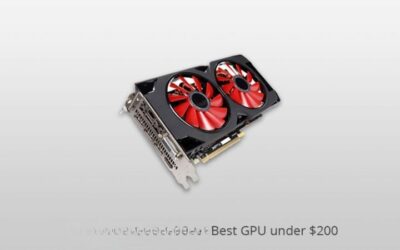
- Top Pick: maxsun Geforce GTX 1650 4GB Video Graphics Card GPU for Computer Gaming PC GDDR6 128-Bit Dual Fan HDMI/DP/DVI 4K HDCP DirectX 12
- Best Value: ASUS Dual GeForce RTX 3050 6GB GDDR6 OC Edition Gaming Graphics Card
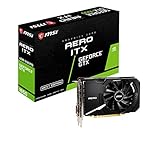
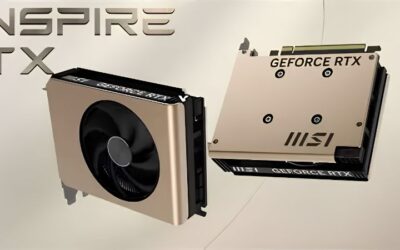
- Premium Choice: msi Gaming GeForce GTX 1650 128-Bit HDMI/DP/DVI 4GB GDRR6 HDCP Support DirectX 12 VR Ready ITX Graphics Card (GTX 1650 D6 AERO ITX OCV1) (G165D6AIC1)
GTX 1650 remains one of the most practical budget graphics cards you can buy, and in 2026 it answers a very specific question: how do you get real gaming and video acceleration into a cheap or prebuilt PC without upgrading the power supply? Drawing just 75 watts and often needing no extra power connector, it is the classic low-effort upgrade. This review covers exactly what the GTX 1650 can and cannot do today, which games it handles, and whether it is still the smart budget pick for your build.
As an Amazon Associate we earn from qualifying purchases at no extra cost to you.





What the GTX 1650 Offers in 2026
The GTX 1650 is an entry-level card built on Nvidia’s Turing architecture, aimed at 1080p gaming on a tight budget and at reviving older systems. Understanding what its modest specifications realistically deliver, and where they run out of room, is the key to knowing whether it fits your needs or whether you should stretch to something faster.
Turing Specs and Memory
The GTX 1650 pairs 896 CUDA cores with 4 GB of GDDR5 or, on later versions, faster GDDR6 memory. That 4 GB buffer is the card’s defining limit, comfortable for 1080p at moderate settings in many titles but increasingly tight in the newest, memory-hungry games.
Crucially, the GTX 1650 lacks the RT and Tensor cores of RTX cards, so there is no hardware ray tracing and no DLSS. For its target buyer that is a fair trade, since those features matter little at this budget and performance level.
The analytical takeaway is to treat the GTX 1650 as a capable 1080p esports and older-title card rather than a modern AAA machine. Judged against that role, its specifications are well matched; judged against a mid-range card, they are clearly entry level.
For the buyer this card targets, that entry-level status is not a criticism but a match. Someone reviving an old office PC or building a first budget rig is not chasing ultra settings; they want dependable, affordable frames, and the GTX 1650 is engineered squarely for that goal.
Gaming Performance at 1080p
In practice, the GTX 1650 delivers smooth frame rates in esports titles like Valorant, CS2, League of Legends, and Rocket League at 1080p, often at high settings. These are exactly the games its buyers play most, and it handles them comfortably.
For modern AAA games, expectations must be realistic. The card can run many recent titles at 1080p with low to medium settings, but the newest and most demanding games will require compromises, and some will strain the 4 GB memory.
The honest framing is that the GTX 1650 is a low-settings-in-demanding-games, high-settings-in-esports card. For players who mostly enjoy competitive and older titles, that is a genuinely good experience for the money.
Frame rate expectations should be set by title, not by hope. Competitive shooters and MOBAs will feel fast and fluid, while a cutting-edge open-world game will ask you to drop settings, and accepting that split up front is the key to being happy with the card.
How It Compares to the GTX 1650 Super and 1660
The step up to the GTX 1650 Super brings a large performance jump for a modest price increase, and if your budget allows it, that upgrade is well worth considering. The plain 1650 earns its place mainly on its lower power and price.
Against the GTX 1660 family, the 1650 is clearly slower and has less memory, so those cards are better for demanding games. The 1650’s advantage is purely its efficiency and the fact that it needs no external power on many models.
Choosing correctly is about honesty over your games and your PC. If you play esports, run an older prebuilt, and cannot upgrade the power supply, the GTX 1650 is the natural pick; otherwise a faster sibling delivers more per dollar.
The one scenario where the plain 1650 clearly beats its siblings is the power-limited prebuilt. When the machine’s small power supply cannot feed a card needing a connector, the 1650’s self-powered design is not just convenient but the only realistic option.
The GTX 1650 in Real Use
Specifications only tell part of the story; how the card fits real PCs and real gaming habits is what matters. Across esports, everyday use, and older builds, the pattern is that the GTX 1650 is a reliable, low-hassle upgrade for the right buyer.
Esports and Popular Games
Esports is where the GTX 1650 shines. Competitive titles are optimized to run well on modest hardware, and the card delivers the high, stable frame rates that matter most for responsive play at 1080p.
For the huge audience that mainly plays free-to-play and competitive games, this makes the GTX 1650 more than enough. It hits the frame rates these games reward without the cost or power draw of a bigger card.
Owners consistently praise it for exactly this: dependable esports performance at a low price. The common complaint, unsurprisingly, is that it struggles with the latest demanding AAA titles, which is a limit of its class rather than a fault.
Set against its price, that limit is easy to accept. Buyers who go in knowing the GTX 1650 is an esports-and-older-games card almost uniformly report satisfaction, since the card does exactly what its class promises without pretending to be more.
Power, Size, and PC Compatibility
The GTX 1650’s standout practical feature is its 75-watt power draw, which on many models means no external power connector is required. That lets it drop into prebuilt and office PCs with modest power supplies that could not handle a bigger card.
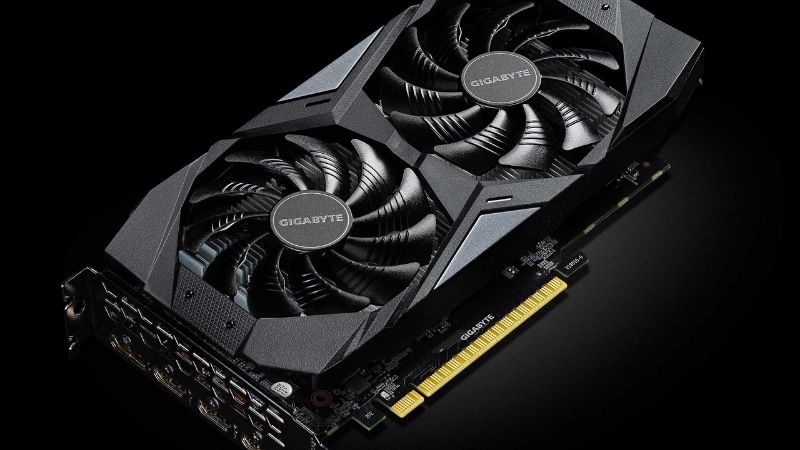
Many versions are also compact, including single-fan and low-profile models that fit small cases. This makes the GTX 1650 one of the easiest graphics upgrades to install in a system that was never designed for a dedicated card.
The practical advice is to confirm your case size and, if choosing a model that does need a connector, your power supply. For most buyers, though, the card’s low demands are precisely why it is such a hassle-free upgrade.
That ease of installation has real value for non-technical buyers. Someone nervous about PC upgrades can add a GTX 1650 to many prebuilt systems in minutes without touching the power supply, which lowers the barrier to a meaningful performance boost.
Beyond Gaming: Streaming, HTPC, and Light Creative
The GTX 1650 also serves well beyond gaming. Its Turing media engine handles video playback and encoding capably, making it a solid choice for a home-theater PC or a general-purpose machine that occasionally games.
For light creative work like photo editing and modest video editing, the card provides useful GPU acceleration that outpaces integrated graphics comfortably. It is not a creator’s workstation card, but it lifts everyday tasks noticeably.
The experimental angle worth noting is driver features like Nvidia Image Scaling, which can improve perceived performance in some games. These extras add value without changing the card’s fundamentally budget nature.
Buying the GTX 1650 in 2026: Value, Market, and Pros and Cons
The GTX 1650 makes the most sense as a low-cost, low-power upgrade rather than a performance card, and the 2026 market shapes what you should expect to pay. Understanding both helps you decide whether to buy now or stretch your budget elsewhere.
Where to Buy and What to Pay
The GTX 1650 is widely available both new at the budget end and heavily on the used market, where it is abundant and cheap. For many buyers, a used unit from a reputable seller offers the best value, provided it comes with clear return terms.
Because it is an older card, prices are low, but they have not collapsed the way you might expect for aging hardware. That is worth understanding before you assume waiting will make it dramatically cheaper.
The practical guidance is to buy from trustworthy listings and verify the memory type, since GDDR6 versions are faster than the original GDDR5. A slightly higher price for a tested card from a good seller beats a bargain with no recourse.
It also pays to weigh a cheap new card against a used one. New budget models sometimes cost only a little more than used units while carrying a warranty, so compare both before assuming the used market is automatically the better deal.
Finally, remember that even a modest card ages, so buy for the games you play now rather than for a future you are unsure of. The GTX 1650 is a today card, and judged against today’s budget needs it holds up well, delivering exactly the frames its buyers care about at a price that keeps a whole build affordable.
Why Prices Stay Firm
Even budget cards are shaped by the memory market. Component and memory prices climbed steeply through late 2025 before merely leveling off, which is relief but not a price cut, so even older cards like the GTX 1650 hold their value more than their age suggests.
New supply is coming, with OEMs able to source memory from vendors such as CXMT and Micron building two plants in Idaho, but those fabs will not reach volume production until 2027 to 2028. In short, waiting for a broad price collapse is optimistic.
For a budget buyer, the takeaway is simple: if the GTX 1650 fits your games and your PC, buying now is reasonable, since the market is unlikely to hand you a meaningfully cheaper card any time soon.
GTX 1650 Pros and Cons
The ownership picture distilled for a fast decision.
Pros: very low price; 75-watt draw with often no power connector needed; excellent for 1080p esports and older games; compact models fit almost any PC; easy, hassle-free upgrade.
Cons: only 4 GB of memory; no ray tracing or DLSS; struggles with the newest demanding AAA titles; the GTX 1650 Super offers much more performance for a little more money.
See More:
Final Verdict: Is the GTX 1650 Worth It?
For budget gamers who mainly play esports and older titles, or who need a low-power upgrade for a prebuilt PC without touching the power supply, the GTX 1650 remains a genuinely worthwhile card, delivering smooth 1080p performance where it counts at a low price. If you play demanding modern AAA games or can spare a little more, the GTX 1650 Super or a 1660-class card is the smarter buy.
If the GTX 1650 fits your games and your build, a firm memory market means waiting is unlikely to save you much. Check the latest GTX 1650 pricing, versions, and availability through the link below and grab the hassle-free upgrade while it still makes sense.
Top-Rated Picks


Save $42.77

| Product | Brand | Rating | Reviews | Price |
|---|---|---|---|---|
| ARCTIC MX-4 (4 g) – Premium Performance Thermal Paste… | ARCTIC | ★ 4.8 | 104k | $4.99 |
| ARCTIC MX-4 (incl. Spatula, 4 g) – Premium Performanc… | ARCTIC | ★ 4.8 | 71.9k | $5.49 |
| Crucial 8GB DDR4 RAM 3200MHz (PC4-25600), Downclockab… | Crucial | ★ 4.8 | 62.8k | $74.99 |
| AMD Ryzen 5 5600X 6-core, 12-thread unlocked desktop … | — | ★ 4.8 | 30.2k | $177.60 |
| NVIDIA Shield Remote; Voice Search, Motion-Activated,… | — | ★ 4.7 | 10.6k | $25.99 |
Frequently Asked Questions
Why is the GTX 1650 still popular in 2026?
Because it needs no PCIe power connector. Its 75W draw comes entirely from the slot on most models, letting owners of office prebuilts with small proprietary power supplies add real gaming capability without replacing the PSU. That niche keeps demand and used prices unusually high.
What performance should I expect at 1080p?
Esports titles run comfortably above 60fps at medium to high settings, and older AAA games are playable at medium. Modern demanding releases need low settings, reduced resolution, or FSR upscaling. It is an entry card, and 4GB of VRAM sets the ceiling more than the GPU itself.
Does the GTX 1650 have NVENC for streaming?
It depends on the revision. Original TU117 cards use the older Volta-generation encoder, roughly matching Pascal quality, while later TU116-based GTX 1650 revisions include the improved Turing encoder. Check the specific model if streaming quality matters, since packaging rarely makes the difference clear.
Should I buy the GDDR5 or GDDR6 version?
The GDDR6 revision is meaningfully better, offering around 192GB/s versus 128GB/s on GDDR5, worth roughly 5 to 10 percent in real games. Both are sold under the same GTX 1650 name, so verify the memory type in the specifications before purchasing.
Is 4GB of VRAM enough for modern games?
Not at high textures. Many recent titles exceed 4GB even at 1080p, producing severe stutter instead of a gradual slowdown. Medium or low textures are usually required. If you can supply PCIe power, a used GTX 1660 Super with 6GB is a far stronger choice.




Write Your Review
No reviews yet. Be the first to share your experience!