
- Top Pick: NVIDIA Tesla A100 Ampere 40 GB Graphics Processor Accelerator – PCIe 4.0 x16 – Dual Slot
- Best Value: NVIDIA RTX A1000 8GB ATX
- Premium Choice: Nvidia RTX A1000
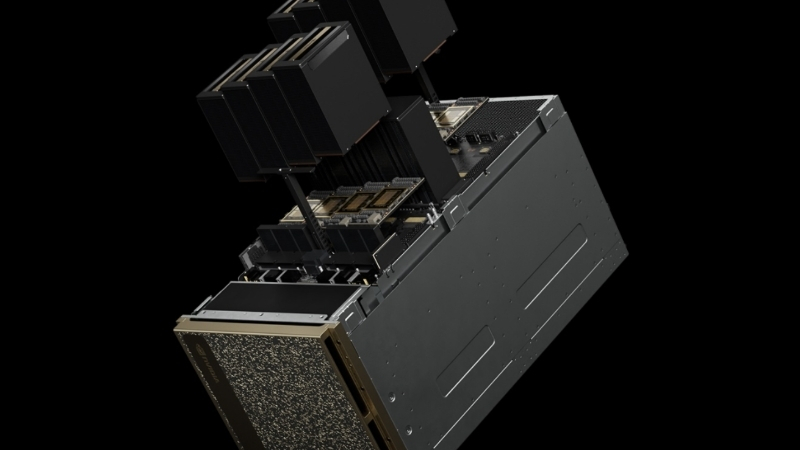
NVIDIA B200 price is the number everyone from enterprise buyers to NVIDIA investors wants pinned down, because this single chip sits at the heart of a multi-billion-dollar AI buildout, and what it costs shapes budgets, business cases, and stock theses alike. The short answer is that a B200 runs in the tens of thousands of dollars per chip, but the full cost is far more nuanced once systems, demand, and export policy enter the picture. This review lays out the realistic pricing, explains why it is so high, and puts it in the market context that actually determines what you pay.
What the NVIDIA B200 Actually Costs
Pinning the B200’s price down is trickier than it sounds, because these chips are not sold at a public retail sticker; they move through enterprise deals, complete server systems, and cloud allocations. Still, reported figures give a clear ballpark, and understanding the difference between the bare chip and a deployed system is essential to a real cost picture. The headline number is only the beginning of what an organization actually spends. Here is what the B200 genuinely costs.
As an Amazon Associate we earn from qualifying purchases at no extra cost to you.



The Per-Chip Price Range
Reported pricing places a single B200 GPU in the range of roughly $30,000 to $40,000, depending on configuration, volume, and the specific deal. This is a substantial premium over prior-generation parts, reflecting its Blackwell-generation capabilities.
That figure is a guide rather than a fixed list price, since large buyers negotiate and pricing shifts with supply and demand. There is no consumer storefront price because the B200 is enterprise hardware sold through channels, not shelves.
The takeaway is that the chip alone is a five-figure purchase, and that is before any of the surrounding infrastructure needed to actually run it, which adds considerably more.
It is worth understanding why even the bare-chip figure is a range rather than a single number. Pricing at this level depends on volume commitments, whether you buy chips or complete systems, your relationship with NVIDIA and its partners, and the timing of the order relative to supply. A hyperscaler ordering tens of thousands of units negotiates very different terms from a smaller enterprise buying a handful, and reported figures usually reflect one of many possible deals rather than a universal price. So when a number circulates online, treat it as a snapshot of a particular transaction, not a fixed rate you can count on, which is a distinction that trips up many first-time buyers researching the market.
System and Server Costs Beyond the Chip
A B200 does not run on its own; it lives inside a server with CPUs, networking, memory, cooling, and power delivery, all of which add cost. A complete B200-based server with multiple GPUs can run into the hundreds of thousands of dollars.
Scaling further, rack-scale systems combining many Blackwell GPUs reach into the millions. So the per-chip price, while eye-catching, understates what deploying B200 compute at a useful scale actually requires.
For anyone budgeting, the honest number is the total system cost, not the chip price in isolation, because the supporting infrastructure is a large fraction of the spend.
How B200 Price Compares to H100 and H200
Placing the B200 against the Hopper generation clarifies the premium. The table below gives approximate reported per-chip ranges to frame the comparison, keeping in mind that all such figures vary by deal.
| Chip | Generation | Approx. per-chip range |
|---|---|---|
| H100 | Hopper | ~$25,000-$35,000 |
| H200 | Hopper | ~$30,000-$40,000 |
| B200 | Blackwell | ~$30,000-$40,000+ |
The B200 commands a top-tier price, but because it delivers a generational leap in performance, buyers often weigh it on cost per unit of AI work rather than sticker price, where its efficiency can justify the premium.
Why the B200 Costs So Much
A five-figure chip price invites the obvious question of why, and the answer combines genuine manufacturing complexity with market forces that push prices even higher. Both the cost to build a B200 and the environment it is sold into matter, and export policy has become part of that environment. This section breaks down the manufacturing side, the demand and policy pressures, and the honest trade-offs of buying at this price. Here is what drives the number.
Manufacturing, HBM, and Packaging Costs
The B200 is genuinely expensive to produce. Its dual-die design, advanced manufacturing process, and large amounts of costly HBM3e memory all raise the bill of materials well above simpler chips. High-bandwidth memory in particular is expensive and supply-constrained.
Advanced packaging to bind the dies and memory together adds further cost and complexity, and yields on cutting-edge processes are never perfect, which raises effective per-chip cost. These are real, structural expenses, not just margin.
So a meaningful portion of the price reflects the genuine difficulty and materials of building a chip at this level, especially the premium memory it depends on.
High-bandwidth memory deserves special mention because it is often the single most expensive and constrained ingredient. HBM3e is produced by only a small number of manufacturers, is difficult to make in volume, and is in fierce demand across the entire AI industry, so its price and scarcity flow directly into the cost of every chip that uses it. When memory suppliers cannot keep pace, it limits how many B200s can be built regardless of how many the market wants, which both raises prices and caps supply. This is why the memory story and the chip-price story are inseparable: the B200’s cost is tethered to a memory supply chain that is itself stretched thin.
Demand, Supply, and Export Policy
Beyond build cost, market forces push B200 pricing hard, and this is where policy enters. Demand for high-end NVIDIA accelerators has consistently outstripped supply, and when demand vastly exceeds availability, prices stay elevated and allocation, not list price, often decides who gets chips at all.
Export policy is now part of this equation. A significant recent development is that the United States has moved to allow NVIDIA to sell the H200, one of its most powerful AI chips, into the China market. While that decision concerns the Hopper-generation H200 rather than the B200 directly, it matters for B200 pricing because opening a market as large as China adds enormous new demand across NVIDIA’s high-end lineup, tightening an already strained supply chain.
For buyers, the practical effect is that broader access to high-end chips in major markets keeps upward pressure on prices and lead times for everyone competing for the same manufacturing capacity and memory supply. For investors, expanding NVIDIA’s addressable market is a bullish factor that supports the pricing power behind chips like the B200. Either way, the lesson is that the B200’s price is set as much by demand and policy as by manufacturing cost, and that in a market this tight, timing and allocation can matter as much as the headline number. Anyone planning a purchase should treat availability and evolving export rules as real variables, not footnotes, since they directly shape both what you pay and whether you can buy at all.
Pros and Cons of Buying at This Price
At a five-figure per-chip cost and far more per system, buying B200 hardware is a major decision, so weighing it honestly matters. Here is the balance for prospective buyers.
Pros: best-in-class performance for frontier AI, strong cost-per-unit-of-work efficiency at scale, and ownership that avoids ongoing cloud fees for heavy continuous workloads. Cons: enormous upfront capital cost, tight supply and long lead times, substantial power and infrastructure requirements, and rapid generational turnover that affects resale value. For many, these cons push them toward renting rather than owning.
Should You Buy, Rent, or Wait
Given the price, the real decision for most organizations is not just whether the B200 is good, but whether to buy it, rent equivalent power in the cloud, or wait. The right answer depends on scale, cash flow, and how continuously you would use the hardware. This final section covers when buying beats renting, the accessible alternatives, and the bottom line on B200 pricing.
When Buying Makes Sense vs Cloud Renting
Buying makes sense for organizations with heavy, continuous AI workloads at large scale, where owning hardware is cheaper over time than paying cloud rates around the clock, and where control over infrastructure is strategically important. For sustained frontier work, ownership can pay off.
Renting through the cloud makes more sense for variable, smaller, or occasional workloads, where you avoid the massive upfront cost and only pay for what you use. Most organizations without constant, large-scale demand are better served renting Blackwell-class power than buying it.
There is also a timing dimension to buying versus waiting. Because NVIDIA iterates its data-center lineup quickly, a chip bought today will be succeeded by a newer generation sooner than in most hardware categories, which affects both resale value and how long the purchase stays cutting-edge. For continuous heavy users this matters little, since the chip pays for itself through use, but for anyone on the fence it is another reason renting can be the safer financial choice, letting you access current hardware without betting capital on a fast-moving product cycle.
Alternatives and Where to Look
For the many readers researching B200 pricing who will not purchase one, the practical paths are clear. Cloud providers offer Blackwell-class GPUs by the hour, sidestepping the capital cost entirely, which suits most developers and smaller teams.
For local development, learning, and smaller-scale AI, workstation-class RTX GPUs provide an accessible on-ramp at a tiny fraction of the price, and good reference materials help teams plan cost-effective infrastructure. These are the realistic options for anyone not running a data center.
If you are working below the data-center tier, compare current prices on workstation RTX graphics cards and AI infrastructure reference books through the links on this page.
See More:
- NVIDIA Broadcast vs OBS
- RTX HDR settings
- NVIDIA App download
- NVIDIA RTX Video Super Resolution
- GeForce Experience alternative
Final Verdict
The B200’s price, roughly tens of thousands of dollars per chip and far more per system, reflects genuine manufacturing cost and intense, policy-influenced demand, and for large-scale operators the performance can justify it on a cost-per-work basis. For frontier AI at scale, it is priced as the premium tool it is.
For everyone else, the price signals that cloud access or smaller hardware is the sensible route, since owning B200-class compute only pays off at sustained scale. Judge it by total system cost and your real usage, not the headline chip figure.
In the end, the NVIDIA B200 price lands in the tens of thousands per chip and climbs into the hundreds of thousands or millions at the system and rack level, driven by costly HBM memory, advanced packaging, and demand intensified by shifting export policy like the recent opening of H200 sales to China. Buy it only at sustained frontier scale, rent Blackwell power in the cloud otherwise, and for smaller work, check the recommended workstation RTX cards and AI reference materials through the links here.
Top-Rated Picks


| Product | Brand | Rating | Reviews | Price |
|---|---|---|---|---|
| ARCTIC MX-4 (4 g) – Premium Performance Thermal Paste… | ARCTIC | ★ 4.8 | 104k | $4.99 |
| ARCTIC MX-4 (incl. Spatula, 4 g) – Premium Performanc… | ARCTIC | ★ 4.8 | 71.9k | $5.49 |
| Crucial 8GB DDR4 RAM 3200MHz (PC4-25600), Downclockab… | Crucial | ★ 4.8 | 62.8k | $74.99 |
| AMD Ryzen 5 5600X 6-core, 12-thread unlocked desktop … | — | ★ 4.8 | 30.2k | $177.60 |
| NVIDIA Shield Remote; Voice Search, Motion-Activated,… | — | ★ 4.7 | 10.6k | $25.99 |
Frequently Asked Questions
What does a single B200 actually cost?
Individual GPUs are not sold at retail; they reach customers inside HGX baseboards and OEM systems. Industry reporting places the effective per-GPU cost in the region of 30,000 to 40,000 US dollars, with a complete eight-GPU HGX B200 server typically quoted between 400,000 and 500,000 dollars once CPUs, memory, NVMe and networking are included.
Why is it more expensive than an H100?
B200 uses two reticle-limit dies totalling 208 billion transistors on an advanced TSMC process, plus eight stacks of HBM3e for 192GB at around 8 TB/s. Yields, packaging complexity and HBM supply all add cost, and the higher power envelope forces more expensive board, cooling and power delivery design.
Is the cost per token actually lower than Hopper?
For large-model inference, generally yes. The combination of FP4 precision, more than double the memory capacity and roughly 2.4 times the bandwidth of an H100 means far fewer GPUs are needed per served model, which cuts networking, rack space and power per token even though each card costs more.
What hidden costs should buyers budget for?
Networking is the big one: InfiniBand or high-speed Ethernet fabric can add a substantial fraction of the compute cost. Then come power distribution upgrades, liquid cooling infrastructure for the highest-TDP variants, NVIDIA AI Enterprise software licences and multi-year support contracts. These regularly add 30-50% on top of the server quote.
Is renting a better option than buying?
For most organisations, yes initially. Cloud B200 instances avoid long lead times and let you validate that your workload genuinely benefits from FP4 and the larger memory before committing capital. Purchase becomes attractive only with sustained high utilisation and an existing datacentre capable of the power and cooling load.


Write Your Review
No reviews yet. Be the first to share your experience!