
NVIDIA B200 is the chip at the center of the current AI infrastructure race, the flagship Blackwell accelerator that data centers are racing to deploy for training and serving the largest models. For AI infrastructure leaders and investors tracking NVIDIA, understanding what the B200 delivers, and how it fits into a market shaped by surging demand and shifting export rules, is essential. This review breaks down the Blackwell architecture in plain terms, the key specifications, real-world performance, and the market context around it, giving the technically fluent reader the concise, grounded picture they need.
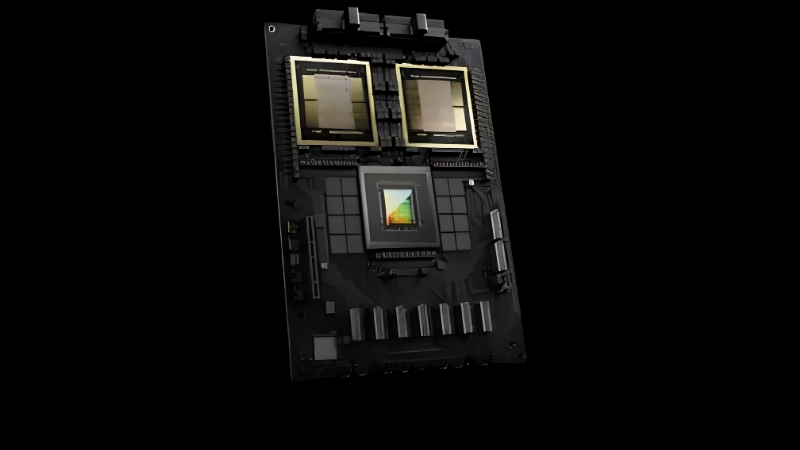
What the NVIDIA B200 Is and Why It Matters
The B200 is a data-center GPU built on NVIDIA’s Blackwell architecture, the generational successor to Hopper. It targets the most demanding AI workloads, training frontier models and serving them at scale, with a large jump in both memory and compute over the previous generation. This is not an incremental refresh; it is a new architecture designed for the era of ever-larger models. Understanding what makes Blackwell different, and where the B200 sits in the lineup, is the foundation for judging its significance. Here is what it is and why it matters.
As an Amazon Associate we earn from qualifying purchases at no extra cost to you.


The Blackwell Architecture in Brief
Blackwell is NVIDIA’s architecture succeeding Hopper, and the B200 is one of its flagship parts. A defining feature is its dual-die design, effectively combining two GPU dies into one package that operates as a single unit, enabling far more compute and memory than a single monolithic chip.
The architecture also advances low-precision AI math, with strong support for formats that accelerate both training and inference of large models, alongside greatly increased memory capacity and bandwidth.
In short, Blackwell is a substantial leap over Hopper rather than a tweak, and the B200 embodies that leap, which is why it has drawn such intense attention across the AI industry.
The dual-die design deserves a closer look, because it is central to how Blackwell scales. Rather than pushing a single piece of silicon to ever-larger sizes, which runs into manufacturing limits, NVIDIA links two dies with an extremely fast interconnect so they behave as one GPU to software. This sidesteps the physical ceiling on chip size and lets the B200 offer far more compute and memory than a monolithic design of the same generation could. For developers, the important part is that this complexity is largely invisible: the two dies present as a single accelerator, so existing software scales onto it without being rewritten, which is a major reason adoption has been so rapid.
Key Specs and Capabilities
The B200’s specifications place it well beyond the Hopper generation, particularly in memory and low-precision throughput. The figures below capture the essentials that matter to infrastructure planners.
| Spec | NVIDIA B200 |
|---|---|
| Architecture | Blackwell (dual-die) |
| Memory type | HBM3e |
| Memory capacity | ~192 GB |
| Memory bandwidth | ~8 TB/s |
| Focus | Large-model training and inference |
| Deployment | Data center / enterprise |
Roughly 192 GB of HBM3e and around 8 TB/s of bandwidth put the B200 far ahead of Hopper parts on memory, which is decisive for the largest models. Its low-precision compute throughput is a major generational step as well.
How the B200 Compares to Hopper
Against the H100 and H200, the B200 is a clear generational advance rather than a memory refresh. Where the H200 upgraded Hopper’s memory, the B200 brings a new architecture with more memory, more bandwidth, and substantially higher compute, especially for the low-precision formats that dominate modern AI.
This makes the B200 dramatically more capable for frontier-scale training and high-throughput inference, the workloads that push even H200-class hardware to its limits. For organizations building for the largest models, it is the forward-looking platform.
The trade-off is that this capability comes with premium pricing and tight supply, so Hopper parts remain relevant for buyers who need more available or cost-effective hardware, a point the market context makes especially clear.
The B200 in Real AI Workloads
Specifications only matter in the context of what the B200 does and the market it operates in, both of which shape whether and how organizations can actually use it. Its performance on real training and inference, together with the demand and policy environment around high-end accelerators, determines its practical value. This section covers the workload performance, the market context including recent export developments, and the honest trade-offs for buyers and investors. Here is the grounded view.
Training and Inference Performance
For training the largest models, the B200’s combination of high compute, large memory, and fast bandwidth allows bigger models and batches per GPU and faster throughput, reducing the number of GPUs and the time needed for frontier-scale runs. That efficiency at scale is its core value.
For inference, the enormous memory and bandwidth let it serve very large models with high throughput and lower latency, and its low-precision support is tuned for exactly the efficient inference modern deployments demand. This matters as model sizes and serving costs grow.
The practical result is that the B200 is designed to lower the cost per unit of AI work at the largest scales, which is why hyperscalers and AI labs have prioritized it despite its price and scarcity.
That cost-per-unit framing is the metric that actually drives purchasing at this level, and it is worth spelling out. A more expensive chip that completes a training run in less time, using fewer total GPUs and less energy, can be cheaper overall than a larger fleet of slower accelerators, once power, cooling, data-center space, and networking are counted. The B200 is engineered around exactly this logic: raw price per chip is high, but efficiency at frontier scale is where it aims to win. For infrastructure teams, this means the honest comparison is never sticker price alone but total cost to reach a given result, which is where Blackwell’s generational gains show up most clearly.
The Market Context: Export Rules and Demand
The B200 does not exist in a vacuum; it sits in a market defined by extraordinary demand and active export policy, both of which affect availability and strategy. Demand for high-end NVIDIA accelerators has consistently outstripped supply, and the entire data-center GPU segment operates under tight allocation, so what you can obtain is often as important as what performs best on paper.
Export policy is a live factor. A notable recent development is that the United States has moved to allow NVIDIA to sell the H200, one of its most powerful AI chips, into the China market. While that specific decision concerns the Hopper-generation H200 rather than the B200, it is significant context for anyone evaluating the Blackwell lineup, because it reshapes where NVIDIA’s various tiers of accelerators are permitted to flow and how demand distributes across them.
For investors, opening the China market to H200-class hardware expands NVIDIA’s addressable demand and is one of the larger swing factors in its data-center trajectory, which indirectly influences how aggressively Blackwell parts like the B200 are allocated and priced elsewhere. For infrastructure teams, the operational lesson is to treat availability and evolving export rules as first-class variables: the B200 may be the most capable choice, but procurement timelines, allocation, and policy shifts determine whether it is the practical one. In a supply-constrained, policy-sensitive market, planning around what you can actually secure is as important as choosing the fastest silicon.
Pros and Cons for Buyers and Investors
Because the B200 represents a major investment and a strategic bet, weighing its strengths against its constraints matters. Here is the honest balance.
Pros: a genuine architectural leap over Hopper, massive memory and bandwidth for the largest models, strong low-precision performance that lowers cost per unit of AI work at scale, and clear leadership for frontier training and inference. Cons: premium pricing, very tight supply and allocation, high power and infrastructure requirements, and no consumer retail availability, since it is enterprise-only hardware sold through data-center channels rather than a storefront.
What the B200 Means for You
The B200’s significance depends on who you are, a hyperscaler, an AI lab, a smaller team, or an investor, and matching its capabilities to your actual situation is what turns specs into a decision. This final section covers who the B200 is really for, where related hardware and resources fit for those not deploying data-center GPUs, and the bottom line on this flagship accelerator.
Who the B200 Is Really For
The B200 is for organizations training or serving the largest AI models at scale: hyperscalers, major AI labs, and enterprises with frontier workloads and the infrastructure to support data-center GPUs. For them, it is the leading platform and a strategic necessity.
It is not for individual developers, researchers on modest budgets, or anyone without data-center infrastructure, since it is not sold at retail and requires substantial supporting systems. Smaller teams typically access Blackwell-class power through cloud providers instead of buying hardware.
Matching the B200 to genuine frontier-scale needs, rather than assuming bigger is always better, is the mark of sound infrastructure planning.
Related Hardware and Where to Look
Most readers researching the B200 will not be buying one directly, so it helps to know the practical alternatives. Individual developers and small teams generally access Blackwell-class compute through cloud services, renting time rather than owning hardware, which sidesteps the cost and scarcity entirely.
For local AI work, model development, and learning, workstation-class RTX GPUs offer a far more accessible on-ramp, and quality reference materials help teams design efficient AI infrastructure regardless of which accelerator they ultimately use.
If you are building or learning at a scale below the data center, compare current prices on workstation RTX graphics cards and AI infrastructure reference books through the links on this page.
See More:
- NVIDIA Broadcast vs OBS
- RTX HDR settings
- NVIDIA App download
- NVIDIA RTX Video Super Resolution
- GeForce Experience alternative
Final Verdict
The B200 is the definitive flagship for frontier AI at scale, delivering a real Blackwell-generation leap in memory, bandwidth, and low-precision compute that makes it the platform of choice for the largest training and inference workloads. For hyperscalers and AI labs, it is essential.
For everyone else, its value is contextual: it is enterprise hardware you likely access via the cloud rather than own, in a market defined by scarcity and shifting export policy. Understand it as the top of the lineup, and match your approach to your real scale.
In the end, the NVIDIA B200 is the Blackwell-generation flagship built for the largest AI workloads, pairing roughly 192 GB of HBM3e and around 8 TB/s of bandwidth with a major compute leap over Hopper, all within a market shaped by tight supply and evolving export rules like the recent opening of H200 sales to China. It is essential for frontier-scale operators and cloud-accessed for everyone else. If you are working below the data-center tier, check the recommended workstation RTX cards and AI reference materials through the links here.
Top-Rated Picks

Best Seller
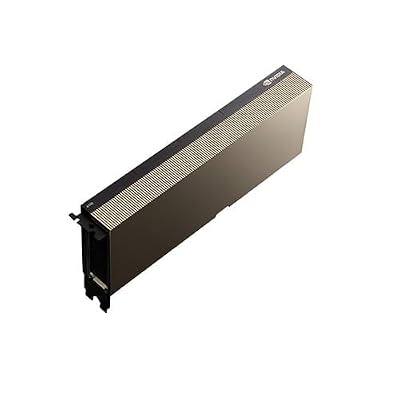
NVIDIA Tesla A100 Ampere 40 GB Graphics Processor Accelerator – PCIe 4.0 x16 – Dual Slot


| Product | Brand | Rating | Reviews | Price |
|---|---|---|---|---|
| ARCTIC MX-4 (4 g) – Premium Performance Thermal Paste… | ARCTIC | ★ 4.8 | 104k | $4.99 |
| ARCTIC MX-4 (incl. Spatula, 4 g) – Premium Performanc… | ARCTIC | ★ 4.8 | 71.9k | $5.49 |
| Crucial 8GB DDR4 RAM 3200MHz (PC4-25600), Downclockab… | Crucial | ★ 4.8 | 62.8k | $74.99 |
| AMD Ryzen 5 5600X 6-core, 12-thread unlocked desktop … | — | ★ 4.8 | 30.2k | $177.60 |
| NVIDIA Shield Remote; Voice Search, Motion-Activated,… | — | ★ 4.7 | 10.6k | $25.99 |
Frequently Asked Questions
How does the dual-die design affect programming?
The two dies are joined by a roughly 10 TB/s interconnect and presented to CUDA as a single logical GPU, so existing code does not need to treat it as two devices. In practice you still benefit from memory-locality-aware kernels, but no explicit multi-GPU programming is required, unlike older multi-chip approaches.
How much memory does it have and why does that matter?
Each B200 carries 192GB of HBM3e delivering around 8 TB/s. That lets a 70-billion-parameter model at BF16 fit on a single GPU with room for a large KV cache, eliminating cross-GPU communication for many serving workloads and dramatically simplifying deployment compared with sharding across multiple H100s.
What is the second-generation Transformer Engine?
It adds FP4 and improved FP6/FP8 handling with fine-grained per-block scaling, automatically choosing precision layer by layer during execution. Combined with framework support in TensorRT-LLM, it roughly doubles effective throughput on transformer inference versus FP8 while keeping output quality within acceptable bounds for most production models.
What are the cooling requirements?
Air-cooled HGX B200 configurations run near 1000W per GPU and demand very high airflow chassis, while the densest deployments use direct-to-chip liquid cooling. An eight-GPU node can approach 14-15kW, so most existing enterprise racks need power and thermal upgrades before installation.
Should I choose B200 or wait for the next refresh?
B200 is the practical choice if you need capacity now and your workload is large-model inference or trillion-parameter training. If your models are small enough to fit comfortably on H100 or H200 hardware, the older generation is far cheaper per FLOP and available immediately with mature software support.



Write Your Review
No reviews yet. Be the first to share your experience!