
Are GPU prices dropping is the one question that keeps you refreshing price-tracker tabs instead of clicking buy. You do not want a ten-minute video; you want a clear yes or no, the real street numbers behind RTX 4090 and RTX 5080 cards, and a plan you can act on between meetings. This review pulls together current pricing data, verified buyer reports, and the supply news that actually moves the needle, so you can decide whether to check out today or hold for a few more weeks.
What “Dropping” Really Means for GPU Prices Now
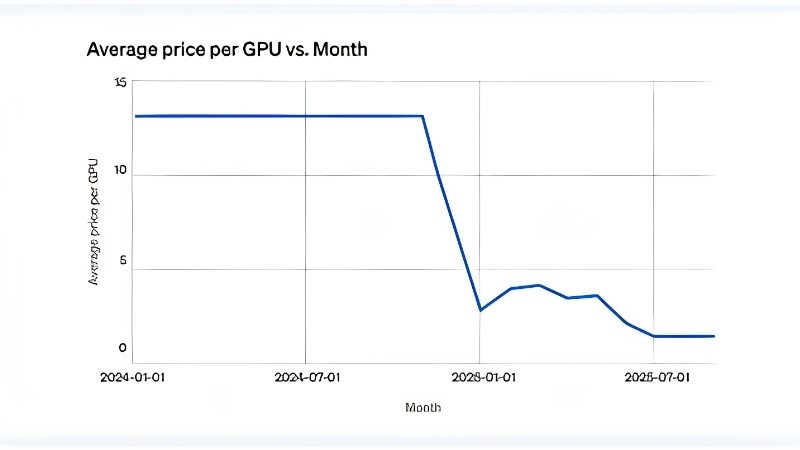
Short answer: not really. GPU prices stopped climbing in early 2026 and have steadied, but they are not broadly falling yet, and real relief is tied to memory supply that is still a year or two out. With that verdict in hand, it helps to define what a “drop” even looks like in this market, because a small dip on one model can hide a flat or rising trend everywhere else. The honest answer for 2026 is nuanced: the steep climb of late 2025 has stopped, a few cards have softened, but a broad, lasting decline has not arrived yet. The gap between the sticker number you see in slides and the price you actually pay at checkout is where most buyers get confused, so that is where we start.
As an Amazon Associate we earn from qualifying purchases at no extra cost to you.






Street Price vs MSRP: Reading the Real Numbers
MSRP is the figure Nvidia and its partners announce on launch day. Street price is what you really pay once retailers, demand, and stock levels are factored in. In 2026 the two still rarely match on popular models.
A card with a $999 MSRP can sit at $1,150 to $1,250 in live listings, while budget cards like the RTX 4060 hover much closer to their suggested number. The further up the stack you go, the wider that gap tends to be.
So when you ask whether prices are dropping, always check street price, not MSRP. A retailer can hold the MSRP label while the real selling price quietly shifts, which means the headline number tells you almost nothing.
The -to-2026 Price Curve at a Glance
Across 2025, GPU prices rose sharply, pushed by memory shortages and heavy AI demand pulling capacity away from gaming cards. That curve has flattened in early 2026.
Flat is not the same as falling. Trackers show most mainstream cards holding within a narrow band month to month, with occasional short dips during restocks that vanish within days.
The data-backed verdict is therefore simple: prices have stopped sprinting upward, which is real progress, but they are not in a dependable downtrend you can count on yet. A useful way to read the curve is to compare a model’s lowest verified price this month against its lowest three months ago. On most mainstream cards that difference is within a few percent, which statistically reads as flat rather than falling. Treat any single low listing as noise until you see the same price repeat across multiple retailers.
| Card | Late 2025 Street Price | Current 2026 Street Price | Trend |
|---|---|---|---|
| RTX 4060 | $300 to $330 | $300 to $330 | Flat |
| RTX 4070 | $610 to $660 | $580 to $640 | Slightly easing |
| RTX 5080 | $1,200 to $1,300 | $1,100 to $1,250 | Stabilizing |
| RTX 5090 | $2,400 to $2,600 | $2,200 to $2,500 | Holding high |
Read across the rows and the pattern is clear: budget cards are flat, mid-range has eased a touch, and flagships have stabilized without truly dropping. That is the data behind the short answer above.
Why Memory Costs Keep GPU Prices Sticky
A major reason prices stay firm is memory. GDDR and DDR5 costs feed directly into what a finished card costs to build, and that supply is still tight.
There is movement on the horizon. OEMs can now source DDR5 from Chinese suppliers such as CXMT, and Micron is building two new plants in Idaho to expand output. On paper that should ease the bottleneck that keeps cards expensive.
The catch is timing: those facilities are not expected to run until 2027 to 2028. So meaningful relief on memory, and therefore on GPU prices, is real but still a year or two out. There is also a competing pressure pulling the other way: AI demand continues to soak up advanced manufacturing capacity, which keeps gaming-card supply from expanding as fast as buyers would like. For now, the honest read is sticky pricing, not a sudden collapse, and any near-term softening is more likely to come from a specific model being overstocked than from a market-wide drop.
Are GPU Prices Dropping Fast Enough to Wait?
Knowing prices have plateaued is useful, but your real question is practical: should you buy now or wait for prices to drop further? The answer depends on how soon you need the card and how much risk you are willing to carry on timing, and there is no universal right answer here. A buyer with a dead GPU faces a very different calculation than someone whose card still runs fine. Here are both sides, grounded in current conditions instead of hope, so you can weigh them against your own situation.
The Case for Buying Now
The strongest argument for buying today is that broader component prices are still trending upward. Laptop and PC part costs have continued to creep higher, so a card that is in budget now may quietly cost more next quarter.
There is genuinely positive news too, just modest. The steep increases of late 2025 have eased, and makers like Framework have reported a relatively stable stretch, even while warning that volatility is not over.
If you need the GPU for work, study, or a build you have already planned, buying into a stable-but-firm market is reasonable. You also start using current features such as DLSS and frame generation immediately, instead of paying an opportunity cost while you wait. These technologies matter to the value math: a card’s effective performance keeps climbing as Nvidia ships driver and software updates, so the frames you get a year from now can exceed what you measured on day one. In other words, you are not just buying today’s silicon, you are buying a feature set that tends to improve after purchase.
The Case for Holding a Little Longer
The case for patience rests on future supply. The new memory capacity from CXMT sourcing and Micron’s Idaho plants should eventually loosen the constraint that keeps prices high.
But “eventually” is doing heavy lifting here. With those plants targeting 2027 to 2028, waiting for that specific relief could mean sitting on the sidelines for a very long time.
Waiting makes the most sense if your current GPU still runs your games and apps acceptably. In that case you lose nothing by monitoring prices and pouncing on a genuine dip rather than buying into a flat market. Be precise about what “acceptable” means for you, though. If you are gaming at 1080p and hitting your refresh target, waiting is easy. If you are already dropping settings to stay playable at 1440p or 4K, the cost of waiting is measured in months of worse experience, which often outweighs a small possible saving.
Pros and Cons of Timing the GPU Market
To make this concrete, here is a balanced look at trying to time your purchase in 2026 rather than just reacting to a single dip.
- Pros: you lock in today’s price before further component increases; you get immediate access to current-gen features; and Nvidia cards hold resale value well, lowering your true cost of ownership.
- Cons: there is no guaranteed near-term drop to reward waiting; flat prices mean little downside to a short hold if your card still works; and the deepest relief is tied to 2027 to 2028 supply, not the next few weeks.
Read that way, the choice is less about gambling on a crash and more about matching the purchase to your actual need.
How to Track Whether GPU Prices Are Dropping
Whether you buy now or wait, you can stop guessing about the market by tracking the right signals. A few minutes of setup turns a stressful refresh habit into a calm, alert-driven process that pings you only when a price actually moves in your favor.
Price Tools and Alerts Worth Using
Price-history trackers and browser extensions let you see whether a listing’s current number is genuinely low or just dressed up as a deal. Set alerts on the two or three exact models you want.
Retailer stock notifications matter just as much as price. A card at a fair price you cannot buy is not a deal, so combine price alerts with restock alerts.
This approach respects your time. Instead of watching videos speculate about the market, you get one clean notification the moment a specific card hits your target.
Which GPUs Are Most Likely to Fall First
Cards drop in a predictable order. Older or overstocked models soften first, which is why last-gen 4060 and 4070 cards usually see the earliest discounts.
Halo cards like the 4090 and 5090 hold value longest because demand outstrips supply. If you are chasing those, expect patience to be punished rather than rewarded.
Mid-range refreshes tend to land between these extremes. Knowing where each tier sits helps you set a realistic target price instead of waiting for a number that never comes. As a practical rule, anchor your target to MSRP plus a small, tier-appropriate premium: near MSRP for budget cards, a modest markup for mid-range, and an accepted premium for flagships. Aiming below MSRP on a flagship in 2026 is, in effect, deciding not to buy, because that number is not realistically on the table while supply stays tight.
A Smart 2026 Buying Strategy
A sensible strategy is to decide your maximum price first, then let alerts do the waiting for you. If a card hits that number, buy without second-guessing.
Factor resale into the math. Current Nvidia cards hold value partly because their features stay relevant through driver and software updates, so the real cost of owning one is lower than the sticker suggests.
When you are ready to act on a fair price, you can check current live listings through the links in this guide and move before the deal disappears.
See More:
Conclusion
So, are GPU prices dropping? The accurate answer for 2026 is that they have stopped climbing and steadied, but a broad, lasting decline is still tied to memory supply that will not expand until 2027 to 2028. That makes timing less about waiting for a crash and more about catching fair prices when they appear. The practical move is to stop treating the market as a single trend and instead track the two or three exact models you want, judging each listing against MSRP rather than against hope. Set your target price, arm your restock and price alerts, and let the notifications do the patient watching for you. When a card you want lands in range, use the links here to check the latest Amazon price and grab it before stock and pricing shift again.
Top-Rated Picks


| Product | Brand | Rating | Reviews | Price |
|---|---|---|---|---|
| ARCTIC MX-4 (4 g) – Premium Performance Thermal Paste… | ARCTIC | ★ 4.8 | 104k | $4.99 |
| ARCTIC MX-4 (incl. Spatula, 4 g) – Premium Performanc… | ARCTIC | ★ 4.8 | 71.9k | $5.49 |
| Crucial 8GB DDR4 RAM 3200MHz (PC4-25600), Downclockab… | Crucial | ★ 4.8 | 62.8k | $74.99 |
| AMD Ryzen 5 5600X 6-core, 12-thread unlocked desktop … | — | ★ 4.8 | 30.2k | $177.60 |
| NVIDIA Shield Remote; Voice Search, Motion-Activated,… | — | ★ 4.7 | 10.6k | $25.99 |
Frequently Asked Questions
Are graphics card prices actually falling?
The picture is uneven rather than uniformly downward. Mid-range and previous-generation cards do soften as newer parts arrive and stock clears, while high-VRAM flagships often hold firm or rise because AI and professional buyers compete for the same supply. The segment you are shopping in matters more than the overall market narrative.
What drives GPU pricing besides supply and demand?
Memory costs, wafer allocation between consumer and datacentre products, tariffs and currency movements, and how aggressively board partners price against the reference figure. Datacentre demand is particularly influential because it competes directly for manufacturing capacity and advanced memory, which limits how much consumer supply can expand.
Should I wait for prices to fall further?
Waiting makes sense if a direct replacement for the card you want is due within a few months, since launches reliably push previous-generation street prices down. Waiting indefinitely rarely pays, because the segments that get cheapest are usually the ones being replaced by faster parts you would then want instead.
Why is street price often above the stated reference price?
Reference pricing usually applies to a small number of baseline models, while most stock consists of partner cards with larger coolers and factory overclocks that carry a premium. Retailer margin, regional taxes and constrained supply widen the gap further, which is why the advertised figure rarely reflects what buyers actually pay.
When are the best times of year to buy?
Major sale events such as Prime Day, Black Friday and Cyber Monday produce the most consistent genuine discounts, and the weeks after a generational launch bring clearance pricing on the outgoing tier. Avoid buying in the run-up to a known launch, since prices firm up while supply is deliberately held back.



Write Your Review
No reviews yet. Be the first to share your experience!