
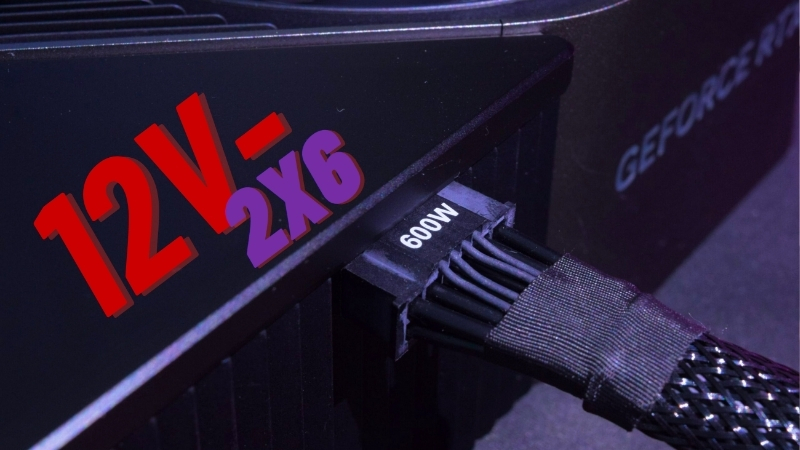
12V-2×6 connector is the quiet redesign that aims to put the 12VHPWR melting fears to rest, and if you are buying a new high-end Nvidia card or power supply in 2026, it is the connector you want. It looks almost identical to the original, plugs into the same cards, and carries the same 600 watts, yet a small change to its pin layout makes it meaningfully harder to get a dangerous, half-seated connection. Drawing on a synthesis of owner reviews and the engineering behind the change, this review explains exactly how the 12V-2×6 fixes the older design’s weakness and whether it is worth seeking out.
What the 12V-2×6 Connector Is and Why It Exists
The quick verdict: the 12V-2×6 is a refined version of the 12VHPWR connector that solves its single biggest flaw, partial seating, by reshaping the pins so a plug that is not fully inserted simply will not deliver power. It is the same 16-pin, 600-watt interface on the surface, but the safety margin is wider, which is why every current ATX 3.1 power supply ships with it. The detail below shows precisely what changed and why it matters.
As an Amazon Associate we earn from qualifying purchases at no extra cost to you.



The Small Design Change That Matters
On the original 12VHPWR, the four small sense pins and the twelve power pins were arranged so that a plug could make partial power contact even when it was not fully seated. That created a dangerous middle state: power flowing through too few contacts, generating heat at the weak points.
The 12V-2×6 fixes this by shortening the sense pins and lengthening the power terminals slightly. The practical effect is that the sense pins, which tell the card it is safe to draw full power, only connect when the plug is genuinely all the way in.
In plain terms, a 12V-2×6 plug that is not properly seated will not power the card at all, rather than powering it dangerously. That single change removes the exact failure state behind most melting reports.
It is a subtle change with an outsized effect. Nothing about the cable you route or the wattage you plan changes, yet the connector now refuses to enter the one state that caused real damage. Good engineering often looks this small from the outside.
12V-2×6 vs 12VHPWR: The Key Differences
From the outside, the two connectors are nearly indistinguishable and are fully cross-compatible: a 12V-2×6 cable works in a 12VHPWR card and vice versa. The difference lives entirely in the terminal lengths inside the plug and socket.
That compatibility is deliberate, so you are never locked out of a card or cable you already own. What you gain by choosing the newer side of the pairing is the safer seating behaviour, not a different shape or a new cable standard to learn.
This also means you do not need to match cable to card by generation. A 12V-2×6 cable in an older 12VHPWR socket still seats and works; you simply do not get the improved behaviour unless both halves are the newer type. When buying new, getting the newer connector on the PSU side is the easy win.
Same 600W Power, Better Safety Margin
The 12V-2×6 carries the same up to 600 watts as before, so there is no performance change and no new wattage to plan around. Your power calculations stay exactly the same.
What improves is the margin for human error. The connector still rewards a careful, full insertion, but it is far less punishing of a borderline one, because the borderline state no longer delivers power. For a card worth hundreds of dollars, that built-in safeguard is the whole point.
It is worth repeating that none of this raises your power budget. If you sized a unit for a 12VHPWR card, the same wattage applies here, so the upgrade is purely about safety and seating, not about needing a bigger supply.
Is the 12V-2×6 Connector Actually Safer? What Owners Report
Engineering theory is reassuring, but the owner data is what confirms it, and the picture from reviews of ATX 3.1 units using the 12V-2×6 is clearly more positive than the early 12VHPWR era. The pattern in the feedback lines up neatly with the design intent.
Why Shorter Sense Pins Prevent Melting
Because the card will not draw full power until the sense pins connect, and the sense pins only connect at full insertion, the most dangerous scenario, high current through a half-seated plug, is largely designed out. Reviewers who understand this consistently describe it as the connector working as intended.
That predictability is reassuring on an expensive build. Instead of wondering whether a plug is secretly marginal, you get a clear binary: it either powers on cleanly or it does not power at all, which is exactly the behaviour you want guarding a costly card.
This does not make the plug indestructible, but it changes the failure mode from a silent, heat-building hazard into an obvious no-power situation you notice immediately. A card that will not turn on is annoying; a melted connector is expensive, and the 12V-2×6 trades the latter for the former.
What 4-5 Star Owners Say
The majority of owners of recent ATX 3.1 units praise the connector as a non-event. They report seating it once, confirming the click, and never thinking about it again across months of heavy use.
A common theme is relief: buyers who were nervous after the 12VHPWR headlines describe the newer connector as the reason they felt confident upgrading. Many specifically recommend choosing a unit with the native 12V-2×6 cable rather than reusing an older adapter.
The recurring advice is consistent and simple: buy the unit with the native 12V-2×6 cable, seat it fully, and forget about it. Owners who followed that path are the ones with nothing negative to report.
What 2-3 Star Complaints Reveal
The smaller pool of critical reviews rarely involves melting at all. Instead they tend to focus on cable stiffness, length, or routing difficulty in compact cases, which are build-quality and ergonomics issues rather than safety ones.
That shift in the nature of complaints is itself telling. When the worst common gripe about a power connector is that the cable is a little stiff to route, the underlying safety problem has largely been addressed.
Choosing and Using a 12V-2×6 Connector
For most buyers the practical question is simple: get the newer connector where you can, and still install it with the same basic care. This section weighs the trade-offs, answers the upgrade question honestly, and covers the few habits that keep any high-power plug safe.
Pros and Cons of the 12V-2×6 Connector
Here is the balanced view drawn from the design and owner feedback:
- Pros: a far safer seating behaviour that designs out the main melting cause, full backward compatibility with 12VHPWR cards and cables, the same 600-watt capacity, and a tidy single-cable connection.
- Cons: it still requires a proper full insertion, the cables can be stiff in cramped cases, and it does not retrofit the safety change onto an old cable, so the benefit comes from using the new connector itself.
On balance, there is no real downside to choosing the 12V-2×6 when you have the option, and a clear safety upside.
That is rare for a hardware change: a meaningful safety improvement with no performance cost, no compatibility break, and no price penalty. It is the kind of quiet upgrade worth choosing without a second thought.
Do You Need to Upgrade From 12VHPWR?
If you already run a 12VHPWR setup that is correctly seated and stable, you do not need to rush out and replace it; a properly installed original connector is safe in practice. The melting reports came from poor connections, not from correctly seated ones.
That said, if you are buying a new power supply anyway, or building a fresh system, choosing an ATX 3.1 unit with the native 12V-2×6 cable is the obvious, low-cost way to get the extra safety margin. It is upgrade-by-default rather than upgrade-in-a-panic.
The cost angle reinforces this. Because the 12V-2×6 cable comes included with current ATX 3.1 units at no premium, getting the safer connector is essentially free when you are already buying a power supply. There is simply no reason to choose the older design today.
How to Seat and Route It Safely
Even with the improved design, treat the connector with the same respect. Push the plug straight in until you feel a firm click, confirm the latch is engaged, and check it sits flush before closing the case.
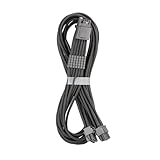
Keep the cable run straight for at least an inch before any gentle bend, avoiding a sharp kink right at the plug. Doing this with a quality native cable, like the ATX 3.1 options linked in this review, gives you both the safer connector and the clean, strain-free fit it is designed for.
The 12V-2×6 is the connector to choose if you want the power of the modern 16-pin standard without the seating anxiety of the original. If you are buying a new card or power supply, take a look at the recommended ATX 3.1 units and native cables linked throughout this review and pick the one that matches your build.
See More:
- How to clean a GPU heatsink
- GPU vertical mount thermals
- GPU thermal throttle temp
- What PSU for RTX 4090
- What PSU for RTX 5080
Conclusion
The 12V-2×6 connector is a small but genuinely important redesign that targets the exact weakness behind the 12VHPWR melting reports, using shorter sense pins so a half-seated plug simply will not power your card. It keeps the same 600 watts and full compatibility while widening the safety margin, which is why every current ATX 3.1 unit uses it. You still need a proper, fully seated install, but the 12V-2×6 connector makes that far more foolproof. Check the recommended ATX 3.1 units and native cables above to power your card with confidence.
Top-Rated Picks


| Product | Brand | Rating | Reviews | Price |
|---|---|---|---|---|
| ARCTIC MX-4 (4 g) – Premium Performance Thermal Paste… | ARCTIC | ★ 4.8 | 104k | $4.99 |
| ARCTIC MX-4 (incl. Spatula, 4 g) – Premium Performanc… | ARCTIC | ★ 4.8 | 71.9k | $5.49 |
| Crucial 8GB DDR4 RAM 3200MHz (PC4-25600), Downclockab… | Crucial | ★ 4.8 | 62.8k | $74.99 |
| AMD Ryzen 5 5600X 6-core, 12-thread unlocked desktop … | — | ★ 4.8 | 30.2k | $177.60 |
| NVIDIA Shield Remote; Voice Search, Motion-Activated,… | — | ★ 4.7 | 10.6k | $25.99 |
Frequently Asked Questions
What exactly changed between 12VHPWR and 12V-2×6?
The four small sense pins were shortened by roughly 1.5mm and the twelve main conductor terminals were recessed slightly deeper into the housing. The result is that a partially inserted plug loses contact with the sense pins before the power pins engage, so the card refuses to request full power instead of drawing it through poor contacts.
Is the 12V-2×6 connector physically compatible with 12VHPWR?
Yes. The plug and socket share identical dimensions and pin layout, so any 16-pin cable fits any 16-pin socket in either direction. The change is entirely in terminal depth and sense pin length. You can use an older cable with a newer card, though pairing the revised connector on both ends is preferable.
How much power can it carry?
Up to 600W across six 12V conductors and six grounds, with the four sense pins signalling the available capacity so the card knows whether it may request 150W, 300W, 450W or the full 600W. That signalling is why a badly seated plug results in reduced performance or a power warning rather than silent overdraw.
What is the correct way to install it?
Push straight in until you hear and feel the latch click, then look along the housing to confirm no gap remains between plug and socket. Leave at least 35mm of straight cable before any bend, and route the cable so the side panel does not press against it. Never bend immediately at the connector body.
Do I need to replace my existing 12VHPWR cable?
Not necessarily. A correctly seated original cable used within its rating remains functional, and many supply makers have quietly shipped revised terminals in newer production. If you are running a 500W or higher card and can obtain a native 12V-2×6 cable for your specific supply model, it is a worthwhile inexpensive upgrade.


Write Your Review
No reviews yet. Be the first to share your experience!