
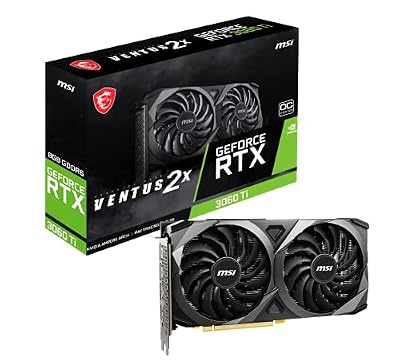
- Top Pick: msi Gaming GeForce RTX 3060 Ventus 2X 12G OC V1 Graphics Card – 15 Gbps GDRR6 Boost Clock: 1807 MHz 192-Bit HDMI/DP PCIe 4 Torx Twin Fan Ampere
- Best Value: GIGABYTE GeForce RTX 3060 WINDFORCE OC 12G (rev. 2.0) Graphics Card, 2X WINDFORCE Fans, 12GB 192-bit GDDR6, GV-N3060WF2OC-12GD Rev2.0 Video Card
- Premium Choice: MSI Gaming GeForce RTX 3060 12GB 15 Gbps GDRR6 192-Bit HDMI/DP PCIe 4 Torx Twin Fan Ampere OC Graphics Card
Top Rtx 3060 Price Still Smart Picks for 2026
Here are our current top rtx 3060 price still smart picks, compared on real Amazon owner reviews, price, and features. Live prices update below.


Prime
Limited Time
NVIDIA GeForce RTX 3060 Ti Founders Edition 8GB GDDR6 PCI Express 4.0 Graphics Card (Renewed)

As an Amazon Associate we earn from qualifying purchases at no extra cost to you.



RTX 3060 price has become one of the most interesting numbers in the 2026 budget market, because a card that launched at $329 now sits at the center of a memory shortage that is reshaping value everywhere. The RTX 3060 still offers a generous 12GB of VRAM that newer entry-level cards can only envy, which keeps demand strong. This review takes an objective, expert look at the card through the lens of cost: the specifications that justify its price, how it performs today, what you should pay new versus used, the rumored relaunch that could shift the market, and how 2026’s conditions affect your decision. If you are weighing this card, here is what the RTX 3060 price really tells you.
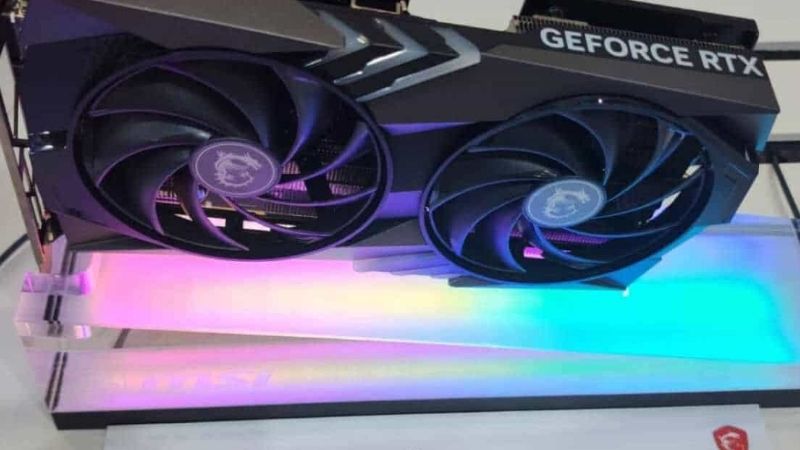
What the RTX 3060 Offers for the Price
Before judging any price, it helps to know what the RTX 3060 delivers. This is a balanced 1080p card with an unusually large memory buffer for its class, and understanding its hardware sets a fair baseline for the value question. The specifications explain why it has aged better than many of its peers.
The Specs Behind the Price
The RTX 3060 is built on NVIDIA’s Ampere architecture using the GA106 die, with 3,584 CUDA cores and 12GB of GDDR6 memory on a 192-bit bus, boosting to around 1,777 MHz. It launched in January 2021 at a $329 MSRP.
The standout is that 12GB frame buffer. It is larger than the memory on many newer budget cards, which still ship with just 8GB, and it has become the single biggest reason the RTX 3060 price holds up.
It draws around 170 watts and supports DLSS and ray tracing, though as an Ampere card it lacks the DLSS frame generation found on newer Ada and Blackwell GPUs. It is a capable, feature-aware 1080p part.
Real-World Performance Today
In current games the RTX 3060 is a solid 1080p performer and a capable 1440p card at adjusted settings. It runs modern AAA titles smoothly at high settings at 1080p, which suits its target audience well.
The 12GB buffer pays off in memory-heavy games, where it avoids the texture stutter that troubles 8GB cards at higher settings. DLSS extends performance further in supported titles.
Ray tracing is possible but best kept light at this tier, and 4K is outside its comfort zone. As a 1080p workhorse with headroom to spare, though, it remains genuinely useful in 2026.
Where It Sits Against Newer Cards
On raw speed, newer cards clearly pull ahead. A current Radeon RX 9060 XT posts dramatically higher benchmark scores, so the RTX 3060 is no longer about cutting-edge performance.
Its case rests on memory and price. Against 8GB newer budget cards, the 12GB buffer is a real longevity advantage, which is why the RTX 3060 price stays relevant even as faster options exist.
Positioned honestly, the 3060 is a value play defined by VRAM. It wins when its price undercuts newer cards enough to make its larger memory the deciding factor.
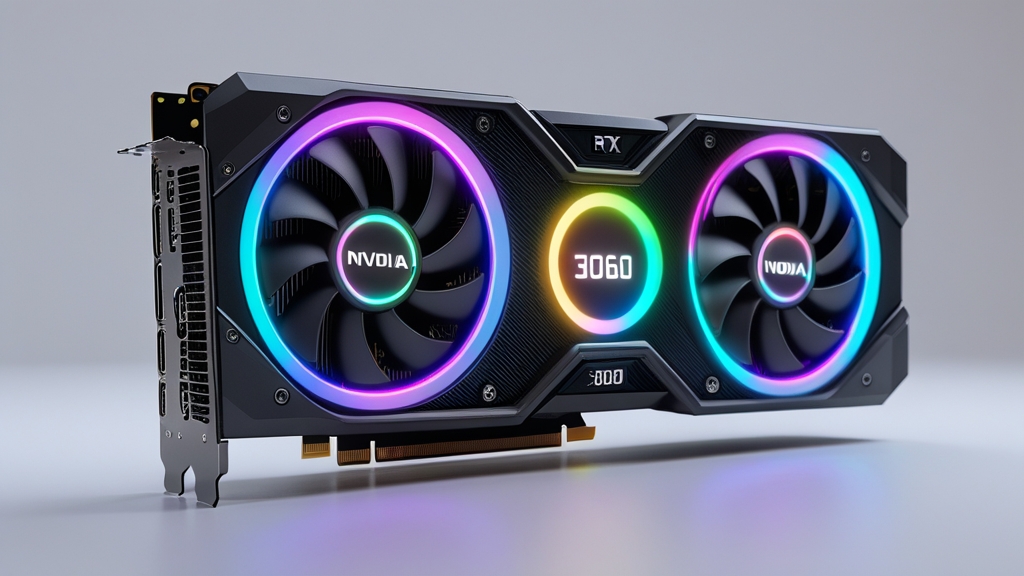
RTX 3060 Price in 2026: What You Should Pay
With performance understood, the central question is cost. The RTX 3060 price spans a wide range between inflated new stock and a healthier used market, so knowing the realistic numbers protects you from overpaying. This section sets the anchors for any purchase.
New Versus Used Pricing
On the used market the RTX 3060 typically trades between roughly $194 and $240, with many clean cards landing around $200 to $230. New stock, where available, has drifted up to around $354 amid the shortage.
That gap matters. A used 3060 near $200 is a reasonable budget buy for its 12GB of VRAM, while paying over $350 new puts it in competition with far faster current-generation cards.
The practical guidance is to favor a clean used card or wait for a genuine deal. The RTX 3060 price only makes sense when it stays well below newer alternatives.
The 12GB VRAM Value
The 12GB buffer is the heart of the RTX 3060’s value argument. As modern games grow more memory-hungry, that headroom lets the card load high-resolution textures that choke 8GB rivals, even newer ones.
For buyers who keep a GPU for several years, this longevity is worth paying a small premium over a faster 8GB card. Memory has quietly become one of the most important factors in budget GPU value.
The trade-off is raw speed, since the 3060 is slower than newer cards in pure benchmarks. The right RTX 3060 price reflects that balance: pay for the VRAM, not for performance it does not have.
Pros and Cons at the Current RTX 3060 Price
At a fair used price near $200, the strengths are clear. You get a generous 12GB of VRAM, solid 1080p and adjusted 1440p performance, DLSS and ray tracing support, reasonable 170-watt power draw, and strong longevity for a budget card.
The drawbacks are equally real. The card is slower than newer options, lacks DLSS frame generation, carries used-market wear and no warranty, and is poor value at inflated new prices above $350.
The verdict at the right RTX 3060 price is positive. It is a smart buy for a budget 1080p gamer who values VRAM and finds a clean card near $200, and a poor one for anyone paying new-card prices.
Market Forces and Who Should Buy
The RTX 3060 price cannot be read without the wider 2026 market, which has pushed new hardware up and may bring this card back into production. Understanding that backdrop, and what it means for a buyer, clarifies the timing. Compatibility then confirms whether the card fits your system.
Why New GPU Prices Climbed in 2026
The 2026 market is defined by a severe structural memory shortage. DRAM contract prices have risen more than 170 percent year over year, and because video memory can account for up to 80 percent of a graphics card’s bill of materials, new GPU prices have climbed sharply, with current-generation cards up an estimated 15 to 23 percent and some models jumping 16 to 17 percent almost overnight.
AI demand is the driving force. With the United States approving sales of NVIDIA’s powerful H200 accelerators to major Chinese firms, memory and fabrication capacity is being pulled toward data-center silicon, and reports indicate NVIDIA has trimmed mid-range consumer output by a significant margin. Memory suppliers have warned the shortage could persist into 2027.
Strikingly, reports suggest NVIDIA may even relaunch the RTX 3060 itself around mid-2026, possibly near $200, precisely because its older GDDR6 memory and mature manufacturing are cheaper to produce than the GDDR7 used by newer cards. These details remain unconfirmed, but they underline how the shortage is reshaping the budget tier.
What This Means for the RTX 3060 Price
For a buyer, the squeeze keeps the RTX 3060 price firm rather than falling. Strong demand for affordable, VRAM-rich cards means used prices have stabilized instead of dropping the way older hardware usually does.
A potential relaunch could change the equation further. If new 3060 cards return near $200, that would set a fresh reference point and pressure used prices, so patient buyers may benefit from waiting to see whether the rumor materializes. AMD raised prices around ten percent early in 2026 and NVIDIA followed, so the inflation spans the whole market and is unlikely to ease while the shortage continues into 2027.
The timing logic is clear. While the shortage keeps newer cards expensive, a used 3060 near $200 is a sensible value pick, but watch for relaunch news before paying the top of the used range, and favor a tested card with a clear history over a cheaper unknown.
Compatibility and Who Should Buy
The 3060 is undemanding to run. A quality 550-watt power supply comfortably covers its 170-watt draw, and the card fits in most standard cases without special cooling.
Pair it with a capable CPU for balanced 1080p performance, and confirm your PSU has the required connector before buying. No oversized power supply is needed.
The ideal buyer is a budget 1080p gamer who prioritizes VRAM and longevity and can find a clean card near $200. Anyone chasing maximum frame rates or the newest features should look at a faster current-generation card instead.
Frequently Asked Questions
A few questions recur from buyers researching the RTX 3060 price in 2026. The concise answers below cover value, fair pricing, and memory.
Is the RTX 3060 worth buying in 2026?
Yes at a fair used price near $200, mainly for its 12GB of VRAM and solid 1080p performance. It is poor value at inflated new prices above $350, where faster cards compete.
What is a fair used price for an RTX 3060?
Around $194 to $240, with many clean cards near $200 to $230. Aim for roughly $200 for a tested unit and pay less for higher-mileage cards.
Is 12GB of VRAM on the RTX 3060 useful?
Yes. The 12GB buffer outclasses many newer 8GB budget cards, loading high-resolution textures without stutter and giving the 3060 meaningful longevity at 1080p.
See more:
Recommended Products

PNY
PNY GeForce RTX 4070 Ti 12GB XLR8 Gaming Verto Epic-X RGB Triple Fan Graphics Card DLSS 3
GIGABYTE
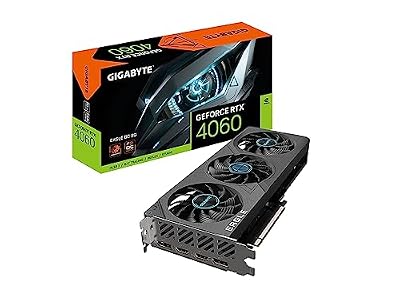
GIGABYTE GeForce RTX 4060 Eagle OC 8G Graphics Card, 3X WINDFORCE Fans, 8GB 128-bit GDDR6, GV-N4060EAGLE OC-8GD Video Card (Renewed)
msi
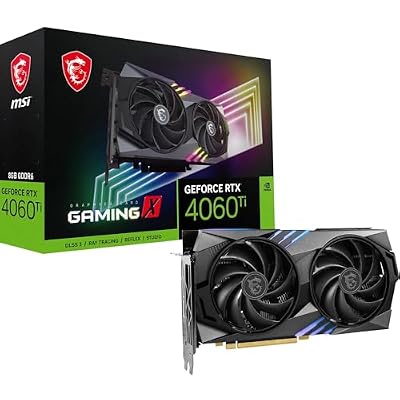
MSI GeForce RTX 4060 Ti Gaming X 8G Graphics Card – RTX 4060 Ti GPU, 8GB GDDR6 (18Gbps/128-bit), PCIe 4.0 – Twin FROZR 9 (2 x TORX Fan 5.0), RGB – HDMI 2.1, DisplayPort 1.4a
As an Amazon Associate we earn from qualifying purchases. Product prices and availability are accurate as of the date/time indicated.
Conclusion
The RTX 3060 price in 2026 reflects a card that has aged into a VRAM-driven value pick rather than a performance leader. Near $200 used, its generous 12GB buffer, solid 1080p performance, and DLSS support make it a sensible budget choice, especially against newer cards still shipping with only 8GB. The caveats are real: it is slower than current options, lacks frame generation, and is poor value at inflated new prices. With 2026’s memory shortage keeping new cards expensive and even a possible 3060 relaunch on the horizon, demand stays strong and used prices remain firm. Buy a clean card near $200, watch for relaunch news, and the RTX 3060 price still points to one of the better budget deals available.



Write Your Review
No reviews yet. Be the first to share your experience!