
How to fix GPU artifacts starts with understanding that those flickering pixels, colored lines, or blocky corruption on your screen are symptoms, not a single problem. Artifacts can come from an unstable overclock, overheating, a failing driver, or in the worst case degraded VRAM, and each cause has a different fix. The good news is that most cases trace back to heat or software rather than dying hardware, and working through a simple diagnostic sequence tells you which one you are dealing with before you spend anything. This guide walks you through identifying the type of artifact, isolating the cause, and applying the right fix so you can get a clean image back.
What You Will Need to Fix GPU Artifacts
Diagnosing artifacts is mostly a software exercise, so the tools are free. A monitoring utility, a stress test, and a clean driver install handle the vast majority of cases. Hardware supplies only enter the picture if heat turns out to be the cause.
Monitoring and Stress-Test Tools
Download GPU-Z or HWiNFO to watch core, hotspot, and memory junction temperatures in real time. Pair that with a GPU stress test like FurMark or Unigine Heaven, which push the card to its limits and make intermittent artifacts reproducible.
An in-game FPS overlay from MSI Afterburner also helps, since artifacts that only appear in specific games may point to a game or driver bug rather than a hardware fault.
Take a photo or screenshot of the artifacts when they appear. The visual pattern is diagnostic: regular geometric corruption often points to VRAM, random colored pixels can indicate heat, and screen-wide flickering may be a driver or cable issue. Having a reference image also helps if you need to describe the problem to support.
Driver Tools
Have the latest Nvidia driver downloaded and ready. Also download Display Driver Uninstaller, a free tool that performs a thorough clean removal of the old driver so you can install fresh without leftover files causing conflicts.
A clean driver install resolves a surprising share of artifact cases, especially those that appeared after an update or a settings change. It is always worth trying before opening the card.
Cooling Supplies for Heat-Related Cases
If monitoring reveals the artifacts correlate with high temperatures, a can of compressed air, quality thermal paste, and a matched-thickness pad kit are the items to have. Hold off buying these until the diagnostic confirms heat as the cause, since spending on cooling when the issue is software wastes time and money.
Fresh paste and pads are cheap and effective when heat is genuinely the culprit, often eliminating artifacts that appeared only under heavy load.
Also have a spare DisplayPort or HDMI cable on hand. A failing cable can produce artifacts that look identical to a GPU fault, and swapping the cable is a ten-second test that rules out one of the simplest causes before you open the card.
Step-by-Step Guide to Fixing GPU Artifacts
Work through these steps in order, from software to hardware. Each step either eliminates a cause or confirms it, so by the time you reach the end you know exactly what fixed the problem or what remains. Re-test after every change.
Step 1 to 3: Software and Driver Fixes
Step 1: Revert any overclock. If you have raised core or memory clocks, set them back to stock. An unstable overclock is the single most common cause of artifacts, and reverting it is free and instant.
Step 2: Clean-install the Nvidia driver. Use Display Driver Uninstaller in safe mode to remove the old driver completely, then install the latest Game Ready release fresh. Corrupted or conflicting driver files produce artifacts that look identical to hardware faults.
Step 3: Test in multiple games and a stress tool. If artifacts appeared in only one game, test another title and run a synthetic stress test. Artifacts in one game point to a game-specific bug or setting; artifacts everywhere point to the card or driver.
These three steps resolve the majority of artifact cases. If the image is clean after a stock-clock clean-driver run, the problem was software and you are done.
If artifacts persist after a clean-driver stock-clock run, you have ruled out the most common software causes and can proceed to the hardware side of the checklist with confidence that the remaining issue is physical rather than digital.
Step 4 to 6: Heat and Thermal Fixes
Step 4: Monitor temperatures under load. Run a stress test while watching core, hotspot, and memory junction temperatures. Artifacts that appear as temperatures climb and disappear when the card cools are a clear thermal signal.
Step 5: Clean dust and improve airflow. Blow out the card and case, set a more aggressive fan curve, and ensure the card has room to breathe. This alone can drop temperatures enough to stop heat-related artifacts.
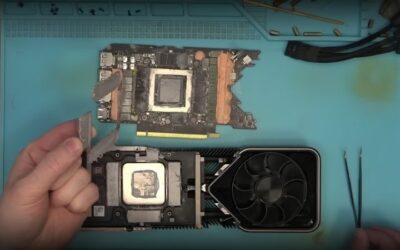
Step 6: Repaste and repad if needed. On an older card where cleaning does not bring temperatures down, fresh thermal paste on the die and new pads on the memory restore the heat transfer the cooler was designed for, often eliminating artifacts that appeared under sustained load.
A cable swap is also worth doing at this stage if you have not already. Some owners complete an entire thermal fix only to discover the artifacts were caused by a loose or degrading cable, so rule out the cheapest, simplest cause alongside the thermal checks to avoid wasted effort.
Step 7 to 9: Hardware Diagnosis
Step 7: Test in another system. If artifacts persist after software and thermal fixes, install the card in a different PC to rule out the motherboard, PSU, or cable. Artifacts that follow the card confirm a GPU fault; artifacts that stay with the original system point elsewhere.
Step 8: Downclock the memory. In MSI Afterburner, reduce the memory clock by 100–200 MHz and re-test. If the artifacts stop, the VRAM is degraded and the downclock is a temporary workaround. This is a strong signal of a hardware-level issue.
Step 9: Decide on repair or replacement. A card with confirmed VRAM degradation may continue to work at a lower clock for a while, but the problem typically worsens. At this stage, warranty replacement, RMA, or a new card is the long-term answer.
Pro Tips, Mistakes, and Honest Expectations
Artifact diagnosis rewards patience and order. Jumping to a hardware conclusion before ruling out software wastes money, while ignoring a genuine thermal problem lets it worsen. This section covers the habits that keep the process efficient and the honest truth about when a card cannot be fixed.
Pro Tips for Accurate Diagnosis
Always revert overclocks first. An unstable memory overclock produces artifacts that look exactly like failing VRAM, and the only way to tell them apart is to test at stock. Skipping this step leads to false hardware diagnoses that cost real money.
Log temperatures alongside the artifact appearance. If you can pinpoint the exact temperature at which corruption begins, you have a clear thermal threshold to fix with cooling. Without that data, every fix is a guess.
Common Mistakes to Avoid
Do not assume the card is dying at the first sign of artifacts. The majority of cases are software or heat, both of which are fixable. Panicking and buying a replacement before running through the checklist wastes hundreds of dollars on a problem a driver reinstall might have solved.
Do not ignore artifacts that only appear occasionally. Intermittent corruption under load is often an early thermal warning, and fixing it now with cleaning or a repaste prevents the problem from worsening into persistent faults.
Pros and Cons of a DIY Artifact Fix
On the plus side, the diagnostic process is free, the most common fixes cost little or nothing, and working through the checklist gives you a clear understanding of your card’s health. Even in a worst-case VRAM scenario, a temporary memory downclock can extend usable life.
On the downside, a genuinely degraded card cannot be fully repaired at home. If the diagnosis points to VRAM failure, the options narrow to a warranty claim, RMA, or replacement. Knowing that early is still valuable, because it stops you spending on fixes that will not help.
Most GPU artifacts trace back to an unstable overclock, a bad driver, or heat, all of which are fixable. Work through the checklist, confirm the cause, and apply the right fix.
Building a quick diagnostic habit into your GPU ownership catches problems early. A ten-minute run through the first three software steps after any driver update or new game install keeps you ahead of the most common artifact triggers and gives you ongoing confidence that the card is healthy. If artifacts do appear in only one title, check the game’s known-issues page before blaming the card, since game-specific shader bugs are common and are fixed by patches, not by hardware changes. Confirming the scope of the problem before acting prevents unnecessary teardowns and expense.
See More:
- How to lower GPU temperature
- How to lower GPU hotspot temp
- How to increase GPU performance
- How to enable G-Sync
Conclusion
Learning how to fix GPU artifacts is about diagnosis first and fixes second. Revert overclocks, clean-install the driver, and test across multiple titles to rule out software. Monitor temperatures to catch thermal causes, then clean, repaste, and repad as needed. Test in another system and downclock memory to confirm or rule out VRAM degradation. Most cases resolve with free or cheap steps, and even a worst-case diagnosis gives you clarity. Use the recommended tools and supplies through the links above and enjoy the confidence of a properly diagnosed, cleanly running card. Building a ten-minute diagnostic habit after driver updates or new game installs catches the most common artifact triggers early, when they are cheapest to fix, rather than after they have worsened into a larger problem. to keep your card displaying a clean, artifact-free image.
Top-Rated Picks


| Product | Brand | Rating | Reviews | Price |
|---|---|---|---|---|
| ARCTIC MX-4 (4 g) – Premium Performance Thermal Paste… | ARCTIC | ★ 4.8 | 104k | $4.99 |
| ARCTIC MX-4 (incl. Spatula, 4 g) – Premium Performanc… | ARCTIC | ★ 4.8 | 71.9k | $5.49 |
| Crucial 8GB DDR4 RAM 3200MHz (PC4-25600), Downclockab… | Crucial | ★ 4.8 | 62.8k | $74.99 |
| AMD Ryzen 5 5600X 6-core, 12-thread unlocked desktop … | — | ★ 4.8 | 30.2k | $177.60 |
| NVIDIA Shield Remote; Voice Search, Motion-Activated,… | — | ★ 4.7 | 10.6k | $25.99 |
Frequently Asked Questions
What do graphics artifacts actually look like?
Common signs include coloured speckles across the screen, flickering or stretched polygons, blocky texture corruption, horizontal lines, and geometry spikes shooting off models. They usually appear under load rather than on the desktop. Artifacts that appear in the BIOS screen before Windows loads point strongly to a hardware fault rather than a driver issue.
What causes artifacts most often?
An unstable memory overclock is the single most common cause, followed by overheating memory modules, a failing or inadequate power supply, a corrupted driver installation and, less often, genuinely degraded VRAM. Cards used heavily for mining are more prone to memory-related artifacts because sustained load accelerates thermal pad and module wear.
How do I diagnose the cause systematically?
Reset all clocks to stock first and see whether artifacts disappear. Then use Display Driver Uninstaller in safe mode and install the current driver cleanly. Next, log memory junction temperature during a long gaming session. Finally, test the card in another system, or another card in yours, to isolate the power supply.
Can artifacts be fixed, or is the card dead?
Frequently they are fixable. Overclock instability, driver corruption, dust-driven overheating and marginal power delivery all cause artifacts and all have straightforward remedies. Only after those are ruled out, and artifacts persist at stock clocks with good temperatures in a second system, should you conclude the memory or GPU itself has degraded.
Do artifacts always mean permanent damage?
No. Transient artifacts from an aggressive overclock vanish the moment you reduce clocks, with no lasting effect. Persistent artifacts at stock settings that also appear in BIOS and in another machine indicate hardware failure. If the card remains in warranty, document the behaviour with photographs and start a support claim rather than attempting repair.




Write Your Review
No reviews yet. Be the first to share your experience!