
- Top Pick: OwlTree 4 Pack Thermal Pad,100x100mm 0.5mm 1mm 1.5mm 2mm Highly Efficient Thermal Conductivity 6.0 W/mK,Heat Resistant Silicone Thermal Pads for Laptop Heatsink CPU GPU SSD IC LED Cooler
- Best Value: CPU & GPU Cooling Fan Set for Lenovo Legion Pro 7 16ARX8H / 16IRX8 / 16IRX8H (82WQ), Y9000K 2023, and R9000K 2023 5H40S20787 / 5H40S20788 / 5H40S20789 Replacement Fans 12V (CPU and GPU Fan)
- Premium Choice: SYW·pcparts GPU Cooling Fan for MSI Sword 15 A12U Series A12UC A12UD A12UE A12UG, Replacement DC 5V Graphics Card Fan
GPU overheating fix searches usually start when a card runs hot enough to throttle, get loud, or shut down mid-game. A graphics card that runs too hot loses performance, makes more noise, and ages faster, so cooling it properly is worth the effort. The good news is that most overheating has a clear, fixable cause, from dust and poor airflow to aged thermal paste. This guide walks through the causes and the cooling solutions that work, in order of effort, drawing on patterns reported across many cards and builds.

Worked through methodically, a GPU overheating fix is almost always achievable without replacing the card itself.
As an Amazon Associate we earn from qualifying purchases at no extra cost to you.


What Causes a GPU to Overheat
Overheating has a small set of common causes, and identifying which applies tells you exactly where to focus. Dust and airflow, aging thermal materials, and demanding settings or overclocks are the main culprits. Here is how each contributes to high temperatures.
Dust, Airflow, and Case Cooling
The most common cause of rising temperatures over time is simply dust. As it accumulates on the heatsink and fans, it insulates the card and blocks airflow, steadily driving temperatures up over months of use.
Poor case airflow compounds the problem. A case starved of intake, clogged with dust filters, or short on exhaust traps hot air around the card, so the GPU recirculates its own heat rather than expelling it.
Addressing dust and airflow is the first and most effective step for most overheating cards.
The pattern of the heat is a useful clue. Temperatures that have crept up gradually over months almost always point to dust, whereas a card that has run hot since installation more likely has an airflow or mounting issue from the start. Distinguishing a slow climb from a sudden one tells you where to look first.
Aging Thermal Paste and Pads
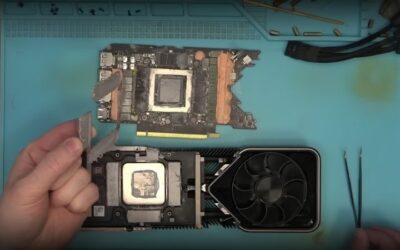
On cards a few years old, the thermal paste between the chip and the heatsink dries out and loses effectiveness, allowing temperatures to climb even when the card is clean. The memory pads can degrade similarly.
This kind of overheating develops gradually and affects a card that once ran cool, which is the telltale sign. The paste is doing less of its job of transferring heat away from the silicon.
For an older card, refreshing the thermal materials is one of the most impactful fixes available.
Memory temperatures are easy to overlook in this. On cards with high-speed memory, the pads that cool the modules can degrade alongside the main paste, and a card that throttles on hot memory rather than the core will keep struggling until those pads are refreshed. Checking the memory temperature specifically guides whether a full pad replacement is needed.
Overclocks and Demanding Settings
Pushing the card harder naturally produces more heat. An overclock raises power draw and temperatures, and running games at very high settings or resolutions keeps the card at full load for longer.
A card that overheats only when overclocked or under the most demanding workloads is responding normally to the extra load you have asked of it. Reducing that load lowers temperatures directly.
Recognizing this helps you decide whether to cool the card better or simply ask less of it.
There is a useful middle ground here. Capping the frame rate in less demanding games stops the card running flat out for no benefit, which lowers temperatures and noise without affecting the experience. It is a simple setting change that often takes the edge off heat in exactly the situations where full performance is not needed.
How to Fix GPU Overheating
With the cause in mind, the cooling fixes run from simple cleaning to repasting and tuning. Most overheating responds to one of these, so work through them in order of effort, starting with the easiest and cheapest. Each step lowers temperatures directly.
Clean the Card and Improve Airflow
Start by cleaning the card and case. Use compressed air to clear dust from the heatsink fins and fans, and clean any dust filters in the case so air can flow freely again.
Improve the overall airflow path by ensuring you have a sensible balance of intake and exhaust fans, and that cables are not blocking the flow. Giving the card cool air to draw in and a clear path to expel hot air makes an immediate difference.
This costs little and often resolves overheating that built up gradually over time.
Take care with how you clean the fans. Holding the blades still while you blow dust away prevents them spinning too fast and stressing the bearings, and clearing the fins from the right direction pushes debris out rather than deeper in. A careful clean lasts longer and protects the fans in the process.
Repaste and Set a Better Fan Curve
If cleaning is not enough on an older card, replacing the thermal paste with a quality compound, and fitting fresh thermal pads where needed, can drop temperatures substantially. Follow a guide for your specific model, since cooler disassembly varies.
At the same time, set a more aggressive fan curve so the fans ramp up sooner under load. A little extra noise in exchange for noticeably lower temperatures is usually a worthwhile trade.
Together, fresh paste and a tuned fan curve are among the most effective cooling fixes for an aging card.
A balanced fan curve beats an extreme one. Ramping the fans steadily as temperature rises keeps the card cool without the constant noise of running them at maximum, and it avoids the wear that comes from fans repeatedly slamming to full speed. The goal is a curve that responds smoothly to load rather than aggressively.
Pros and Cons of Undervolting
Undervolting lowers the voltage the card uses while holding its clocks, which reduces heat and power without sacrificing much performance. It is a powerful tool, with trade-offs worth knowing.
Pros
- Lowers temperatures and power draw, often with no performance loss.
- Reduces fan noise as a direct result of less heat.
- Costs nothing and is fully reversible.
Cons
- Requires testing to find a stable voltage for your card.
- An unstable undervolt can cause crashes until tuned correctly.
- Results vary between individual cards.
Advanced Cooling and Prevention
If the basics are not enough, or you want to keep temperatures low for the long term, a few further steps help. These range from improving the case itself to ongoing monitoring. Here is how to take cooling further.
Case Layout and Extra Fans
The case has a large effect on GPU temperatures. Adding intake fans to feed the card cool air, and exhaust fans to remove hot air, improves the whole thermal picture, as does choosing a case with good ventilation.
Cable management matters too, since a tidy interior lets air move freely. For a card that sits close to the bottom of the case, ensuring there is intake nearby makes a measurable difference.
Improving the case is a lasting fix rather than a temporary one.
Positive air pressure is worth aiming for. Having slightly more intake than exhaust keeps fresh air flowing through dust filters rather than drawn in through unfiltered gaps, which both cools the card and slows the dust buildup that caused the problem in the first place. It is a simple principle that pays off over the long term.
Monitoring Temperatures
Keeping an eye on temperatures lets you catch problems early and confirm your fixes worked. A monitoring tool that shows core and memory temperatures during gaming reveals exactly how hot the card runs under real load.
Watching the trend over time also flags when dust is building up again or paste is aging, so you can act before throttling returns. Knowing your normal temperatures makes any future rise easy to spot.
Regular monitoring turns overheating from a recurring surprise into a managed, predictable thing.
Set yourself a rough threshold to watch for. Knowing the temperature at which your card begins to throttle, and treating a sustained approach to that figure as a prompt to act, turns monitoring into early warning rather than after-the-fact diagnosis. Acting on a trend is always easier than reacting to a shutdown.
When Cooling Is Not Enough
Occasionally a card runs hot despite a thorough clean, fresh paste, and good airflow, which can indicate a cooler mounting problem or, rarely, a deeper hardware fault. Reseating the cooler with correct, even pressure sometimes resolves a stubborn case.
If a card continues to overheat and throttle after every reasonable fix, and especially if it is old and worn, replacement may be the practical option. Weigh the effort already spent against the card’s remaining value.
When a new card is the better path, check the current price and choose one with a strong cooler suited to your system.
Before reaching that conclusion, confirm the readings are real. A faulty sensor or a misreporting monitoring tool can occasionally exaggerate temperatures, so cross-checking with a second utility, and confirming the card actually feels hot and throttles in practice, ensures you are solving a genuine heat problem rather than a measurement error.
See More:
- GPU for Valorant 240fps
- GPU for Fortnite 240fps
- GPU for CS2 high fps
- GPU for Apex Legends
- RTX 4070 Cyberpunk FPS
Conclusion
An effective GPU overheating fix almost always starts with the basics: clean the dust, improve case airflow, and confirm the fans are working before anything more involved. For an older card, fresh thermal paste, a tuned fan curve, and a careful undervolt can transform temperatures, while a better case layout and ongoing monitoring keep the card cool long term. Only when every reasonable cooling fix fails should you treat the card as the problem. Keep your card clean and well-ventilated to prevent overheating returning, and if a replacement is ultimately needed, check the current price and choose one with a capable cooler.
Top-Rated Picks


Editor's Pick
GIGABYTE GeForce RTX 3060 Gaming OC 12G (REV2.0) Graphics Card, 3X WINDFORCE Fans, 12GB 192-bit GDDR6, GV-N3060 Video Card


| Product | Brand | Rating | Reviews | Price |
|---|---|---|---|---|
| MSI GeForce RTX 3060 Ventus 2X 12G OC, Gaming Graphic… | — | ★ 4.7 | 4.5k | $635.00 |
| GIGABYTE GeForce RTX 3060 Gaming OC 12G (REV2.0) Grap… | — | ★ 4.7 | 3.2k | $479.00 |
| EVGA GeForce GTX 1060 3GB GAMING, ACX 2.0 (Single Fan… | EVGA | ★ 4.6 | 3.4k | $247.79 |
| MSI Gaming GeForce GTX 1660 Super 192-bit HDMI/DP 6GB… | — | ★ 4.7 | 2.2k | $232.60 |
| MSI GeForce RTX 4060 Ti Ventus 3X 8G OC (8GB GDDR6/PC… | — | ★ 4.7 | 1.3k | $998.00 |
Frequently Asked Questions
What is the first thing to check on an overheating card?
Dust. A clogged fin stack can add 15 to 20C on its own. Power the system down, remove the card, and blow compressed air through the fins from the back side while holding the fans still so they do not overspin. Also clear intake filters and front panel mesh.
How much difference does case airflow make?
A great deal. Feeding the card 25C intake air instead of recycled 45C exhaust can lower core temperature by 8 to 12C. Two or three front intake fans, a rear exhaust, and at least 30 mm of unobstructed space beneath the card are more effective than most aftermarket accessories.
When should I repaste the GPU?
Consider it at three to four years, or immediately if the hot spot to core delta exceeds roughly 20C. Use a quality non-conductive compound, replace thermal pads with the exact original thickness on memory and VRM, and tighten the backplate screws evenly in a cross pattern to preserve mounting pressure.
Does undervolting really cool the card?
Yes, because heat is a direct product of power. Reducing the voltage-frequency curve to around 0.900 to 0.950V typically cuts 40 to 70 watts on an RTX 4070 Ti or 4080 class card and drops temperatures 8 to 15C, while costing only a couple of percent of frame rate.
Should I worry more about memory temperature than core?
On GDDR6X cards yes. RTX 3080, 3090, 4080 and 4090 memory routinely reaches 95 to 105C and throttles above that, producing stutter even when the core reads a comfortable 70C. Monitor memory junction in HWiNFO64 and replace memory pads if it consistently sits above 100C.




Write Your Review
No reviews yet. Be the first to share your experience!