
The GeForce RTX 3060 was announced at CES in January 2021 and went on sale on February 25, 2021, as the 12GB mainstream entry in NVIDIA’s Ampere-based RTX 30-series. It sat below the RTX 3060 Ti, which had launched a couple of months earlier in December 2020.
- Announcement to Availability
- Launch Timeline Table
- Key Specs at Launch
- The 8GB Variant and LHR Revisions
- What Came After the RTX 3060
- Is It Still Relevant Today?
- Why the 12GB Decision Mattered
- The Mining-Era Legacy on the Used Market
- Who Should Buy or Skip It
- Features Worth Knowing About
- Buyer Checklist
- Frequently Asked Questions
- Related Guides
Its unusual 12GB memory pool made it one of the more talked-about cards of its generation, and the launch landed in the middle of a global graphics card shortage that shaped its early reputation. This article lays out the release timeline, the specs at launch, the later variants, what succeeded it and whether it still fits a build.
Announcement to Availability
NVIDIA revealed the RTX 3060 in January 2021 during its CES presentation, alongside news about laptop GPUs. The desktop card reached stores at the end of February 2021. Founders Edition cards were not offered for the 3060, so the launch relied on partner models from the usual board makers. If you need the exact date for a given region, check NVIDIA’s announcement.
The timing mattered. High demand from gamers and cryptocurrency miners, plus component shortages, meant that finding any 30-series card was difficult in 2021. NVIDIA introduced a hash rate limiter on new production of the 3060, and later versions were marketed as “LHR,” short for lite hash rate. That detail still appears in used listings today.
Launch Timeline Table
| Milestone | Timing | Notes |
|---|---|---|
| RTX 3080 and 3090 | September 2020 | Start of the RTX 30-series |
| RTX 3070 | October 2020 | High-end mainstream |
| RTX 3060 Ti | December 2020 | The card directly above the 3060 |
| RTX 3060 announced | January 2021 | Revealed at CES |
| RTX 3060 on sale | Late February 2021 | 12GB desktop launch |
| LHR versions | Mid 2021 | Hash rate limiter on newer production |
| 8GB variant | Later in the product’s life | Narrower bus and less memory |
| RTX 4060 | 2023 | Next-generation successor |
| RTX 5060 | 2025 | Blackwell successor in the same tier |
Key Specs at Launch
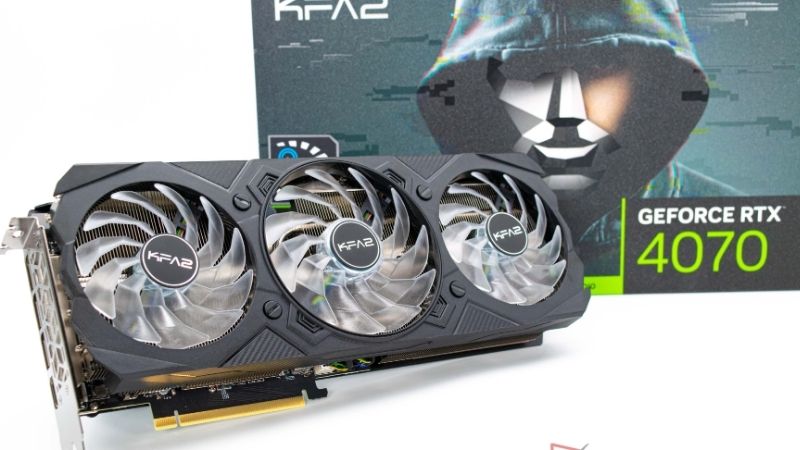
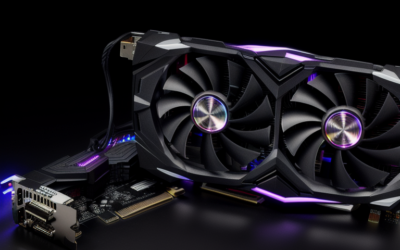
The RTX 3060 uses the GA106 chip with 3,584 CUDA cores, 112 Tensor cores and 28 ray tracing cores. It has 12GB of GDDR6 memory on a 192-bit bus, giving about 360 GB/s of bandwidth. Board power is around 170 watts, with most partner models using a single 8-pin connector. The card uses PCIe 4.0 x16 and typically offers HDMI 2.1 and DisplayPort 1.4 outputs.
The memory choice was the headline. At the time, the cards above it, such as the RTX 3070 and the 3060 Ti, had 8GB, so the 12GB capacity of the 3060 stood out. The 192-bit bus meant that 6GB was an alternative option, but NVIDIA chose 12GB, which gave the card more room for high-resolution textures than its higher-priced siblings.
The 8GB Variant and LHR Revisions
Later in the card’s life, NVIDIA added an RTX 3060 with 8GB of memory on a narrower bus. It keeps the same name, which makes labels important when you shop. The 8GB card has lower memory bandwidth and a smaller buffer, so it can behave differently in memory-heavy games. Listings that only say “RTX 3060” may refer to either one.
The LHR revisions share the same specifications as the original but include the mining limiter. For gaming, the difference is not noticeable. When buying used, check that the card is a gaming card with normal behavior, and ask if it was used for mining.
What Came After the RTX 3060
NVIDIA’s RTX 40-series arrived in late 2022. The RTX 4060 followed in 2023 as the nearest successor, bringing a newer architecture, better efficiency and frame generation support, but with 8GB of memory. The RTX 50-series followed in 2025, including the RTX 5060. When comparing, look beyond raw frame rates: the 3060’s 12GB buffer remains a point in its favor against some newer 8GB cards in memory-hungry games, while newer cards offer better efficiency and feature support.
Is It Still Relevant Today?
As of late 2026 the RTX 3060 remains a capable 1080p card and a workable 1440p card with upscaling. Its 12GB of memory is helpful, and it supports DLSS upscaling and hardware ray tracing. It does not support frame generation. It is also widely available on the used market, which makes it a common budget upgrade.
- Strengths: generous 12GB buffer on the original model, moderate power draw, broad availability.
- Weaknesses: no frame generation, modest ray tracing performance, slower than newer mainstream cards.
Check NVIDIA’s driver release notes for current support of the 30-series.
Why the 12GB Decision Mattered
Memory capacity on a GPU is tied to its bus width, because memory chips come in fixed sizes and the number of chips follows the bus. With a 192-bit bus, the 3060 could be built with either 6GB or 12GB. NVIDIA chose 12GB, which made the card look generous next to the 8GB cards above it in the lineup. That choice gave it a longer useful life in games that load large textures, and it is a main reason the card has stayed popular.
It also created an odd situation where the cheaper card had more video memory than the 3070, 3070 Ti or 3060 Ti. For gaming, raw speed still decided most results at launch, but as texture sizes grew, the extra memory started to matter more. Anyone comparing the 3060 with a faster 8GB card today should think about which limit they are more likely to hit.
The Mining-Era Legacy on the Used Market
Because the 3060 launched into a mining boom, a share of used cards were run for long periods at high load. That does not automatically mean a card is worn out, but it is a reason to inspect carefully. Check the fans, look for dust packed into the heatsink, and ask whether the seller has records or photos of the card working.
Look at the board for signs of repairs, discolored thermal pads and damaged connectors. A card with a clean PCB, quiet fans and stable behavior in a stability run is a better bet than one that is simply cheaper. If a seller will not answer simple questions about the card’s history, treat that as a warning sign.
Who Should Buy or Skip It
The Budget Upgrader
If you are coming from a GTX 10-series or older card and want an easy move up for 1080p and some 1440p, a 12GB 3060 at a fair price is a sensible choice.
The Memory-Conscious Gamer
If you care about texture settings and want more than 8GB without paying for a higher tier, the 12GB model is attractive. Make sure the listing is not the 8GB variant.
The Next-Gen Feature Seeker
If you want frame generation and the latest efficiency gains, look at the newer 40-series or 50-series cards instead.
Features Worth Knowing About
Beyond raw specs, the 3060 brought the full Ampere feature set to the mainstream tier: second-generation ray tracing cores, third-generation Tensor cores, DLSS upscaling, NVIDIA Reflex latency tools and AV1 decoding support. It also supports resizable BAR on compatible platforms, which can help some games when enabled in the BIOS. These features are part of why the card has aged reasonably well despite its modest tier.
Buyer Checklist
- Confirm 12GB or 8GB in the listing title and the product page.
- Check for an 8-pin connector on your PSU.
- Ask used sellers about mining history and request proof of operation.
- Compare with newer entry-level cards for efficiency and features.
- Measure card length and thickness for your case.
Frequently Asked Questions
When did the RTX 3060 come out?
It was announced in January 2021 and went on sale on February 25, 2021. Check NVIDIA’s announcement for regional details.
Does the RTX 3060 have 12GB of memory?
The original model does, using a 192-bit bus. A later variant has 8GB on a narrower bus, so check the listing.
What replaced the RTX 3060?
The RTX 4060 arrived in 2023, followed by the RTX 5060 in 2025. Both sit in the same general tier.
Is the RTX 3060 still worth buying?
It is a reasonable choice for 1080p and light 1440p gaming at a fair used or discounted price. Newer cards offer better efficiency and added features.
Related Guides
- RTX 3060 Ti Review: Is It Still the Best Budget GPU in 2026?
- Best RTX 3060 (2026): How to Choose
- RTX 3060 Price 2026: Is It Still a Smart Budget Buy?
- RTX 3060 Ti 8GB Review: Is It Still Worth Buying in 2026?
Write Your Review
No reviews yet. Be the first to share your experience!