
- Top Pick: GIGABYTE GeForce RTX 5060 WINDFORCE OC 8G Graphics Card, Cooling System, 8GB 128-bit GDDR7, PCIe 5.0, Manufactured by NVIDIA, DisplayPort & HDMI – Video Output Interface, GV-N5060WF2OC-8GD Video Card
- Best Value: ASUS Dual NVIDIA GeForce RTX 5060 Ti 16GB GDDR7 OC Edition Graphics Card, (PCIe 5.0, DLSS 4, HDMI 2.1b, DisplayPort 2.1b, 2.5-Slot, Axial-tech Fan, 0dB Technology), 3 Year Warranty
- Premium Choice: ASUS Dual Radeon RX 9060 XT 16GB GDDR6 Graphics Card, AMD, for Desktop (PCIe 5.0, HDMI 2.1b, DisplayPort 2.1a, 2.5-Slot, Axial-tech Fan, 0dB Technology, and More)
Graphics card at Best Buy searches spike whenever someone wants a GPU in their hands today rather than in three days. Walk-in retail has a narrower catalogue and different pricing behaviour than online, so it pays to know which models are worth the trip, and which ones are better ordered, before you drive over there.
As an Amazon Associate we earn from qualifying purchases at no extra cost to you. Product prices and availability are accurate as of the date shown and are subject to change.
By Ryan Cole, PC hardware writer at NvidiaReview
How to Choose a Graphics Card at Best Buy
Buying a graphics card at Best Buy means choosing from a fraction of the models available online, usually reference-style or entry-level partner cards. That narrows the decision to three practical checks you can make standing in the aisle, before you commit to carrying a box home.
Confirm the Card Physically Fits Your Case
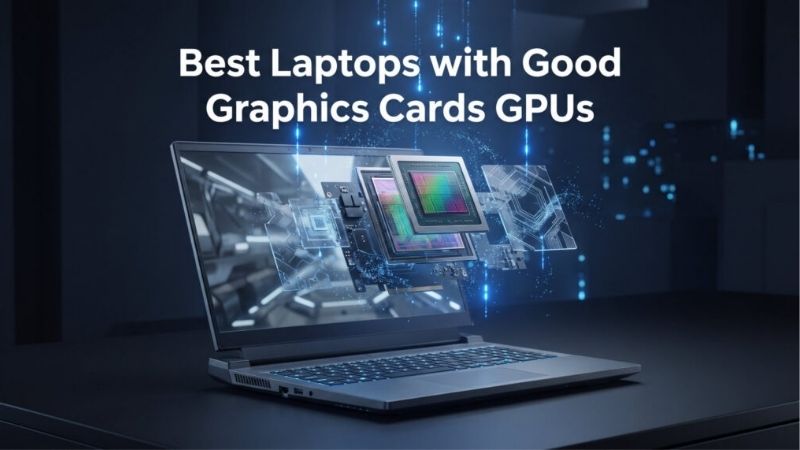
Card length and slot height are printed on the box, and this is the mistake that turns a same-day purchase into a same-day return. Measure your case clearance before leaving home, including any front radiator or fan stack that eats into the space in front of the graphics card.
Slot thickness matters just as much. Many current partner cards occupy two and a half or three slots, which can block the second PCIe slot entirely and choke airflow in a compact chassis. In a small form factor build, a shorter dual-slot model is worth more than a slightly higher core clock.
Match VRAM and Bus Width to Your Monitor
At 1080p, 8GB still works for most titles but is increasingly tight with high texture settings. At 1440p, 12GB is the comfortable floor, and 16GB gives real headroom for the next few years. Bus width matters too: a 128-bit card behaves differently at high resolution than a 256-bit one.
Memory type has become a differentiator. NVIDIA has moved its current generation to GDDR7 while AMD Radeon RX 9000 cards use GDDR6. Both perform well in games; the difference shows up mainly in pricing and supply, since GDDR7 modules are considerably more expensive to source.
Check Power Connectors and PSU Headroom
Look at the board partner specification for total board power and the connector type. Cards in the 180W class typically use a single 8-pin, while higher tiers use either dual 8-pin or the 12V-2×6 connector, which needs an adapter if your power supply predates the ATX 3.0 standard.
Add roughly 150W of headroom above the combined CPU and GPU draw when sizing a supply. If your existing unit is an older 550W model and you are stepping up to a 300W card, budget for a new PSU in the same trip rather than discovering the problem during your first heavy session.
Finally, weigh the channel itself. Retail wins on same-day stock and a simple returns counter, which matters when a dead card has left you without a working machine. Online wins on partner variety, compact two-slot designs and pricing during promotions, so plan ahead when the upgrade is optional.
Top Picks: Graphics Card at Best Buy Worth Considering
These five cover the range most commonly stocked at physical retail, from a budget 1080p option to a strong 1440p performer. Specifications are reference figures from the chip vendors; partner cards vary in clocks and dimensions. Availability was checked in August 2026 and changes constantly.
| Model | Memory | Bus width | Board power | Target resolution |
|---|---|---|---|---|
| Intel Arc B580 | 12GB GDDR6 | 192-bit | 190W | 1080p |
| GeForce RTX 5060 Ti 16GB | 16GB GDDR7 | 128-bit | 180W | 1080p / 1440p |
| GeForce RTX 5070 | 12GB GDDR7 | 192-bit | 250W | 1440p |
| Radeon RX 9070 XT | 16GB GDDR6 | 256-bit | 304W | 1440p / 4K |
| GeForce RTX 5070 Ti | 16GB GDDR7 | 256-bit | 300W | 1440p / 4K |
Intel Arc B580 – Best Budget Option
The B580 pairs 12GB of GDDR6 on a 192-bit bus with a 190W board power figure and a single 8-pin connector, which is unusually generous memory for its tier. For 1080p gaming and light creative work it is the most card you can get for the money in this bracket, and it fits modest cases.
Driver maturity remains the caveat. Intel has improved enormously, but older DirectX 11 titles and niche applications can still behave unpredictably compared with the two established vendors. It also benefits from resizable BAR being enabled, which older platforms may not support properly.
GeForce RTX 5060 Ti 16GB – Best 1080p to 1440p Balance
The 16GB variant is the one worth buying. It carries 16GB of GDDR7 with a 180W board power rating and a single 8-pin connector, so it drops into modest builds without a power supply upgrade. That memory capacity gives it real staying power at 1440p with high textures.
The 128-bit bus is the honest limitation, and it shows at higher resolutions where memory bandwidth starts to bite. Retail shelves also stock the 8GB version in similar packaging, so read the box carefully. At the same price, the 8GB card is not the one you want.
GeForce RTX 5070 – Best Mainstream 1440p Card
With 12GB of GDDR7 on a 192-bit bus and a 250W board power rating, the RTX 5070 is the natural 1440p choice for most builders and the tier that turns up most often in stock. It uses the 12V-2×6 connector, so check that your supply has one natively or shipped with the adapter.
The 12GB buffer is adequate rather than luxurious, and it is the first thing that will feel tight if you push to 4K with heavy texture packs. Cards in this tier have also seen the steepest pricing pressure of the generation, so compare against the 16GB alternatives before deciding.
Radeon RX 9070 XT – Best Memory for the Money
The RX 9070 XT brings 16GB of GDDR6 on a 256-bit bus with a 304W board power figure, typically drawing from dual 8-pin connectors. Because it uses GDDR6 rather than GDDR7, its supply chain has been less strained than the competition, which often translates into better shelf availability.
Board power is high enough to demand a quality 750W supply and decent case airflow, and partner designs tend to be long and thick. Ray tracing performance still trails NVIDIA at equivalent tiers. For raw rasterised frames per dollar at 1440p, it is very hard to beat.
GeForce RTX 5070 Ti – Best High-End Retail Pick
The 5070 Ti combines 16GB of GDDR7 on a 256-bit bus with a 300W board power rating, which makes it a genuine 4K card in most titles and a very comfortable 1440p one for years to come. It is usually the highest tier that appears with any regularity on physical retail shelves.
Pricing is the problem. This tier has absorbed the largest increases of the current generation, and in-store stock rarely undercuts online listings. It also needs a 12V-2×6 connection and a case that can handle a long triple-slot card, so measure before you commit to a walk-in purchase.
Frequently Asked Questions
The questions that come up most from people deciding whether to buy a graphics card at Best Buy today or wait for an online order. Short answers on pricing, checking local stock before you travel, and whether open-box listings are worth the saving on a component this expensive.
Are in-store graphics cards more expensive?
Not always. A graphics card at Best Buy is usually priced against the vendor recommended figure, which looks competitive when supply is tight and poor when online sellers discount. The gap is rarely dramatic on GPUs, unlike accessories where the in-store markup is proportionally larger.
Can I check local stock before driving over?
Yes, and you should. The retailer website lets you filter availability by store, which is the only reliable way to know whether a specific model is physically present. Allocation varies enormously between locations, and popular tiers can sell through within hours of arriving.
Do retail cards come with the power adapter?
Cards using the 12V-2×6 connector generally include an adapter cable in the box, but this varies by board partner. Check the specification list on the packaging. If your power supply predates ATX 3.0 and no adapter is included, budget for one before leaving the store.
Is the open-box option worth considering?
It can be, provided the listing states the condition clearly and the return window is intact. Open-box is the one case where buying a graphics card at Best Buy clearly beats online pricing. Inspect the connectors and fans before leaving, and test the card thoroughly the same evening.
See More:
- Best thermal compound paste
- Thermal paste at Best Buy
- Best AM4 CPU for gaming
- Best motherboard for 9800x3d
Final Thoughts
Buying a graphics card at Best Buy makes sense when you need working hardware today and the model on the shelf fits your case and power supply. If you have time, order online for a wider choice of partner designs and better pricing. Check local stock first, measure your clearance, and never buy a tier above what your monitor needs.
As an Amazon Associate we earn from qualifying purchases at no extra cost to you. Product prices and availability are accurate as of the date shown and are subject to change.





Write Your Review
No reviews yet. Be the first to share your experience!