
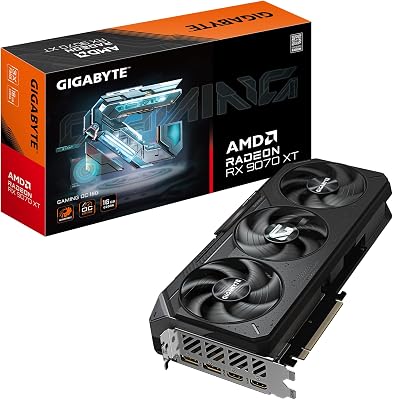
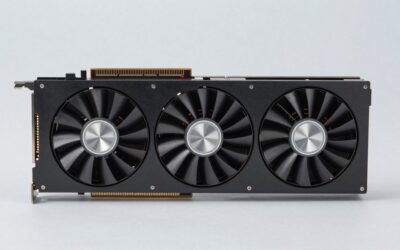
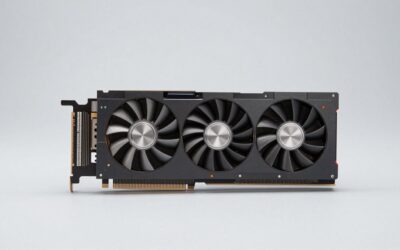
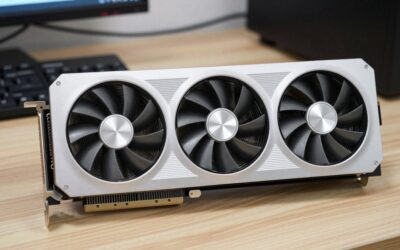
- Top Pick: GIGABYTE Radeon RX 9070 XT Gaming OC 16G Graphics Card, PCIe 5.0, 16GB GDDR6, GV-R9070XTGAMING OC-16GD Video Card
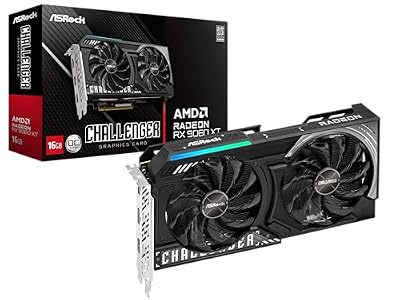
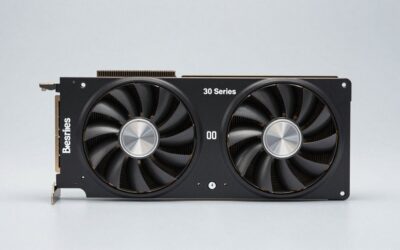
- Best Value: ASRock Radeon RX 9060 XT Challenger 16GB OC, RDNA 4, 3290MHz Boost, 16GB GDDR6 128-bit, PCIe 5.0, Dual Fans, 0dB Silent, LED Indicator, DisplayPort 2.1a, HDMI 2.1b
- Premium Choice: ASUS Dual Radeon RX 9060 XT 16GB GDDR6 Gaming Graphics Card
9070 XT vs 9060 XT 16GB is the value-versus-power question facing almost every AMD buyer in 2026, and the answer is not as one-sided as the price gap suggests. Both are Radeon cards with 16GB of memory, but they sit in different classes: one chases higher resolutions and raw frames, the other chases efficiency and price-per-frame. This comparison gives you the quick verdict up front, a full specs breakdown, a feature-by-feature face-off, and a clear recommendation for which card fits your build and budget.

RX 9070 XT vs 9060 XT 16GB: Quick Verdict and Specs
Before the deep dive, most readers just want the short answer and the numbers to back it up. The two cards are aimed at different players, so the right pick depends heavily on your resolution, your power budget and how much you are willing to spend per frame. Here is the fast summary followed by the full specification table.
As an Amazon Associate we earn from qualifying purchases at no extra cost to you.






The Quick Verdict
If you game at 1440p or 4K and want the most performance, the RX 9070 XT is the clear winner, delivering roughly a third more aggregate performance and pulling much further ahead in the heaviest, most demanding titles.
If you game mainly at 1080p and care most about value and efficiency, the RX 9060 XT 16GB is the smarter buy. It costs significantly less, sips far less power, and its 16GB buffer means it does not compromise on memory despite the lower price.
In one line: the 9070 XT wins on raw power and high-resolution gaming, while the 9060 XT 16GB wins on price, efficiency and 1080p value, and both share the same generous memory. That last point is worth stressing, because it removes the usual budget-card compromise: whichever way you lean here, you are not sacrificing memory capacity, only compute power, which keeps the decision cleanly about resolution and budget rather than about future-proofing.
Full Specification Comparison
The specifications make the gap concrete and explain exactly where each card’s strengths come from.
| Spec | RX 9070 XT | RX 9060 XT 16GB |
|---|---|---|
| Compute units | 64 (4096 stream processors) | 32 (2048 stream processors) |
| Memory | 16GB GDDR6 | 16GB GDDR6 |
| Board power | 304 watts | 160 watts |
| Launch MSRP | $599 | $369 |
| Best resolution | 1440p and 4K | 1080p and entry 1440p |
| Relative performance | Around 34% faster overall | Better price per frame at 1080p |
The pattern is immediately clear: the 9070 XT has double the compute units and far more power to work with, while the 9060 XT 16GB matches it on memory and beats it decisively on efficiency and cost.
Price and Value in a Rising-Cost Market
Neither card lives at its launch price in 2026, and the reason matters for this comparison. A memory-driven component squeeze, fuelled by AI workloads competing for the same supply, has pushed graphics card prices upward across the board, so both cards commonly sell above their original MSRP and value becomes the deciding factor rather than a footnote.
That backdrop tilts the math toward the cheaper card for many buyers. When every card costs more than it should, the 9060 XT 16GB’s lower price and strong price-per-frame at 1080p look increasingly attractive, while the 9070 XT has to justify a larger absolute outlay in a market where every dollar stretches less. Real relief is not close either, since new memory production is only expected to come online around 2027 to 2028.
The practical consequence is that both cards are worth buying at a fair price now rather than waiting for a crash that the supply timeline says is years away, but the rising-cost environment makes the value-focused 9060 XT 16GB especially compelling for budget-conscious players. It is also worth watching each card individually rather than assuming the price gap stays fixed, because in a volatile market the two can move independently, and there are moments when a 9070 XT deal narrows the gap enough to change the recommendation outright.
Deep Dive Face-Off: Performance, Power and Features
With the summary settled, the detail is where you decide whether the 9070 XT’s premium is worth it for your specific use. Comparing the two by resolution, efficiency and features rather than as whole products shows exactly what your extra money buys and where the cheaper card gives up nothing. Each criterion favours a different buyer.
1080p, 1440p and 4K Gaming Performance
At 1080p the gap between the two is at its narrowest in value terms. The 9070 XT is faster, but the 9060 XT 16GB delivers excellent frame rates for far less money, which is why it posts a markedly lower cost per frame at this resolution and suits competitive 1080p players so well. It is worth spelling out for the large 1080p audience: the extra money the 9070 XT commands buys headroom you would never actually use at that resolution, so paying it would mean spending on performance the monitor simply cannot display, which is the single clearest argument for choosing the cheaper card here.
At 1440p and 4K the picture changes decisively. The 9070 XT’s extra compute units stretch its lead to roughly a third or more in aggregate, and even further in the most demanding titles, making it the card that stays comfortable at high settings where the 9060 XT starts to strain.
The analytical bottom line is that the two cards nearly converge on value at 1080p but diverge sharply as resolution climbs, which is why resolution is the single most important question when choosing between them. Put bluntly, paying the 9070 XT premium to game at 1080p is spending on headroom you will not use, while trying to drive a 4K panel with the 9060 XT asks the cheaper card to do work it was never built for, so the mismatch cuts both ways.
Power Draw, Efficiency and System Fit
Efficiency is where the 9060 XT 16GB shines. At around 160 watts it draws far less power than the 9070 XT’s roughly 304 watts, a difference that ripples through the whole build in practical ways that a frame-rate chart never shows.
That lower draw means the 9060 XT 16GB slots comfortably into small cases, modest power supplies and quieter builds, often without a power upgrade. The 9070 XT, by contrast, expects a stronger supply and better cooling, so a buyer on an older or compact system may find the cheaper card is not only cheaper to buy but cheaper and easier to run.
For anyone building in a small form factor or reusing an existing mainstream power supply, this practical gap can matter as much as the raw performance difference. A buyer who would otherwise need to upgrade a power supply or fight a cramped case to fit the 9070 XT should fold that hidden cost and hassle into the comparison, because a card that drops straight into the system you already own is often the better real-world choice even when it is slower on paper.
FSR 4, Upscaling and Future Features
Both cards are built on AMD’s current RDNA architecture and share the same modern feature set, including the latest FSR upscaling, which uses AI-assisted techniques to lift frame rates in supported games. That shared foundation is important, because it means the cheaper card is not missing key technology.
Where the extra power of the 9070 XT helps is in giving those features more headroom to work with at higher resolutions, so upscaling and future driver optimizations have more raw performance to build on. The 16GB buffer on both cards is also genuinely forward-looking, since games continue to demand more memory and both are well positioned to age gracefully rather than choke on future textures. AMD’s upscaling has also been improving generation over generation, and because both cards support the current version, a large share of the performance uplift arrives through software that keeps getting better after purchase, which is a meaningful bonus for buyers who plan to keep a card for several years rather than upgrade often.
Which to Buy, the Alternative and Final Verdict
All the data points toward a simple decision framed around resolution, budget and system, but it helps to spell out each card’s ideal owner and offer a middle option for anyone caught between them. This closing section makes the recommendation concrete so you can act on it with confidence rather than second-guessing the trade-offs.
Who Should Buy the RX 9070 XT
The 9070 XT is for the 1440p or 4K gamer who wants the most performance and has both the budget and the system to support it. If you run a high-refresh 1440p monitor or push into 4K, its extra compute and comfortable headroom justify the higher price.
| RX 9070 XT pros | RX 9070 XT cons |
|---|---|
| Around a third faster overall, more at 4K | Higher price in an already pricey market |
| Excellent for high-refresh 1440p and 4K | 304-watt draw wants a stronger supply |
| 16GB memory and full modern feature set | Overkill for pure 1080p players |
Choose it if performance is your priority and your build and budget can comfortably absorb the premium. It is the right call for anyone future-proofing a high-refresh setup, where the extra compute headroom keeps demanding games smooth for longer and delays the next upgrade, which can offset some of the higher up-front cost over the life of the card.
Who Should Buy the RX 9060 XT 16GB
The 9060 XT 16GB is for the 1080p gamer, the value hunter and the small or efficient build. It delivers strong frame rates for meaningfully less money and asks far less of your power supply and case, all without giving up memory capacity.
| RX 9060 XT 16GB pros | RX 9060 XT 16GB cons |
|---|---|
| Excellent price per frame, especially at 1080p | Noticeably slower at 1440p and 4K |
| Very efficient at around 160 watts | Less headroom for the most demanding titles |
| Full 16GB buffer despite the lower price | Fewer compute units limit high-res ceilings |
Choose it if value, efficiency and 1080p gaming matter more to you than chasing the highest resolutions.
See More:
The Alternative and Final Recommendation
If you are torn between the two, or the 9070 XT is a stretch while the 9060 XT feels slightly modest, the non-XT RX 9070 is the natural middle ground. It sits between them on both price and performance, offering a step up from the 9060 XT without the full cost and power draw of the XT, and it is worth pricing alongside the other two before you decide.
The final recommendation is straightforward: buy the 9070 XT if you game above 1080p and want maximum performance, buy the 9060 XT 16GB if you game at 1080p and want the best value and efficiency, and consider the plain 9070 if you want a balance of the two. Once you have matched a card to your resolution and system, you can compare current prices on all three through the links on this page and grab the one that fits at a fair price.
To sum up the 9070 XT vs 9060 XT 16GB decision, this is less a contest of better versus worse than a choice between power and value, both wrapped in the same generous 16GB of memory. The 9070 XT is the performance pick for high-refresh 1440p and 4K, while the 9060 XT 16GB is the efficient, budget-smart champion of 1080p, a distinction that matters more than ever in a 2026 market where prices remain elevated. Decide on your resolution and your budget first, and the right AMD card between these two becomes obvious.
Frequently Asked Questions
How large is the performance gap between these two cards?
It is substantial. The RX 9070 XT carries double the compute units of the 9060 XT, a 256-bit memory bus against 128-bit, and roughly twice the bandwidth. Expect it to be well over 60 percent faster in most titles, with the margin widening at 4K where bandwidth and shader throughput both matter more.
Since both have 16GB, why pay more for the 9070 XT?
Capacity is only one part of the memory equation. The 9070 XT feeds those 16GB with far greater bandwidth, and it has the shader hardware to actually use high settings at 1440p and 4K. The 9060 XT’s 16GB prevents stutter at 1080p and 1440p but does not give it the raw speed for higher targets.
What are the power supply differences?
The 9060 XT sits near 160 watts on a single 8-pin connector and is happy on a good 550 watt unit. The 9070 XT draws around 300 watts, wants two 8-pin connectors and a quality 750 watt supply. That is a meaningful difference if you are upgrading an existing prebuilt with a modest power supply.
Which one suits a small form factor case?
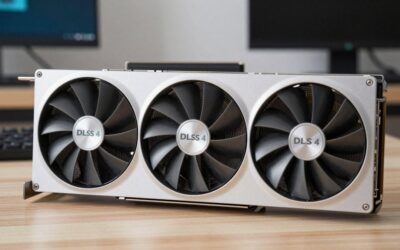
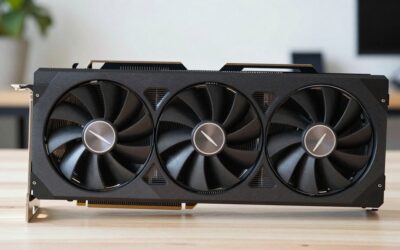
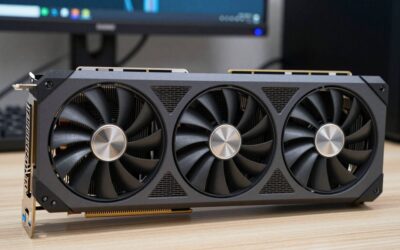
The 9060 XT is far easier to accommodate, with compact dual fan models available under 250mm and two slots thick. Most 9070 XT designs are triple fan units over 300mm long and close to three slots, needing good case airflow to keep noise down. Measure clearance carefully before committing to the larger card.
Which is better value per pound or dollar spent?
The 9060 XT 16GB usually wins on cost per frame and is the sensible choice for 1080p and entry 1440p gaming. The 9070 XT is the better card in absolute terms and the right pick if you target 1440p at high refresh or dabble in 4K, but you pay a premium for that headroom.

Write Your Review
No reviews yet. Be the first to share your experience!