
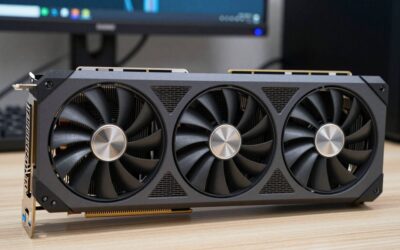
- Top Pick: GIGABYTE Radeon™ RX 9070 XT Gaming OC ICE 16G Graphics Card (16GB GDDR6, 256-bit, PCIe 5.0, HDMI/DP 2.1, 2.7 Slot, Hawk Fan, Server-Grade Thermal Gel, Reinforced Structure)
- Best Value: GIGABYTE Radeon RX 9070 XT Gaming OC 16G Graphics Card, PCIe 5.0, 16GB GDDR6, GV-R9070XTGAMING OC-16GD Video Card
- Premium Choice: Sapphire 11348-03-20G Pulse AMD Radeon™ RX 9070 XT Gaming Graphics Card with 16GB GDDR6, AMD RDNA 4
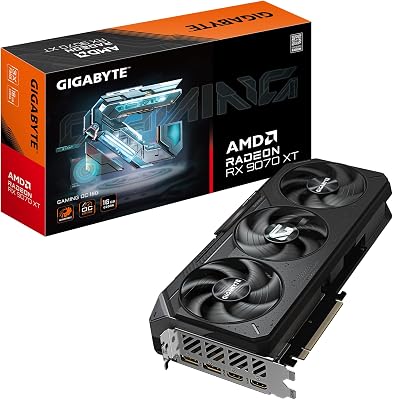


AMD RX 9070 XT vs 5070 Ti comes down to one honest question: is it worth paying extra for Nvidia, or does AMD’s cheaper card give you almost everything for less? Both pack 16GB of memory and target high-refresh 1440p and 4K gaming, but they sit at different prices. This comparison focuses on value, laying out real benchmarks, ray tracing, upscaling, power and 2026 pricing so you can decide whether the AMD card is the smarter buy for your build. Rather than declaring one card the winner for everyone, we weigh the premium against what you actually get, because value is personal and depends entirely on how you use your PC.
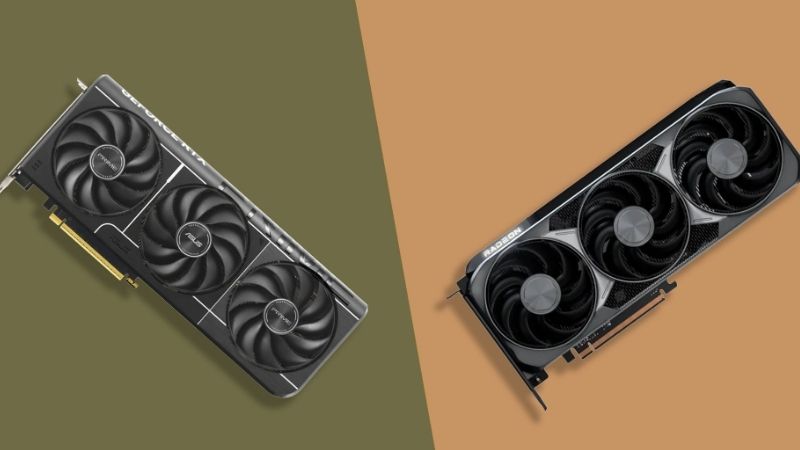
The Quick Verdict and Full Spec Sheet
Framed from the value angle, this fight asks whether the 5070 Ti’s premium is money well spent. Below is the fast answer, a full spec table, and the pricing context that determines how big that premium really is in 2026. The size of that premium is the whole story here, and because it shifts with sales and stock, the current price can make or break the case for paying up for Nvidia.
As an Amazon Associate we earn from qualifying purchases at no extra cost to you.




Quick Verdict: Is the RX 9070 XT the Smarter Buy?
The short version: for most 1440p gamers, the RX 9070 XT is the smarter buy, because it delivers most of the 5070 Ti’s rasterized performance for a lower price, and both cards share the same 16GB buffer.
The 5070 Ti earns its premium in ray tracing and DLSS 4 with Multi Frame Generation, where Nvidia holds a clear lead. If those features define how you play, paying up is justified. The reverse is just as true: if you almost never switch ray tracing on, most of what the 5070 Ti charges extra for sits unused, and that money is better kept in your pocket or spent elsewhere in the build.
So the smart answer depends on your games. Mostly rasterized play favors the cheaper 9070 XT; heavy ray tracing and creation favor the pricier 5070 Ti. A useful gut check is to open your most-played titles and count how many actually run ray tracing that you leave enabled. If the honest number is low, the 9070 XT’s savings are real money you keep; if it is high, the 5070 Ti’s premium buys something you will use every session.
Full Comparison Table: Specs Side by Side
Value starts with knowing exactly what each dollar buys. This table lists the specifications that drive performance and system fit, with the AMD card first since it is the value benchmark here.
| Spec | RX 9070 XT | RTX 5070 Ti |
|---|---|---|
| Architecture | AMD RDNA 4 | Nvidia Blackwell |
| Cores | 4,096 stream processors (64 CUs) | 8,960 CUDA cores |
| VRAM | 16GB GDDR6 | 16GB GDDR7 |
| Memory bus | 256-bit | 256-bit |
| Board power | ~304W | ~300W |
| Recommended PSU | 750W | 750W |
| Launch MSRP | 599 | 749 |
| Upscaling | FSR 4 | DLSS 4 + Multi Frame Gen |
The takeaway is plain: same memory, same power class, same PSU, but the 9070 XT arrives at a lower price while the 5070 Ti adds compute and Nvidia’s software. The question is whether that gap is worth it for you. Since both cards ask for the same 750W supply and occupy the same power class, moving from one plan to the other costs nothing in the rest of your build, so the entire decision really does reduce to price versus features rather than compatibility.
How 2026 Pricing Decides the Value Question
Because this is a value comparison, price movement matters more than usual. Component and laptop prices have kept trending upward, so the real gap between these cards can be larger or smaller than their MSRPs suggest.
There is cautious good news: prices stopped climbing as steeply as they did in late 2025, and some makers like Framework report a stretch of relative stability, while still warning of further swings. For a value-focused comparison this matters more than usual, because the entire case for the AMD card rests on a price advantage that a single sale on the Nvidia card can temporarily erase or even reverse.
Real relief is far off, though. New memory supply from suppliers like CXMT and Micron’s upcoming Idaho fabs will not arrive until roughly 2027 to 2028. For a value shopper the lesson is direct: check both cards’ live prices on the day you buy, because if the 5070 Ti is on sale, paying up for Nvidia can suddenly become the smarter move. Because prices move week to week, the value gap you see today may not be the one you get at checkout, so it pays to watch both cards for a short spell and buy when the difference is at its narrowest or the AMD card is at its cheapest.
Deep Dive Face-Off: Value, Ray Tracing and Power
Here the 9070 XT vs 5070 Ti battle is decided on the terms that matter to a value buyer: raw performance per dollar, whether Nvidia’s ray tracing and DLSS are worth the premium, and the power and fit both cards demand.
Rasterized Performance and Frames Per Dollar
In rasterized 1440p and 4K, the 5070 Ti is faster, but the RX 9070 XT stays close, often within a modest margin in the games most people actually play. That closeness is exactly what makes the value argument work: when the cheaper card trails the pricier one by only a small amount, the money you save can matter more than the frames you lose, especially on a fixed budget.
Divide that performance by price and the picture flips: the 9070 XT usually offers the better frames per dollar, which is the core of its value case.
Practical takeaway: if you count cost as part of performance, the AMD card wins the rasterized battle. If you only count raw frames, the Nvidia card edges ahead. This is the crux of the value argument: the 9070 XT does not need to win outright to be the smarter purchase, it only needs to come close enough that the money you save outweighs the frames you give up, which for most 1440p players it comfortably does.
Is Nvidia Ray Tracing and DLSS 4 Worth the Premium?
This is where your money goes on the 5070 Ti. Nvidia’s ray tracing is clearly stronger, and DLSS 4 with Multi Frame Generation adds AI-generated frames for noticeably smoother motion that keeps improving through driver updates.
AMD’s FSR 4 has closed much of the quality gap and looks excellent in supported titles, but Nvidia still leads on per-game tuning and future software value.
The honest verdict: if you play ray-tracing showcases and want the best upscaling, the premium is worth it. If you rarely enable ray tracing, you are paying for features you will not use, and the 9070 XT is smarter. Streamers and creators should also factor in Nvidia’s stronger NVENC encoder and wider software support, which can tip the decision toward the 5070 Ti even for someone who games mostly in rasterized titles.
Power Draw, Thermals and Real-World Build Fit
Power is a wash here. The 9070 XT draws around 304W and the 5070 Ti around 300W, and both recommend a quality 750W PSU, so your power planning does not change with your choice.
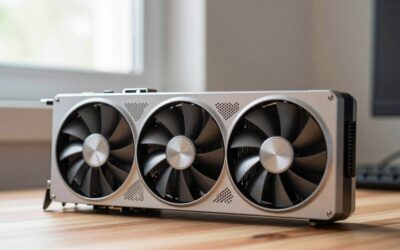
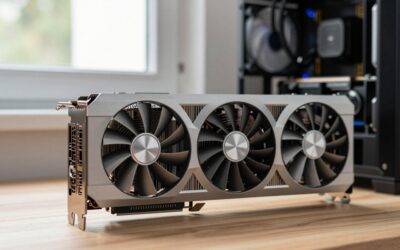
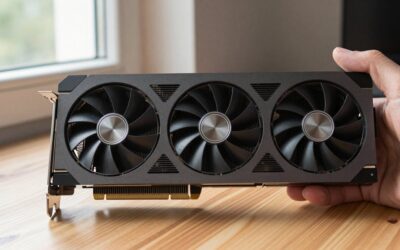
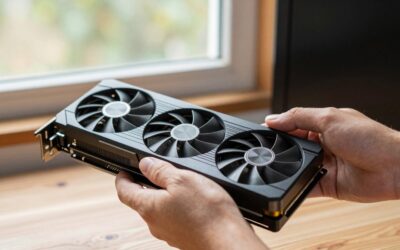
That makes physical fit the real practical variable. Many models in both camps are large triple-fan designs, so case clearance and airflow deserve a quick check before you buy.
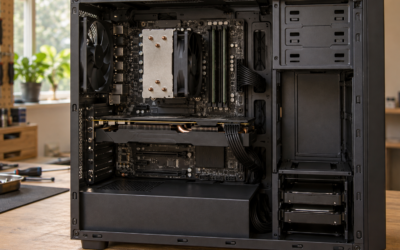
Confirm your PSU wattage and connectors, measure your case in millimeters, and make sure airflow is adequate. With efficiency nearly identical, the model you pick matters more than the brand. With both cards drawing around 300W, the practical questions are simply whether your case has the length and airflow for the specific model you choose, so read the product page dimensions before ordering.
Value, Alternatives and the Final Call
Value is the whole point of this matchup, so here are the pros and cons, alternatives if neither card fits your budget, and a clear recommendation on whether AMD is the smarter buy for you. Keep your own game library in mind as you read, because that, more than any single benchmark, is what decides which of these two cards is the smarter spend for the way you actually play.
Pros and Cons of the RX 9070 XT vs 5070 Ti
The honest balance sheet, weighted toward the value question at the center of this comparison.
| RX 9070 XT | RTX 5070 Ti |
|---|---|
| Pros: Lower price; best frames per dollar; strong raster; same 16GB and 256-bit bus. | Pros: Faster overall; clearly better ray tracing; DLSS 4 Multi Frame Gen; creator features. |
| Cons: Weaker ray tracing; FSR 4 slightly behind DLSS in some titles. | Cons: Higher price; premium wasted if you skip ray tracing. |
If your play style is mostly rasterized, the 9070 XT is the smarter spend; if ray tracing and DLSS define your experience, the 5070 Ti’s premium pays off. Framed as a value question, the burden of proof sits on the 5070 Ti to justify its extra cost, and it only clears that bar for players who genuinely use ray tracing and DLSS rather than leaving them switched off.
The Alternative: If Neither Card Fits Your Budget
If both stretch your wallet, the standard RTX 5070 or RX 9070 non-XT drop the price while keeping a strong 1440p experience and, in AMD’s case, the 16GB buffer.
If you can spend more and want no compromises, stepping up to a higher-tier Nvidia card buys extra 4K and ray-tracing headroom, though at a steep price jump.
Compare live prices across all of these before checkout, since a well-timed discount can make a better card the cheaper choice. In a market this volatile, flexibility is worth money, so keep a couple of options in mind rather than fixating on one exact card and paying whatever it costs on the day.
Final Verdict: Should You Buy AMD or Nvidia?
Buy the RX 9070 XT if you want the smarter-value pick, play mostly rasterized games at 1440p or 4K, and would rather save money or spend it elsewhere in your build.
Buy the RTX 5070 Ti if ray tracing, DLSS 4 and creator workloads are central to how you use your PC, and the extra performance and features justify the premium for you.
Both share 16GB and the same power class, so let your game library and the current price settle the decision. The smarter buy is ultimately the one that matches how you actually play, bought at the moment its price is most attractive rather than the one that wins the most benchmark charts.
See More:
Conclusion
The RX 9070 XT vs 5070 Ti question really is a value question, and for most 1440p gamers the answer is that AMD’s cheaper card is the smarter buy, delivering the majority of the performance for less while matching the 5070 Ti’s 16GB memory. The 5070 Ti remains the better choice for ray-tracing enthusiasts and creators who will genuinely use DLSS 4 and its extra speed. Since 2026 prices stay elevated and shift weekly, compare the latest live price for both the RX 9070 XT and the 5070 Ti through the links on this page, and let today’s deal decide whether AMD or Nvidia is the smarter buy for you. For the majority of players who spend most of their time in rasterized games, the RX 9070 XT will feel like the smarter money, while dedicated ray-tracing fans and creators are the ones who will be glad they paid for the 5070 Ti.
Frequently Asked Questions
Which card is faster in traditional rasterised games?
They land very close, with the outcome swinging by title. The RX 9070 XT uses 64 RDNA 4 compute units with 16GB of GDDR6 on a 256-bit bus, while the RTX 5070 Ti pairs 8960 CUDA cores with 16GB of faster GDDR7. At 1440p and 4K raster the two frequently trade places within a few percent.
How big is the ray tracing gap now?
Much smaller than in previous generations, because RDNA 4 substantially improved ray traversal hardware. NVIDIA still leads in heavy path traced titles, where the gap remains clear, but in games with moderate ray tracing effects the difference is often small enough that settings choices matter more than the badge on the card.
What about upscaling and frame generation quality?
DLSS 4 with the transformer model remains the image quality benchmark and multi frame generation is exclusive to the RTX 50 series. AMD’s FSR 4 closed a lot of ground with its machine learning approach on RDNA 4 hardware, but game support arrives more slowly. Check whether your specific games implement it.
Which needs more power and a bigger supply?
The 9070 XT is rated around 304 watts and typically uses two 8-pin connectors, so plan on a 750 to 850 watt supply. The 5070 Ti sits near 300 watts using a 12V-2×6 connector, and also suits a 750 watt unit. Neither is extreme, but both benefit from a case with proper front to rear airflow.
Which is the smarter buy overall?
If price is meaningfully lower on the AMD card and you play mostly raster titles, it is the better value. If you use heavy ray tracing, need CUDA for creative or AI work, or want multi frame generation, the NVIDIA card justifies the premium. Both have 16GB, so memory is not a deciding factor.

Write Your Review
No reviews yet. Be the first to share your experience!