


Prime
Limited Time
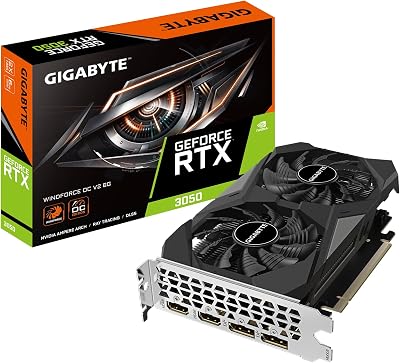
GIGABYTE GeForce RTX 3050 WINDFORCE OC V2 6G Graphics Card, 2X WINDFORCE Fans, 6GB GDDR6 96-bit GDDR6, GV-N3050WF2OCV2-6GD Graphics Card
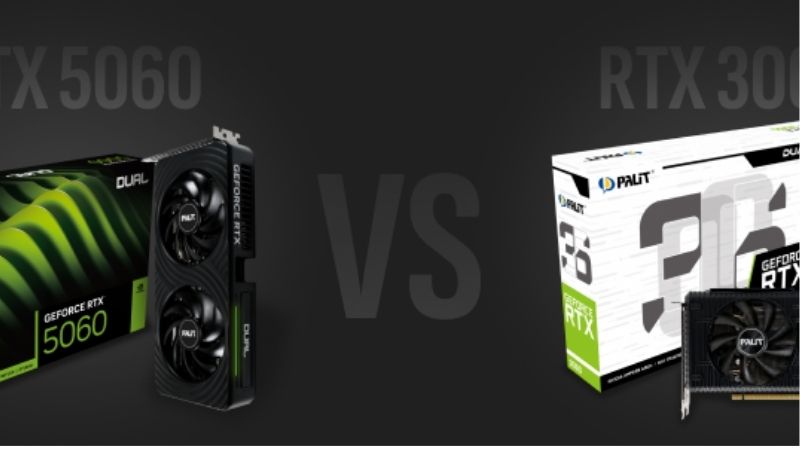
3060 vs 5060 is the classic upgrade question: should you stick with or buy the older RTX 3060, or step up to the newer RTX 5060? It is not as simple as newer-is-better, because the two cards make an interesting trade — the RTX 5060 is faster, more efficient, and brings DLSS 4, while the older RTX 3060 carries more memory with its 12GB versus the 5060’s 8GB. With GPU prices elevated in 2026, the decision hinges on performance, features, memory, and price. This comparison gives you the quick verdict, a clear spec table, a feature-by-feature face-off, an alternative if neither fits, and a direct recommendation for each type of buyer.
The quick verdict and how to read the price gap
For readers who want the answer first: the RTX 5060 is the better all-round card for most new buyers, delivering more performance, better efficiency, and DLSS 4 with multi-frame generation, while the older RTX 3060 remains appealing mainly for its larger 12GB memory buffer and when it can be found cheaper. The 5060 wins on speed and features; the 3060’s one lasting edge is memory capacity.
The fast answer for busy buyers
If you are buying new and want the best performance, efficiency, and the newest features, the RTX 5060 is the smarter choice. If you can find an RTX 3060 significantly cheaper and value its larger memory buffer for memory-hungry games, it remains a reasonable budget pick, though it gives up speed and modern features.
These cards serve different buyers at different priorities. The rest of this comparison exists so you can judge whether the 3060’s memory advantage and potential price savings outweigh the 5060’s performance and feature lead for your specific needs.
Spec comparison at a glance
Here are the core numbers that drive the decision. Treat MSRP as a reference point, since street prices in the current market frequently differ from list.
| Spec | RTX 3060 | RTX 5060 |
|---|---|---|
| Architecture | Nvidia Ampere (older) | Nvidia Blackwell (newer) |
| Memory | 12GB GDDR6 | 8GB GDDR7 |
| Generation feature set | DLSS (earlier) | DLSS 4 with multi-frame generation |
| Efficiency | Older, less efficient | Newer, more efficient |
| Best fit | 1080p, memory-heavy games | 1080p, entry 1440p with DLSS 4 |
The table captures the trade-off: the 5060 brings newer architecture, faster memory, better efficiency, and DLSS 4, while the 3060 counters with a larger 12GB memory buffer. This is a modern-features-versus-memory decision, with performance favoring the newer card.
How to read the price gap in 2026
Because the 3060 is older, its price depends heavily on the used market and remaining new stock, while the 5060 sells as a current card. Component and memory costs have kept GPU prices elevated into 2026, and that pressure reaches both new and used, so a used 3060 is not automatically cheap, and the gap to a new 5060 can be smaller than expected.
There is cautious context to weigh. Prices have flattened after the steep climb of late 2025, and some hardware makers report a stretch of relative stability, while warning that volatility is not over. New memory supply is opening up, but the plants that would ease prices are not expected to run until 2027 to 2028, so meaningful relief is years away. The takeaway for this matchup is to compare the real prices of a new 5060 against a 3060 in your market, and to buy at a fair price now rather than waiting for a drop the supply chain is not promising. If the 3060’s discount is small, the newer 5060 is usually the better spend.
This pricing reality quietly tilts the decision toward the newer card in many cases. Because the 3060 is now largely a used-market proposition and used prices have stayed firm alongside new ones, the discount that once made older cards obvious bargains has narrowed. When a used 3060 costs nearly as much as a new 5060, the newer card’s warranty, performance, and features make it the easy call. The 3060 only reclaims the value crown when its price drops far enough below the 5060 to make its memory advantage worth the sacrifice in speed and features. So the single most useful thing you can do before deciding is check both prices on the day you buy, since in a close-priced scenario the 5060 wins and only a genuinely large 3060 discount changes that math.
Deep dive face-off by the features that matter
A spec table tells you what the cards are; this section shows how those specs translate into experience. We break it down by performance, by features and efficiency, and by the crucial memory question, because those axes settle this generational decision.
Performance and resolution
In raw performance, the RTX 5060 is the faster card, delivering higher frame rates than the 3060 thanks to its newer architecture. At 1080p and entry 1440p, the 5060 provides a smoother, more capable experience, and it has more headroom for demanding titles.
The RTX 3060 remains a competent 1080p card, but it is a generation behind and shows it in raw frame rates. The practical reading is that for pure performance, the 5060 is clearly ahead; the 3060’s case does not rest on speed but on its memory and potential price advantage.
It is worth being concrete about what the performance gap means day to day. A faster card gives you more comfortable frame rates at 1080p, a better chance of smooth entry-1440p gaming, and more headroom as games grow more demanding over the next few years. For someone buying a card they intend to keep, that headroom translates into a longer useful life before settings have to come down. The 3060 still plays modern games well at sensible settings, so this is not a case of one card being usable and the other not — it is a case of the 5060 simply doing more, which matters most to buyers who want their purchase to stay comfortable for as long as possible rather than feeling dated sooner.
Features, efficiency, and DLSS 4
This is where the 5060 pulls firmly ahead. It brings DLSS 4 with multi-frame generation, which can significantly boost frame rates in supported games and represents the newest direction of Nvidia’s rendering technology, along with better power efficiency. For buyers who want the latest features and a cooler, more efficient card, the 5060 is the clear choice.
The RTX 3060 supports an earlier version of DLSS, which still helps, but it does not match the 5060’s newest frame-generation capability. The experimental edge belongs decisively to the newer card; as games increasingly optimize for the latest features, the 5060 is better positioned for what is coming, while the 3060 relies on an older feature set. Efficiency compounds this advantage: a cooler, lower-power card is quieter, easier to fit into a range of builds, and cheaper to run over time, which are real everyday benefits on top of the raw performance and feature gains.
The memory question: 12GB versus 8GB
Here is the 3060’s one genuine advantage: its 12GB buffer exceeds the 5060’s 8GB. In the most memory-hungry modern games at higher settings, that extra memory can prevent the stutters and texture problems that an 8GB card may encounter, which is a real consideration for longevity.
The nuance is that the 5060’s 8GB is faster and paired with more efficient technology, and DLSS 4 can ease some memory pressure, but raw capacity still matters when a game simply needs more. The practical point is that if you play memory-intensive titles at high settings and want maximum longevity, the 3060’s 12GB is a meaningful edge; for most 1080p and DLSS-assisted gaming, the 5060’s speed and features outweigh its smaller buffer.
This is the most genuinely debatable part of the whole comparison, and it is worth sitting with. There is something counterintuitive about a newer, more expensive card carrying less memory than the older one it replaces, and for buyers who keep hardware a long time and push settings hard, the 3060’s larger buffer is a real hedge against the future. On the other hand, the 5060’s faster memory, greater efficiency, and DLSS 4 frame generation address the same goal — smooth performance in demanding games — through a different route, and for the resolutions these cards target, that combination usually wins in practice. The honest conclusion is that the memory question favors the 3060 on paper but rarely enough to overturn the 5060’s overall lead, unless your specific games are known to be memory-hungry at the settings you play. Knowing your own library is the tie-breaker here.
Value, the alternative, and the final recommendation
With performance, features, and memory weighed, the decision comes down to your budget and whether the 3060’s memory and price can outweigh the 5060’s clear performance and feature lead. This section gives the honest pros and cons, offers an alternative, and delivers a direct recommendation.
Pros and cons at each price
Here is the straight balance sheet for the 3060 vs 5060 decision.
| Pros | Cons | |
|---|---|---|
| RTX 3060 | Larger 12GB memory; can be cheaper used; proven | Slower; older feature set; less efficient |
| RTX 5060 | Faster; DLSS 4; more efficient; newer architecture | Only 8GB; new-card pricing |
Read this against your games and budget. If you want the best performance and features for a new purchase, the 5060 is the stronger buy; if you value memory capacity and can find a 3060 meaningfully cheaper, it remains a reasonable budget option, especially for memory-heavy titles.
The alternative if neither fits
If the 5060’s 8GB concerns you but you want its newer features, a higher-tier current card with more memory can bridge the gap, though at a higher price. If budget is the priority and you want more memory than the 5060 for less than a higher tier, a current AMD card with a larger buffer is worth considering.
Because street prices shift in the current market, it is worth checking current listings for these nearby options too, since a well-timed price sometimes makes an adjacent card the best overall value of the group.
Final verdict and who should buy which
Buy the RTX 5060 if you are purchasing new and want the best performance, efficiency, and DLSS 4’s frame generation for 1080p and entry-1440p gaming. It is the better all-round card for most buyers and the more future-facing choice on features.
Buy the RTX 3060 if you can find it significantly cheaper and prioritize its larger 12GB memory buffer for memory-hungry games over raw speed and the newest features. It is a reasonable budget pick when the price is right. Whichever you choose, check the current price and availability of both on Amazon before buying, because the real-world price gap should weigh heavily in this generational decision, often more than the spec sheet alone suggests.
See More:
- Nvidia CEO LinkedIn
- Nvidia driver rollback
- Nvidia roll back driver
- RX 9070 XT vs 5060 Ti
- Nvidia driver uninstaller
Conclusion
The 3060 vs 5060 decision comes down to a clear trade-off: the newer 5060 wins on performance, efficiency, and DLSS 4, while the older 3060’s one lasting edge is its larger 12GB memory buffer and potentially lower price. For most new buyers, the 5060 is the smarter, more future-facing choice; the 3060 makes sense mainly when it is meaningfully cheaper and memory matters most to you. With prices elevated and real relief years away, buy the card that fits your needs and budget now rather than waiting on a drop that is not coming. Compare current prices for both on Amazon, and lock in the one that matches how you play.
Frequently Asked Questions
How much faster is the RTX 5060 than the RTX 3060?
In rasterized 1080p workloads the RTX 5060 typically lands somewhere between 25 and 40 percent ahead of the 12GB RTX 3060, with the gap widening in ray traced titles thanks to newer RT cores. Add DLSS 4 Multi Frame Generation and the on screen smoothness difference in supported games is much larger than raw numbers suggest.
Is going from 12GB to 8GB of VRAM a downgrade?
It is the real catch. The RTX 3060 carries 12GB on a 192-bit bus while the RTX 5060 has 8GB on 128-bit GDDR7. At 1080p with sensible texture settings the 5060 is fine, but ultra textures, heavy ray tracing, high resolution texture mods and local AI models will hit the 8GB wall first.
Do I need a new power supply or motherboard?
The RTX 5060 is rated near 145W versus 170W for the RTX 3060, so a 550W quality unit is ample and it uses a single 8-pin. The important detail is the PCIe 5.0 x8 interface: on an older PCIe 3.0 board that becomes an x8 3.0 link, which measurably reduces performance in VRAM heavy scenes.
Is the upgrade worth the money?
If you already own a 3060 and play at 1080p, the honest answer is usually no. The uplift is a single tier, and the VRAM drop offsets it in some titles. Save toward an RTX 5070 or a 16GB class card instead. If you are buying either one new today, the 5060 is the better card.
What about DLSS support on the older card?
Both support DLSS 4 transformer model upscaling, which Nvidia extended back to all RTX generations. Only the RTX 5060 supports Multi Frame Generation, and only RTX 40 and 50 series support single frame generation. So the 3060 gets better image quality from the new upscaler, but not the frame multiplication features.

Write Your Review
No reviews yet. Be the first to share your experience!