
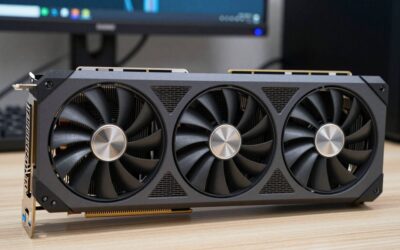
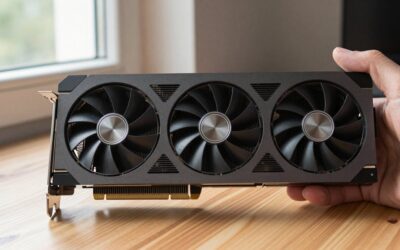
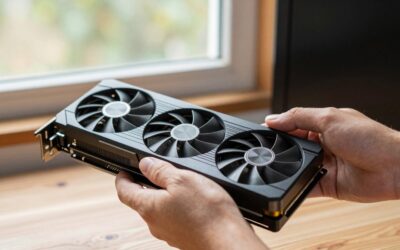
- Top Pick: ASUS Prime GeForce RTX 5060 Ti 16GB GDDR7 Gaming Graphics Card
- Best Value: ASUS Dual GeForce RTX 5060 Ti 16GB GDDR7 OC Edition Gaming Graphics Card
- Premium Choice: GIGABYTE GeForce RTX 5060 Ti WINDFORCE OC 8G Graphics Card, 8GB 128-bit GDDR7, PCIe 5.0, WINDFORCE Cooling System, GV-N506TWF2OC-8GD Video Card
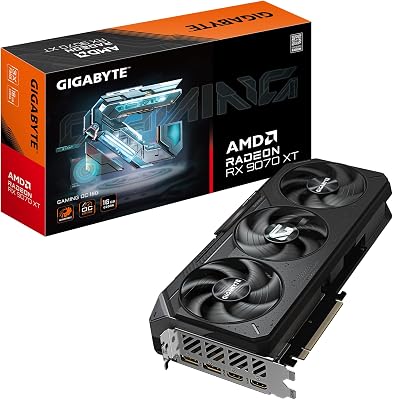


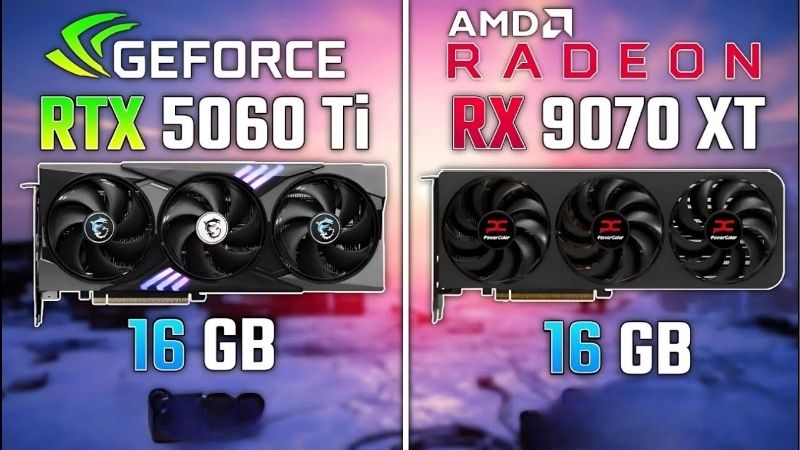
RX 9070 XT vs 5060 Ti is a matchup a lot of buyers put side by side, even though these two cards do not really sit in the same weight class. The Radeon RX 9070 XT is a high-tier 16GB card built for 1440p and 4K, while the GeForce RTX 5060 Ti is a mid-range 1080p-to-1440p card that leans hard on Nvidia’s AI-driven upscaling and frame generation. If you are cross-shopping them, what you are really deciding is how much raw performance you need versus how much you want to spend — and with component prices still elevated in early 2026, that price question matters more than usual. This comparison gives you the fast verdict, a clean spec table, a feature-by-feature face-off, a cheaper alternative, and a clear recommendation for each type of buyer.
As an Amazon Associate we earn from qualifying purchases at no extra cost to you.




The quick verdict and how to read the price gap
For readers who want the answer before the analysis: the RX 9070 XT is the faster card by a wide margin in traditional rendering and is the better pick if your target is high-refresh 1440p or 4K. The RTX 5060 Ti is the smarter buy if your budget is tighter, your monitor is 1080p or entry-level 1440p, and you value Nvidia’s DLSS 4 feature set and lower power draw. They win on different terms, so the “better” card depends entirely on your resolution and your wallet.
The fast answer for busy buyers
If you can spend the extra money and you play demanding titles at 1440p or above, the RX 9070 XT is the more future-proof choice thanks to its larger, faster memory subsystem and stronger raw throughput. If you are building or upgrading a mainstream rig and want the best experience per dollar, the RTX 5060 Ti delivers a lot of playable performance at a lower price and a much lower power budget.
Neither answer is wrong; they simply serve different buyers. The rest of this article exists so you can place yourself confidently on that spectrum instead of guessing.
Spec comparison at a glance
Here are the core numbers that drive the decision. Treat MSRP as a reference point, not a promise — as the pricing section below explains, street prices have been running above list.
| Spec | RX 9070 XT | RTX 5060 Ti |
|---|---|---|
| Architecture | AMD RDNA 4 | Nvidia Blackwell |
| Memory | 16GB GDDR6, 256-bit | 16GB or 8GB GDDR7, 128-bit |
| Reference MSRP | around $599 | around $429 (16GB) / $379 (8GB) |
| Typical power draw | roughly 300W | roughly 180W |
| Best fit | High-refresh 1440p, entry 4K | 1080p, entry 1440p |
| Upscaling / frame gen | FSR | DLSS 4 with multi-frame generation |
Even at a glance the pattern is clear: the RX 9070 XT trades higher power and price for substantially more raw capability, while the RTX 5060 Ti trades outright performance for efficiency, a modern feature stack, and a lower entry cost.
How to read the price gap in early 2026
The MSRP gap looks like roughly $170, but the real gap on store shelves has been noisier, and that is where current market news matters to your decision. Component and laptop prices have kept an upward bias into 2026, driven largely by memory costs, so both cards have frequently sold above their reference prices. Practically, that means the true 9070 XT-to-5060 Ti price difference you encounter may be wider or narrower than the sticker suggests, and it can change month to month.
There is cautious good news worth factoring in. The steep climb seen at the end of 2025 has flattened, and some hardware makers have reported a stretch of relative price stability, even while warning that volatility is not over. New memory supply is also opening up, with OEMs able to source DDR5 from Chinese suppliers such as CXMT and Micron building two new plants in Idaho. The catch for a buyer today is timing: those plants are not expected to run until 2027 to 2028, so meaningful relief is still years out. The honest read is that prices have stopped spiking rather than started falling. For this matchup, the takeaway is simple: buy on your budget now rather than waiting for a discount that the supply chain says is not imminent, and always check the live price before you commit.
This backdrop also reframes the 8GB-versus-16GB choice on the 5060 Ti. Because memory is the very component keeping prices elevated, the premium for the larger frame buffer can swing with the market, and it is often the smarter long-term buy despite the extra cost, since games keep asking for more memory. When street prices are calm, the step up to 16GB tends to look like cheap insurance; when they spike, it is worth watching for the moment that gap narrows. The broader lesson is that in a market where relief is real but distant, the winning strategy is patience with timing your purchase, not patience waiting for a price crash that current supply forecasts do not support.
Deep dive face-off by the features that matter
A spec table tells you what the cards are; this section tells you how that translates into the experience you actually get. We break it down by raw performance, by ray tracing and upscaling, and by the practical realities of power and system fit, because those three axes decide the outcome for most buyers.
Raw performance and resolution
In traditional rasterized rendering — the workload behind most games — the RX 9070 XT is comfortably ahead. Its wider 256-bit memory bus and larger compute resources let it hold high frame rates at 1440p and stretch into 4K in many titles, which is exactly where the RTX 5060 Ti begins to strain. If your monitor is high-refresh 1440p, that headroom is the single biggest reason to choose the Radeon.
The RTX 5060 Ti, by contrast, is tuned for 1080p and lighter 1440p. Within that envelope it is a very capable card, and the 16GB version in particular avoids the memory pressure that can trouble the 8GB model in modern games. The practical guidance is to match the card to your panel: buy the 9070 XT if you are pushing pixels, and the 5060 Ti if your resolution is more modest.
It is worth being concrete about what the gap feels like. At 1440p in demanding titles, the 9070 XT often keeps average frame rates in the comfortable high-refresh range where a 144Hz monitor earns its keep, while the 5060 Ti more often lands in the smooth-but-not-spare zone that suits a 60 to 100Hz panel. Neither is bad; they simply target different displays. If you have already bought a fast high-resolution monitor, pairing it with the weaker card wastes the panel, and that mismatch is one of the most common upgrade regrets.
Ray tracing and the upscaling battle
This is where Nvidia’s strategy shows. The RTX 5060 Ti ships with DLSS 4, including multi-frame generation, which can multiply on-screen frame rates in supported games and materially improves ray-traced performance relative to the card’s raw class. For buyers who care about the newest AI-assisted rendering and want to keep pace with where Nvidia is steering the technology, that feature set is a genuine draw and a hint at how future titles will be optimized.
The RX 9070 XT answers with strong raw ray-tracing gains over previous Radeon generations and its own FSR upscaling, and its brute-force horsepower means it does not lean on frame generation as heavily to stay smooth. The experimental edge in software features tilts toward Nvidia; the raw-hardware edge tilts toward AMD. Which matters more depends on whether you prioritize cutting-edge upscaling or straightforward rendering muscle.
Power, heat, and system fit
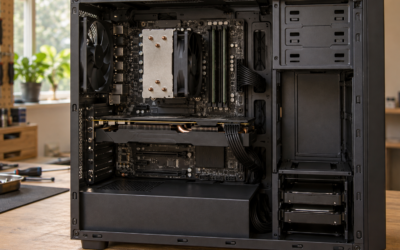
The practical gap here is large and easy to overlook. The RX 9070 XT draws roughly 300W and expects a robust power supply and good case airflow, while the RTX 5060 Ti sips around 180W and slots comfortably into smaller or older builds. If you are upgrading an existing system, this is not a footnote — it can decide whether you also need a new power supply.
For a compact or lower-wattage build, the 5060 Ti is the far easier fit and runs cooler and quieter with less effort. For a full-size gaming tower with headroom to spare, the 9070 XT’s appetite is a non-issue. Factor the total cost of a matching power supply into your budget before you assume the cheaper card is the only affordable route, and confirm your current unit has the right connectors and wattage.
Value, alternatives, and the final recommendation
With performance, features, and practicality on the table, the decision comes down to value at your specific budget and use case. This section weighs the pros and cons at each price, offers a middle-ground alternative, and then gives a direct recommendation for each buyer profile.
Pros and cons at each price
Here is the honest balance sheet for the RX 9070 XT vs 5060 Ti decision.
| Pros | Cons | |
|---|---|---|
| RX 9070 XT | Much stronger raster; 16GB on a wide bus; great for 1440p/4K | Higher price; ~300W needs a stronger PSU and cooling |
| RTX 5060 Ti | Lower price and power; DLSS 4 multi-frame gen; easy system fit | Weaker raw performance; 128-bit bus; 8GB model ages faster |
Read this alongside your monitor and your existing power supply. If the extra performance would go unused at your resolution, paying for the 9070 XT is spending on headroom you will not feel; if you play at high resolution, the 5060 Ti’s lower price stops being a bargain the moment frame rates dip.
The alternative if neither fits
If the 9070 XT is more than you want to spend but the 5060 Ti feels a step short, the sensible middle ground is a card one notch up from the 5060 Ti — such as a higher-tier 5070-class Nvidia option or a step-down Radeon above the 9070 XT’s price point. These slot into the gap in both price and performance, giving you more 1440p headroom than the 5060 Ti without the full cost and power demands of the 9070 XT. It is worth checking current listings for that middle tier, because shifting street prices sometimes make the in-between card the best value of the three.
Whichever way you lean, comparing live prices across all three tiers is the move that protects your budget, since the market has been anything but static.
Final verdict and who should buy which
Buy the RX 9070 XT if you game at high-refresh 1440p or 4K, want maximum raw performance and a roomy 16GB frame buffer, and already have a capable power supply. It is the card that will feel comfortable for longer as games grow more demanding.
Buy the RTX 5060 Ti — ideally the 16GB version — if you play at 1080p or entry 1440p, want lower power draw and an easy upgrade into an existing build, and value DLSS 4’s frame generation and the direction of Nvidia’s software features. It delivers the better experience per dollar for mainstream gamers. Whichever you choose, check the current price and availability on Amazon before you buy, because the number on the sticker today is the one that should decide this matchup.
See More:
Conclusion
The RX 9070 XT vs 5060 Ti question has a clean answer once you frame it around resolution and budget rather than raw bragging rights. The 9070 XT is the stronger, higher-power card for 1440p and 4K; the 5060 Ti is the cheaper, cooler, feature-rich pick for 1080p and mainstream builds. With component prices flattening but not yet falling, and real supply relief still a couple of years out, the smart move is to buy the card that fits your needs today rather than waiting on a discount the market is not promising. Compare current prices for both — and the middle-tier alternative — on Amazon, and lock in the one that matches your monitor and your build.
Frequently Asked Questions
How large is the performance gap?
It is not close. The RX 9070 XT is a high mid range Navi 48 card with 4096 stream processors and roughly 304W of board power, while the RTX 5060 Ti is an entry mainstream part around 180W. Expect the AMD card to be 50 to 70 percent faster at 1440p in rasterized games.
Then why would anyone pick the RTX 5060 Ti?
Price, power and features. It launched near 429 US dollars for the 16GB version against 599 for the 9070 XT, runs on a modest 550W supply with a single connector, and brings DLSS 4 with Multi Frame Generation plus the stronger NVENC encoder. For a small case, a 1080p monitor, or a tight budget, it is the sensible pick.
Do both have 16GB of memory?
The 9070 XT is 16GB across the board. The RTX 5060 Ti ships in 8GB and 16GB versions with identical names on the box, and the 8GB model runs out of memory in several current titles at high textures. If you choose Nvidia here, buy the 16GB version specifically.
What about PCIe compatibility?
Both use PCIe 5.0 x8 physical links. On an older PCIe 3.0 motherboard that halves effective bandwidth compared with a 4.0 board, which hurts the 8GB RTX 5060 Ti considerably once it starts swapping textures over the bus. Check your board generation before buying either card for an older platform.
Which is better for 1440p high refresh gaming?
The RX 9070 XT, without much debate. It holds well above 100 frames per second in most titles at high settings natively, whereas the RTX 5060 Ti needs upscaling and often Multi Frame Generation to reach similar numbers. If your monitor is 1440p at 144Hz or higher, the extra spend is justified.



Write Your Review
No reviews yet. Be the first to share your experience!