
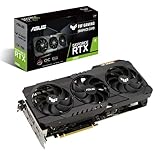
- Top Pick: ASUS TUF Gaming NVIDIA GeForce RTX 3080 V2 OC Edition Graphics Card (PCIe 4.0, 10GB GDDR6X, LHR, HDMI 2.1, DisplayPort 1.4a, Dual Ball Fan Bearings, Military-Grade Certification, GPU Tweak II)
- Best Value: Dell Gaming OEM Nvidia GeForce RTX 3080 10GB GDDR6X 320-bit 19Gbps PCIe 4.0 x16 Graphics Video Card 0Y5K9F (Renewed)
- Premium Choice: EVGA GeForce RTX 3080 FTW3 Ultra Gaming, 10G-P5-3897-KL, 10GB GDDR6X, iCX3 Technology, ARGB LED, Metal Backplate, LHR (Renewed)
Top Rtx 5070 Rtx 3080 Buy Picks for 2026
Here are our current top rtx 5070 rtx 3080 buy picks, compared on real Amazon owner reviews, price, and features. Live prices update below.


Prime
Limited Time
ASUS SFF-Ready Prime NVIDIA GeForce RTX 5070 Graphics Card (PCIe 5.0, 12GB GDDR7, HDMI/DP 2.1, 2.5-Slot, Axial-tech Fans, Dual BIOS), 3 Year Warranty
Dropped $2.52


Dropped $4.44
RTX 5070 vs RTX 3080 is the classic new-versus-used dilemma in its purest 2026 form: $549 buys a brand-new Blackwell midranger with warranty and the latest AI features, while roughly $300 on the used market buys the card that ruled 2020 — a genuine former flagship with a wide memory bus and proven performance. For a buyer building or upgrading on a budget, the $250 between them is not pocket change; it can fund a better CPU, a faster SSD, or a nicer monitor. So this comparison is written for the shopper standing at that fork: what each path actually delivers in frames, what the used route truly risks, and how the math shifts as you account for power bills, warranty, and where GPU prices are heading this year.
As an Amazon Associate we earn from qualifying purchases at no extra cost to you. Product prices and availability are accurate as of the date shown and are subject to change.




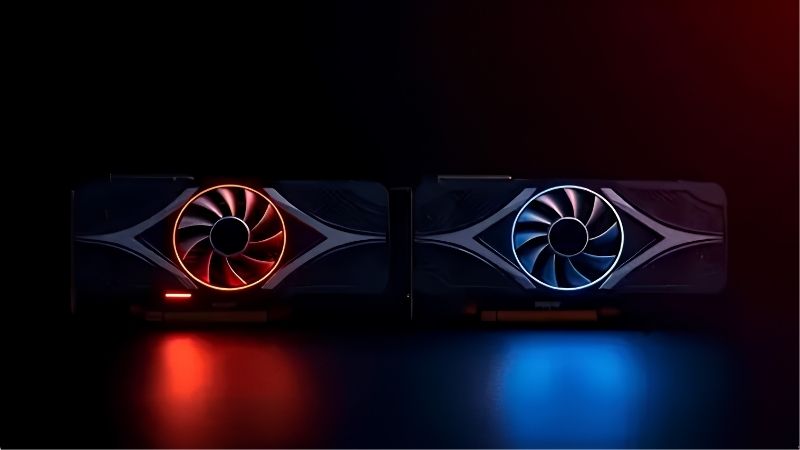
The Quick Verdict: New $549 or Used $300?
The condensed answer: the new RTX 5070 is the better card and the safer purchase — 20–30% faster natively, 12GB versus 10GB of VRAM, DLSS 4 Multi Frame Generation, 250W versus 320W, and a full warranty. The used RTX 3080 is the better deal per raw frame today: at $280–$320 it delivers roughly 75–80% of the 5070’s native performance for 55% of the money, an arithmetic no new card matches. Risk tolerance decides it: buyers who need their PC to just work should pay for new; experienced buyers who can vet used hardware get the strongest budget play in this price range. Check the 5070’s live Amazon price before choosing — the smaller the gap to $549, the weaker the used case becomes.
The Case for Buying the RTX 5070 New
What $549 buys beyond frames: a sealed card with a three-year warranty, GDDR7 memory and an architecture Nvidia will actively optimize into the 2030s, DLSS 4 Multi Frame Generation, dual AV1 encoders for streaming, and a 250W power budget that runs on the 650W PSU most builds already have.
It also buys certainty. Every component has zero hours on it, the warranty covers the next three years of ownership, and resale value follows the normal curve of a current-generation card. For a primary machine — work, school, daily gaming — that certainty is worth real money even before the performance edge.
The Case for Hunting a Used RTX 3080
The arithmetic is the argument: 8,704 Ampere CUDA cores, a 320-bit bus pushing 760GB/s, and benchmark results that still land 75–80% of the new card’s — for $280–$320. Per native frame, nothing sold new in 2026 competes at that price, and the 3080’s five-year reliability record is genuinely strong; Ampere silicon has proven durable at scale.
The route demands diligence rather than luck: buy from rated sellers or platforms with return windows, prefer premium-cooler models that lived cooler lives, and stress-test within the return period. Done properly, the used 3080 is the best raw-performance bargain in the sub-$350 market.
Specs Comparison Table
The two paths, quantified side by side.
| Specification | RTX 5070 (new) | RTX 3080 (used) |
|---|---|---|
| Architecture | Blackwell (2025) | Ampere (2020) |
| CUDA Cores | 6,144 | 8,704 |
| VRAM | 12GB GDDR7 | 10GB GDDR6X |
| Memory Bandwidth | 672 GB/s | 760 GB/s |
| TGP / PSU | 250W / 650W | 320W / 750W |
| Frame Generation | DLSS 4 MFG (up to 4x) | None (upscaling only) |
| Warranty | 3 years, full | Usually none |
| Typical 2026 Price | $549–$620 | $280–$320 |
| Native Performance | 100% | ~75–80% |
Deep Dive: What Each Dollar Path Delivers
A budget decision deserves budget-grade analysis. This section compares the two paths across benchmark reality at the resolutions budget builders actually target, the total-cost-of-ownership math that the sticker prices hide, and the risk ledger that separates a used bargain from a used mistake.
Benchmark Reality at 1080p and 1440p
At 1080p, both cards are overqualified: 120 fps+ in demanding AAA titles, 200+ in esports staples — the used 3080 loses nothing visible, and the budget buyer gaming at full HD captures its entire value proposition. This is the used card’s home turf.
At 1440p, the gap appears and grows: the 5070’s 100–130 fps on high-to-ultra versus the 3080’s 75–100, with the older card’s 10GB buffer producing the sharper difference — frame-time spikes and texture management in 2025–2026 releases that allocate 9–11GB. The 3080 still plays everything; it increasingly plays it with one settings notch of supervision.
Ray tracing doubles the distance: two generations of RT cores make heavy RT a playable default on the 5070 and a selective treat on the 3080. Budget buyers indifferent to RT can discount this paragraph entirely — many honestly are.
Total Cost of Ownership: The $250 Gap Shrinks
The sticker gap is $250; the real gap is smaller. The 3080’s 320W wants a 750W PSU — a $30–$60 line item for builders who would otherwise buy 650W — and draws roughly $20–$35 more electricity per year for a daily gamer at typical rates. Over a three-year hold, power alone returns $60–$105 of the gap.
Resale closes more of it: in three years, a then-current 5070 will likely resell for $200–$250, while an eight-year-old 10GB card approaches floor value. Net three-year cost of ownership lands far closer than $250 — closer to $100–$150 — which is the honest number the decision should weigh.
Feature depreciation deserves its own line in the ledger: the used card’s missing features are permanent, not patchable. Frame generation, AV1 encoding, and the latest upscaler models arrive via hardware, and each year of ownership widens the software gap as more titles build around capabilities Ampere physically lacks. The used discount pays for that widening once, at purchase; the new card’s premium buys immunity to it.
The Risk Ledger: What Used Actually Risks
Quantifying the used route’s downside: no warranty means a failure is a total loss, though Ampere’s field reliability makes that probability low for vetted units. The practical risks are smaller and likelier — tired thermal paste and pads (a $15 refresh restores launch thermals), fan bearings nearing service life, and the unknowable history of mining-era cards, mitigated by preferring units from gaming-focused sellers with return windows.
The 5070’s risk column is nearly empty by design — that is what the warranty premium purchases. The fair framing: the used path converts $250 of savings into a small probability of loss plus an afternoon of due diligence. Buyers who enjoy that work profit from it; buyers who dread it should not take it.
2026 Market Forces: Why Both Prices Are Firm
Two current news stories shape both sides of this decision: the United States approving Nvidia’s H200 AI chip exports to China, and the continued industry-wide rise in laptop and component prices. Together they explain a market oddity central to this matchup — why a five-year-old used card refuses to get cheaper while the new card drifts above MSRP.
H200 Exports Squeeze the New Card
The H200 approval adds enormous demand for Nvidia’s leading-edge wafers and GDDR7 — the 5070’s exact supply chain. The repeating pattern after AI demand surges: consumer street prices drift 5–15% above MSRP within a quarter or two, and 2026’s MSRP listings already behave like brief events rather than steady stock.
For this comparison, every dollar of drift above $549 strengthens the used card’s arithmetic — the gap is the argument, and supply pressure widens it.
Component Inflation Props Up the Used Card
Used prices anchor to new alternatives, and with memory and component costs rising for consecutive quarters — laptop retail prices have already followed — the cheap-new-card pressure that normally crushes old flagships is absent. The result shows in tracking data: 3080 used prices flattened in the $280–$320 band instead of continuing their decline, and clean premium-cooler units sell within days.
The fire-sale 3080 era many budget buyers waited for has been indefinitely postponed by the same forces inflating everything else.
A second-order effect works in the patient buyer’s favor on exactly one side: each quarter, more 3080 owners upgrade to Blackwell and list their cards, keeping used supply liquid even as prices hold. Selection improves over time even when prices do not — premium-cooler units appear weekly for the buyer who knows which models to watch.
Timing the Two Paths
Both paths reward decisiveness over waiting. New-route buyers should treat a $549–$580 listing as the green light — the supply backdrop offers no catalyst for sub-MSRP pricing this year. Used-route buyers should hunt premium-cooler units at $300 or below and move quickly on clean listings, because that segment clears fastest.
The cross-check that decides everything: measure the live gap on the day you shop. At $250+, the used math shines; if 5070 stock hits MSRP while 3080 listings drift toward $350, the new card wins outright. Check the RTX 5070’s current Amazon price and let today’s actual spread cast the deciding vote.
Final Verdict: Pros, Cons, and the Third Option
This comparison ends as a genuine fork — both paths are rational for different buyers — and the ledger below draws the boundary, with one alternative that serves shoppers squeezed between the two budgets.
Pros and Cons of Each Path
RTX 5070 new — Pros: 20–30% faster with 12GB GDDR7; DLSS 4 MFG and AV1 encoding; 250W on a 650W PSU; three-year warranty and strong resale; zero vetting required. Cons: $549+ with upward street drift; 12GB is adequate rather than generous; the $250 premium is real money in a budget build.
RTX 3080 used — Pros: the strongest raw frames-per-dollar under $350; flagship-class cooler designs; proven Ampere reliability; perfect fit for 1080p and capable 1440p. Cons: 10GB ceiling tightens yearly; no frame generation, weaker RT, older encoders; 320W heat and PSU demands; no warranty and mandatory due diligence.
The Alternative: Used RTX 4070 Splits the Fork
For buyers whose budget stretches to $380–$430, the used RTX 4070 dissolves most of this dilemma: 12GB of VRAM, DLSS 3 Frame Generation, 200W efficiency, and performance within 10% of the new 5070 — used-market pricing with most of the modern feature set. Its generation is young enough that many units carry transferable warranty remainder.
It concedes only DLSS 4 MFG and the sealed-box certainty; as a middle path, it captures the majority of both endpoints’ arguments and has quietly become the budget enthusiast’s default recommendation.
Who Should Take Which Path
Buy the RTX 5070 new if this machine is your daily driver, you play at 1440p or stream, you keep hardware four-plus years, or warranty peace of mind has any dollar value to you — it is the default for most readers. Hunt the used RTX 3080 if you game at 1080p, enjoy vetting hardware, upgrade frequently enough that VRAM ceilings never catch you, and want maximum frames for minimum outlay.
And if $400 sits comfortably in your budget, the used 4070 middle path deserves your first search of the day.
See More:
Conclusion
The rtx 5070 vs rtx 3080 decision is the new-versus-used question with unusually clean math: the new card is 20–30% faster, modern, efficient, and warrantied at $549; the used flagship delivers three-quarters of that performance for barely half the money, demanding diligence in exchange. Total-cost analysis narrows the true gap to $100–$150 over three years, which is precisely why both paths remain rational — and why the live price spread on the day you shop should cast the deciding vote. With H200 exports drifting new prices upward and component inflation holding used prices firm, neither path gets cheaper by waiting: tap through to check the latest RTX 5070 price on Amazon, weigh it against today’s used 3080 listings, and take the fork that matches your budget and your appetite for the hunt.
Frequently Asked Questions
What is the best rtx 5070 rtx 3080 in 2026?
The best rtx 5070 rtx 3080 depends on your budget and how you plan to use it. The options compared above are our top-rated picks based on real customer ratings, build quality, and overall value — start with the highest-rated model that fits your budget.
How much should I expect to spend on a rtx 5070 rtx 3080?
Prices vary by brand and features. Budget options cover the essentials, while mid-range and premium models add durability, performance, and extra features. Compare the prices in the list above to find the best value for your needs.
What should I look for when buying a rtx 5070 rtx 3080?
Focus on what matters most for your use case — build quality, compatibility, performance, warranty, and verified customer reviews. Every pick above is selected to balance these factors.
Are budget rtx 5070 rtx 3080 options worth it?
Yes. For most people a well-reviewed budget or mid-range rtx 5070 rtx 3080 delivers excellent value. You only need to spend more if you specifically require premium materials or top-tier performance.
How did we choose these rtx 5070 rtx 3080 picks?
We compare current Amazon ratings, review counts, key features, and price to surface the options with the best real-world value. The list is refreshed as ratings and availability change.










Write Your Review
No reviews yet. Be the first to share your experience!