
- Top Pick: GIGABYTE GeForce RTX 4070 WINDFORCE OC 12G Graphics Card, 3X WINDFORCE Fans, 12GB 192-bit GDDR6X, GV-N4070WF3OC-12GD Video Card
- Best Value: MXZ Intel Core i7 12700F 5.2GHz,GeForce RTX 4070, Gaming PC,16G DDR4, M.2 SSD 1T, B760, 6RGB Fans,Windows 11 Pro, Gamer Desktop Computer(I7 12700F| RTX 4070)
- Premium Choice: MSI Gaming GeForce RTX 4070 Ventus 3X E1 12G OC Graphics Card (Ada Lovelace Architecture, Extreme Clock: 2520 MHz, Memory Speed: 20 Gbps, 12GB GDDR6, 192-bit, DP/HDMI)
RX 7800 XT vs RTX 4070 is the matchup that defines the 1440p mid-range in 2026, and it is also one of the hardest calls a buyer can face because both cards are genuinely good. They sit at nearly the same price, target the same resolution, and yet they win on completely different things. This comparison cuts straight to the decision: a quick verdict for the impatient, a full specs table, a feature-by-feature face-off on the things that actually change your experience, a cheaper alternative if both feel like too much, and a clear recommendation on who should buy which.
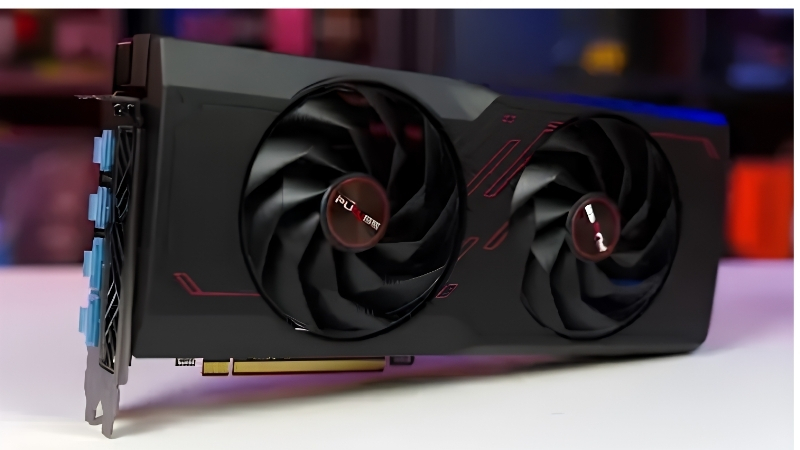
The Quick Verdict: RX 7800 XT vs RTX 4070 at a Glance
If you only read one paragraph, here it is. The RX 7800 XT wins on raw rasterization performance and VRAM, giving you slightly higher frame rates in most games today and more headroom for the future thanks to its larger 16GB buffer. The RTX 4070 wins on efficiency and features, drawing far less power and bringing the stronger ray-tracing and DLSS 3 stack that, in supported titles, can flip the performance lead. Choose the 7800 XT for maximum traditional gaming value; choose the 4070 if ray tracing, lower power, and NVIDIA’s software matter to you.
As an Amazon Associate we earn from qualifying purchases at no extra cost to you.





Who Wins on Raw Rasterization
In standard rasterized gaming, which is still the vast majority of titles, the RX 7800 XT holds a consistent edge at 1440p. Its wider memory bus and higher raw throughput translate into a measurable, if modest, frame-rate lead across most of the games people actually play, particularly in competitive and AAA titles without heavy ray tracing.
The gap is not enormous, usually a handful of frames rather than a different tier of performance, but it is real and it leans in AMD’s favor. For a buyer who measures value strictly in rasterized frames per dollar, this is the 7800 XT’s strongest argument.
Who Wins on Ray Tracing and Features
Turn ray tracing on and the picture inverts. The RTX 4070’s dedicated RT hardware is more capable, and the gap widens further once DLSS enters the equation. DLSS Super Resolution generally produces a cleaner upscaled image than AMD’s FSR at equivalent settings, and DLSS 3 Frame Generation can lift frame rates in supported titles beyond what the 7800 XT reaches.
This is the experimental dimension that favors NVIDIA: its feature set is software that keeps expanding. New DLSS-supported games, driver optimizations, and tools like Ray Reconstruction mean the 4070’s advantage in this lane tends to grow over the life of the card rather than shrink.
Specs Comparison Table
The core specifications explain why each card wins where it does. The 7800 XT leans on memory and raw width; the 4070 leans on efficiency and architecture. Keep the VRAM and TDP rows in mind, because those two numbers drive most of the real-world differences discussed below.
| Spec | RX 7800 XT | RTX 4070 |
|---|---|---|
| Architecture | RDNA 3 (Navi 32) | Ada Lovelace (AD104) |
| VRAM | 16GB GDDR6 | 12GB GDDR6X |
| Memory bus | 256-bit | 192-bit |
| Board power (TDP) | 263W | 200W |
| Ray tracing | Good | Stronger |
| Upscaling | FSR (open) | DLSS 3 + Frame Gen |
| Launch MSRP | $499 | $549–$599 |
| Best for | 1440p raster value | 1440p RT + efficiency |
Deep Dive Face-Off: Performance, VRAM and Efficiency
A glance at the headline numbers is not enough to spend $500 wisely, so this section compares the two cards on the three axes that decide long-term satisfaction: how they actually perform at 1440p, how their differing VRAM affects longevity, and how power draw shapes the real build around them. These are the factors that separate a card you are happy with for four years from one you regret in two.
1440p Gaming Performance
Both cards are built for 1440p, and both clear high-refresh 1440p comfortably in most titles. In pure rasterization the 7800 XT is the slightly faster card; in ray-traced titles with DLSS enabled, the 4070 often pulls ahead. The honest summary is that they are close enough that your favorite games and your feelings about ray tracing matter more than the raw averages.
For competitive players chasing the highest frame rates in esports titles, the 7800 XT’s rasterization lead is the more useful trait. For players who prioritize visual showcase single-player games with ray tracing, the 4070’s feature stack is worth more than a few rasterized frames.
It is also worth being realistic about how these cards behave at other resolutions. Drop to 1080p and both are overkill for most games, with the difference between them shrinking as the CPU becomes the limiting factor. Push to 4K and both are usable in lighter titles with upscaling, but this is where the 7800 XT’s extra VRAM and the 4070’s DLSS each become more relevant, reinforcing that your resolution and your tolerance for upscaling should guide the choice as much as the average frame-rate charts.
VRAM, Longevity and Resolution Headroom
This is the most consequential difference for buyers planning to keep their card for years. The 7800 XT’s 16GB versus the 4070’s 12GB is not a meaningful gap in most of today’s games at 1440p, but it is a growing one. Newer titles with high-resolution textures and ray tracing are increasingly pushing past 12GB, and when a card runs out of VRAM the result is stutter and texture pop-in rather than a graceful slowdown.
For a buyer who upgrades every two years, 12GB is fine today. For a buyer who wants this card to last four or five years, or who runs texture mods, the 7800 XT’s extra 4GB is the kind of insurance that quietly pays off later. It is the single strongest long-term argument in AMD’s favor. If you also dabble in creative or productivity apps, the larger buffer helps there too, giving the 7800 XT a little extra usefulness beyond pure gaming.
Power Draw, Heat and Real-World Build Notes
Efficiency is the 4070’s quiet superpower. At 200W against the 7800 XT’s 263W, the 4070 runs cooler, demands less from your power supply, and dumps less heat into the room and the case. In a small-form-factor build, in a warm room, or on a modest PSU, that 63W difference is a genuine practical advantage rather than a spec-sheet footnote.
Practically, the 4070 is the easier card to cool quietly and the safer choice on an older or lower-wattage power supply, while the 7800 XT wants a bit more airflow and a slightly beefier PSU. Neither is hard to accommodate in a standard mid-tower, but if your case is cramped or your PSU is borderline, efficiency tips the scale toward NVIDIA.
Pricing, Alternatives and Final Recommendation
Performance and features only resolve into a decision once price and timing are on the table, and right now the broader component market is part of that calculation. This final section covers where prices stand, what to buy if both of these cards are more than you want to spend, and exactly which buyer should pick which card.
Current Pricing and the Component-Cost Picture
Both cards launched close in price, and street pricing shifts often, so the smart move is to compare the current cost of each at the moment you buy rather than relying on MSRP. The wider backdrop matters too: PC component prices have broadly trended upward, pushed mainly by memory costs, which affects graphics cards and the rest of a build alike.
There is cautious good news. The sharp price climb seen at the end of 2025 has eased, and some makers, Framework included, have noted a relatively stable recent stretch while still warning of further movement. New memory supply is coming, with OEMs able to source DDR5 from suppliers like CXMT and Micron building two fabs in Idaho, but those plants are not expected to run until 2027–2028.
The practical reading for a 1440p buyer: prices have stopped spiking rather than started falling, so there is little to gain by waiting in the near term. Buy when the card you want hits a price you are comfortable with, and weigh the total build cost, not just the GPU, since memory and other parts are caught in the same trend.
The Alternative If Both Are Too Pricey
If both cards stretch your budget, the standout alternative is the RX 7700 XT, AMD’s slightly cut-down sibling to the 7800 XT. It delivers most of the 1440p experience for less money, making it the natural fallback for value-focused buyers who do not want to drop to 1080p-class hardware.
On the NVIDIA side, the RTX 4060 Ti (ideally the 16GB version) is the cheaper feature-rich option, bringing DLSS 3 and strong efficiency at a lower price, though with a real step down in raw performance. And in the used market, a last-generation RX 6800 XT can occasionally match this tier’s rasterization for less, if you are comfortable buying second-hand.
One word of caution on going cheaper: the gap between these alternatives and the main two cards is mostly in raw performance and, on the 8GB models, in VRAM. If you intend to keep your GPU for several years, saving $80–$100 now on a lower-VRAM card can cost you in texture stutter later, so weigh the upfront discount against how long you plan to hold the card before deciding to step down a rung.
Final Verdict: Who Should Buy Which Card
Buy the RX 7800 XT if you want the most rasterized performance per dollar, plan to keep the card for many years, run texture-heavy games, and care more about traditional frame rates than ray tracing. Its 16GB buffer and raw speed make it the long-term value pick for the classic 1440p gamer.
Buy the RTX 4070 if ray tracing, DLSS image quality, lower power draw, and a quieter, cooler build are your priorities, or if you are working with a small case or a modest power supply. Whichever way you lean, compare today’s live prices for both cards through the links here before deciding, because at this tier a $30–$50 swing in either direction is often the real tiebreaker.
See More:
- Colorful iGame RTX 4090
- Founders Edition vs AIB
- Best RTX 4080 Super card
- Best RTX 5080 AIB
- Best RTX 5070 Ti card
Conclusion: RX 7800 XT vs RTX 4070, the Smart Buy
There is no single winner in the RX 7800 XT vs RTX 4070 debate, only the right winner for you. The 7800 XT is the rasterization-and-VRAM value champion for gamers who want raw frames and long-term headroom; the 4070 is the efficient, feature-rich choice for those who value ray tracing, DLSS, and a cool, quiet system. Both are excellent 1440p cards that will serve you well for years, so let your own priorities, and the live price on the day you buy, make the final call.
Top-Rated Picks


| Product | Brand | Rating | Reviews | Price |
|---|---|---|---|---|
| ARCTIC MX-4 (4 g) – Premium Performance Thermal Paste… | ARCTIC | ★ 4.8 | 104k | $4.99 |
| ARCTIC MX-4 (incl. Spatula, 4 g) – Premium Performanc… | ARCTIC | ★ 4.8 | 71.9k | $5.49 |
| Crucial 8GB DDR4 RAM 3200MHz (PC4-25600), Downclockab… | Crucial | ★ 4.8 | 62.8k | $74.99 |
| AMD Ryzen 5 5600X 6-core, 12-thread unlocked desktop … | — | ★ 4.8 | 30.2k | $177.60 |
| NVIDIA Shield Remote; Voice Search, Motion-Activated,… | — | ★ 4.7 | 10.6k | $25.99 |
Frequently Asked Questions
Which is faster for 1440p gaming?
In raster the RX 7800 XT typically leads by a modest margin, helped by 16GB on a 256-bit bus against 12GB on 192-bit. The RTX 4070 reverses that lead in ray traced titles, where Ada RT cores are stronger, so the winner depends heavily on the games you actually play.
Is the 16GB buffer worth prioritising?
At 1440p, 12GB is still adequate in nearly all current games, so the difference rarely shows today. It becomes relevant if you push 4K textures, use heavy mod packs, or run creative applications. As insurance for a card you plan to keep four or five years, the extra 4GB is welcome.
What are the power and connector differences?
The RTX 4070 is notably more efficient at around 200W and uses 12VHPWR with an included adapter, running fine on a 650W unit. The RX 7800 XT draws about 263W through dual 8-pin connectors and wants 700W. Over years of gaming that efficiency gap does show up on an electricity bill.
How do the software features compare?
Nvidia offers DLSS 4 with the transformer upscaler, frame generation, Reflex, Broadcast and CUDA. AMD counters with FSR 3.1, AFMF driver-level frame generation, Anti-Lag 2 and HYPR-RX. The 7800 XT is RDNA 3, so FSR 4 is unavailable to it, which is the main image quality disadvantage.
Which should I buy?
For raster-first 1440p gaming at the lowest cost per frame, the 7800 XT. For ray tracing, better upscaling, lower power draw and creative software compatibility, the RTX 4070. Both are solid 1440p high refresh cards, so let pricing in your region and your game library break the tie.





Write Your Review
No reviews yet. Be the first to share your experience!