
The GeForce RTX 3080 was announced on September 1, 2020 and went on sale on September 17, 2020. It was the first Ampere gaming card to reach customers, arriving a week before the RTX 3090 and about six weeks before the RTX 3070.
It remains one of the most discussed graphics cards of the last decade, partly for its performance and partly because buying one at launch was famously difficult. Below you will find the launch timeline, the specs that defined it, the 12 GB revision that came later, what succeeded it, and where it stands as of late 2026.
RTX 3080 Release Timeline
The 3080 was revealed during NVIDIA’s September 2020 event, where the company positioned Ampere as its biggest generational leap in years. Reviews and retail availability followed in mid-September. Stock sold out almost immediately across retailers, and shortages continued well into 2021. Confirm precise dates on NVIDIA’s announcement archive if you need them for a record.
| Milestone | Timing | Notes |
|---|---|---|
| Announcement | September 2020 | Alongside the RTX 3070 and RTX 3090 |
| Retail launch (10 GB) | Mid-September 2020 | First Ampere gaming card on sale |
| RTX 3080 Ti | June 2021 | 12 GB, closer to RTX 3090 performance |
| RTX 3080 12 GB | Early 2022 | Larger bus, more cores, higher power |
| RTX 4080 | Late 2022 | Ada Lovelace successor |
| RTX 5080 | 2025 | Blackwell successor |
What the RTX 3080 Replaced
The 3080 stepped into the slot previously held by the RTX 2080 and RTX 2080 Super. NVIDIA’s launch marketing claimed roughly double the performance of the RTX 2080 in some scenarios, particularly with ray tracing and DLSS enabled. Those claims were NVIDIA’s own and varied by game, but independent coverage at the time agreed the generational jump was unusually large.
Perhaps more important was how it changed the price-to-performance conversation. At launch positioning, the 3080 delivered flagship-class 4K performance from a card that sat below the 3090, which is why enthusiasts treated it as the real halo card for gamers.
Launch Specs That Defined the Card
The original 3080 uses the large GA102 chip. The core numbers from the specification sheet are listed below.
- CUDA cores: 8,704
- Memory: 10 GB GDDR6X on a 320-bit bus
- Board power: about 320 watts
- Recommended PSU: NVIDIA suggested roughly 750 watts
- Interface: PCIe 4.0 x16
- Outputs: HDMI 2.1 and multiple DisplayPort 1.4a connectors on reference-style boards
The 10 GB capacity is the number that has attracted the most scrutiny since. It was generous in 2020 and became a limiting factor for some 4K workloads as texture sizes grew.
Why the 10 GB Question Never Went Away
When the 3080 launched, 10 GB sounded like plenty for a card aimed at 4K. NVIDIA pointed to the speed of GDDR6X and to new technologies for streaming data to the GPU more efficiently as reasons the capacity was enough. For the games of 2020 that was largely true.
Over the following years, texture quality and scene complexity grew, and a handful of well-known releases began to ask for more than 10 GB at maximum settings. Owners typically responded by lowering texture quality one notch or by turning on upscaling, which reduces the memory needed for internal rendering. The card kept delivering strong frame rates, but the compromise became part of its reputation.
That history is the reason the 12 GB revision and the 3080 Ti are often favored on the used market. If your plan involves 4K and recent releases, the extra two gigabytes can matter more than a small difference in clock speed.
Power, Heat, and Case Fit
Launch coverage quickly noticed that the 3080 was a demanding board. A 320-watt power target means a strong power supply, good case airflow, and attention to cable quality. The Founders Edition introduced a distinctive dual-fan cooler with a through-flow design, which pushed some warm air toward the CPU cooler and the top of the case.
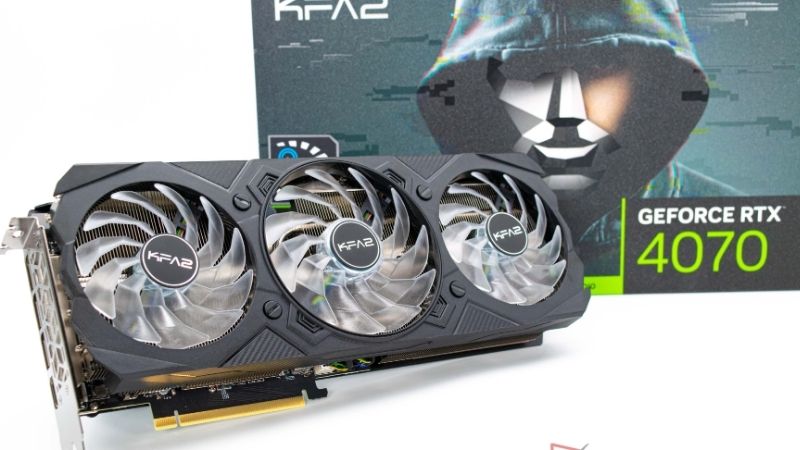
Partner boards are usually larger and quieter than the reference design, but many occupy three slots and extend well past the length of a typical mid-range card. Measure before you buy, and allow room for power cables to bend without strain.
The 12 GB Version
In early 2022 NVIDIA released a second RTX 3080 with 12 GB of memory on a wider 384-bit bus and more CUDA cores. This is a meaningfully different card from the original despite sharing a name. It draws more power, with board power around 350 watts, and delivers a modest performance increase over the 10 GB model.
If you are shopping used, always confirm which variant you are getting. A listing that simply says RTX 3080 may mean either one, and the memory size should be spelled out in the product name or photos of the card’s sticker or software readout.
What Came Next
The RTX 3080 Ti arrived in mid-2021 as a step toward 3090-class performance, with 12 GB of memory and a power target around 350 watts. In late 2022 the RTX 4080 launched as the Ada Lovelace successor with 16 GB of memory and a far more efficient design. The 2025 Blackwell generation brought the RTX 5080.
Those newer cards added DLSS frame generation, which Ampere cards do not support. They also run cooler and quieter at comparable performance, which is part of the argument for moving on from a power-hungry 3080.
Is the RTX 3080 Still Relevant?
Today the 3080 is a used-market card with continued relevance for 1440p and capable 4K at tuned settings. It supports ray tracing and DLSS upscaling, and it keeps receiving current drivers as far as NVIDIA’s published release notes show. Check NVIDIA’s driver pages for confirmation of support for your operating system.
The trade-offs are a high power draw, a large cooler that needs case space, and a frame buffer that can run out in the most demanding new games at 4K. Many used examples also spent time in mining rigs, which makes a careful inspection important.
Who Should Buy or Skip It
The 1440p high-refresh enthusiast
A used 3080 still pushes high frame rates at 1440p in most games, and it has headroom for ray tracing with DLSS enabled. If you can buy one at a clear discount from a trustworthy seller, it remains a strong option.
The budget 4K player
It can work, especially with upscaling, but the 10 GB model may require lower texture settings in some new titles. The 12 GB version is the safer pick for this buyer.
The efficiency-minded builder
Skip it. A current-generation card at a lower tier can reach similar performance with far less power draw and heat, and it adds frame generation support. This matters in small cases or for anyone who cares about noise.
Used Buying Checklist
- Confirm whether the card is the 10 GB or 12 GB version before paying.
- Check that your power supply has enough wattage and the right number of PCIe connectors.
- Measure your case, since many partner boards are long and thick.
- Ask about mining history and inspect fans, thermal pads, and the backplate.
- Prefer sellers with return protection or a transferable warranty.
Frequently Asked Questions
When did the RTX 3080 come out?
It was announced on September 1, 2020 and went on sale in mid-September 2020. It was the first card in the RTX 30 Series to reach customers.
Was there more than one RTX 3080?
Yes. The original model has 10 GB of memory, and a 12 GB version followed in early 2022 with more cores and a wider bus. They share a name but differ in performance and power draw.
What replaced the RTX 3080?
The RTX 4080 took its place in late 2022, and the RTX 5080 holds the tier in the 2025 generation. The RTX 3080 Ti sat between the 3080 and 3090 within the same generation.
Is the RTX 3080 worth buying used?
It can be if the price is right and the card is in good condition. The main concerns are power draw, 10 GB of memory on the original model, and wear from previous mining use.
Related Guides
- 3080 RTX in 2026: The Legend Reviewed Five Years Later On
- Is the RTX 3080 Still Worth Buying for Gaming in 2026
- RTX 3080 Ti in 2026: Is This Used Card Still Worth It
- RTX 3080 on eBay in 2026: Smart Bargain or a Costly Gamble?

Write Your Review
No reviews yet. Be the first to share your experience!