
- Top Pick: ASUS SFF-Ready Prime NVIDIA GeForce RTX™ 5060 Ti 8GB GDDR7 OC Edition Graphics Card (PCIe® 5.0, 8GB GDDR7, HDMI®/DP 2.1, 2.5-Slot, Axial-tech Fans, Dual BIOS), 3 Year Warranty
- Best Value: Geforce RTX 3080 Ti 12GB GDDR6X PCI Express 4.0 Graphics Card Titanium and Black (Renewed)
- Premium Choice: NVIDIA GeForce RTX 3060 Ti Founders Edition 8GB GDDR6 PCI Express 4.0 Graphics Card (Renewed)
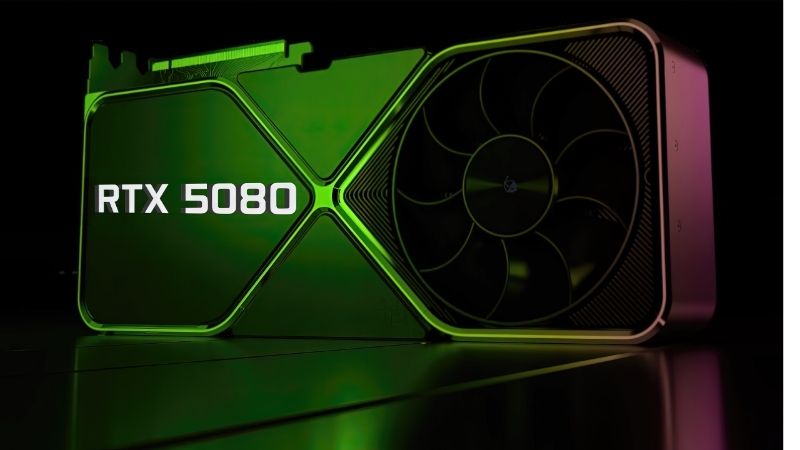
RTX 5070 Ti or 5080 used to be a question about value: was 10–14% more performance worth $250? In 2026 it has become a question about availability, and that is a very different conversation. Board partners have declared the 5070 Ti end of life while Nvidia disputes it, retailers have gone weeks without stock, and the price gap that made the comparison interesting has narrowed from the wrong direction. This covers what actually separates the two cards, what the supply situation means for your decision, and which one to buy in the market that exists rather than the one on the spec sheet.
What Actually Separates These Two Cards
The RTX 5070 Ti and the RTX 5080 are closer relatives than the naming suggests. They come from the same silicon, share a memory subsystem that differs by single digits, and land within a range most players could not identify blind. Understanding why explains the entire comparison.
Same Die, Different Harvest
Both cards use the GB203 die. The RTX 5080 gets the fuller configuration — GB203-400 with 10,752 CUDA cores, 84 RT cores, and 336 Tensor cores. The RTX 5070 Ti is GB203-300-A1, harvested down to 8,960 CUDA cores across 70 SMs, with 70 RT cores and 280 Tensor cores.
That is a 20% core deficit, which sounds decisive and is not. The memory subsystem is where these cards actually live, and it barely differs.
| Spec | RTX 5070 Ti | RTX 5080 | Gap |
|---|---|---|---|
| Die | GB203-300-A1 | GB203-400 | Same silicon |
| CUDA cores | 8,960 | 10,752 | +20% |
| RT cores | 70 | 84 | +20% |
| Tensor cores | 280 | 336 | +20% |
| VRAM | 16GB GDDR7 | 16GB GDDR7 | Identical |
| Bus | 256-bit | 256-bit | Identical |
| Bandwidth | 896 GB/s | 960 GB/s | +7% |
| TDP | 300W | 360W | +60W |
| PSU | 750W | 850W | +100W |
| Founders Edition | No — AIB only | Yes | — |
| MSRP | $749 | $999 | +$250 |
Why 20% More Cores Delivers 10–14% More Frames
Look at the bandwidth row: 896 against 960 GB/s. Seven percent. Both cards run the same 256-bit bus and the same 16GB of GDDR7; the 5080 simply clocks its memory a little higher.
At 4K, bandwidth is the constraint more often than shader count. The 5080’s extra 1,792 cores frequently have less to do than the spec sheet implies, because the memory subsystem cannot feed them proportionally faster. The result is a 10–14% frame rate gap at 1440p and 4K, with the 5070 Ti landing at roughly 85–90% of the 5080.
The gap widens in shader-bound scenarios and narrows in bandwidth-bound ones. At 1440p, where both cards exceed most panels without frame generation, the difference is measurable and rarely perceptible.
The Practical Costs Nobody Puts in the Table
The 5080’s 360W wants an 850W supply against the 5070 Ti’s 750W. If your PSU is a 750W unit, the 5080 adds a power supply to the bill and the $250 gap becomes $330–$400.
Physical size follows power. RTX 5080 triple-fan cards run large — PNY’s OC Triple Fan is 2.99 slots and asks for three slots of clearance. Owner reports for cards in this class consistently mention installation difficulty, including having to remove CPU coolers to create a path into the case.
One check applies to both: a small fraction of early RTX 50 production — reported under 0.5% of units — shipped with a disabled ROP unit. GPU-Z shows the count. An RTX 5070 Ti should read 80. Nothing in Windows will tell you.
The Supply Situation That Rewrote This Comparison
Everything above is the comparison as it existed on paper. What follows is why that comparison stopped being the one you are actually making, and it is the most important section here.
What Happened at CES 2026
ASUS told Hardware Unboxed at CES 2026 that Nvidia had stopped supplying GB203 dies for the RTX 5070 Ti, and that ASUS had placed its own 5070 Ti products — the PRIME and TUF Gaming models — into end-of-life status. Retailers across multiple regions reported being unable to source the SKU from any board partner.
Nvidia responded publicly that all SKUs remain in production and that the 5070 Ti is not end of life. ASUS subsequently issued a clarification calling the reports incomplete. The dispute has not been resolved.
The price data does not require resolution. The cheapest available 5070 Ti moved from roughly $730 in November 2025 to $830 by January 2026. One major US retailer went from $835 to $990 overnight at the end of January. Cards that were listed at $743 have appeared at $1,010 weeks later.
Why the 5080 Is the Card Nvidia Wants to Sell You
The logic follows from the silicon. Both cards are GB203. With GDDR7 supply constrained and every 16GB card consuming twice the memory modules of an 8GB one, Nvidia has an obvious incentive to ship every usable GB203 die as the higher-margin RTX 5080 rather than as a 5070 Ti.
The allocation shift is visible across the lineup. Nvidia’s supply has moved toward 8GB parts — the RTX 5060 and RTX 5060 Ti 8GB remain readily available. The RTX 5060 Ti 16GB was reported as end of life alongside the 5070 Ti. That leaves the RTX 5080 and RTX 5090 as the 16GB-and-above cards still clearly in production.
So the answer to “5070 Ti or 5080” is being made for you by allocation rather than preference. That is an uncomfortable thing to write in a buying guide, and it is the truth.
Prices Flattened, But Relief Is Years Out
Component pricing has continued trending upward, memory foremost. The positive news is real but weak: the steep late-2025 climb has flattened, and Framework has reported a stretch of relative stability while still warning that volatility remains. New supply is opening — OEMs can source DDR5 from Chinese suppliers such as CXMT, and Micron is building two Idaho fabs — but those plants do not produce until 2027–2028.
Nor is the SUPER refresh a plan. It would take this tier to 24GB using 3GB GDDR7 modules, and it has slipped repeatedly — from early 2026 to Q3 2026 and, in other reports, toward 2027 — with memory supply named as the cause each time. Nvidia has never confirmed a date.
What This Means for Resale and Longevity
An unusual consequence worth naming. Cards that stop being produced do not depreciate the way cards in normal supply do. A 5070 Ti bought near list today is unlikely to be worth dramatically less in eighteen months, because there is no stream of new units pushing the used price down.
That cuts both ways. It makes the 5070 Ti a better store of value than a GPU normally is, and it means the used market will not rescue anyone who waits — used prices track new prices, and new prices are climbing.
The 5080 does not get this effect, because it remains in production. It will depreciate normally, which is what you want from a card you intend to replace and not what you want from one you intend to sell.
Pros and Cons of Each Card in This Market
The verdict looks different than it did six months ago, and the reason is not performance. Both cards are the same as they were. What changed is which one you can put in a basket.
The Case for the RTX 5070 Ti
At MSRP it is the better value by a wide margin: 85–90% of the 5080’s performance for 75% of the price, with the same 16GB and the same 256-bit bus. That was one of Nvidia’s stronger launches in this tier for several generations.
Efficiency favours it. 300W against 360W, a 750W PSU rather than 850W, and a smaller card that fits more cases. For a build with an existing 750W supply, it is the drop-in.
And there is a scarcity argument that is genuinely real rather than a sales line. If you find one near $850, the analysis is finished — that price has been disappearing rather than returning, and there is no restock coming at it.
The Case for the RTX 5080
Availability is now its strongest feature, which is a strange thing to say about a $999 card. It is the primary 16GB part still in normal production, it has a Founders Edition, and you can generally order one.
Performance is the ordinary argument: 10–14% more frames, 10,752 cores, 960 GB/s. At native 4K without upscaling, that margin matters more than at 1440p.
The street gap has also narrowed from the wrong direction. As of July 2026, 5070 Ti cards run $979–$1,049 while 5080s start around $1,249. That is roughly $200–$270 in practice rather than the $250 on paper — and the 5080 is the one you can actually buy.
Where Both Cards Lose
Neither sells at MSRP and neither has for long. Judging either on its list price is judging a number nobody pays.
16GB is now the debated figure rather than the reassuring one, particularly with the SUPER refresh promising 24GB at an unannounced date that keeps moving.
And the competition deserves a look. AMD’s RX 9070 XT matches the 5070 Ti in rasterization within roughly 6% either way, carries 16GB, and — critically — uses GDDR6 rather than GDDR7. That puts it outside the memory crunch squeezing Nvidia’s 16GB lineup. It trails 20–30% in ray tracing, which settles it if RT matters to you and does not if it does not.
See More:
- Nvidia beta
- Nvidia CUDA 11.8
- Check CUDA version
- Nvidia GPU for gaming
- PNY GeForce RTX 5080 16GB OC review
Final Verdict: RTX 5070 Ti or 5080?
On the hardware, the RTX 5070 Ti or 5080 question has a clean answer: the 5070 Ti wins on value at MSRP, because 20% more cores only buys 10–14% more frames when both cards share a 256-bit bus that differs by 7%. Nothing about that has changed.
What changed is supply. AIBs have declared the 5070 Ti end of life while Nvidia disputes it, retailers cannot source stock, and prices have climbed regardless of who is right. So the practical answer: buy the 5070 Ti if you find one near list — that is the better card for the money and there will be no restock at that price. Buy the 5080 if you cannot, because it is the 16GB card still in production, and waiting for the 5070 Ti to return is waiting for something Nvidia’s allocation decisions suggest is not coming.
Check your PSU before committing — 750W for the 5070 Ti, 850W for the 5080 — and run GPU-Z on arrival to confirm the ROP count reads 80 rather than assuming it does. And if ray tracing is not central to how you play, run the RX 9070 XT comparison first: it is the 16GB card whose memory type kept it out of this shortage entirely.
Frequently Asked Questions
How much faster is the 5080 in practice?
Both cards use the GB203 die, with the 5080 having more cores enabled, faster memory, and a higher power limit. In games the gap is typically fifteen to twenty percent at 4K and slightly less at 1440p, where the CPU begins to matter. That is a real gain but rarely proportionate to the price difference.
Do they have different memory capacities?
No, both carry 16GB of GDDR7 on a 256-bit bus. The 5080 runs its memory faster for around 960GB per second against roughly 896GB per second on the 5070 Ti. Since capacity is identical, neither card will hit a memory wall before the other in the games where 16GB is enough.
What power supply does each require?
The 5070 Ti is rated around 300W with a recommended 750W system supply, and the 5080 around 360W with a recommended 850W supply. Both use a 12V-2×6 connector. If you are reusing an existing PSU, that difference alone can decide the purchase, since stepping up may mean buying a new unit as well.
Which is the better value if I game at 4K?
The 5070 Ti is usually the better performance per pound choice, and with DLSS quality upscaling it handles 4K in essentially every current title. Buy the 5080 if you want maximum headroom for path traced titles at high refresh, or if you are targeting a display above 4K 120Hz and want margin.
How does supply affect the decision right now?
When GDDR7 and high end silicon are constrained, street prices drift well above list and the higher tier card is often disproportionately marked up. Under those conditions the practical answer is whichever card you can buy near its reference price, because a twenty percent performance gain rarely justifies a fifty percent price gap.
As an Amazon Associate we earn from qualifying purchases at no extra cost to you.


Ready to decide? Our #1 pick for 2026 is the Die.
Live price & availability on Amazon.

Write Your Review
No reviews yet. Be the first to share your experience!