
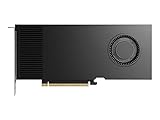
- Top Pick: NVIDIA RTX 4000 SFF Ada Generation Workstation Ada Lovelace Architecture Dual Slot Low Profile Professional Graphics Board 900-5G192-2571-000 VD8465
- Best Value: PNY NVIDIA RTX 4000 SFF Ada Gen OEM
- Premium Choice: NVIDIA RTX 4000 Ada Generation Workstation Ada Lovelace Architecture Single Slot Professional Graphics Board 900-5G190-2570-000 VD8552
Nvidia RTX 4000 SFF Ada answers a very specific question: how do you get 20 GB of certified professional graphics into a machine that has almost no room and almost no spare power? Built as a compact, low-profile card sipping just 70 watts, it targets small-form-factor workstations, dense deployments, and space-constrained offices where a normal professional card simply will not fit. This review synthesizes deployment reports and buyer feedback to show exactly what the RTX 4000 SFF Ada delivers, where its limits lie, and who should choose this compact powerhouse in 2026.
As an Amazon Associate we earn from qualifying purchases at no extra cost to you.


What the Nvidia RTX 4000 SFF Ada Offers
The RTX 4000 SFF Ada takes the professional capability of the Ada generation and squeezes it into the smallest practical package. Understanding what that compact design gives you, and the trade-offs it accepts to fit almost anywhere, is the key to knowing whether it is the right card for your space-limited system.
Ada Architecture and 20 GB in a Tiny Package
The RTX 4000 SFF Ada pairs 6,144 CUDA cores with 192 fourth-generation Tensor cores and 48 third-generation RT cores, fed by 20 GB of GDDR6 memory with error correction. That is a striking amount of professional memory for such a small card, and it is the specification that defines what the SFF can genuinely handle.
The 20 GB buffer comfortably holds detailed CAD assemblies, layered design files, and mid-sized AI models that would overwhelm smaller compact cards, giving professionals real capability in a form factor that normally forces compromise. The ECC support adds the reliability certified workflows expect.
Analytically, the fourth-generation Tensor cores bring FP8 support, so even this tiny card accelerates modern AI inference efficiently. For professionals running local models on compact machines, that competence turns the SFF into a surprisingly capable little AI workstation alongside its core design role.
For buyers, that dual competence in such a small card is genuinely novel. Compact machines have long meant compromise, and the SFF quietly ends that trade-off for a wide band of professional and light-AI work that used to require a full-size tower.
Small Form Factor, Low Profile, 70 Watts
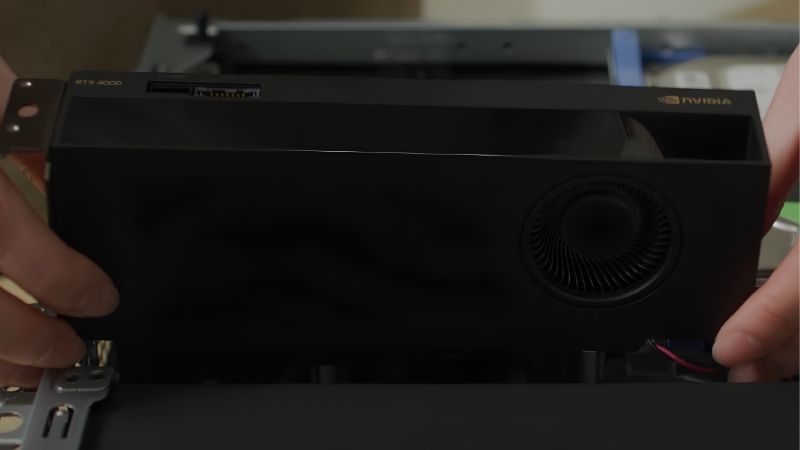
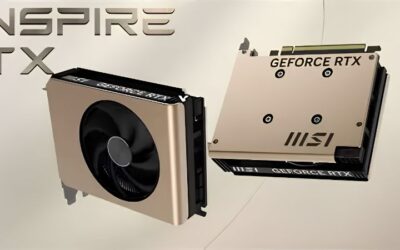
The defining trait of the RTX 4000 SFF Ada is its half-height, low-profile design drawing only 70 watts with no external power connector. This lets it fit into small-form-factor and compact workstations where full-size cards are physically impossible, dramatically widening the range of systems it can serve.
For professionals in tight spaces, dense deployments, or slim business desktops, that fit is not a convenience but the entire reason to choose this card. It brings genuine 20 GB professional capability to machines that otherwise could never host a card of this class.
The honest trade-off is that the compact, low-power design caps performance below the full-size RTX 4000 Ada and larger cards. You are buying capability in a form factor nothing else matches, not maximum horsepower, and for the space-constrained buyer that is exactly the point.
Where It Fits vs RTX 4000 Ada and RTX 2000 Ada
Against the full-size RTX 4000 Ada, the SFF version offers the same 20 GB in a far smaller package at similar performance within its power limits, making it the choice purely when space and form factor demand it. If your case fits a full-size card, the standard 4000 Ada may run cooler under sustained load.
Against the RTX 2000 Ada, the SFF steps up with more memory and compute while keeping a compact profile, making it the better choice for space-limited systems that need more capability than the entry card provides. It is the high-capability option for small builds.
Choosing correctly is about honestly assessing your space and power constraints. Buyers who need serious professional capability in a machine that cannot host a normal card find the SFF uniquely valuable, while those with room to spare may prefer a full-size card for the same money.
The clearest way to decide is to start with the chassis. If your system can only take a low-profile card, the SFF is effectively without rival at this capability; if it can host a full-size board, weigh whether the compact premium buys you anything you actually need.
Nvidia RTX 4000 SFF Ada Performance in Real Work
Specifications set expectations, but the SFF’s value shows in how it performs where nothing else fits. Across CAD, content creation, and light AI in compact systems, buyer feedback describes a capable little card that rewards those who chose it for its unique form-factor advantage.
CAD, Design, and Certified Reliability
For CAD and design software, the RTX 4000 SFF Ada delivers certified, reliable performance in applications like AutoCAD, SolidWorks, and Revit, which is remarkable for a card of its size. Professionals value the certified stability just as they would from a full-size card.
The 20 GB buffer handles substantial assemblies and detailed models smoothly, letting engineers and architects work in compact machines without the memory-related slowdowns that plague smaller cards. That capability in a tiny package is the SFF’s defining achievement.
Feedback from CAD users is consistently positive on reliability, with the standout praise being that a card this small behaves like a proper professional GPU. For space-constrained professional workflows, that dependable capability is precisely what makes the SFF worth its price.
Content Creation and Compact Rendering
For content creation, the RTX 4000 SFF Ada handles photo editing, video timelines, and GPU-accelerated rendering capably for its class, giving creators in compact rigs performance well beyond integrated graphics or tiny consumer cards. It brings real creative capability to small builds.
Its rendering ability suits creators whose projects are moderate and whose systems are space-limited, and the low-profile design fits ultra-compact editing setups. That combination of genuine capability and unmatched fit is central to its appeal for space-conscious professionals.
The common and fair caveat is that heavy production rendering benefits from a larger, higher-power card. The SFF is a capable compact tool, not a full render node, and buyers who choose it for its form-factor advantage rather than raw speed come away satisfied.
AI Inference, Dense Deployment, and Compatibility
With FP8-capable Tensor cores and 20 GB, the RTX 4000 SFF Ada handles local AI inference and development well, and its compact, low-power design makes it ideal for dense deployments where many cards must fit in limited space. That density is a genuine advantage for edge and compact AI systems.
For organizations rolling out many small machines, that density compounds. Fitting real 20 GB professional capability into slim desktops across a department, without power or space upgrades, is a deployment advantage that larger cards simply cannot offer, and it is a big reason the SFF keeps appearing in fleets of slim professional desktops.
Practically, the 70-watt draw and half-height design make it compatible with small-form-factor systems that no other 20 GB professional card can enter, and installation is straightforward. Confirm your case accepts the low-profile bracket, though its tiny footprint rarely causes fit problems.
The pattern in feedback is that buyers who choose the SFF for its unique combination of capability and compact fit are very satisfied, while the few disappointed users expected full-size performance from a card deliberately built for the smallest systems.
Buying the RTX 4000 SFF Ada in 2026: Value, Market, and Pros and Cons
The RTX 4000 SFF Ada makes the most sense as a form-factor solution rather than a performance leader, delivering serious capability where nothing else fits. Two market realities in 2026 also shape whether now is a good time to buy, and both favor buying to a real need over waiting.
Why the RTX 4000 SFF Ada Is a Unique Solution
The core argument is that nothing else does what it does. For professionals who need 20 GB of certified graphics in a small-form-factor machine, the SFF delivers capability that simply has no compact alternative, which makes it uniquely valuable to space-constrained buyers.
It also enables dense deployments, letting organizations pack real professional capability into small or numerous machines without power or space upgrades. That flexibility opens use cases, from compact CAD workstations to dense edge AI nodes, that larger cards cannot serve.
Where it stops being the right choice is when you have room for a full-size card and want maximum performance per dollar, and buyers should weigh that honestly. Chosen for its unmatched form factor, the SFF is one of the most useful specialized professional cards available.
Memory Prices and Buying Timing
The main external factor is the memory market. Component and memory prices climbed steeply through late 2025 before leveling off, and that plateau is a pause rather than a price cut, so a professional card carrying 20 GB of ECC memory stays exposed to elevated costs that keep its price firm.
New supply is coming, with OEMs able to source DDR5 from vendors such as CXMT and Micron building two plants in Idaho, but those fabs will not reach volume production until 2027 to 2028. The measured conclusion is that RTX 4000 SFF Ada pricing is unlikely to fall meaningfully in the near term.
With broad component prices still drifting upward, the practical takeaway is that today’s price is likely close to the best you will see for a while, so if the compact form factor solves a real problem for you, buying now beats waiting on relief that remains years away.
Nvidia RTX 4000 SFF Ada Pros and Cons
The ownership picture distilled for a fast decision.
Pros: 20 GB ECC memory in a half-height, low-profile package; only 70 watts with no power connector; certified drivers and reliability; FP8 support for local AI; unmatched fit for small-form-factor and dense deployments.
Cons: compact design caps performance below full-size cards; not built for heavy rendering or the largest AI models; costs a premium for the form factor; pricing held up by an elevated memory market into 2027.
See More:
Final Verdict: Is the Nvidia RTX 4000 SFF Ada Worth It?
For professionals who need serious, certified professional graphics with 20 GB of memory in a machine that cannot host a full-size card, the Nvidia RTX 4000 SFF Ada is genuinely worth it, delivering capability that has no compact equal. If you have room for a full-size card and want maximum performance per dollar, the standard RTX 4000 Ada or a larger card is the better fit.
If the RTX 4000 SFF Ada solves your form-factor problem, a firm memory market means waiting is unlikely to reward you. Check the latest Nvidia RTX 4000 SFF Ada pricing, availability, and system compatibility through the link below and secure the value while supply lasts.
Top-Rated Picks


| Product | Brand | Rating | Reviews | Price |
|---|---|---|---|---|
| Cable Matters 8 Pin GPU Power Cable – 2ft, 8Pin PSU(E… | CableMatters | ★ 4.5 | 592 | under $10 |
| Fasgear 16pin GPU Cable to 4X 8 Pin Pcie Extension – … | Fasgear | ★ 4.5 | 240 | under $30 |
| PCIE 5.0 16Pin GPU Power 12VHPWR Extension Cable, 16P… | Bangfun | ★ 4.5 | 86 | under $20 |
| YEZriler 8 Pin PCIe Cable for EVGA Power Supply, PCIe… | MoreOptionsForYou! | ★ 4.2 | 99 | under $10 |
| (2-Pack) COMeap 12 Pin GPU Cable, Dual PCIe 8 Pin Fem… | COMeap | ★ 4.6 | 39 | under $20 |
Frequently Asked Questions
What makes the RTX 4000 SFF Ada special?
It packs 20GB of GDDR6 with ECC into a low-profile dual-slot card drawing only about 70W from the PCIe slot with no auxiliary power connector. That combination of capacity, efficiency and size is unmatched for small form factor workstations and compact rack systems.
Does it really need no power connector?
Correct, its 70W envelope stays within the PCIe slot budget, so it installs in slim workstations and 1U or 2U chassis with no spare PCIe cables. That is a major practical advantage in prebuilt and OEM systems where power delivery is fixed.
What display outputs does it have?
It uses four Mini DisplayPort connectors, which keeps the low-profile bracket viable while supporting four independent displays. You will need Mini DisplayPort adapters or cables for standard DisplayPort or HDMI monitors, so budget for those when planning a multi-monitor deployment.
How does its performance compare to a full-size card?
The 70W limit caps throughput well below full-height professional cards like the RTX 4000 Ada or RTX 4500 Ada. Expect competent viewport, CAD and moderate rendering performance rather than flagship speed. You are paying for capacity and density, not raw compute per dollar.
Is 20GB with ECC useful for AI work?
Yes for inference and moderate fine-tuning where capacity matters more than raw throughput, and ECC protects long-running jobs from silent memory errors. For heavy training the limited power budget makes it slow. Consider it a compact inference and visualization card rather than a training accelerator.
Ready to decide? Our #1 pick for 2026 is the Cable Matters 8 Pin GPU Power Cable – 2ft, 8Pin PSU(E….
Live price & availability on Amazon.

Write Your Review
No reviews yet. Be the first to share your experience!