
- Top Pick: MSI Gaming Radeon RX 6650 XT 128-bit 8GB GDDR6 DP/HDMI Dual Torx 3.0 Fans FreeSync DirectX 12 VR Ready OC Graphics Card (RX 6650 XT MECH 2X 8G OC) (Renewed)
- Best Value: ASRock Radeon RX 7600 Challenger Pro 8GB OC, AMD RDNA 3, 8GB GDDR6, PCIe 4.0, Triple Fans, 0dB Silent, 2695MHz Boost, Triple Fan Graphics Card
- Premium Choice: XFX Speedster SWFT210 Radeon RX 7600 Graphics Card with 8GB GDDR6 HDMI 3xDP, AMD RDNA 3 RX-76PSWFTFY
RX 6650 XT is a last-generation budget card that keeps showing up on shortlists for one simple reason: it is cheap and it still handles 1080p gaming well. As an RDNA 2 card it lacks some of the newest features, but for a price-conscious builder who just wants smooth frame rates at 1080p without overspending, it remains a tempting option. If you are weighing it against newer budget cards or hunting for value in the used market, this review covers the 1080p performance, the practical build details, and the honest pros and cons that decide whether the RX 6650 XT is still worth buying.
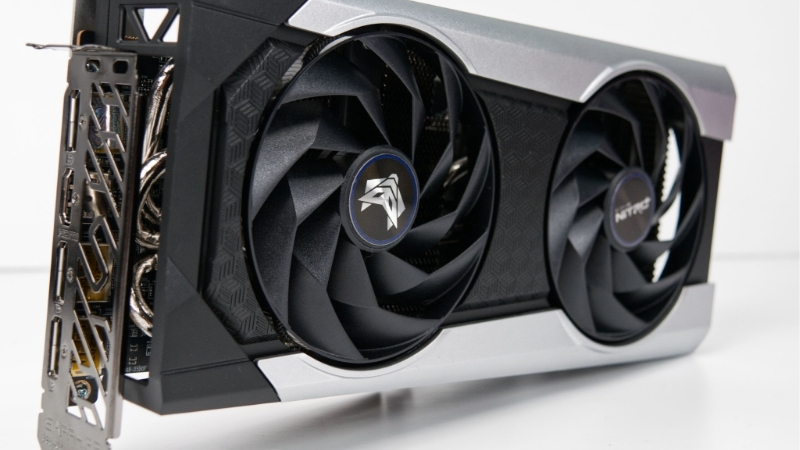
RX 6650 XT Performance: Affordable 1080p Done Right
The RX 6650 XT is a factory-tuned version of the RX 6600 XT, built on RDNA 2 Navi 23 with 8GB of GDDR6 on a 128-bit bus and a 180W board power. It is a dedicated 1080p card, and at the low prices it now commands it offers strong rasterized performance for the money. Below, the performance is broken down the way a budget 1080p buyer evaluates an older but affordable card.
As an Amazon Associate we earn from qualifying purchases at no extra cost to you.




1080p Gaming Performance
At 1080p the RX 6650 XT is a genuinely capable card, clearing 60 FPS in the vast majority of modern titles at high settings and pushing well past 100 FPS in lighter and competitive games. For the esports and online titles that dominate budget gaming, it delivers smooth, high-refresh frame rates that belie its low price.
It is firmly a 1080p card, though. It can manage some 1440p gaming at reduced settings, especially with upscaling, but that is stretching it beyond its comfort zone. The honest framing is that this is an affordable 1080p performer, and within that lane it does its job well even years after launch.
The practical takeaway is that the RX 6650 XT punches above its current price for pure 1080p rasterized gaming. If your goal is smooth 1080p without paying for newer features you may not use, it remains a sensible amount of performance for the money.
Ray Tracing, FSR and Feature Limitations
Ray tracing is the clearest weakness of this RDNA 2 card. It can technically run ray tracing, but the performance hit is steep, so most owners leave it off and rely on the card’s solid rasterized performance instead. If ray tracing matters to you, this is not the card to chase it on.
On upscaling it supports FSR, including FSR 3 Frame Generation, which is software-based and works on RDNA 2, giving the card a useful way to lift frame rates in heavier titles. It does not support the newer FSR 4, which is exclusive to RDNA 4 hardware, so it misses that specific upscaling leap.
There is one more feature gap worth knowing: as an older card it lacks the AV1 encoding found on newer RDNA 3 cards like the RX 7600. For a pure gamer that does not matter, but for a budget streamer or creator it is a real consideration that can tip the decision toward a newer card.
What Owners Praise and Criticize
Owner feedback is positive within the context of a budget card, with the most common praise being strong 1080p value, low pricing, quiet operation, and reasonable efficiency. Many owners are happy with the card as an affordable way to game smoothly at 1080p without spending on a newer model they feel they do not need.
The criticisms are the expected ones for an older card: weak ray tracing, the 8GB of VRAM that can be tight in a few newer titles, and the missing modern features like AV1 encoding. None of these matter much for straightforward 1080p gaming, but they are the reasons a buyer might step up to a newer card if the price difference is small.
The overall impression is of a card that still does its core job well, rewarding the buyer who simply wants smooth, affordable 1080p gaming and is not chasing the latest features.
| Strengths | Trade-offs |
|---|---|
| Strong 1080p value at low current prices | Weak ray-tracing performance |
| Smooth high-refresh in esports titles | 8GB VRAM tight in some newer games |
| Quiet, efficient and easy to build around | No AV1 encoding for streamers |
| FSR 3 Frame Generation supported | No FSR 4; older RDNA 2 feature set |
RX 6650 XT Build Fit: Power, Size and Cooling
As a budget card, the RX 6650 XT is easy to build around, but a clean install still depends on three practical things: the power draw and supply it needs, whether it fits your case, and how it handles heat and noise. Each is covered below so your affordable build comes together without surprises.
Power Draw and PSU Requirements
With a 180W board power, the RX 6650 XT is modest in its demands, and a quality 500W to 550W power supply is plenty for most budget builds. It uses a single standard 8-pin connector, which keeps the install simple for newer builders.
That low draw is a budget advantage, since it rarely forces a power-supply upgrade and keeps system heat and noise down. For anyone slotting this into an older system or a prebuilt, the existing PSU will very often have the headroom it needs.
For a budget builder, that predictability is valuable: there are no hidden costs lurking behind the card, so the price you pay is essentially the whole upgrade. That keeps the 6650 XT firmly in the affordable, no-surprises category that first-time builders appreciate.
Card Size and Small-Case Builds
Most RX 6650 XT models are compact, with plenty of short dual-fan designs that fit easily into small and budget cases. This makes the card a natural fit for compact builds and tight budgets where larger cards will not go.
Dimensions still vary by brand, so measure your case clearance before buying, especially in a small-form-factor build. The card’s modest power draw means even an affordable compact cooler keeps it running comfortably, so a smaller model gives up little.
That compactness, combined with the low power draw, makes the 6650 XT a comfortable fit for budget prebuilt upgrades and small starter rigs, where buyers often have limited space and a modest power supply to work with.
Cooling, Noise and Temperatures
Thanks to its modest power draw, the RX 6650 XT runs cool and quiet on most coolers, with even affordable dual-fan models keeping temperatures comfortably in check during extended gaming. Fan-stop keeps the card silent at idle and on the desktop.
Under sustained load it stays quiet enough for almost any setup, and a mild undervolt can lower temperatures and noise further if desired. For a budget card, the acoustic experience is genuinely good.
RX 6650 XT Pricing, Value and When to Buy
The RX 6650 XT’s appeal is value, so price is central to the verdict, and the current component market is part of the picture. This section covers where prices sit, how the card compares to newer options, and which buyer it suits.
Where Prices Stand Right Now
For a budget buyer, the market backdrop matters. PC component prices have broadly trended upward, driven mainly by memory costs, and that pressure reaches graphics cards and the rest of a build. The encouraging side is real but limited: the steep climb seen at the end of 2025 has cooled, and some makers, Framework among them, have reported a relatively stable recent stretch while still warning of further movement.
New memory supply is on the way but not soon. OEMs can now source DDR5 from suppliers like CXMT, and Micron is building two fabs in Idaho, yet those plants are not expected to come online until 2027–2028. In short, prices have stopped spiking rather than started falling, so genuine relief is still some distance out, which is worth remembering when budgeting a whole system.
The practical implication for an RX 6650 XT buyer is that its value depends on how low its price is relative to newer budget cards. As an older model it should be clearly cheaper than current-generation options to be worth choosing, so compare it directly against newer cards on the day you buy.
RX 6650 XT vs the Competition
The key comparison is with newer budget cards like the RX 7600, which offers similar 1080p performance plus modern features such as AV1 encoding and better efficiency. If the 7600 is only a little more expensive, it is often the smarter long-term buy; if the 6650 XT is significantly cheaper, its value case strengthens.
Against its near-twin the RX 6600 XT, the 6650 XT is a slightly factory-overclocked version offering marginally higher performance, so the two are close enough that price should decide between them. The overall theme is that the 6650 XT is a strong pick when it is meaningfully cheaper than newer cards, and a harder sell when prices are close.
A simple way to decide is to look at the price per frame and the feature gap together: if the 6650 XT saves you a meaningful amount over the RX 7600 and you do not need AV1 encoding, it is the rational pick, while a small saving rarely justifies giving up the newer card’s features and efficiency.
Who Should Buy the RX 6650 XT
Buy it if you want affordable 1080p gaming, prioritize raw rasterized value over newer features, and can find it at a clear discount to current-generation cards. For a budget builder who just wants smooth 1080p frame rates, it remains a sensible amount of performance for the money.
Look at a newer card like the RX 7600 instead if you want AV1 encoding, better efficiency, or more longevity, and the price difference is small. If the RX 6650 XT is genuinely cheap relative to newer options, check the current price and availability through the link here, and compare it directly against the RX 7600 before deciding.
See More:
- Colorful iGame RTX 4090
- Founders Edition vs AIB
- Best RTX 4080 Super card
- Best RTX 5080 AIB
- Best RTX 5070 Ti card
Conclusion: Is the RX 6650 XT Worth It?
The RX 6650 XT remains a solid value for affordable 1080p gaming, delivering smooth rasterized performance, quiet operation, and low power draw at the low prices it now commands. Its limitations, weak ray tracing, 8GB of VRAM, and the lack of newer features like AV1 encoding, are the expected trade-offs of an older RDNA 2 card, and they matter only if those features are on your list. With component prices stabilizing rather than falling, the move is simple: if the RX 6650 XT is clearly cheaper than newer budget cards, it is still a sensible 1080p buy, so compare it against the current generation before you commit.
Top-Rated Picks


| Product | Brand | Rating | Reviews | Price |
|---|---|---|---|---|
| ARCTIC MX-4 (4 g) – Premium Performance Thermal Paste… | ARCTIC | ★ 4.8 | 104k | $4.99 |
| ARCTIC MX-4 (incl. Spatula, 4 g) – Premium Performanc… | ARCTIC | ★ 4.8 | 71.9k | $5.49 |
| Crucial 8GB DDR4 RAM 3200MHz (PC4-25600), Downclockab… | Crucial | ★ 4.8 | 62.8k | $74.99 |
| AMD Ryzen 5 5600X 6-core, 12-thread unlocked desktop … | — | ★ 4.8 | 30.2k | $177.60 |
| NVIDIA Shield Remote; Voice Search, Motion-Activated,… | — | ★ 4.7 | 10.6k | $25.99 |
Frequently Asked Questions
How much faster is the 6650 XT than the 6600 XT?
The refresh raises memory speed from 16Gbps to 17.5Gbps and lifts clocks slightly, producing roughly a 5 percent improvement overall. Board power rises from about 160W to 176W to pay for it. It is a modest bump, so buy whichever is cheaper rather than paying a premium for the newer name.
Is 8GB of VRAM enough for 1080p today?
It is adequate at high settings but no longer comfortable at ultra in the most demanding 2025 and 2026 releases, particularly with ray tracing enabled. Dropping textures one notch usually resolves stutter with almost no visual cost, but it does mean the card is showing its age in newer titles.
Does the PCIe x8 interface cause problems?
Only on older systems. The card uses PCIe 4.0 x8, which is fine on any PCIe 4.0 motherboard. Installed in a PCIe 3.0 system it runs at x8 of the older standard, which can cost several percent in VRAM-heavy scenes. Check your board generation before pairing it with an older platform.
What power supply and case clearance does it need?
At 176W with a single 8-pin connector, a quality 500W to 550W supply is sufficient. Most models are short dual-fan cards around 200mm to 240mm, so clearance is rarely an issue even in compact mATX builds with a front radiator installed.
How does it compare with an Arc B570?
The B570 offers 10GB of VRAM and newer architecture with XeSS 2 frame generation, at similar money. The 6650 XT counters with mature drivers and lower CPU overhead, which matters if you are running an older processor. On a modern CPU the Intel card is generally the better forward-looking buy.



Write Your Review
No reviews yet. Be the first to share your experience!