
- Top Pick: GIGABYTE GeForce RTX 5060 Ti WINDFORCE OC 8G Graphics Card, 8GB 128-bit GDDR7, PCIe 5.0, WINDFORCE Cooling System, GV-N506TWF2OC-8GD Video Card
- Best Value: ASUS Prime GeForce RTX 5060 Ti 16GB GDDR7 Gaming Graphics Card
- Premium Choice: ASUS Dual GeForce RTX 5060 Ti 16GB GDDR7 OC Edition Gaming Graphics Card
RTX 4060 Ti vs RTX 5060 is a deceptively tricky budget matchup, because the newer card is not simply the faster one. The last-generation 4060 Ti has more cores, while the current 5060 is cheaper, more efficient, and packs DLSS 4. That tension is exactly what makes this comparison worth reading before you spend, and this head-to-head settles which budget GPU deserves your money in 2026.

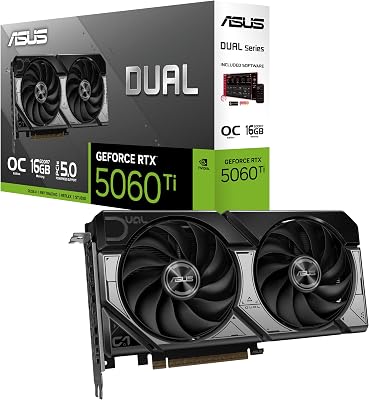

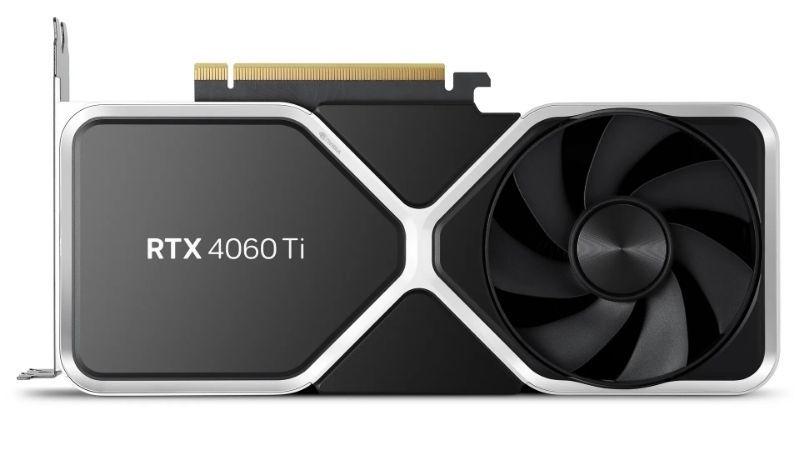
The Quick Verdict: RTX 4060 Ti vs RTX 5060
Short answer: the RTX 5060 is the smarter buy for most new builders, because it costs about $100 less at MSRP, uses less power, and adds DLSS 4 Multi Frame Generation, all while landing within a few frames of the 4060 Ti in raw rasterization. The 4060 Ti only makes sense if you find it heavily discounted or specifically want its 16GB variant for more VRAM.
As an Amazon Associate we earn from qualifying purchases at no extra cost to you.




Who Wins on Raw Performance
It is worth stressing how narrow this lead really is in day-to-day play. A five-to-nine percent gap is the kind of difference that vanishes the moment you enable upscaling or nudge a single setting, which is why almost nobody would identify the faster card blind. On raw raster the 4060 Ti wins on paper more than in feel.
In pure rasterization, the RTX 4060 Ti holds a narrow edge, typically around 5% to 9% on aggregate thanks to its higher 4,352 core count against the 5060’s 3,840. It is technically the faster card in traditional rendering, and in some titles that gap is visible.
But the margin is small enough that most players would not notice it without a frame counter, and the 5060’s much faster GDDR7 memory narrows or erases the lead in bandwidth-heavy scenes. Calling a clear raster winner is genuinely difficult.
The honest summary is that these two trade blows at 1080p, with the 4060 Ti nudging ahead on core count and the 5060 clawing it back with memory bandwidth. Raw speed alone does not settle this fight.
Who Wins on Value
The value gap also compounds when you factor in efficiency and features, not just the sticker. The 5060 costs less to buy, draws less power, and unlocks DLSS 4, so the money you save up front is not offset by hidden downsides later. For a fresh build, that combination is very hard for the older card to answer.
The RTX 5060 wins value decisively. At a $299 MSRP against the 4060 Ti’s $399, you are paying roughly a third less for near-identical raster performance, which is a lopsided trade in the newer card’s favour.
That $100 saving is real money in a budget build, enough to fund a better CPU, more storage, or a faster monitor, all of which improve your experience more than a handful of extra frames would.
Unless the 4060 Ti is on a steep clearance discount, its higher price makes it hard to recommend over the 5060 for a fresh purchase. Value is where this comparison stops being close.
Specification Comparison Table
Here are the core numbers side by side, drawn from each card’s official specifications, so the generational trade-offs are visible before we get into what they mean in games.
| Spec | RTX 4060 Ti (8GB) | RTX 5060 |
|---|---|---|
| Architecture | Ada Lovelace | Blackwell |
| CUDA cores | 4,352 | 3,840 |
| Memory | 8GB GDDR6 | 8GB GDDR7 |
| Bandwidth | 288 GB/s | 448 GB/s |
| TDP | 160W | 145W |
| DLSS Multi Frame Gen | No (DLSS 3) | Yes (DLSS 4) |
| Launch MSRP | $399 | $299 |
Deep Dive Face-Off: Cores, Memory, and Features
The spec table captures a classic generational puzzle: the old card has more cores, the new one has better everything else. Untangling which of those advantages matters more in real games is the heart of this comparison.
Core Count vs Memory Bandwidth
This is a textbook example of why spec-sheet core counts can mislead. Two cards can look mismatched on paper yet perform almost identically once memory bandwidth, architecture, and clocks are accounted for, which is precisely the situation here. The lesson is to judge these two on real results and price rather than on CUDA-core totals alone.
The 4060 Ti’s extra 512 CUDA cores give it a theoretical compute lead, and in pure shader-bound workloads that edge shows up as the small raster advantage noted earlier. On raw core count, the older card wins.
The 5060 counters with 448 GB/s of GDDR7 bandwidth against the 4060 Ti’s 288 GB/s on GDDR6 — a 55% increase. In modern games that lean on memory bandwidth, especially with high textures, that gap closes the performance difference and sometimes flips it.
The result is a near-tie that depends on the game. Shader-heavy titles favour the 4060 Ti’s cores; bandwidth-hungry ones favour the 5060’s memory. Neither card runs away with it, which is why price and features become the deciding factors.
DLSS 4 vs DLSS 3
The gap here also widens over time rather than shrinking. As more titles ship with the full DLSS 4 suite, the 5060’s advantage grows, while the 4060 Ti stays capped at the older feature set. For a buyer keeping a card several years, that trajectory is a meaningful reason to favour the newer architecture.
This is the 5060’s clearest advantage. As a Blackwell card it supports DLSS 4 with Multi Frame Generation, which can multiply frame output in supported games, while the Ada-based 4060 Ti is limited to DLSS 3 and its single-frame generation.
In the growing library of DLSS 4 titles, that lets the 5060 post frame rates the 4060 Ti simply cannot match, backed by Reflex to keep latency in check. For anyone who plays the newest games, this is a forward-looking edge worth real weight.
It is fair to note frame generation adds smoothness rather than raw responsiveness, but for single-player and visually rich games the effect is a genuine win, and it is exclusive to the newer card here.
Power, Efficiency, and System Fit
The efficiency difference is small in absolute terms but pleasant in practice. A cooler, lower-power card tends to run quieter and puts less strain on an older power supply, which is exactly the kind of low-stress upgrade a budget builder appreciates. Neither card is demanding, but the 5060 is the gentler fit of the two.
The 5060 is the more efficient card, drawing 145W against the 4060 Ti’s 160W, so it runs a little cooler and is even easier to power. Both are undemanding, comfortable on a modest 550W supply and happy in compact cases.
Neither card forces a power-supply upgrade for most existing systems, which keeps the true cost of the decision limited to the card itself. That is a point in the budget builder’s favour whichever way they lean.
The efficiency edge also means the 5060 tends to be the quieter, cooler option in small-form-factor builds, a subtle but real advantage for anyone building a compact 1080p machine.
Price, Availability, and the Alternative
Specs decide which card is faster; the market decides which is worth buying. In 2026 both cards have often sold above their launch prices, so timing matters as much as the choice itself.
MSRP vs Street Prices
Shopping both on the same day at the same retailer is the practical safeguard here. Their prices move independently, and catching the 4060 Ti on a genuine clearance or the 5060 near MSRP can swing the verdict far more than any benchmark chart, so let the live numbers guide the final call.
At $299 versus $399, the 5060’s value case is strongest at MSRP. In practice, rising component costs pushed real-world prices up across the budget tier, so both cards have drifted above list, and older 4060 Ti stock is priced unpredictably between new and used listings.
The discipline is the same as always: treat each card’s MSRP as the fair-price anchor and judge every listing against it. A 4060 Ti only becomes interesting when a genuine discount drags it well below its $399 launch price.
Because the 4060 Ti is older, its pricing swings more than the 5060’s, which is where the occasional bargain hides — but also where overpriced leftover stock lingers, so the anchor matters most when eyeing the older card.
Is Price Relief Coming?
There is cautiously good news. The steep price climb of late 2025 has eased, and the market has shown a stretch of relative stability, though makers still warn of possible volatility ahead. Prices have levelled off rather than dropped.
Longer term, new memory supply is being built, with CXMT expanding output and Micron constructing two Idaho fabs, but those arrive around 2027-2028. Genuine relief is on the horizon, not on the shelf.
That timeline argues against waiting for a crash. Buying either card when it reaches a fair price today beats holding out for cheaper memory that is still years away from the market.
The Alternative If Neither Fits
If the 4060 Ti feels overpriced and you want more headroom than the 5060, the RTX 5060 Ti at a $429 MSRP steps up with more cores and a 16GB option for longevity. On AMD’s side, a comparably priced Radeon can offer strong rasterization value.
Check the live price on all of them before deciding — in a strange market, the best value is frequently whichever card happens to be sitting closest to its MSRP that week.
Staying flexible on the exact model is the winning move when supply is uneven, since an unusually good price on a neighbouring card can beat rigidly sticking to your first pick.
Final Verdict: RTX 4060 Ti vs RTX 5060
This one is closer on raw speed than the generation gap suggests, but the full picture favours the newer card. Match the choice to your budget and how new the games you play are, and the right pick becomes clear.
Who Should Buy the RTX 5060
It is also the more future-facing pick for someone who plays the latest releases. Between DLSS 4, GDDR7 bandwidth, and a newer architecture, the 5060 is positioned to benefit from ongoing driver and game optimisations in a way the outgoing 4060 Ti simply is not.
Most new buyers. If you play at 1080p, want DLSS 4, value efficiency, and care about price, the 5060 is the smart-money choice at $100 less than the 4060 Ti for near-identical raster performance.
Who Should Buy the RTX 4060 Ti
The one scenario where it clearly shines is the 16GB variant on a discount. If you edit video, run modded games, or want extra VRAM headroom and can find that model cheap, it offers something the base 5060’s 8GB cannot, and that specific niche keeps the older card relevant.
Bargain hunters and VRAM seekers. If you find the 4060 Ti heavily discounted below the 5060, or specifically want its 16GB variant for editing and modded games, the older card can still make sense.
See More:
- TechPowerUp GPU
- Nvidia H200 GPU price
- RTX 5050 Mobile
- Nvidia competitors
- Nvidia Reflex low latency on or off
Pros and Cons at a Glance
The summary below distils the whole comparison into the trade-offs that actually change a purchase decision.
| RTX 4060 Ti (8GB) | RTX 5060 | |
|---|---|---|
| Best for | Steep discounts; 16GB variant for VRAM | New 1080p builds, best value, DLSS 4 |
| Strength | ~5-9% more raster cores; 16GB option exists | $100 cheaper, DLSS 4, +55% bandwidth, efficient |
| Weakness | Pricier, DLSS 3 only, slower memory | Fewer cores; 8GB only on the base model |
To settle the RTX 4060 Ti vs RTX 5060 debate: buy the 5060 for value, efficiency, and DLSS 4, and only choose the 4060 Ti if a big discount or the 16GB variant tips it. Budget prices move fast, so tap the link on our site to check today’s live price before you commit.
Frequently Asked Questions
Which card is faster overall?
They trade blows. The RTX 5060 benefits from Blackwell architecture improvements and faster GDDR7 memory, putting it roughly level with or slightly ahead of the 8GB RTX 4060 Ti in most rasterised games at 1080p. The 16GB RTX 4060 Ti pulls ahead in memory-constrained scenarios, where its larger frame buffer avoids the stutter that plagues 8GB cards.
Is VRAM the deciding factor between them?
Often, yes. The RTX 5060 ships with 8GB, while the 4060 Ti exists in both 8GB and 16GB versions. If your choice is between the 5060 and the 16GB 4060 Ti at similar money, the extra capacity is usually the better long-term buy for 1440p and for texture-heavy titles, even though the 5060 wins on architecture and features.
What features does the RTX 5060 have that the 4060 Ti lacks?
Multi frame generation in DLSS 4, which can generate several interpolated frames rather than one, plus the updated Blackwell media engine with improved encoding efficiency and additional format support. The 4060 Ti supports DLSS Super Resolution, Ray Reconstruction and single frame generation, so the practical gap is narrower than the version numbering suggests.
How do power and connector requirements compare?
The RTX 4060 Ti is rated at 160W and the RTX 5060 at 145W, both typically using a single 8-pin PCIe connector with a 550 to 600W supply recommended. Both are compact, low-heat cards that fit comfortably in small cases and prebuilt systems, so neither imposes a power supply upgrade on most existing machines.
Which is the better value on the used market?
A discounted or used RTX 4060 Ti 16GB is frequently the strongest value of the three options, because 16GB at this performance tier is otherwise expensive. Buy used cards only with a return option, check that the fans spin freely and the card was not used for continuous mining, and test with a demanding title before the return window closes.
Ready to decide? Our #1 pick for 2026 is the Architecture.
Live price & availability on Amazon.

Write Your Review
No reviews yet. Be the first to share your experience!