
- Top Pick: Ultimate Milvus Vector Database for AI Apps: Master Vector Search, Distributed Data Management, and GPU-Accelerated AI Systems with Milvus (English Edition)
- Best Value: Practical GPU Programming: High-performance computing with CUDA, CuPy, and Python on modern GPUs
- Premium Choice: GPU Databases A Complete Guide – 2020 Edition
TechPowerUp GPU tools have quietly become the first tab most PC builders open before spending a single dollar. If you have ever stared at a wall of graphics cards and wondered which numbers actually matter, this review breaks down what the TechPowerUp GPU database does well, where it falls short, and how to turn its raw specifications into a confident, money-saving buying decision. Consider it the pre-flight check you run before any purchase.
What the TechPowerUp GPU Database Actually Does
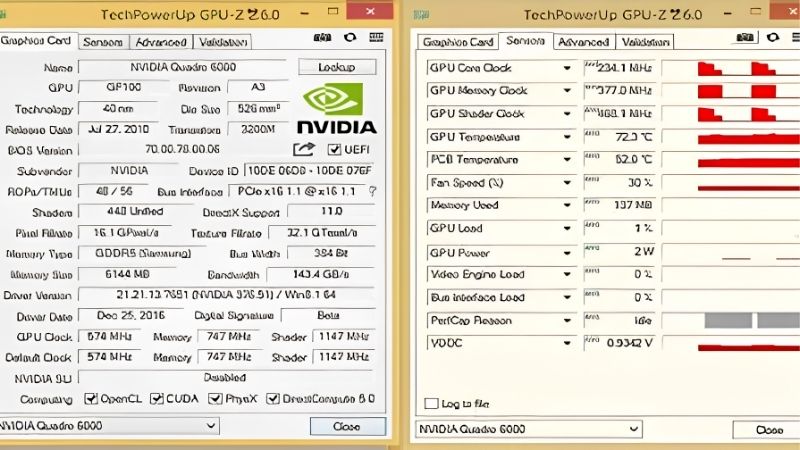
TechPowerUp runs two things enthusiasts lean on daily: a free, community-maintained GPU specs database that catalogs nearly every consumer card ever shipped, and GPU-Z, the lightweight utility that reads exactly what is physically installed in your PC. Together they answer the two questions that decide a purchase — “what is this card actually made of?” and “is it worth the price on the shelf today?” That combination of a reference library and a diagnostic tool is why the site keeps showing up in build guides and forum threads.
As an Amazon Associate we earn from qualifying purchases at no extra cost to you.



The GPU Specs Database at a Glance
Every entry lists the same core fields, which is precisely why the database is so useful for comparison. You get shader and CUDA core counts, ROPs and TMUs, base and boost clocks, memory size, memory type, bus width, bandwidth, TDP, the manufacturing node, the release date, and the launch MSRP. Having all of that in one uniform layout means you never have to hunt across three product pages to line up two cards.
The coverage spans Nvidia, AMD, and Intel in a single consistent format, so a GeForce card and a Radeon card are described with identical units. That neutrality matters more than it sounds. Marketing slides bury the numbers that hurt a product and inflate the ones that flatter it; the database simply prints them all side by side, which is the honest, analytical starting point any serious buyer needs.
GPU-Z rounds out the picture on the hardware you already own. It reports your exact GPU, memory manufacturer, BIOS version, and live sensor data, which is invaluable when you are checking whether a used card is genuine or whether a “new” pre-built really contains the GPU it advertises.
Live Price Tracking and Relative Performance
The two features that turn specifications into a decision are the relative-performance percentage and the price context. Relative performance places each card on a normalized scale against a reference GPU, so you can see at a glance that one model is, for example, 18% faster than another without decoding raw clock speeds or memorizing benchmark charts.
The price context is even more practical in 2026. Because the database records the original MSRP, you can immediately tell whether the card in your cart is selling near its intended price or well above it. A GeForce RTX 5060 Ti 16GB launched at $429; seeing that figure next to a $540 listing tells you instantly that you are paying a scarcity premium, not a fair price. That single data point has probably saved buyers more money than any benchmark ever will.
Used together, these two panels let you shortlist by performance first and then sanity-check the asking price, which is exactly the order a smart purchase should follow.
Pros and Cons of Relying on TechPowerUp GPU Data
No single source is perfect, and the honest way to review a tool is to weigh what users consistently praise against what frustrates them. Long-time users rate the database highly for accuracy, depth, and the fact that it is free of aggressive advertising. The recurring complaint in lower-star feedback is that community-sourced data can lag on brand-new launches, and that “relative performance” is a synthetic estimate rather than a guarantee for your specific game at your specific settings.
| Pros | Cons |
|---|---|
| Free, ad-light, and covers Nvidia, AMD and Intel equally | Newly launched cards can take days to populate fully |
| Consistent units make cross-brand comparison honest | Relative-performance % is a model, not a per-game promise |
| Launch MSRP shown, so overpriced listings are obvious | Does not replace hands-on reviews for coil whine, heat or noise |
| GPU-Z verifies exactly what is installed in your rig | Price links point to retailers, so you still confirm stock yourself |
Read that way, the database is a superb first filter and a poor last word. Pair it with a couple of hands-on video reviews for the finalists and you have covered both the data and the lived experience.
Reading TechPowerUp GPU Numbers Like a Buyer
Specifications only help if you know which ones move real-world frame rates. The database gives you the raw material; the skill is knowing which fields to weight for your build and which to dismiss as marketing noise. Get this right and you will stop overpaying for numbers that do nothing for you.
CUDA Cores, Bus Width, and Bandwidth — What Actually Matters
The most common mistake is comparing CUDA core counts across different architectures. A Blackwell core and an older Ada core are not interchangeable units, so a raw count tells you very little between generations. Within a single generation, though, core counts scale fairly predictably, which is where the database earns its keep for like-for-like comparisons.
Memory bandwidth is the number many buyers underrate. The GeForce RTX 5060 Ti 16GB moves data at 448 GB/s over GDDR7, while the previous-generation 4060 Ti 16GB sat at 288 GB/s on GDDR6. That 55% gap explains a large share of the real-world difference at 1440p, far more than the near-identical CUDA counts suggest. When two cards look similar on paper, bandwidth is often the tiebreaker that decides which one holds its frame rate under pressure.
The practical rule is to read the fields in order of impact: memory size and bandwidth first, then core count within the same architecture, then clocks. Reverse that order and you will misjudge cards constantly.
TDP, Power Connectors, and PSU Headroom
This is the field that saves people from expensive returns. The database lists TDP and the required power connectors, so you can confirm your power supply and case will actually accept the card before it ships to your door.
A practical sizing method: add your GPU TDP to your CPU TDP and roughly double the total to leave safe headroom. A 180W RTX 5060 Ti paired with a 105W CPU points you toward a quality 600W-plus unit, not the 450W bargain supply already in the case. That margin also absorbs the brief power spikes modern GPUs produce under load, which are a common cause of random shutdowns on underpowered systems.
Checking the connector type here also prevents the classic surprise of a card that needs a 12-pin adapter you do not own. Two minutes of reading spares you a second shopping trip.
Matching a GPU to Your Resolution, Case, and DLSS Goals
Numbers should map to how you actually play. For 1080p high-refresh esports, a mid-tier current card is plenty; for 1440p with ray tracing, bandwidth and memory size start to matter, and 8GB cards begin to feel tight in the most demanding 2026 titles. The database’s dimensions and slot data also tell you whether a card physically fits a small-form-factor case, which spec sheets on retail pages often omit.
This is also where Nvidia’s software stack quietly changes the math. DLSS 4 with Multi Frame Generation and Reflex can lift effective frame rates and cut latency in supported games, and neural rendering features are steadily expanding the supported list. A card that looks merely adequate on paper can punch well above its raw specs once these features are switched on.
So when you weigh a GeForce card against a spec-comparable rival, factor in that forward-looking software advantage. The database shows you the silicon; the feature set is what keeps that silicon relevant a year later.
Market Context: Why Prices Move Faster Than Specs
Specs are fixed the day a card launches, but the price you pay is not — and 2026 has been a case study in that gap. Understanding the current market is the difference between buying at a fair number and overpaying by a hundred dollars, so the price context in the database is arguably its most valuable feature right now. This is where the tool stops being a spec sheet and starts being a shopping strategy.
Memory Costs and the 2026 Price Climb
Laptop and component prices have continued to trend upward, driven heavily by memory. As DRAM and GDDR costs rose, graphics cards drifted above their launch MSRPs across the entire stack. The RTX 5060 Ti 16GB is the clearest example: a $429 sticker that routinely appears in the $500-$550 range once demand and thin supply are priced in. If you had only the retail number to go on, you would never know how far above fair value that is.
Supply tightened from the other side too. Nvidia signalled a reduction in RTX 50-series production of up to 40% in early 2026, and fewer cards chasing steady demand keeps street prices firm. For a buyer, the takeaway is simple and worth repeating: the MSRP in the database is your fair-price anchor, and anything far above it is the market talking, not the card getting better.
Has the Worst Passed? Reading the Stabilization Signals
There is genuine good news, but it is modest and it lives in the future. Prices have stopped climbing as steeply as they did in late 2025, and some hardware makers have reported a stretch of relative stability, even while cautioning that conditions can still shift. The panic buying has cooled, and that alone takes some heat out of pricing.
New supply is also on the way. Memory makers such as CXMT are expanding DDR5 output, and Micron is building two fabrication plants in Idaho. The catch is timing — those facilities are not expected to come fully online until 2027-2028. So the accurate read is that prices have levelled off rather than fallen, and real relief is still some distance out. That timeline is exactly why “wait for the crash” is a weak plan for anyone who needs a card this year.
How to Time a Purchase Using Live Price Data
Put those two realities together and a clear tactic emerges. Use the price context to learn a card’s recent floor, then treat any dip back toward MSRP as a genuine buying window rather than holding out indefinitely for a drop that the supply timeline says is not imminent.
When a card you have already researched lands at a fair number, that is the moment to move, because good pricing in this market does not sit around for long. Once your shortlist is set, you can check the current, live price and availability through the retailer link on our recommendations, so you buy at the right moment instead of guessing.
See More:
The Bottom Line
Used well, the TechPowerUp GPU database turns a confusing purchase into a data-driven one: read bandwidth and TDP over headline core counts, treat the launch MSRP as your fair-price anchor, and let the price context tell you when to buy. In a 2026 market where specs are steady but prices are not, that discipline is what keeps you from overpaying by a wide margin. When your research points to the right card at the right price, use the link on our site to check today’s live deal and lock it in before stock moves on.
Frequently Asked Questions
How reliable is the relative performance chart?
It is a useful ranking tool, not a benchmark result. The figures are aggregated from a fixed test suite at a given resolution and normalised against a reference card, so they smooth over per-game variance, driver maturity and ray tracing behaviour. Use it to sort candidates into rough tiers, then check dedicated reviews for the specific games you play.
Does the database list true board power rather than marketing numbers?
Entries list the manufacturer TDP or total graphics power plus the suggested power supply figure and the physical connector layout. That is the specification, not measured draw, and partner cards with raised power limits can pull noticeably more. Treat the listed suggested PSU as a conservative floor and add headroom for transient spikes on high-wattage models.
Can I use it to check whether a card fits my case?
Yes, and this is one of its strongest features. Individual board entries record length, width, slot height and cooler type for specific partner variants, which is exactly what you need when planning a small form factor or mini ITX build. Always cross-check against the case manufacturer maximum GPU clearance before ordering.
Is GPU-Z the same thing as the database?
No. GPU-Z is a separate free utility from the same site that reads your installed card in real time, reporting clocks, memory type, BIOS version, sensor data and an authenticity check. The database is a static reference catalogue of thousands of GPUs. Users often pair them, identifying an unknown card with GPU-Z then researching it in the database.
Does it show current retail pricing?
Entries include launch date and original launch price, which is valuable historical context, but they are not a live price tracker. For current street pricing, especially on used cards, compare marketplace listings separately. The launch price is still handy for spotting when a supposedly discounted card is actually being sold above its original recommended price.
Ready to decide? Our #1 pick for 2026 is the Free, ad-light, and covers Nvidia, AMD and Intel equally.
Live price & availability on Amazon.

Write Your Review
No reviews yet. Be the first to share your experience!