


Reinstall Nvidia drivers is one of the most common fixes for graphics problems, but “reinstall” actually covers two different approaches — a normal reinstall and a full clean reinstall — and choosing the right one for your situation is what makes the difference between a quick fix and wasted effort. Whether your games started crashing, a Windows update broke your display, or you just swapped cards, the correct reinstall approach depends on what triggered the problem. This review explains when to reinstall, which type you need, how to do it correctly without stranding your display, and where reinstalling stops helping and hardware becomes the real issue. The aim is a stable system with the least effort required.
As an Amazon Associate we earn from qualifying purchases at no extra cost to you.




![nvidia geforce has a new graphics driver update [Explicit]](https://m.media-amazon.com/images/I/61mtLzL1Z1L._SL160_.jpg)


When and why to reinstall Nvidia drivers
Reinstalling is not a one-size-fits-all action; it is a family of approaches for different problems. Understanding when a reinstall is the right move, and which kind to use, saves you from either doing too little to fix a stubborn issue or too much for a minor one. Matching the method to the trigger is the whole skill here.
Normal reinstall versus clean reinstall
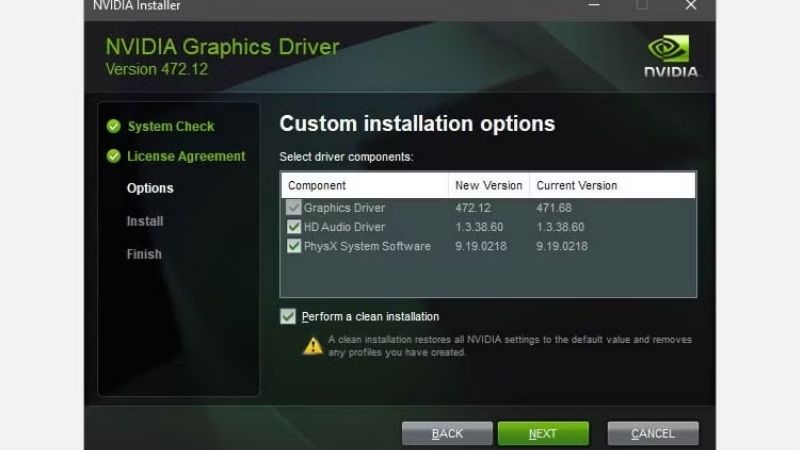
A normal reinstall installs the driver again over the existing one, keeping your settings and most files in place. A clean reinstall removes everything first — driver, settings, and leftovers — then installs fresh. The distinction matters because each suits different problems: a normal reinstall for minor glitches, a clean one for stubborn or conflict-related issues.
The analytical point is that the two approaches trade effort for thoroughness. A normal reinstall is quick but shallow; a clean reinstall is more work but clears the residue that causes persistent problems. Knowing which your situation calls for prevents both under-fixing and over-fixing.
Common triggers for reinstalling
People reinstall for a handful of recurring reasons: games or applications crashing, stutters or glitches after a driver or Windows update, a display that stopped working correctly, or after changing graphics cards. Each of these has a typical best approach, from a simple reinstall to a full clean wipe.
The practical guidance is to let the trigger guide the method. A minor glitch after an update often responds to a normal reinstall or rollback, while a card change or a problem that survives ordinary fixes calls for a clean reinstall. Identifying your trigger first points you to the right approach.
It is worth walking through the common cases briefly. If a driver update introduced a problem, the fastest path is often to revert or do a normal reinstall of a known-good version. If a Windows update seems to have disrupted the driver, a normal reinstall usually restores correct behavior. If you have physically changed graphics cards — especially between brands — a clean reinstall is essential, because leftovers from the old card’s driver will conflict with the new one. And if you face unexplained, persistent instability that ordinary fixes have not resolved, a clean reinstall is the tool that clears the residue those fixes leave behind. Mapping your specific trigger to the right method up front is what turns troubleshooting from guesswork into a short, deliberate process.
Deciding which type you need
The decision comes down to how stubborn the problem is. Try a normal reinstall first for straightforward issues, because it is quick and often enough. Escalate to a clean reinstall when the normal approach does not hold, when you are switching cards, or when leftover files are likely the culprit.
This escalation approach is efficient: you spend the least effort that solves the problem, and you only reach for the more involved clean reinstall when it is genuinely needed. Starting with the heaviest method for every minor issue wastes time you do not need to spend, and it can even reset settings you were happy with for no reason. Reserve the clean reinstall for the moments that truly call for it, and the normal reinstall handles the rest quickly.
How to reinstall Nvidia drivers correctly
Whichever type you choose, doing it in the right order keeps you in control and avoids stranding your display. A little preparation turns a nerve-wracking process into a routine task, and the sequence is what ensures the reinstall actually resolves your issue rather than creating new ones.
Prepare and download first
The most important step happens before you remove or reinstall anything: download the driver you intend to use and save it locally. That way, whatever happens during the process, the driver you need is already on your drive, ready to install, and you are never left without one.
It also helps to note your current version if you are troubleshooting, so you can return to a known state if needed. This small bit of preparation removes the main risk in reinstalling — being caught without a working driver — and takes only a couple of minutes.
The reinstall steps
For a normal reinstall, run the driver installer and choose the reinstall option, letting it replace the current files. For a clean reinstall, remove the existing driver completely first — ideally while isolated from automatic updates so nothing installs a random driver mid-process — then install your saved driver onto the clean base.
The practical routine for the clean approach is download first, remove fully, restart, then install. This ordered sequence avoids the leftover-file conflicts that cause a reinstall to fail, and it gives your driver the best chance to run correctly from the start.
Verifying it worked
After reinstalling, confirm the driver is active, your display is running at the right resolution and refresh rate, and the problem you were fixing is resolved. A quick check tells you whether the reinstall succeeded or whether you need to escalate to a cleaner approach.
If a normal reinstall did not fix the issue, that is your signal to try a clean reinstall next. Verifying the result rather than assuming success is what keeps you from thinking a problem is solved when it is not, and it guides your next step if more is needed.
There is value in testing the specific thing that was broken rather than just confirming the desktop appears. If a particular game was crashing, launch it and play for a while; if the display was misbehaving, check the resolution, refresh rate, and any external monitors. A reinstall can appear successful at the desktop yet leave the original symptom unaddressed, so reproducing the exact scenario that prompted the reinstall is the only way to be sure. Once the specific problem behaves correctly across a real test, you can consider the job done and re-enable normal updates with confidence, knowing the fix actually held rather than merely looking like it did.
Results and when reinstalling is not the answer
Reinstalling solves a large share of graphics problems, but it is honest to acknowledge the ones it cannot touch. When the issue is software, a reinstall often fixes it; when it is hardware, no reinstall will help, and recognizing that boundary saves you from repeating a process that cannot solve your problem.
Pros and cons of reinstalling drivers
Because this is a review, here is the straight assessment of reinstalling as a fix.
| Pros | Cons |
|---|---|
| Fixes a wide range of software-caused problems | Normal reinstall may leave conflicting leftovers |
| Flexible — normal or clean to match the issue | Clean reinstall takes more time and care |
| Quick first step before deeper troubleshooting | Briefly leaves you without a driver (clean method) |
| Resolves most update and conflict issues | Cannot fix hardware, power, or thermal faults |
The verdict is that reinstalling is one of the most effective and flexible fixes for graphics-software problems, especially when you match the method to the trigger. Its only real limit is that it cannot address hardware faults, which need a different solution entirely.
When reinstalling will not fix it
If problems persist even after a clean reinstall, the evidence points to hardware. Crashes that survive a complete software reset usually trace to an aging or undersized power supply, overheating from tired cooling, or a card that is wearing out — none of which respond to software.
Reading this correctly saves time. Once you have ruled out driver issues with a clean reinstall and the problem remains, you can stop reinstalling and start investigating the physical parts that actually determine stability, which is where the real fix lies. Continuing to reinstall at that stage is understandable but unproductive, since you would be repeating a software fix for a hardware problem it was never able to solve.
When to upgrade instead
If reinstalling has confirmed the software is fine but problems continue, or if the card is simply too old to keep up with your games, the durable answer is hardware. A newer graphics card, or a properly sized power supply, ends the instability that no reinstall can, and does so permanently.
When you reach that point, it is worth comparing current, well-reviewed GPUs and power supplies on Amazon. Pairing a fresh driver install with hardware that actually keeps up is what turns a recurring problem into a lasting fix rather than a temporary patch.
See More:
- Nvidia CEO LinkedIn
- Nvidia driver rollback
- Nvidia roll back driver
- RX 9070 XT vs 5060 Ti
- Nvidia driver uninstaller
Conclusion
Knowing how to reinstall Nvidia drivers the right way means matching the method to the problem: a normal reinstall for minor glitches, a clean reinstall for stubborn issues, card changes, or conflicts. Download your driver first, follow the correct order, and verify the result so you know whether to escalate. Done well, reinstalling resolves the majority of graphics-software problems with the least effort needed. Just remember its boundary — a reinstall cannot fix power, heat, or a failing card. If problems survive a clean reinstall, that is your cue to look at hardware, and to compare trusted GPUs and power supplies on Amazon so your fresh install finally runs on parts worthy of it.
Frequently Asked Questions
What is the difference between a normal and a clean reinstall?
A normal reinstall overwrites driver files but keeps your profiles, settings and registry entries, which is fine for routine version bumps. A clean install, either through the checkbox in the Nvidia installer or through Display Driver Uninstaller in Safe Mode, wipes profiles and leftover registry keys. Use clean when you have crashes, artifacts, or you are switching GPU vendors.
Do I really need Display Driver Uninstaller?
Not for everyday updates. The Nvidia installer’s own clean install option handles most cases. DDU earns its place when you see persistent black screens, code 43 errors, corrupted control panel settings, or you are moving from AMD to Nvidia. Run it from Safe Mode with the network disconnected so Windows cannot inject its own driver mid-process.
Why does Windows reinstall an old driver on its own?
Windows Update ships its own WHQL driver packages and will push them if automatic device driver installation is enabled. Turn it off in Advanced System Settings under Hardware and Device Installation Settings, or through Group Policy on Pro editions. Otherwise, a reboot after your clean install can silently reintroduce the exact version you removed.
Should I disconnect the internet during the reinstall?
Yes when doing a clean install. With networking off, Windows cannot fetch a replacement driver in the gap between removal and your manual install. Download the installer package first, unplug or disable the adapter, run DDU, reboot, install your driver, then reconnect. This avoids the most common cause of a half applied driver state.
Will reinstalling drivers fix stuttering and low frame rates?
Sometimes. Driver corruption, conflicting overlays, and leftover files from several stacked updates genuinely do cause frame pacing problems. But if a clean reinstall changes nothing, look at thermal throttling, a power supply that sags under transient load, PCIe slot bandwidth, or background software before assuming the driver is at fault.



Write Your Review
No reviews yet. Be the first to share your experience!