
Top Nvidia Dxcache Does Should You Picks for 2026
Here are our current top nvidia dxcache does should you picks, compared on real Amazon owner reviews, price, and features. Live prices update below.
- Top Nvidia Dxcache Does Should You Picks for 2026
- What Nvidia DXCache Is and How It Actually Works
- Should You Delete Nvidia DXCache? Testing the Trade-Offs
- Nvidia DXCache Pros and Cons From Community Experience
- The Hardware Side: Making Shader Caching Invisible
- Recommended Products
- Conclusion: A Quiet System Worth Leaving Alone
- Related Guides
- Frequently Asked Questions
- Related Articles


Prime
Editor's Pick
ASUS SFF-Ready Prime NVIDIA GeForce RTX 5070 Graphics Card (PCIe 5.0, 12GB GDDR7, HDMI/DP 2.1, 2.5-Slot, Axial-tech Fans, Dual BIOS), 3 Year Warranty
Dropped $2.52
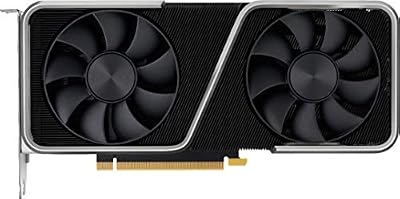
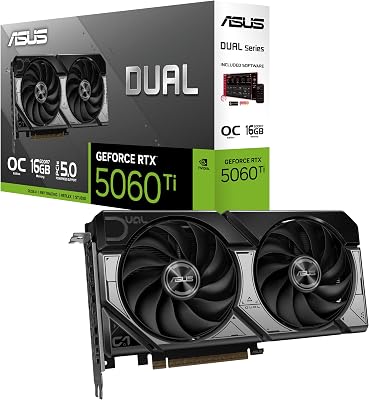
Nvidia DXCache is the mysterious folder that quietly grows to gigabytes on millions of gaming PCs, and most owners discover it only while hunting for lost disk space or chasing stutter problems. Is it safe to delete? Does it actually help performance? This review takes a measured look at what the DirectX shader cache really does, when clearing it fixes problems versus creates them, what the gaming community consistently reports, and which hardware choices make shader caching invisible instead of annoying.
As an Amazon Associate we earn from qualifying purchases at no extra cost to you. Product prices and availability are accurate as of the date shown and are subject to change.





What Nvidia DXCache Is and How It Actually Works
DXCache is the storage folder where Nvidia’s driver keeps compiled DirectX shaders — the small GPU programs that define how every surface, light, and effect in a game gets rendered. Games ship shaders as generic code; your driver must compile them into instructions specific to your exact GPU and driver version. That compilation is computationally expensive, so the driver saves the results to disk and reuses them, which is the entire reason the folder exists.
Where the DXCache Folder Lives and What Is Inside
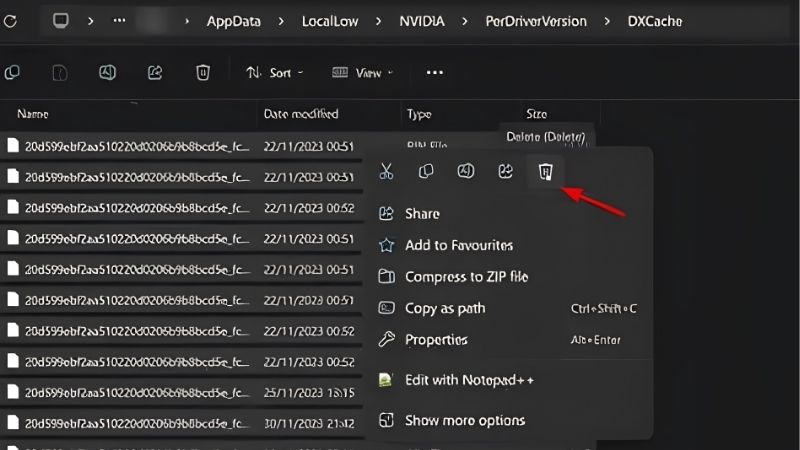
On a standard Windows installation, the folder sits at %LOCALAPPDATA%NVIDIADXCache, alongside a sibling GLCache folder for OpenGL titles. Inside are thousands of files with hashed names — each one a compiled shader bundle tied to a specific game, GPU, and driver combination.
Size grows with your library: a PC running a handful of esports titles might hold 1-2GB, while a machine cycling through modern AAA releases routinely accumulates 10-20GB. Nvidia’s driver settings expose a shader cache size control, defaulting to a driver-managed limit that most users never touch.
How Shader Compilation Affects Your Frame Rates
The cache’s value shows up as the absence of a problem. With a warm cache, games load faster and run smoothly from the first minute. With a cold cache — after a driver update, a Windows reinstall, or a manual deletion — the driver recompiles shaders during gameplay, producing the hitching and frame-time spikes players describe as “stutter that disappears after an hour.”
Modern engines compound this: titles built on Unreal Engine 5 can have shader counts in the hundreds of thousands, which is why many now run a visible “compiling shaders” step at first launch. That step writes directly into DXCache, and deleting the folder forces every game to repeat it.
DXCache vs GLCache and Per-Game Caches
DXCache covers DirectX titles — the overwhelming majority of Windows games — while GLCache serves OpenGL applications, and Vulkan titles use a separate driver cache path. Many games additionally keep their own internal shader caches inside their install folders, layered on top of the driver’s.
The practical takeaway from this architecture: clearing DXCache alone does not always reset everything a troubled game has cached, and conversely, a problem inside a game’s own cache will not be fixed by touching Nvidia’s folder. Knowing which layer misbehaves saves a lot of blind deleting.
Should You Delete Nvidia DXCache? Testing the Trade-Offs
The honest answer is situational, and the gaming community’s accumulated experience maps the situations clearly. Deleting the cache is a legitimate troubleshooting tool — and a self-inflicted stutter generator when used without reason.
When Clearing the Cache Genuinely Helps
Three scenarios consistently justify a clean-out. First, corruption: after a crashed driver update or unexpected shutdown, partially written shader files can cause specific games to crash at launch or render artifacts, and deleting the cache forces a clean rebuild. Second, major driver upgrades: stale shaders compiled against old driver branches occasionally cause stutter that a fresh cache resolves.
Third, reclaiming disk space on small system drives — a 20GB cache on a crowded 256GB SSD is a real cost, and the cache rebuilds itself automatically. In all three cases the operation is safe: nothing in DXCache is irreplaceable, and no game data or settings live there.
When Deleting It Makes Things Worse
Routine “maintenance” deletion is the mistake to avoid. Players who clear the cache weekly chasing performance gains report the opposite outcome: every game stutters again during its recompilation window, and benchmark runs immediately after deletion measurably regress until shaders rebuild.
The cache is not clutter; it is precomputed work. Deleting it discards hours of accumulated compilation across your library for zero benefit unless one of the genuine problem scenarios above applies. The community consensus after years of testing is blunt: leave it alone unless something is actually wrong.
How to Clear DXCache Safely, Step by Step
When clearing is warranted, the safe procedure takes two minutes. First, close all games and the Nvidia overlay. Second, open Run with Windows+R, enter %LOCALAPPDATA%NVIDIA, and delete the contents of DXCache (and GLCache if desired). Third, optionally use Windows’ Disk Cleanup with “DirectX Shader Cache” checked, which performs the same operation through an official path.
Afterward, expect the first session in each game to stutter while shaders recompile — that is the rebuild working as designed, not a new problem. Within a session or two, behavior returns to normal with a fresh, healthy cache.
Nvidia DXCache Pros and Cons From Community Experience
Aggregating years of forum threads, support reports, and enthusiast testing produces a consistent scorecard for the shader cache system — genuine strengths, recurring annoyances, and the configuration tweaks that separate smooth experiences from frustrating ones.
Benefits Users Consistently Confirm
The praise centers on what players stop noticing: faster game launches, smooth first minutes in open-world titles, and the elimination of repeated compilation work across sessions. Users who migrate from hard drives to SSDs report the cache’s benefits multiplying, since shader reads stop competing with slow seeks.
The automatic management also earns quiet credit — the driver caps growth, evicts old entries, and rebuilds transparently, requiring zero attention from the vast majority of users across years of operation.
Common Complaints and Their Real Causes
The recurring complaint is disk space growth on small system drives, particularly laptops with 256GB SSDs where a 15GB cache hurts. The second is misdiagnosis: players blame DXCache for stutter actually caused by the compilation process itself — punishing the cure for the disease — or by insufficient VRAM forcing texture swaps that no cache can fix.
A smaller cluster of reports involves the cache failing to persist between sessions, historically traced to overly aggressive disk cleanup utilities or the shader cache size setting configured too small for a large game library. Setting the driver’s shader cache size to 10GB or unlimited resolves most such cases.
Smart Settings for Different System Types
For most desktops, the optimal configuration is the boring one: leave the cache enabled, set size to driver default or 10GB, and never think about it again. For small-SSD laptops, a 5GB cap balances smoothness against space.
For machines with multiple drives, keeping Windows and the cache on the fastest NVMe drive matters more than any setting — which leads directly into the hardware question, because the cache is ultimately only as fast as the disk underneath it.
The Hardware Side: Making Shader Caching Invisible
Software settings only go so far; the difference between a system where DXCache is invisible and one where it is a recurring annoyance usually comes down to two components — and current market conditions make the timing of those purchases worth a paragraph of attention.
Why a Fast NVMe SSD Transforms the Experience
Shader cache reads are thousands of small file operations, the exact workload where NVMe drives demolish SATA SSDs and embarrass hard drives. Moving a game library and system drive to a quality PCIe 4.0 NVMe — 1TB models from reputable brands are genuinely affordable now — cuts both first-launch compilation time and warm-cache load times measurably.
For anyone still gaming from a hard drive, this single upgrade outweighs every cache tweak combined. A 1TB or 2TB NVMe drive solves the disk-space complaint and the speed complaint simultaneously, and browsing current NVMe deals on Amazon takes less time than one shader compilation run.
Rising Component Prices Make Upgrade Timing Matter
Two market currents affect anyone planning the upgrades above. The United States has approved Nvidia selling its powerful H200 AI chip to China, intensifying data center demand that competes directly with consumer hardware for memory and fabrication capacity. Simultaneously, laptop and component prices are trending upward, with storage and DRAM leading as AI infrastructure absorbs production.
SSDs and memory — precisely the components that improve shader caching — sit in the inflation path, and price tracking already shows the historical pattern of steady declines stalling. An upgrade planned for “sometime this year” is statistically cheaper executed now than deferred, a rare situation where procrastination carries a measurable price tag.
When Cache Problems Signal a Bigger Upgrade
Persistent stutter that survives a healthy cache rebuild usually is not a cache problem at all — it is VRAM pressure or an aging GPU recompiling against features it barely supports. Cards with 4-6GB buffers running modern titles will stutter regardless of shader cache state, because texture swapping dominates frame times.
If that describes your system, the productive fix is hardware: a current-generation GPU with 12-16GB eliminates the symptom at its source, and with GPU prices firming rather than falling under the same market pressures, checking current graphics card listings on Amazon sooner rather than later is the financially defensible move.
Recommended Products

ZOTAC
ZOTAC Gaming GeForce RTX 4080 16GB AMP Extreme AIRO 16GB GDDR6X 256-bit 22.4 Gbps PCIE 4.0 Gaming Graphics Card, IceStorm 2.0 Advanced Cooling, Spectra 2.0 RGB Lighting, ZT-D40810B-10P
View on Amazon
1 day ago

PNY
PNY GeForce RTX™ 4080 16GB XLR8 Gaming Verto Epic-X RGB™ Triple Fan Graphics Card DLSS 3
View on Amazon
6 hours ago

msi
MSI Gaming RTX 4070 Ti Super 16G Ventus 2X White OC Graphics Card (NVIDIA RTX 4070 Ti Super, 256-Bit, Boost Clock: 2655 MHz, 16GB GDRR6X 21 Gbps, HDMI/DP, Ada Lovelace Architecture) (Renewed)
View on Amazon
5 hours ago
As an Amazon Associate we earn from qualifying purchases. Product prices and availability are accurate as of the date/time indicated.
See more:
- ASUS TUF Gaming GeForce RTX 5090 3080 vs 5080
- Nvidia RTX 4070 Super graphics card
- Sapphire graphics card
- Is HDR good for gaming
- RTX 4080 vs 5070
Conclusion: A Quiet System Worth Leaving Alone
The verdict on Nvidia DXCache is that it deserves a better reputation than its disk-space footprint earns it: the shader cache is doing continuous, invisible work that makes every game in your library launch faster and play smoother, and the correct management strategy for most people is simply to let it run. Clear it when corruption, a major driver change, or a genuinely full drive demands it — and otherwise treat its gigabytes as the cheap price of stutter-free gaming. When the folder’s behavior does point to a real bottleneck, the fixes are physical: a fast NVMe drive and adequate VRAM make caching invisible. With component prices climbing under AI demand, those upgrades reward acting early — browse the current SSD and GPU options on Amazon and give your shader cache the hardware it deserves.
Frequently Asked Questions
What is the best nvidia dxcache in 2026?
The best nvidia dxcache depends on your budget and how you plan to use it. The options compared above are our top-rated picks based on real customer ratings, build quality, and overall value — start with the highest-rated model that fits your budget.
How much should I expect to spend on a nvidia dxcache?
Prices vary by brand and features. Budget options cover the essentials, while mid-range and premium models add durability, performance, and extra features. Compare the prices in the list above to find the best value for your needs.
What should I look for when buying a nvidia dxcache?
Focus on what matters most for your use case — build quality, compatibility, performance, warranty, and verified customer reviews. Every pick above is selected to balance these factors.
Are budget nvidia dxcache options worth it?
Yes. For most people a well-reviewed budget or mid-range nvidia dxcache delivers excellent value. You only need to spend more if you specifically require premium materials or top-tier performance.
How did we choose these nvidia dxcache picks?
We compare current Amazon ratings, review counts, key features, and price to surface the options with the best real-world value. The list is refreshed as ratings and availability change.




Write Your Review
No reviews yet. Be the first to share your experience!