
NVIDIA wiki searches usually come from people wanting a clear, encyclopedia-style overview of the company: what it does, how it started, who runs it, and why it has become so important. Rather than piecing that together from scattered sources, this guide brings the essential facts into one readable place. Here you will find a concise overview of NVIDIA as a company, its founding and leadership, its main products and business, and its enormous impact on gaming and artificial intelligence, giving you a solid understanding of one of technology’s most influential firms.
What Is NVIDIA? A Quick Overview
To start with the essentials, it helps to understand what NVIDIA is and where it came from. The company has grown from a graphics startup into a technology giant central to modern computing. Knowing its basic story and structure provides the foundation for understanding everything else about it.
The Company at a Glance
NVIDIA is an American technology company best known for designing graphics processing units, or GPUs, along with a growing range of computing hardware and software. Headquartered in Santa Clara, California, it has become one of the most valuable and influential technology firms in the world.
While it built its reputation on graphics cards for gaming, NVIDIA today spans far more, including data center hardware, artificial intelligence, professional visualization, and automotive technology. This breadth reflects how the company has repeatedly expanded its core technology into new and highly valuable fields.
At its heart, NVIDIA’s success comes from parallel processing, the ability of its chips to perform many calculations at once, which turned out to be enormously valuable well beyond the gaming graphics it was originally designed for. That single strength underpins much of the company’s remarkable rise.
How NVIDIA Started
NVIDIA was founded in 1993, entering a competitive market for graphics hardware with a vision for accelerating visual computing. In its early years it worked to establish itself among many rivals, eventually distinguishing itself through influential graphics products that helped define the industry.
A pivotal moment came when the company popularized the term GPU with a landmark graphics chip, framing the graphics processor as a distinct and important component. From these beginnings, NVIDIA steadily grew into a leader in gaming graphics before expanding into the many other areas it now dominates.
The early years were far from guaranteed success, as the graphics market of the time was crowded with competitors, many of which no longer exist. NVIDIA’s survival and eventual leadership came from a combination of strong engineering and well-timed products that resonated with gamers and the wider industry, setting the pattern of technical ambition that has characterized the company ever since.
Who Founded and Leads NVIDIA
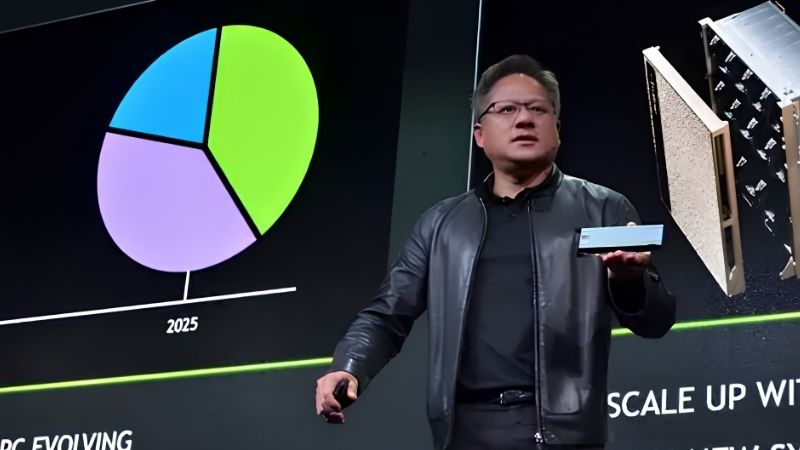
NVIDIA was founded by Jensen Huang along with two co-founders, and Jensen Huang has served as its chief executive since the beginning, an unusually long and stable leadership tenure. His vision has guided the company through its evolution from graphics specialist to AI powerhouse.
Under this consistent leadership, NVIDIA has made bold bets on technologies like GPU computing and artificial intelligence that have paid off enormously. The stability and direction provided by its long-serving leadership are often credited as key factors in the company’s sustained success and its ability to anticipate major shifts in technology.
Having a founder remain at the helm for so long is rare among major technology companies, and it has given NVIDIA an unusual continuity of vision. Decisions made years in advance, such as investing heavily in GPU computing long before its payoff was obvious, reflect a willingness to take long-term bets that a more short-term-focused leadership might have avoided, and several of those bets have defined the company’s trajectory.
NVIDIA’s Products and Business
With the company’s background established, it helps to look at what NVIDIA actually makes and how it earns its place in the industry. Its products span from consumer gaming to cutting-edge AI infrastructure, which explains both its reach and its influence.
Graphics Cards and Gaming
NVIDIA’s most recognizable products are its graphics cards for gaming, sold under the GeForce brand, which power everything from budget builds to high-end gaming PCs. These cards render the demanding visuals of modern games and have long been central to the company’s identity.
Gaming remains a hugely important part of NVIDIA’s business, and its graphics cards are known for strong performance and features that push visual quality forward. This consumer presence keeps NVIDIA a household name among gamers even as its other businesses have grown to rival or exceed gaming in importance.
The GeForce brand has also become a benchmark against which gaming hardware is measured, with each new generation closely watched by enthusiasts and the wider industry. This visibility in the consumer market gives NVIDIA a public profile that its data center and professional products, however lucrative, rarely match, keeping the company firmly in the public eye through the gaming audience that first made its name.
Data Center, AI, and Professional
Beyond gaming, NVIDIA has become dominant in data center and artificial intelligence hardware, where its powerful chips train and run the AI models behind much of today’s technology. This has grown into an enormous part of its business, driven by the global surge in AI.
The company also serves professionals in fields like content creation, engineering, and scientific computing with specialized hardware and software. Together, these areas have transformed NVIDIA from a gaming graphics company into a foundational supplier of the computing power behind modern AI and advanced industries, which is central to its current prominence.
This shift has been so significant that, by many measures, the data center and AI side of the business has come to dominate the company’s value and attention. It is a striking transformation for a firm that began by making graphics chips for games, and it illustrates how NVIDIA has repeatedly extended a single core technology into ever larger and more consequential markets over its history.
Pros and Cons of NVIDIA’s Dominance
Weighing the trade-offs of NVIDIA’s position offers useful perspective. On the plus side, its dominance has driven rapid innovation in graphics and AI, produced powerful and widely supported hardware, and given developers a consistent, well-supported platform to build on, benefiting the whole technology ecosystem.
On the other side, a company this dominant naturally attracts concerns about competition and pricing, and its central role in critical technologies places it under intense scrutiny and regulatory attention. This dual reality, of a company both driving progress and wielding significant market power, is part of what makes NVIDIA such a closely watched firm.
NVIDIA’s Impact and Legacy
Understanding NVIDIA fully means appreciating its broader impact on computing, which extends well beyond its individual products. Two contributions in particular, inventing the modern GPU and enabling general-purpose GPU computing, help explain its outsized influence.
Inventing the GPU and CUDA
NVIDIA is credited with popularizing the modern graphics processing unit, reshaping how computers handle visual tasks. Just as importantly, it later introduced a platform that let developers use GPUs for general-purpose computing, not just graphics, unlocking their massive parallel power for a huge range of applications.
This move to make GPUs programmable for general computing was transformative, turning graphics chips into engines for scientific computing, data processing, and eventually artificial intelligence. It is one of the most consequential decisions in the company’s history, laying the groundwork for its later dominance in AI.
The foresight here is easy to appreciate in hindsight but was far from obvious at the time, since using graphics chips for general computing was a novel idea that required convincing developers to adopt an unfamiliar approach. By investing in the tools and support to make GPU computing practical, NVIDIA created the ecosystem that would later prove essential when artificial intelligence turned out to need exactly that kind of parallel processing power.
NVIDIA’s Role in the AI Era
NVIDIA’s GPUs turned out to be exceptionally well suited to the demands of modern artificial intelligence, and the company has become central to the AI boom, supplying much of the hardware that trains and runs advanced models. This positioned it at the heart of one of the most important technological shifts of the era.
As AI has surged in importance, so has NVIDIA, whose chips are in enormous demand for building and operating AI systems. This role has propelled the company to remarkable heights and made it a key player in the direction of the entire technology industry, cementing its legacy well beyond its gaming roots.
Frequently Asked Questions About NVIDIA
These quick answers resolve the questions that most often accompany an overview of NVIDIA.
What is NVIDIA best known for? It is best known for its GeForce graphics cards for gaming and, increasingly, for the powerful chips behind much of modern artificial intelligence.
Is NVIDIA an American company? Yes. NVIDIA is an American company headquartered in Santa Clara, California, though its chips are manufactured overseas by contract manufacturers.
See More:
- NVIDIA
- NVIDIA DeepStream
- NVIDIA GPU driver update
- NVIDIA GeForce NOW download
- NVIDIA RTX A2000 12GB driver
Final Thoughts on This NVIDIA Overview
This NVIDIA overview shows a company that has evolved from a 1993 graphics startup into one of the most influential technology firms in the world, led throughout by the same founding chief executive. From popularizing the GPU and enabling general-purpose GPU computing to becoming central to the artificial intelligence era, NVIDIA has repeatedly turned its core strength in parallel processing into new and valuable domains. From graphics chips to the engines of the AI era, its story is one of repeatedly turning a single strength into new frontiers. Understanding its founding, its products, and its impact gives you a clear picture of why NVIDIA matters so much today, both to the gamers who first made its name and to the broader future of computing it now helps shape.
As an Amazon Associate we earn from qualifying purchases at no extra cost to you.





Write Your Review
No reviews yet. Be the first to share your experience!