
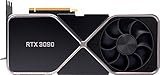
- Top Pick: NVIDIA GeForce RTX 3090 Founders Edition Graphics Card (Renewed)
- Best Value: NVIDIA GeForce RTX 5080 Founders Edition
- Premium Choice: nVidia GeForce RTX 3090 Founders Edition Graphics Card
New Nvidia drivers arrive every few weeks and the only question that matters is whether this one is worth installing today or worth skipping. Most coverage answers that by listing the release notes, which you can read yourself. This page answers it differently: what actually changed that affects you, which group of users should not take the newest features, when waiting two weeks is the correct move, and how to roll back when a driver goes wrong. Current as of the date below, and structured so you can decide in ninety seconds.
The Current Driver at a Glance
Nvidia ships on a roughly monthly cadence across two consumer branches, with version numbers that have climbed into the 600s. The number itself tells you nothing about quality — a .74 release is not more polished than a .97 one. What matters is what is in it and which architecture you own.
Latest Version and What It Requires
| Item | Detail |
|---|---|
| Current Game Ready | 610.74 |
| Minimum for DLSS 4.5 features | 595.97 WHQL |
| Nvidia App version to pair | 11.0.8.299 (7 July 2026) |
| OS support | Windows 10 / 11, Linux |
| Cost | Free |
The DLSS 4.5 row is the one that catches people. If you install the newest Nvidia app but leave an older driver in place, the DLSS overrides appear greyed out or silently fail to apply, and nothing explains why. Driver first, app second.
Note that driver numbering has moved well past the 500s. If your machine is on a 5xx driver, you are a generation behind rather than merely a release behind.
Game Ready or Studio: Which Branch
Two consumer branches, and the difference is smaller than the naming implies.
Game Ready ships fastest, tuned and validated for new game releases on their launch day. Studio is largely the same driver validated against creative applications on a slower cadence — fewer releases, marginally more settled.
The practical guidance: if you game, take Game Ready. If your machine is primarily for Blender, Resolve or Premiere and you resent updating, take Studio. Neither is faster than the other in any measurable sense, and switching between them is a normal install rather than a migration.
For CUDA and compute work, either is fine — this is a common source of anxiety with no basis.
How to Check What You Have
Three ways, in descending order of speed. Open the Nvidia App and look at the Drivers tab. Or run nvidia-smi from a command prompt, which prints the driver version in the header. Or right-click the desktop, open Nvidia Control Panel, and check System Information.
Worth knowing: nvidia-smi also prints a “CUDA Version” field, and that number is the highest CUDA your driver supports rather than anything you have installed. It is the most misread field in the entire ecosystem.
What Recent Drivers Actually Changed
The 2026 releases have been dominated by one thing, and it is a genuinely large change rather than the usual incremental game optimisations.
DLSS 4.5 and the New Model Presets
Announced at CES 2026, DLSS 4.5 introduced a second-generation transformer model for Super Resolution — trained with roughly five times the compute of the original and on a substantially expanded dataset. It reaches over 400 games and apps, and it arrives through the Nvidia app’s override rather than requiring developers to patch anything.
That last detail is the important one. A game that shipped in 2022 with an old DLSS version can run the current model today, because the app injects it. This is why keeping drivers and the app current has more value now than it did two years ago — you are receiving image quality improvements in games that stopped being updated years ago.
The models are lettered: M for Performance mode, L for 4K Ultra Performance, K for the previous DLSS 4.0 model. The “Recommended” preset assigns them automatically.
Dynamic Multi Frame Generation and Display Support
Rolled out through spring, Dynamic Multi Frame Generation shifts the frame multiplier in real time to hit a target — your display’s refresh rate or a custom figure — rather than locking to a fixed 2X, 3X or 4X. Fixed 5X and 6X modes arrived alongside it, aimed at 240+ FPS path-traced gaming at 4K.
This is RTX 50 series only, and it carries a restriction the announcements skip: Dynamic mode is not compatible with frame rate limiters or V-Sync. If you cap frames in-game out of habit, Dynamic simply will not engage and the app does not always explain why.
Recent releases have also added support for dozens of G-SYNC Compatible displays, including 2026 TV models from LG and Samsung. If you bought a new panel this year, a driver update may be the difference between VRR working and not.
The RTX 20 and 30 Series Catch
This is the most important section on this page for a large share of readers, and it is buried in Nvidia’s own release notes rather than in any headline.
RTX 20 and 30 series GPUs lack native FP8 support. DLSS 4.5’s new Models M and L rely on it. The consequence: on Turing and Ampere cards, those models carry a heavier performance impact — they run, and your frame rate drops more than the image quality gain justifies. Nvidia’s own guidance is that these users may prefer to stay on Model K, the DLSS 4.0 model.
Translated: if you own an RTX 2060, 2070, 3050, 3060, 3070 or 3080, install new drivers for the fixes and the game-day optimisations, but do not set DLSS Override to “Recommended”. It may cost you frames. This is the exact opposite of what every “update everything” video will tell you, and it applies to a very large installed base.
Pros and Cons of Updating Immediately
Day-one updating is a habit rather than a decision for most people. It is worth making it a decision.
When to Update on Day One
Three clear cases. You are buying a game at launch — Game Ready drivers exist precisely for this and the optimisation is real, occasionally worth double-digit percentages. You bought a new display and need G-SYNC Compatible validation. Or the release notes name a bug you are actually experiencing.
Also update immediately if you are more than three or four releases behind. The risk of a specific new driver is lower than the accumulated risk of missing months of fixes.
When to Wait Two Weeks
The case for patience is narrower than the internet suggests, but it exists. If your machine is stable and you are mid-project — a render deadline, a tournament, a build you cannot afford to break — a driver update is an unforced risk with no upside. Nothing in a driver release will help you finish faster.
The other case: if you are on a branch that has been working and the release notes contain nothing you need. “New game optimisations for four titles you do not own” is not a reason.
What is not a good reason to wait: vague forum reports of instability. Every driver release has them, on every architecture, forever. They are noise unless they describe your specific card and your specific symptom.
Pros and Cons Summary
| Pros of updating now | Cons and risks |
|---|---|
| DLSS 4.5 in 400+ titles via override, no dev patch needed | Models M and L hurt RTX 20/30 due to missing FP8 |
| Launch-day optimisation for new games, sometimes double digits | Dynamic MFG breaks with V-Sync and frame limiters |
| G-SYNC validation for new 2026 displays | A bad release can cost you an evening rolling back |
| Security and stability fixes accumulate | Mid-project updates are risk with no upside |
| Free, and older games keep improving | Requires 595.97+ or DLSS 4.5 silently does nothing |
Short version: RTX 40 and 50 owners should update freely. RTX 20 and 30 owners should update the driver but leave their DLSS model alone.
Installing and Rolling Back Safely
Most driver problems are install problems rather than driver problems, and both have reliable fixes.
Clean Install with DDU
The standard install works fine most of the time. When it does not — persistent crashes, black screens, an install that keeps failing — a clean install is the reliable answer.
Uninstall the driver from Windows Settings. Reboot into Safe Mode and run Display Driver Uninstaller to strip every leftover registry entry. Reboot again, then install the new driver fresh. The DDU step is what actually resolves the stubborn cases, because a normal uninstall leaves conflicting entries behind that a reinstall layers on top of.
Budget twenty minutes. It works when nothing else does, and it is the correct move rather than the last resort if you have been fighting the same error for half an hour.
Rolling Back a Bad Driver
If a new driver breaks something, do not troubleshoot for hours. Roll back and wait for the next release.
Fastest route: Device Manager, expand Display adapters, right-click your GPU, Properties, Driver tab, Roll Back Driver. This works only if the previous driver is still cached, which it usually is for one release.
If that button is greyed out, download the previous version from Nvidia’s driver archive and install it with the clean install option ticked. Keep a copy of the installer for whichever driver has been reliably good on your machine — it costs 800MB and saves an evening.
When the Driver Is Not the Problem
Worth saying, because driver updating has become a reflex response to any performance complaint. If your frame rate is low and stable, a driver will not fix it. If your game stutters while the average looks fine, that is usually VRAM exhaustion rather than software — the card is running out of memory and spilling assets across PCIe.
Add a VRAM readout to your overlay and check whether allocation is pinned at your card’s ceiling during the stutters. If it is, no driver release will help, because the problem is not the driver. If your 8GB card is sitting at 7.9GB in modern titles, compare what a 12GB or 16GB card costs before spending more evenings on clean installs.
See More:
- GTX 1650 vs RTX 3050
- Nvidia DIGITS
- Nvidia cuDNN
- Radeon RX 9070 XT vs RTX 5090
- PNY GeForce RTX 5080 review
Conclusion: Should You Install the New Nvidia Drivers?
For most people, yes. New Nvidia drivers are free, they arrive roughly monthly, and the 2026 releases have delivered something genuinely worth having — DLSS 4.5’s second-generation transformer model reaching over 400 titles through the app’s override, including games that stopped receiving updates years ago. Keep the driver at 595.97 or newer or those features silently do nothing.
Two things to carry away. If you own an RTX 20 or 30 series card, update the driver but leave your DLSS model on K — the missing FP8 support is real and Nvidia acknowledges it in its own notes. And keep a copy of whichever driver has been reliable on your machine, because rolling back in five minutes beats troubleshooting for three hours. Bookmark this page and check the version table before your next update.
Frequently Asked Questions
Should I update every time a new driver appears?
Not automatically. Update when a Game Ready release supports a title you are about to play, when it fixes a bug you actually have, or when it patches a security advisory. If your system is stable and your games run well, waiting a week for community feedback on a new branch costs you nothing.
What is the difference between Game Ready and Studio drivers?
They come from the same code base but on different cadences. Game Ready ships fast with day one profiles for new releases. Studio drivers are validated longer against creative applications like DaVinci Resolve, Blender and the Adobe suite, so they change less often and prioritise stability over new game optimisations.
How do I roll back a bad driver?
The quickest route is Device Manager, the display adapter properties, the Driver tab and Roll Back Driver, which restores the previously installed package. If that button is greyed out, download the older version from the Nvidia archive and run DDU in Safe Mode first so no fragments of the newer package remain.
Do I need a clean install or is upgrading over the top fine?
Over the top is fine for most minor version bumps. Choose Custom and Perform a clean installation when you are switching branches, moving between Game Ready and Studio, changing GPU vendors, or chasing a persistent crash, black screen or control panel that will not open.
Are older GPUs still getting new drivers?
Nvidia has moved Maxwell, Pascal and Volta cards, which covers the GTX 900 and GTX 10 series, to a legacy branch that receives security fixes on a quarterly cadence rather than new Game Ready optimisations. Turing and newer, meaning GTX 16 and RTX 20 upward, remain on the mainline release schedule.
As an Amazon Associate we earn from qualifying purchases at no extra cost to you.




Ready to decide? Our #1 pick for 2026 is the Current Game Ready.
Live price & availability on Amazon.



Write Your Review
No reviews yet. Be the first to share your experience!