
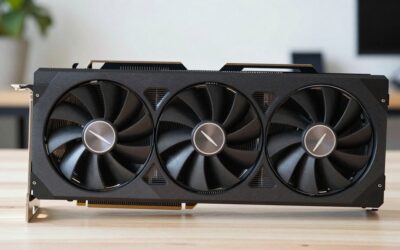
- Top Pick: ASUS Dual GeForce RTX 3050 6GB GDDR6 OC Edition Gaming Graphics Card
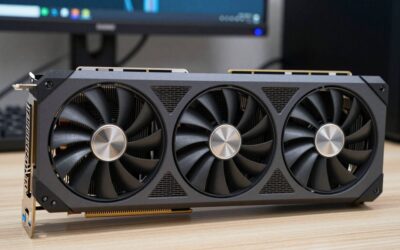
- Best Value: msi Gaming RTX 3050 Ventus 2X 6G OC Graphics Card (NVIDIA RTX 3050, 96-Bit, Boost Clock: 1492 MHz, 6GB GDDR6 14 Gbps, HDMI/DP, Ampere Architecture)
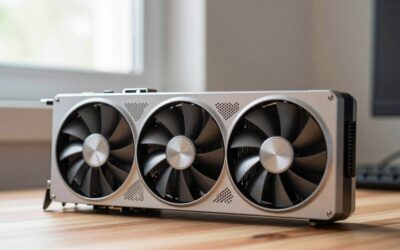
- Premium Choice: maxsun GeForce RTX 3050 6GB Graphics Cards GDDR6 Video Graphics Card GPU for Gaming PC Mini Small Form Factor SSF Slim Low Profile Design PCI Express 4.0, HDMI 2.1, DisplayPort 1.4a


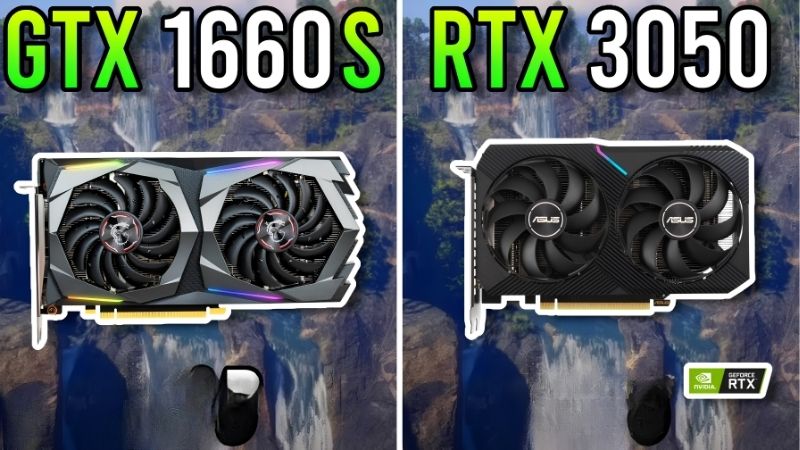
GTX 1660 Super vs RTX 3050 is one of the most searched budget GPU matchups, and it is trickier than it looks: the older card often edges ahead in raw rasterization, while the newer one brings DLSS, ray tracing, and more VRAM. For a value-focused 1080p gamer, choosing wrong means either paying for features you never use or missing the upscaling that keeps modern games smooth. This comparison gives you the fast verdict, a full specification table, a criteria-by-criteria face-off, a sensible alternative, and a clear recommendation so you can pick the right cheap GPU without overthinking it.
GTX 1660 Super vs RTX 3050: The Quick Verdict and Specs
These two budget cards approach 1080p gaming from different eras: the GTX 1660 Super is a pure rasterization workhorse with no modern upscaling, while the RTX 3050 trades a little raw speed for DLSS, ray tracing, and a larger memory buffer. The decision hinges on whether you value slightly higher native frames or the modern feature set that keeps newer games playable. Here is the short answer and the numbers that drive it.
As an Amazon Associate we earn from qualifying purchases at no extra cost to you.


The 30-Second Verdict for Busy Buyers
If you want the modern feature set, DLSS to boost frame rates in demanding games, ray tracing, and more VRAM for the newest titles, the RTX 3050 is the smarter long-term pick. If you only care about raw rasterization in older or lighter games and want the lowest possible price, the GTX 1660 Super can still edge ahead on pure native performance for less money.
The honest framing is that the GTX 1660 Super often wins the raw-frame-rate benchmark in older titles, but the RTX 3050 wins the modern-gaming argument thanks to DLSS, which lifts its effective performance in supported games well beyond what the raw numbers suggest. For anyone buying to play current and future titles, that upscaling advantage usually tips the scales.
It is worth stressing how much DLSS changes the everyday experience rather than just the benchmark. In a supported modern game, upscaling can turn a choppy, borderline result on the RTX 3050 into a smooth, comfortable one, effectively giving it performance the GTX 1660 Super simply cannot match in that title. Since more games support these technologies each year, the practical gap widens over time in the RTX 3050’s favor, even where raw native numbers slightly favor the older card.
Full Specification Comparison Table
The core numbers below explain most of the behavior discussed later, including why the two trade blows depending on the game.
| Specification | GTX 1660 Super | RTX 3050 |
|---|---|---|
| Architecture | NVIDIA Turing | NVIDIA Ampere |
| Memory | 6GB GDDR6 | 8GB GDDR6 |
| Ray tracing | Not supported | Supported |
| DLSS | Not supported | Supported |
| Board power | ~125W | ~130W |
| Approx price | Budget / used | $249 new |
The table makes the trade-off obvious: the GTX 1660 Super is a lean rasterizer with less VRAM and no modern features, while the RTX 3050 adds DLSS, ray tracing, and 8GB of memory for a modest power increase. Those additions are the heart of the case for the newer card.
Price, Availability, and What You Actually Get
The GTX 1660 Super is an older card, so it is typically found at low prices or on the used market rather than as fresh retail stock, which can make it very cheap but also means no new-card warranty in many cases. The RTX 3050 is more commonly available new around the entry-level price point, offering current features and a warranty for a bit more money.
What you get for the money differs accordingly. The GTX 1660 Super gives you raw 1080p rasterization at the lowest cost, while the RTX 3050 gives you a modern feature set, more VRAM, and new-card peace of mind. That practical difference often matters as much as the benchmark gap when you actually go to buy on a tight budget.
Warranty and reliability deserve weight on a budget build. A new RTX 3050 typically comes with manufacturer coverage and a known history, while a used GTX 1660 Super carries the usual unknowns of second-hand hardware, from wear to no support if something fails. For a first graphics card or a system you rely on daily, that peace of mind can be worth the modest extra cost, even before you factor in the modern features.
GTX 1660 Super vs RTX 3050: Deep-Dive Face-Off
Instead of reviewing each card alone, the most useful approach is to compare them directly across the criteria that decide a purchase: raw rasterization, modern features and future-proofing, and power, value, and real-world buying. Each section names a winner so the trade-offs stay concrete.
Raw Rasterization Performance
In pure rasterized gaming, especially in older and esports titles, the GTX 1660 Super frequently matches or slightly edges the RTX 3050 in native frame rates, since it is a lean, focused rasterizer without the overhead of extra features. For someone playing mostly older games at 1080p, that raw efficiency is a genuine strength and part of why the card retains a loyal following.
The RTX 3050 stays close and occasionally pulls ahead depending on the title, but its advantage in raw raster is not the point. Where it counts, the two are similar enough that native benchmarks alone should not decide your purchase, because the moment you enable DLSS in a supported game, the picture shifts decisively. Winner on raw native rasterization in older titles: the GTX 1660 Super, narrowly.
The practical read is that if your library is mostly older or lighter games and you never plan to use upscaling, the 1660 Super delivers the frames you need for less. That is a real and valid use case, just an increasingly narrow one as more games adopt modern features.
Modern Features, DLSS, and Future-Proofing
This is where the RTX 3050 wins decisively. DLSS lets it boost frame rates in supported modern titles well beyond its raw capability, which is exactly the help a budget card needs as games grow more demanding. The GTX 1660 Super has no such tool, so in newer, heavier games it must rely entirely on brute force and lower settings, where it runs out of room faster.
Ray tracing and the larger 8GB buffer add to the RTX 3050’s future-proofing. Ray tracing is limited on a card this class, but having it at all matters for some titles, and 8GB of VRAM handles modern textures better than the 1660 Super’s 6GB. Winner on modern features and future-proofing: the RTX 3050, and this is the single most important category for anyone buying to play current and upcoming games.
Future-proofing is not an abstract concern on a budget card, where headroom runs out fastest. The RTX 3050’s 8GB buffer and modern feature set give it a better chance of staying usable as games grow heavier, whereas the GTX 1660 Super’s 6GB and lack of upscaling mean it will hit its limits sooner in newer titles. For a buyer who wants the card to last a few years rather than months, that longevity is a meaningful part of the value.
Power, Value, and Everyday Compatibility
Power draw is close, with both cards sitting near 125 to 130W, so neither has a meaningful efficiency edge and both run comfortably on a modest power supply. Either fits easily into a budget system without demanding new parts, which keeps the total build cost low for value-focused buyers.
Value is where the decision gets personal. The GTX 1660 Super can be the cheaper entry point, particularly used, while the RTX 3050 asks a little more for its modern features, VRAM, and typical new-card warranty. Winner on lowest upfront cost: often the GTX 1660 Super; winner on overall value for modern gaming: the RTX 3050, since DLSS and future-proofing usually justify the small premium for the majority of buyers who play current titles.
Choosing Between the GTX 1660 Super and RTX 3050
With the face-off settled by criteria, the final decision comes down to your priorities, how the current market shifts the value math, and whether a different card would serve you better. This section closes those loops so you can buy with confidence.
Pros and Cons of Each Card at a Glance
The summary below captures the strengths and weaknesses that matter most for this budget matchup.
| GTX 1660 Super | RTX 3050 | |
|---|---|---|
| Strengths | Strong raw raster, lowest cost, efficient | DLSS, ray tracing, 8GB VRAM, new warranty |
| Weaknesses | No DLSS or ray tracing, only 6GB, often used | Slightly lower raw raster, costs a bit more |
| Best for | Older and esports titles on a tight budget | Modern gaming with upscaling and headroom |
Neither list is a knockout; the right column depends on whether you prioritize the lowest price and raw frames in older games or the modern feature set that keeps newer titles smooth.
How Rising Prices Reshape the Budget Decision
Budget buyers feel price movement most sharply, and the current market matters here. Component and laptop prices have been trending upward, and graphics-card memory has been under particular pressure, which pushes street prices above their usual figures and can narrow the cost gap between an older used card and a new entry-level one. When that gap shrinks, the RTX 3050’s modern features and new warranty become even easier to justify.
There is a cautiously positive note: the steep climbs of late 2025 have eased into a stretch of relative stability, though suppliers still warn the situation can shift again. With meaningful new supply from additional memory vendors and Micron’s upcoming Idaho plants not expected until roughly 2027 to 2028, real relief is years away. The practical conclusion for a budget buyer is that a fairly priced card that fits your games today beats waiting for a crash the timeline does not support.
The Alternative: If You Can Stretch a Little
If your budget can flex slightly beyond either card, the RTX 4060 is the natural step up, offering considerably more 1080p performance along with a newer feature set and DLSS Frame Generation. It costs more than either budget card but delivers a meaningfully better and longer-lasting 1080p experience for players who can afford the jump.
Whichever direction you lean, compare the live prices of these options before deciding. In this shifting market the gaps move constantly, and a well-timed price on the RTX 4060 can occasionally bring it close enough to the budget cards that stretching becomes the smartest long-term value.
See More:
- NVIDIA
- NVIDIA DeepStream
- NVIDIA GPU driver update
- NVIDIA GeForce NOW download
- NVIDIA RTX A2000 12GB driver
Final Verdict: GTX 1660 Super vs RTX 3050
The GTX 1660 Super vs RTX 3050 decision ultimately rewards clarity about the games you play. Choose the GTX 1660 Super if you want the lowest cost and strong raw frames in older or esports titles and never plan to use upscaling. Choose the RTX 3050 if you want DLSS, ray tracing, more VRAM, and the future-proofing that keeps modern games smooth, which suits the majority of buyers looking ahead rather than back at older libraries. For today’s gaming landscape, the RTX 3050 is the more sensible pick for the majority, but both are capable budget cards, so match the choice to your library, check current pricing and availability, and buy when the deal is fair. In a market where prices are elevated and real relief is still years away, the small premium for the RTX 3050’s modern features usually looks like money well spent for anyone gaming today rather than in the past, while the GTX 1660 Super remains a defensible pick only for the narrowest older-game, lowest-cost use case.
Frequently Asked Questions
Which card is actually faster in games?
In pure rasterization the GTX 1660 Super is usually a few percent ahead of the 8GB RTX 3050 at 1080p, despite being the older design. The 3050 pulls ahead only where ray tracing or DLSS is available, because the 1660 Super has no RT cores and no Tensor cores.
Does the extra VRAM on the RTX 3050 matter?
Yes, increasingly so. The 3050 carries 8GB against 6GB on the 1660 Super, and several modern titles at 1080p high already push past six gigabytes, causing texture streaming hitches. That buffer advantage is the strongest long-term argument for the 3050.
What power supply do these cards need?
The 1660 Super is a 125W card and the 8GB RTX 3050 is around 130W, so both need a single 8-pin PCIe connector and a 450W to 500W supply. There is also a 6GB RTX 3050 variant rated near 70W that runs entirely on slot power with no cable at all.
Can the RTX 3050 realistically use ray tracing?
Only in light implementations. Enabling full ray traced reflections or global illumination typically halves the frame rate to unplayable levels. Its real advantage is DLSS upscaling, which recovers meaningful performance in supported titles and is something the 1660 Super can never access.
Which should I buy used?
If prices are close, take the RTX 3050 for the larger framebuffer, DLSS support, and AV1 decode. Buy the 1660 Super only if it is meaningfully cheaper and you play older esports titles, where its raster advantage translates directly into higher frame rates.
Ready to decide? Our #1 pick for 2026 is the Architecture.
Live price & availability on Amazon.

Write Your Review
No reviews yet. Be the first to share your experience!