
- Top Pick: SCCCF Dual 92mm Graphic Card Fans, Graphics Card Cooler, Video Card VGA Cooler, PCI Slot Fan GPU Cooler
- Best Value: SCCCF 3x90mm 92mm Graphic Card Fans, Graphics Card Video Card VGA PCI Slot Fan GPU Cooler
- Premium Choice: 89MM 4PIN GA92S2U for RTX 3060 Twin Edge GPU Fan for ZOTAC GeForce RTX 3060 3060TI Twin Edge Video Card Cooling Fan
GPU fan not spinning is one of the most misunderstood worries in PC building, because on most modern cards a still fan at idle is completely normal rather than a fault. Many graphics cards deliberately stop their fans when the card is cool to run silently, and only spin them up under load. The real concern is a fan that stays still when the card is hot. This guide explains exactly when a stationary fan is expected, when it points to a genuine problem, and the fixes that resolve it, drawing on patterns reported across many cards.
Understand the behavior first and most GPU fan not spinning worries turn out to be a normal feature rather than a broken part.
As an Amazon Associate we earn from qualifying purchases at no extra cost to you.



Is a GPU Fan Not Spinning Normal?
Whether a still fan is normal depends entirely on what the card is doing. At idle, a stopped fan is usually a deliberate feature; under load, it is a warning sign. Knowing which situation you are in is the single most important step before assuming anything is broken.
Zero RPM Idle Mode Explained
Most current graphics cards include a passive cooling mode, often called zero RPM or fan stop, that keeps the fans completely still while the card is cool. This is intentional, designed to make the system silent when you are browsing, watching video, or sitting at the desktop.
Under this mode, the fans only begin spinning once the core temperature crosses a threshold, commonly somewhere around the mid-fifties to low-sixties in Celsius. Below that, a motionless fan is the card working exactly as the manufacturer intended.
So if your fans are still on the desktop but the card is cool, there is almost certainly nothing wrong at all.
You can usually confirm the feature is active in your card’s control software, where a zero RPM or fan-stop toggle is often listed. Some cards even have a small indicator or a setting that shows the fans are intentionally idle, which removes any doubt that the stillness is by design rather than a fault.
When a Still Fan Is a Problem
The behavior becomes a genuine problem when the fans refuse to spin even as the card heats up under load. If you launch a demanding game, temperatures climb past the usual fan-start threshold, and the fans remain still, the cooling is not engaging as it should.
That scenario risks overheating and thermal throttling, and over time it can shorten the card’s life. A fan that never moves regardless of temperature, including during heavy gaming, is the version of this issue that needs attention.
The distinction is simple: still while cool is fine, still while hot is not.
How to Tell the Difference
The reliable test is to load the card and watch both temperature and fan speed with a monitoring tool. Run a demanding game or a stress test for several minutes and observe whether the fans start as the temperature rises.
If the fans spin up on schedule once the card warms, everything is healthy and the idle stillness was just zero RPM mode. If temperatures climb well past the threshold and the fans stay still, you have confirmed a real fault to fix.
This five-minute check settles the question definitively before you open the case or change anything.
It helps to note the exact temperature at which the fans start, if they do. Comparing that figure to your card’s documented fan-start threshold tells you whether the behavior is normal or whether the trigger point has been set too high by accident, which is a common and easily corrected cause of fans starting later than expected.
How to Fix a GPU Fan That Will Not Spin
If the fans genuinely fail to start under load, the fixes run from simple software checks to hardware maintenance. Most cases are resolved without replacing parts, so work through these in order before assuming the worst. Each step is straightforward.
Check Fan Curve and Software Settings
Begin with software, since a misconfigured fan curve is a common and easily fixed cause. A tuning utility set to keep the fans off until an unusually high temperature, or a custom curve that was saved incorrectly, can leave the fans still when they should be running.
Reset any custom fan curve to default or set a more aggressive profile that starts the fans at a lower temperature. Make sure no conflicting tools are fighting over fan control, which can leave the card confused about what to do.
A simple curve adjustment resolves a surprising share of cases at no cost.
Reseat Power and Clean the Fans
If software is not the cause, open the case and check the physical side. Ensure the card’s power connectors are fully seated, since incomplete power can affect fan operation, and confirm nothing is physically blocking the blades.
Dust buildup and tangled cables are frequent culprits; a fan jammed by debris or a stray wire cannot spin freely. Carefully clean the fans and heatsink with compressed air, and make sure no cable is resting against the blades.
These cheap, simple checks bring many stubborn fans back to life.
Pay attention to the fan header connections if your card uses detachable fans. On some models the fans connect to the board with small cables that can work loose during handling, and a fan that is simply unplugged will sit completely still while the rest of the card runs normally. Reseating those connectors is a quick thing to check.
Pros and Cons of Replacing a Fan
If a single fan has failed mechanically, replacing it is often possible without buying a whole new card. Here is the honest balance sheet for that route.
Pros
- Replacement fans for popular cards are inexpensive and widely available.
- Swapping a fan is far cheaper than replacing the GPU.
- It restores proper cooling and extends the card’s usable life.
Cons
- Finding an exact-match fan for an older card can be difficult.
- The repair requires care and may affect any remaining warranty.
- If the fan header on the card itself has failed, a fan swap will not help.
When the Fan or Card Needs Service
If software is correct, power is solid, and nothing is blocking the blades, yet a fan still will not spin under load, the fan or its control circuit has likely failed. Recognizing that lets you plan the right repair. Here is how to diagnose and proceed.
Diagnosing a Failed Fan or Bearing
A failed fan often gives itself away. A bearing that has worn out may produce grinding or rattling before it stops entirely, while a dead fan motor simply does not respond even when the card is hot and the curve demands it.
Gently nudging the blade with the system off can reveal a seized bearing, and listening for noise during the warm-up phase helps too. If one fan spins and another does not on a multi-fan card, the still one is the failed unit.
Isolating the specific failed fan tells you exactly what needs replacing.
Temperature behavior backs up the diagnosis. If the card now throttles or runs much hotter than it used to under the same load, the loss of that fan’s airflow is measurable, which both confirms the failure and underlines why fixing it matters. A monitoring tool showing higher temperatures since the fan stopped is strong supporting evidence.
Replacing the Fan vs the Card
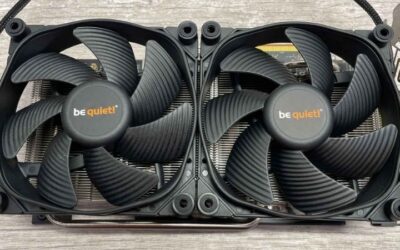
For a single failed fan on an otherwise healthy card, a replacement fan is usually the sensible repair. Match the replacement to your specific model, since fan size, connector, and blade count vary between cards.
If multiple fans have failed or the card’s fan control circuit is dead, the economics shift, and a replacement card may make more sense than an involved repair. Weigh the cost and effort of the fix against the card’s remaining value before deciding.
When a new card is the better path, check the current price and choose one suited to your system and games.
Preventing Fan Failure
Most fan failures are accelerated by dust and heat, so regular maintenance is the best prevention. Clean the card every few months, keep the case airflow healthy, and avoid running the card hotter than necessary.
A sensible fan curve that does not slam the fans to maximum constantly also reduces wear over time. A background monitoring tool lets you catch a fan that is starting to struggle before it stops completely.
These simple habits add years to a card’s cooling system.
If your card supports a semi-passive mode, leaving it enabled is fine and actually reduces fan wear by keeping the fans still when they are not needed. The key is simply to confirm periodically that they still spin up under load, so a silent desktop never quietly becomes a silent gaming session that is overheating.
See More:
- GPU for Valorant 240fps
- GPU for Fortnite 240fps
- GPU for CS2 high fps
- GPU for Apex Legends
- RTX 4070 Cyberpunk FPS
Conclusion
A GPU fan not spinning is usually nothing more than zero RPM idle mode doing its job, and it only becomes a real problem when the fans stay still while the card is hot under load. Run a quick load test to tell the difference, then check your fan curve, reseat power, and clean the blades before suspecting hardware. If a fan has genuinely failed, a matched replacement fan is often a cheap fix, though a dead control circuit may call for a new card. Keep the card clean and cool to prevent future failures, and if you do need a replacement, check the current price and choose one that fits your system. In the great majority of cases, though, a still fan is simply the card running silent by design.
Top-Rated Picks


| Product | Brand | Rating | Reviews | Price |
|---|---|---|---|---|
| EZDIY-FAB RTX 3000 Series 12 Pin to Dual 8 Pin PCIe S… | EZDIY-FAB | ★ 4.6 | 428 | $15.59 |
| 87MM PLD09220S12H RTX3080 RTX3070 Graphics Card Fan R… | LTANDBR | ★ 4.6 | 61 | $29.98 |
| Compatible with GIGABYTE GeForce RTX 5060/5050 OC Low… | NIVXE | ★ 3.9 | 12 | $29.92 |
| Hilitand GPU Backplate Radiator, Aluminum Alloy Graph… | Hilitand | ★ 3.9 | 8 | $26.81 |
| NVIDIA GX Spark – Founders Edition, W129251900 | — | ★ 1.0 | 1 | $10,309.00 |
Frequently Asked Questions
Is it normal for GPU fans to be completely stopped?
Yes on almost every modern card. Zero-RPM or fan-stop mode keeps the fans off below roughly 50 to 60C to eliminate idle noise. They should start automatically under gaming load. Run a stress test and watch temperature and RPM in MSI Afterburner or HWiNFO64 to confirm they engage.
How do I force the fans to spin for testing?
In MSI Afterburner enable manual fan control and set 100 percent, or use the vendor utility’s fan test. If they still refuse to move at 100 percent while the card is otherwise working, the fan header, controller, or the fans themselves have failed and replacement is required.
Can one dead fan out of three be ignored?
No. Losing a third of the airflow raises core and hot spot temperature significantly and forces the remaining fans to work harder, which shortens their life. Replacement fans for common models are inexpensive and typically use a standard 4-pin mini connector, making the repair straightforward on an out-of-warranty card.
Does a cable or obstruction commonly stop the fans?
It does. A stray power or RGB cable resting against a blade, or a cable tie caught in the shroud, will stall a fan and often trigger a stutter as the card heats. Inspect visually with a torch and route cables away from the card before assuming electrical failure.
Could a driver or BIOS issue disable the fans?
Occasionally. Corrupt fan curve profiles, a failed VBIOS flash, or software conflicts between two tuning utilities can leave fans stuck. Uninstall all tuning tools, do a clean driver install, and reset any custom curve. If fans then respond correctly, reintroduce one tuning tool only.



Write Your Review
No reviews yet. Be the first to share your experience!