
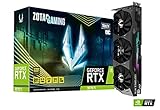
- Top Pick: Geforce RTX 3080 Ti 12GB GDDR6X PCI Express 4.0 Graphics Card Titanium and Black (Renewed)
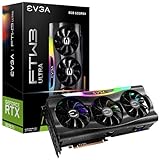
- Best Value: EVGA GeForce RTX 3070 Ti FTW3 Ultra Gaming, 8GB GDDR6X, 19000MHz Memory, 1860MHz GPU, 3 Fans, ARGB LED, Metal Backplate, PCIe 4.0, DisplayPort, Desktop Compatible
- Premium Choice: MSI Gaming GeForce RTX 3070 Ti 8GB GDRR6X Ventus 3X – Computer Graphics Card 256-Bit HDMI/DP Nvlink, Tri-Frozr 2 Ampere Architecture OC, NVIDIA GPU Video Card (Renewed)
Top Rtx 3080 3070 Real Performance Picks for 2026
Here are our current top rtx 3080 3070 real performance picks, compared on real Amazon owner reviews, price, and features. Live prices update below.
- Top Rtx 3080 3070 Real Performance Picks for 2026
- 3080 vs 3070 Ti: Quick Verdict and Spec Breakdown
- Deep Dive Face-Off: Benchmarks, Power, and Longevity
- Used GPU Prices in 2026: The Market Is Not Getting Cheaper
- Final Verdict: Which Ampere GPU Should You Buy?
- Conclusion
- Related Guides
- Frequently Asked Questions
- Related Articles
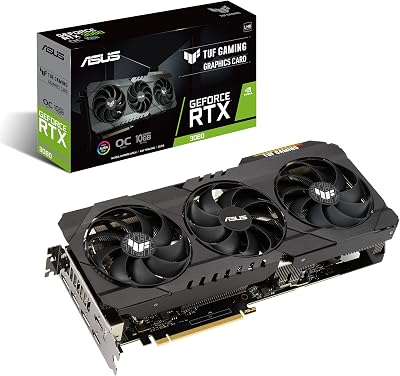

Editor's Pick
EVGA GeForce RTX 3070 FTW3 Ultra Gaming, 08G-P5-3767-KL, 8GB GDDR6, iCX3 Technology, ARGB LED, Metal Backplate, LHR (Renewed)


Dropped $25.00

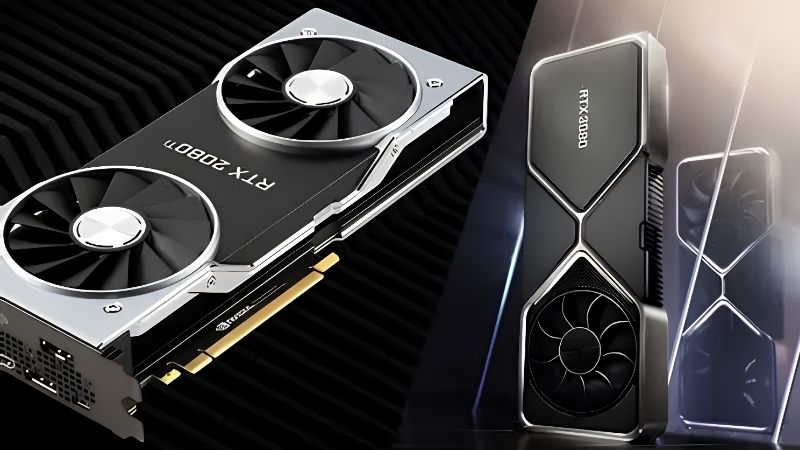
3080 vs 3070 Ti is the classic Ampere-generation dilemma, and in 2026 it has become a pure used-market question with very different math than it had at launch. Both cards debuted within a year of each other, both use GDDR6X memory, and both now sell for a fraction of their original prices. Yet one of them has aged dramatically better. The gap in VRAM, memory bandwidth, and raw shader count means these two GPUs deliver noticeably different experiences in modern games. This data-driven comparison covers specs, benchmarks, power needs, and today’s market conditions so you can pick the right card the first time.
As an Amazon Associate we earn from qualifying purchases at no extra cost to you. Product prices and availability are accurate as of the date shown and are subject to change.


3080 vs 3070 Ti: Quick Verdict and Spec Breakdown
If you only read one section, make it this one. The two cards share an architecture, but the numbers below show they were built to very different specifications — and those differences matter more in 2026 than they did in 2021.
The Quick Verdict for Busy Buyers
The RTX 3080 wins, and it is not close. It is roughly 20 to 30 percent faster than the RTX 3070 Ti at 1440p and up to 35 percent faster at 4K, where the 3070 Ti’s 8GB VRAM buffer becomes a hard limitation in current titles.
On the used market the price gap is often only $50 to $80 — typically around $350 for a 3080 versus $280 for a 3070 Ti. That small premium buys a meaningfully better card. Unless your budget is absolutely fixed, the 3080 is the answer; check current used and renewed listings on Amazon to see today’s spread.
Specification Comparison Table
Here are the core specifications side by side. The 70 percent difference in shader count between tiers is unusual for Nvidia — the 3080 was an aggressively specced card for its name.
| Specification | RTX 3070 Ti | RTX 3080 (10GB) |
|---|---|---|
| GPU Die | GA104 | GA102 |
| CUDA Cores | 6,144 | 8,704 |
| VRAM | 8GB GDDR6X | 10GB GDDR6X |
| Memory Bus | 256-bit | 320-bit |
| Memory Bandwidth | 608 GB/s | 760 GB/s |
| Board Power | 290W | 320W |
| Launch Price | $599 | $699 |
The 3080 has 42 percent more CUDA cores and 25 percent more bandwidth for what was originally a $100 price difference. That ratio is exactly why it became the value legend of the Ampere lineup.
Pros and Cons of Each Card
A fair 3080 vs 3070 Ti assessment has to acknowledge that both are five-year-old GPUs with real trade-offs in 2026.
RTX 3070 Ti pros: lowest entry price; slightly lower power draw at 290W; compact two-slot models fit small cases easily. Cons: 8GB of VRAM causes texture pop-in and stutter in many 2024-2026 releases even at 1440p; GDDR6X runs hot for the performance it delivers; weak resale trajectory because the VRAM problem only worsens.
RTX 3080 pros: GA102 silicon with genuine 4K-class raster performance; 10GB and a 320-bit bus hold up far better; widely available used with abundant model choices. Cons: 320W draw demands a solid 750W PSU; 10GB is adequate rather than generous; like all used Ampere cards, history is unknowable, so testing is essential.
Deep Dive Face-Off: Benchmarks, Power, and Longevity
Architecture parity means this comparison comes down to measurable quantities: frames per second, watts, and gigabytes. Here is how the two cards separate across the criteria that decide real-world satisfaction.
1440p and 4K Gaming Performance
At 1440p high settings, the RTX 3070 Ti averages roughly 75 to 95 fps in demanding AAA titles, while the RTX 3080 lands around 95 to 115 fps. Both are playable, but the 3080 keeps you above 60 fps minimums in heavy scenes where the 3070 Ti dips.
At 4K, the gap becomes structural rather than incremental. The 3070 Ti’s 8GB buffer overflows in modern open-world games with high textures, producing one-percent-low frame rates that fall off a cliff even when averages look acceptable. The 3080 sustains 55 to 70 fps in the same scenarios with consistent frame pacing.
In esports titles, both cards exceed 200 fps at 1440p, so competitive players on a strict budget lose little with the 3070 Ti — that is its one genuinely defensible use case. Driver overhead and frame-time consistency are effectively identical between the two, since they share the Ampere architecture and the same driver branch.
Ray tracing is where neither card shines by 2026 standards, but the hierarchy holds: the 3080’s extra second-generation RT cores keep it 25 to 30 percent ahead in hybrid ray-traced titles, and its larger frame buffer matters even more once RT effects inflate VRAM usage. If ray tracing features at all in your library, treat the 3070 Ti as a settings-off card and the 3080 as a settings-medium card.
Power, Thermals, and PSU Requirements
Practically speaking, the two cards have nearly identical system requirements. The 3070 Ti’s 290W rating is only 30W below the 3080’s 320W, and both exhibit Ampere’s characteristic transient spikes. Plan on a quality 750W power supply for either card; a strong 650W unit can work with the 3070 Ti, but it leaves little margin.
Both use standard 8-pin PCIe connectors (Founders Editions use Nvidia’s 12-pin with an included adapter), so they drop into older systems without a PSU upgrade — a real advantage over current-generation cards if you are upgrading a 2019-2021 build.
Thermally, GDDR6X memory junction temperatures are the number to watch on used cards. Run a monitoring tool during a stress test; sustained memory temperatures above 100C suggest dried thermal pads that need replacement.
VRAM, DLSS, and How Each Card Ages
Both GPUs support DLSS Super Resolution and benefit from Nvidia’s continued driver work, including the newer transformer upscaling model — a genuine free upgrade for Ampere owners. Neither supports Frame Generation, which remains exclusive to RTX 40 and 50 series hardware.
The aging trajectory favors the 3080 decisively. Game VRAM requirements have risen every year, and 8GB is now the minimum specification for several major releases at high settings. The 3080’s extra 2GB and wider bus do not make it future-proof, but they buy it two to three additional years of comfortable service that the 3070 Ti simply does not have.
Cost per Frame and Total Ownership Math
Because both cards live on the used market, value per dollar is the real battleground. Take typical 2026 pricing: a 3070 Ti at $275 averaging 85 fps in a demanding 1440p suite costs about $3.24 per frame. A 3080 at $355 averaging 105 fps costs roughly $3.38 per frame. On raw frames per dollar today, the two are nearly tied — which surprises buyers who expect the cheaper card to win easily.
Useful lifespan breaks the tie. The 3070 Ti’s 8GB buffer is already forcing texture compromises in new releases, so its window of comfortable high-settings gaming realistically ends within a year or two. The 3080’s 10GB and 320-bit bus extend that window to roughly 2028 for 1440p play. Amortized per year of comfortable service, the 3080 works out meaningfully cheaper, and it will also retain more resale value when you eventually upgrade, precisely because future used-market buyers face the same VRAM logic.
Add the soft costs: both cards need the same 750W-class power supply, so there is no system-cost difference, and their electricity draw is within 30W of each other. The only scenario where the 3070 Ti’s math wins is a short-term build — a card you intend to replace within eighteen months. For any longer horizon, the extra $70 to $80 for the 3080 is one of the highest-return upgrades in the entire used GPU market.
Used GPU Prices in 2026: The Market Is Not Getting Cheaper
The traditional assumption — that old GPUs keep dropping in price — has broken down this year. Two industry developments are propping up the value of used Ampere cards, and they should factor into your timing.
How the H200 Export Approval Affects Older Cards
The US government has authorized Nvidia to sell its H200 AI accelerator, one of the most powerful chips the company makes, to China. The immediate effect is a surge in data-center orders that absorbs memory supply and fab capacity across Nvidia’s entire product stack.
When new GeForce cards become scarcer or pricier as a result, demand cascades down to the used market. Buyers priced out of an RTX 5070 look at a used 3080 instead, and that added demand sets a floor under secondhand prices for exactly the cards in this comparison.
Rising Component and Laptop Prices
Simultaneously, laptop and PC component prices are on a sustained upward trend, driven largely by DRAM and flash memory costs. Memory price increases ripple into everything: new GPUs, prebuilt systems, and ultimately the perceived value of used hardware.
For this comparison, the takeaway is concrete: a used 3080 at $350 today is unlikely to cost $280 in six months the way it would have in a normal cycle. Several price trackers already show used Ampere prices flat or slightly up year over year.
Practical Buying Timing
If you need a card now, buy now — waiting carries more price risk than it has in years. Favor listings with return windows, such as Amazon Renewed, over private sales with no recourse.
Set a target: around $330 to $380 for a 3080, and only consider a 3070 Ti if it is under $270. At those numbers, either purchase is defensible; above them, save slightly longer for the better card.
Final Verdict: Which Ampere GPU Should You Buy?
This comparison has a clear winner, but budget realities mean both cards will keep selling. Here is the recommendation by buyer profile, plus a modern alternative worth pricing out.
Who Should Buy the RTX 3070 Ti
Buy the 3070 Ti only if your budget is hard-capped under $280, you play primarily esports or older titles, and you game at 1440p or 1080p. In that narrow scenario it delivers excellent frames per dollar.
Go in with clear eyes about the 8GB limitation: you will be lowering texture settings in new releases sooner than you would like.
Who Should Buy the RTX 3080
The 3080 is the right call for everyone else. The roughly $70 premium buys 20 to 35 percent more performance, 25 percent more memory bandwidth, and years of additional usable life. It remains the best used GPU value of the Ampere generation.
If you are ready to buy, compare used and renewed RTX 3080 listings on Amazon today — clean examples at good prices sell fast in the current market.
The Alternative: RTX 5060 Ti 16GB
If used hardware makes you nervous, the RTX 5060 Ti 16GB at around $429 new is the modern alternative. Its raster performance sits near the 3080’s, but it adds 16GB of VRAM, DLSS 4 Frame Generation, a warranty, and roughly half the power draw at 180W.
For buyers keeping a card four or more years, that package often beats both used Ampere options — check its current price on Amazon and run the comparison for your own budget.
See More:
- Nvidia Reflex low latency
- RTX 4070 vs 5060 Ti
- Zephyr RTX 4070
- RTX 3080 Ti price
- Nvidia RTX 2060 Super
Conclusion
The 3080 vs 3070 Ti matchup ends with a decisive recommendation: pay the small used-market premium for the RTX 3080. Its 42 percent core-count advantage, 760 GB/s of bandwidth, and 10GB buffer translate into a faster card today and a far more livable one through 2028. With the H200 export approval tightening supply chains and component prices rising, used GPU prices are holding firm — so there is little reward for waiting. Whichever way you settle the 3080 vs 3070 Ti question, browse current Amazon listings now and grab a well-priced card before the market moves again.
Frequently Asked Questions
What is the best 3080 3070 ti in 2026?
The best 3080 3070 ti depends on your budget and how you plan to use it. The options compared above are our top-rated picks based on real customer ratings, build quality, and overall value — start with the highest-rated model that fits your budget.
How much should I expect to spend on a 3080 3070 ti?
Prices vary by brand and features. Budget options cover the essentials, while mid-range and premium models add durability, performance, and extra features. Compare the prices in the list above to find the best value for your needs.
What should I look for when buying a 3080 3070 ti?
Focus on what matters most for your use case — build quality, compatibility, performance, warranty, and verified customer reviews. Every pick above is selected to balance these factors.
Are budget 3080 3070 ti options worth it?
Yes. For most people a well-reviewed budget or mid-range 3080 3070 ti delivers excellent value. You only need to spend more if you specifically require premium materials or top-tier performance.
How did we choose these 3080 3070 ti picks?
We compare current Amazon ratings, review counts, key features, and price to surface the options with the best real-world value. The list is refreshed as ratings and availability change.






Write Your Review
No reviews yet. Be the first to share your experience!