
H200 vs H100 is the comparison every AI infrastructure planner, ML engineer, and investor keeps returning to, because these two Hopper-generation accelerators power much of the world’s AI training and inference, and the differences between them decide real budgets and performance. The short version is that the H200 is not a new architecture but a memory-upgraded H100, and whether that upgrade matters depends heavily on your workload. This comparison lays out the specs, the real-world performance gap, and the market and export context now surrounding the H200, so you can decide clearly.
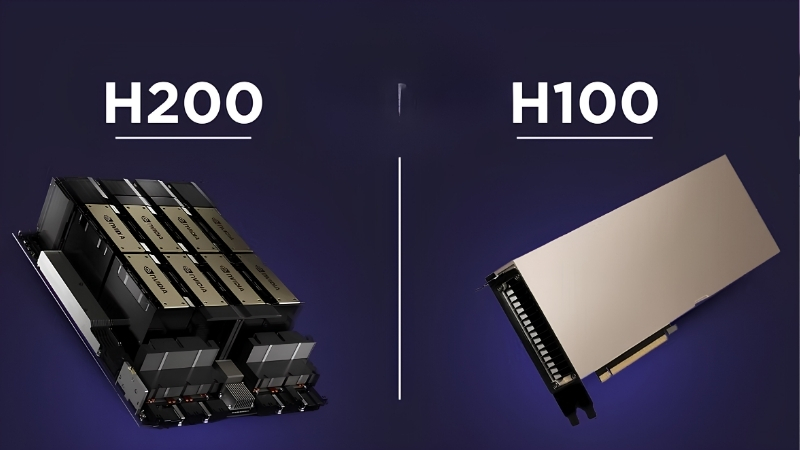
H200 vs H100: The Quick Verdict and Key Specs
Both the H100 and H200 are built on NVIDIA’s Hopper architecture and share the same core compute engine, so this is not a generational leap in raw processing. What changed is memory: the H200 carries substantially more and faster memory than the H100, which reshapes performance on memory-bound workloads like large-model inference. Understanding that the difference is memory, not compute, is the single most important framing for this comparison, because it determines exactly which workloads benefit. Here is the essential picture.
As an Amazon Associate we earn from qualifying purchases at no extra cost to you.



What Changed from H100 to H200
The H200 keeps the same Hopper GPU as the H100 but upgrades the memory subsystem significantly. It moves to larger, faster HBM3e memory, dramatically increasing both capacity and bandwidth while leaving the raw compute throughput essentially unchanged.
This means the H200 is not faster at compute-bound tasks in the way a new architecture would be. Its gains come specifically from feeding data to those same compute units faster and holding larger models in memory.
For anyone deciding between them, that distinction is everything: the H200 is a targeted memory upgrade, so its value is entirely a function of whether your workload is limited by memory or by compute.
This memory-first approach reflects where AI workloads had actually become constrained. As large language models grew, many teams found that the H100’s compute was rarely the bottleneck for inference; instead, they were limited by how much model and context could fit in memory and how fast that memory could be read. The H200 was engineered to address exactly that pain point, which is why it can feel like a much bigger upgrade than its unchanged compute specs suggest, but only for the teams hitting those specific memory walls. For workloads that were never memory-limited in the first place, the same chip offers little.
Full Specs Comparison
The specifications make the difference concrete. The headline figures are memory capacity and bandwidth, where the H200 pulls clearly ahead, while compute figures remain comparable.
| Spec | H100 (SXM) | H200 (SXM) |
|---|---|---|
| Architecture | Hopper | Hopper |
| Memory type | HBM3 | HBM3e |
| Memory capacity | 80 GB | 141 GB |
| Memory bandwidth | ~3.35 TB/s | ~4.8 TB/s |
| Core compute | Hopper GPU | Same Hopper GPU |
| Best for | Broad training and inference | Memory-heavy inference, large models |
The roughly 76 percent jump in capacity and the large bandwidth increase are the whole story. Compute parity means the H200’s advantage appears only where memory is the bottleneck.
Quick Verdict: Which to Choose
Choose the H200 if your workloads are memory-bound: serving large language models, running long context windows, or handling models that strain the H100’s 80 GB. There, the extra capacity and bandwidth translate into real throughput gains.
Choose the H100 if your workloads fit comfortably in its memory and are compute-bound, since you would pay a premium for memory you do not use. For many training jobs and smaller models, the H100 remains ample and more cost-effective.
Deep Dive Face-Off: Memory, Bandwidth, and Real Workloads
The specs tell you what changed; the workloads tell you whether it matters to you. Because the compute is identical, the entire face-off comes down to how much your tasks depend on memory capacity and bandwidth, and to the market realities now shaping who can buy which chip. This section digs into the memory differences, the real performance gap in AI training and inference, and the export and availability picture that has become impossible to ignore. Here is the detailed comparison.
HBM Memory and Bandwidth Differences
The H200’s move to HBM3e is the core technical change. The larger 141 GB capacity lets bigger models or larger batches fit entirely in a single GPU’s memory, reducing the need to split models across more devices, which itself saves cost and complexity.
The higher bandwidth, roughly 4.8 TB/s versus 3.35 TB/s, means data reaches the compute units faster. For memory-bandwidth-bound operations, common in inference and large-model serving, this directly lifts throughput even though the compute cores are unchanged.
Together, more capacity and more bandwidth make the H200 meaningfully better at exactly the workloads the H100’s memory limited, which is the practical heart of the upgrade.
It is worth grounding the bandwidth figure in what it means operationally. Memory bandwidth determines how quickly the GPU can read the model’s weights and data on every step of a computation, and for large-model inference that reading is often the rate-limiting factor rather than the math itself. Raising bandwidth from roughly 3.35 to 4.8 terabytes per second is not a marginal tweak at this scale; it directly shortens the time each token or batch waits on memory, which compounds across billions of operations. This is why two chips with identical compute can post noticeably different real-world throughput, and why the H200’s headline advantage is best understood as feeding the same engine much faster rather than building a bigger engine.
Performance in AI Training and Inference
In inference, especially serving large language models, the H200 often shows clear gains, because inference is frequently memory-bandwidth-bound and benefits from holding larger models and context in faster memory. This is where the upgrade earns its keep.
In training, the picture is more nuanced. Compute-bound training sees smaller differences since the cores are identical, though the extra memory can still help by allowing larger batch sizes or fitting bigger models without as much partitioning. The gain depends on the specific job.
The experimental takeaway for planners is to profile your workload: if it is memory-limited, the H200 delivers; if it is compute-limited, the two perform similarly and the H100 may be the smarter spend.
There is also a systems-level benefit worth weighing. Because the H200 can hold a larger model in a single GPU’s memory, some deployments that required splitting a model across two H100s can run on one H200. Fewer GPUs per model means less inter-GPU communication overhead, simpler deployment, and often better efficiency, which can offset part of the H200’s price premium in total-cost terms rather than per-chip terms. For teams operating at scale, that consolidation effect is sometimes a bigger practical win than the raw bandwidth figure, and it is easy to miss when comparing the two chips purely on a spec sheet.
Availability, Export Rules, and the China Market
Beyond raw performance, availability and policy now shape the H200 decision as much as specs do. A significant recent development is that the United States has moved to allow NVIDIA to sell the H200, one of its most powerful AI chips, into the China market. For a data-center GPU that had been caught up in export restrictions, this is a notable shift with real consequences for supply and demand.
For buyers and planners, the practical implication is twofold. First, opening a market as large as China to the H200 adds substantial new demand to a supply chain for high-end accelerators that is already tight, which can affect availability and lead times for everyone competing for the same chips. Second, it signals that the H200 sits at a capability tier regulators are willing to permit for that market, which shapes where it fits in the broader lineup relative to more restricted, higher-end parts.
For investors tracking NVIDIA, the move is material because it expands the addressable market for a flagship product, and access to the China market has been one of the larger swing factors in the company’s data-center outlook. For engineers and infrastructure teams, the takeaway is more operational: expect continued strong demand for H200-class hardware, plan procurement with tight supply in mind, and treat availability, not just specifications, as a real part of the H200 versus H100 decision. In a market where the best chip you can actually obtain often beats the best chip on paper, these policy shifts belong in the evaluation alongside memory and bandwidth.
The Alternative and Final Recommendation
Choosing between the H100 and H200 is not the only decision, since a newer generation now sits above both, and the right answer depends on budget, workload, and what you can actually source. This section covers where the newer Blackwell parts fit as an alternative, the honest pros and cons for buyers, and a clear recommendation by use case, so you can close out the decision with the full landscape in view.
The Alternative: Where Blackwell Fits
The obvious alternative is the newer Blackwell generation, led by parts like the B200, which represent a true architectural leap over Hopper with far greater memory and compute. For those building new infrastructure with the largest models, Blackwell is the forward-looking choice.
However, Blackwell parts command premium pricing and even tighter supply, so the H100 and H200 remain highly relevant for many buyers who need proven, more available Hopper hardware now. The right call depends on budget, timeline, and how cutting-edge your requirements truly are.
Pros and Cons for Buyers
Because these are major capital purchases, weighing the trade-offs matters as much as the benchmarks. Here is the honest balance for infrastructure buyers.
H200 pros: far more memory and bandwidth, strong gains on large-model inference, and the ability to fit bigger models per GPU. Cons: a price premium and no compute uplift over the H100. H100 pros: proven, often more available, and more cost-effective for compute-bound and smaller-model work. Cons: the 80 GB limit constrains the largest models. Since neither is a consumer retail product, buyers work through enterprise channels rather than a typical storefront.
See More:
- NVIDIA Broadcast vs OBS
- RTX HDR settings
- NVIDIA App download
- NVIDIA RTX Video Super Resolution
- GeForce Experience alternative
Final Verdict: Who Should Choose Which
Choose the H200 if you serve or train large, memory-hungry models and can justify the premium, since its capacity and bandwidth solve exactly the H100’s main limitation. For large-scale inference in particular, it is the stronger tool.
Choose the H100 if your models fit its memory and your workloads are compute-bound, where it delivers similar performance for less. And if you are building fresh for the largest frontier models, evaluate Blackwell as the generational step beyond either.
Weighing H200 vs H100 comes down to one question: is your workload limited by memory or by compute? The H200’s HBM3e upgrade makes it the clear pick for large-model inference, while the H100 remains cost-effective where its memory suffices, and newer export allowances into China only intensify demand for H200-class chips. Since these accelerators sell through enterprise channels rather than retail, plan procurement around availability, and explore workstation-class RTX hardware and AI reference materials through the links here if you are building at a smaller scale.
Top-Rated Picks

Best Seller
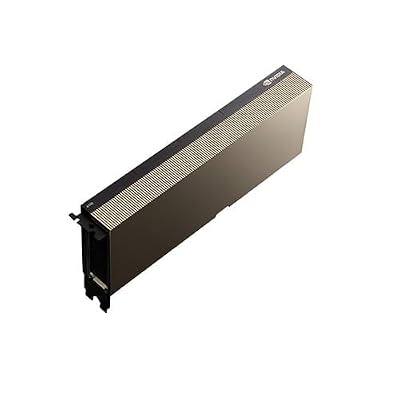
NVIDIA Tesla A100 Ampere 40 GB Graphics Processor Accelerator – PCIe 4.0 x16 – Dual Slot


| Product | Brand | Rating | Reviews | Price |
|---|---|---|---|---|
| ARCTIC MX-4 (4 g) – Premium Performance Thermal Paste… | ARCTIC | ★ 4.8 | 104k | $4.99 |
| ARCTIC MX-4 (incl. Spatula, 4 g) – Premium Performanc… | ARCTIC | ★ 4.8 | 71.9k | under $10 |
| Crucial 8GB DDR4 RAM 3200MHz (PC4-25600), Downclockab… | Crucial | ★ 4.8 | 62.8k | under $80 |
| AMD Ryzen 5 5600X 6-core, 12-thread unlocked desktop … | — | ★ 4.8 | 30.2k | under $200 |
| NVIDIA Shield Remote; Voice Search, Motion-Activated,… | — | ★ 4.7 | 10.6k | under $30 |
Frequently Asked Questions
What is the actual hardware difference between H200 and H100?
They use the same Hopper GPU compute die, so peak FLOPS are identical. The H200 replaces HBM3 with HBM3e, raising capacity from 80GB to 141GB and bandwidth from roughly 3.35 TB/s to about 4.8 TB/s. Everything else, including the 700W SXM envelope and NVLink generation, stays effectively unchanged.
How much faster is the H200 for inference?
Because token generation is bandwidth-bound, the H200 delivers roughly 1.4 to 1.9 times the throughput of an H100 on large models such as Llama 70B, with the biggest gains at long context lengths where the KV cache dominates memory traffic. Training speedups are smaller, usually in the 10-25% range.
Does the extra memory let me run bigger models?
Yes. At 141GB a single H200 can host a 70-billion-parameter model at FP16 with a usable KV cache, something that requires two H100s. Halving the GPU count for a serving deployment removes cross-GPU communication overhead and often improves latency more than the raw bandwidth figures suggest.
Can H200 modules drop into existing HGX H100 systems?
In many cases yes, since the H200 SXM module is pin and thermally compatible with HGX H100 baseboards, but this requires vendor validation and a firmware update. Always confirm with your server OEM rather than assuming, because power delivery headroom and BMC support vary between platforms.
Which should I buy if both are available?
Choose H200 for inference serving, long-context workloads and any model that will not fit in 80GB. Choose H100 when it is meaningfully cheaper and your models already fit comfortably, since compute-bound training jobs see little benefit from the faster memory and you can spend the savings on more nodes.
Ready to decide? Our #1 pick for 2026 is the Architecture.
Live price & availability on Amazon.

Write Your Review
No reviews yet. Be the first to share your experience!