
- Top Pick: GIGABYTE GeForce RTX 5080 Gaming OC 16G Graphics Card, WINDFORCE Cooling System, 16GB 256-bit GDDR7, GV-N5080GAMING OC-16GD Video Card
- Best Value: ASUS TUF Gaming GeForce RTX™ 5080 16GB GDDR7 OC Edition Graphics Card
- Premium Choice: ASUS ROG Astral GeForce RTX 5080 16GB GDDR7 White OC Edition Graphics Card
Top Rtx 3080 4080 5080 Three Picks for 2026
Here are our current top rtx 3080 4080 5080 three picks, compared on real Amazon owner reviews, price, and features. Live prices update below.


Save $100.00

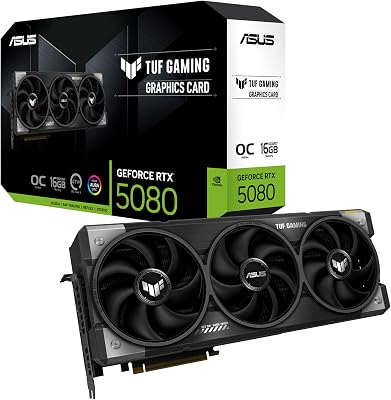


RTX 3080 vs 4080 vs 5080 traces three generations of Nvidia’s enthusiast x80 tier in a single comparison, from Ampere through Ada to Blackwell. Each step brought more performance, more memory, and a new DLSS generation, and seeing them side by side makes the real-world differences obvious. This 2026 comparison breaks down the specs, the benchmarks across resolutions, the power and VRAM picture, and which of the three is the smartest buy today before component prices climb further.
As an Amazon Associate we earn from qualifying purchases at no extra cost to you. Product prices and availability are accurate as of the date shown and are subject to change.


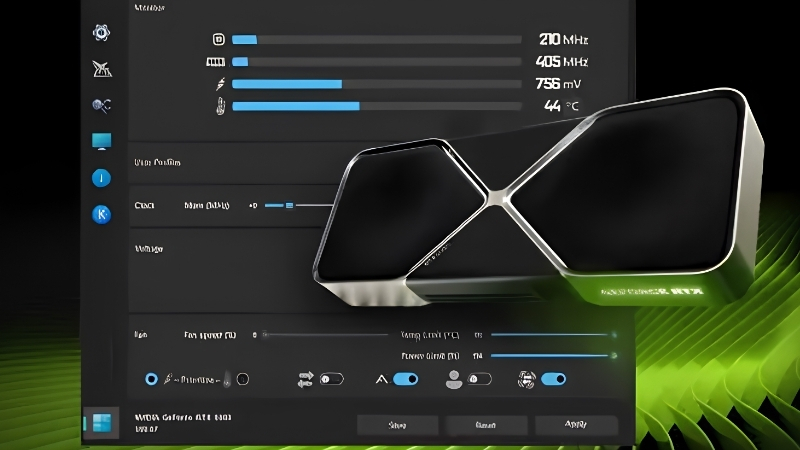
Quick Verdict and Specs: 3080 vs 4080 vs 5080
Three generations apart, these cards tell a clear story of progress, but the right pick depends on your budget and whether you buy new or used. The quick verdict and spec table below give you the fast answer before the detailed comparison.
The Fast Answer
The RTX 5080 is the best overall choice, the fastest of the three with GDDR7 bandwidth and exclusive DLSS 4, and it launched cheaper than the 4080 did. For a new purchase, it is the clear winner on both performance and value.
The RTX 4080 is the middle option, still strong at 4K with 16 GB and DLSS 3, and worth considering only as a discounted used buy. The RTX 3080 is the budget pick, a capable 1440p card that shows its age at 4K, mainly attractive when found cheap on the used market.
In short: buy the 5080 new, the 4080 used if cheap, and the 3080 only as a budget 1440p stopgap. Checking current pricing below is wise, since the market is tightening across all three.
Specs Comparison Table
The table makes the generational progression clear, particularly in memory, bandwidth, and DLSS support.
| Specification | RTX 3080 | RTX 4080 | RTX 5080 |
|---|---|---|---|
| Architecture | Ampere (GA102) | Ada (AD103) | Blackwell (GB203) |
| CUDA Cores | 8,704 | 9,728 | 10,752 |
| Memory | 10 GB GDDR6X | 16 GB GDDR6X | 16 GB GDDR7 |
| Memory Bus | 320-bit | 256-bit | 256-bit |
| Bandwidth | ~760 GB/s | ~717 GB/s | ~960 GB/s |
| Board Power | 320 W | 320 W | 360 W |
| DLSS | DLSS 2 | DLSS 3 | DLSS 4 |
| Launch MSRP | $699 | $1,199 | $999 |
Pros and Cons of Each Card
Comparing the 3080 vs 4080 vs 5080 trade-offs side by side shows how each generation addressed the weaknesses of the last, especially in memory and features.
RTX 3080 — Pros: strong 1440p performance, wide 320-bit bus, cheap used. Cons: only 10 GB VRAM, no Frame Generation, dated at 4K, high power for its output.
RTX 4080 — Pros: 16 GB VRAM, strong 4K, DLSS 3 Frame Generation, efficient. Cons: high original price, lower bandwidth than the 5080, no DLSS 4.
RTX 5080 — Pros: fastest of the three, 16 GB GDDR7, DLSS 4, lower MSRP than the 4080. Cons: 360 W draw, exposed to steeper 2026 price increases.
Read together, these pros and cons trace a clear arc of maturity. Each generation fixed the previous one’s main weakness: the 4080 doubled the 3080’s effective memory and added Frame Generation, and the 5080 then added bandwidth, DLSS 4, and a lower launch price than the 4080. That is why the 5080 stands out as the most complete of the three, addressing both the 3080’s VRAM limit and the 4080’s high cost in a single card while pushing performance forward. For a buyer comparing all three at once, that completeness, rather than any single spec, is the strongest argument. The 3080 and 4080 are not bad cards; they are simply older points on the same curve, and their appeal now depends on how far their used prices fall below the 5080.
Deep Dive Face-Off: 3080 vs 4080 vs 5080
The spec progression is clear, but the everyday experience depends on how the gap translates across gaming, power and memory, and features. The face-off compares all three by these criteria.
Gaming Performance Across Generations
At 1440p, all three remain playable, but the spread is wide. The 3080 typically posts 70 to 95 FPS in demanding titles, the 4080 reaches 100 to 130 FPS, and the 5080 pushes 120 to 150 FPS, comfortably feeding high-refresh monitors.
At 4K, the generational gaps widen and the 3080’s 10 GB buffer becomes a real limitation in texture-heavy titles. The 3080 often falls into the 40 to 55 FPS range, the 4080 holds 65 to 90 FPS, and the 5080 leads at 80 to 105 FPS, staying smoothest with ray tracing enabled.
The analytical takeaway is that each generation delivers a meaningful 4K uplift, with the 5080 roughly 50 to 60 percent faster than the 3080 and clearly ahead of the 4080 in bandwidth-heavy scenes. The 3080 is now firmly a 1440p card, while the 4080 and 5080 are genuine 4K options.
It is worth noting how the 3080’s 10 GB shapes these results. In several recent 4K titles the card runs short of memory before it runs short of compute, producing frame-time spikes and stutter that the average numbers alone do not capture. The 4080 and 5080’s 16 GB buffers avoid this entirely, which is part of why the generational gap feels even larger in practice than the FPS figures suggest.
Power, Efficiency, and VRAM
Power draw is similar across the three, but efficiency improves with each generation. The 3080 and 4080 both sit at 320 W and the 5080 at 360 W, yet the newer cards deliver far more performance for those watts, so frames per watt rise sharply from Ampere to Blackwell.
VRAM is the clearest dividing line. The 3080’s 10 GB was generous in 2020 but now limits it at 4K and in some recent titles, while the 4080 and 5080 both carry 16 GB, which remains comfortable for 4K gaming and light creation today.
For real-world builds, all three run on a quality 750 W to 850 W power supply, so the practical setup differences are minor. The memory gap, not the power draw, is what most affects how each card holds up over time.
The efficiency improvement also affects long-term ownership. A 5080 delivering far more performance for a similar power budget runs cooler per frame and ages more gracefully, while the 3080’s high draw for its now-modest output makes it the least efficient of the three. For buyers thinking about heat, noise, and running costs over several years, the newer cards are clearly the more comfortable choice.
Features: DLSS 2 vs 3 vs 4
The DLSS progression is the headline feature story. The 3080 supports DLSS 2 super resolution only, the 4080 adds DLSS 3 with Frame Generation, and the 5080 brings DLSS 4 with Multi Frame Generation, each generation unlocking higher frame rates in supported titles.
The experimental angle worth testing is how much these features change the picture beyond raw hardware. In supported games, the 5080’s Multi Frame Generation can post frame counts the 4080 cannot match, which in turn far exceeds what the 3080 achieves with DLSS 2 alone. The newer cards also bring improved encoders for streaming and creation.
For future-proofing, this feature ladder matters as much as raw speed: the 5080 is best positioned for upcoming DLSS 4 titles, the 4080 remains well supported with DLSS 3, and the 3080 is increasingly reliant on raw performance as its software stack ages.
This feature ladder is also why upgrading more than one generation pays off. A 3080 owner moving to a 5080 gains not just raw speed but two full DLSS generations and 60 percent more VRAM at once, a far more transformative jump than a single-generation step. That combination of compute, memory, and software is what makes the 5080 feel like a genuine new-era card rather than an incremental update.
Pricing, Alternatives, and Final Recommendation
The 2026 market context shapes this three-way decision, because none of these cards is following the usual path of getting cheaper over time.
How the 2026 Price Surge and H200 News Change the Math
GPU prices are rising in 2026 because of a memory shortage that has pushed GDDR and DRAM to a large share of a card’s cost. The Blackwell 5080 faces the steepest increases, around 15 to 23 percent, while used 3080 and 4080 pricing is propped up by overall scarcity rather than falling as older cards normally would.
The H200 export decision adds indirect pressure. With the U.S. approving capped H200 shipments to China in January 2026, advanced memory is being diverted to AI accelerators, tightening the supply chain that feeds consumer GPUs and keeping even older cards from dropping in price.
For the 3080 vs 4080 vs 5080 decision, the practical implication is that none of the three is likely to become a sudden bargain. The 5080 at or near its $999 MSRP is the most reliable value, while used 3080 and 4080 cards only make sense at genuinely low prices that the current market rarely offers.
The launch prices underline the unusual market. The 3080 debuted at $699, the 4080 at $1,199, and the 5080 at $999, so the newest card undercut the previous flagship while beating it on speed. With the whole stack now trending upward, that $999 5080 looks increasingly like the value anchor of the three, while the older cards rely on used discounts that scarcity keeps rare.
The Alternative if These Do Not Fit
If the 5080 is out of budget but you want Blackwell features, the RTX 5070 Ti offers 16 GB of GDDR7 and DLSS 4 at a lower price, making it a strong alternative to all three cards here.
For buyers who want a discounted 16 GB Ada card, the RTX 4080 Super sits close to the standard 4080 in performance but launched cheaper, often representing better used value than the original 4080.
And for those upgrading from the 3080 specifically, jumping straight to the 5080 or 5070 Ti delivers the largest generational leap, modern features, and more VRAM in one step, which is usually more satisfying than a smaller move to the 4080.
Final Verdict: Which to Buy
Buy the RTX 5080 if you are buying new and want the fastest, most future-proof card of the three; it wins on performance, features, and price against the 4080’s original MSRP.
Buy the RTX 4080 only if you find one significantly discounted used, and keep the RTX 3080 in mind purely as a cheap 1440p option rather than a 4K solution. The 5080 is the card that makes the strongest case in 2026.
Once you have weighed the 3080 vs 4080 vs 5080 trade-offs against current prices, check the latest availability below before the next adjustment.
See More:
- Graphics cards RTX 4090
- RTX 4070 Ti vs 5080
- 4090 vs 4070 Ti Super
- RTX 3080 Ti vs RTX 5080
- Nvidia RTX 4090 vs 5090
Conclusion
The RTX 3080 vs 4080 vs 5080 comparison is a clear march of progress: the 3080 is now a 1440p budget option, the 4080 a capable 4K card best bought used, and the 5080 the fastest and most future-proof of the three at a lower MSRP than the 4080. With the 2026 memory shortage and the H200 export shift keeping prices elevated, the smart move is to choose the 5080 if buying new, or wait only for a genuinely cheap used 4080, rather than betting on discounts the market is unlikely to deliver.
Frequently Asked Questions
What is the best 3080 4080 5080 in 2026?
The best 3080 4080 5080 depends on your budget and how you plan to use it. The options compared above are our top-rated picks based on real customer ratings, build quality, and overall value — start with the highest-rated model that fits your budget.
How much should I expect to spend on a 3080 4080 5080?
Prices vary by brand and features. Budget options cover the essentials, while mid-range and premium models add durability, performance, and extra features. Compare the prices in the list above to find the best value for your needs.
What should I look for when buying a 3080 4080 5080?
Focus on what matters most for your use case — build quality, compatibility, performance, warranty, and verified customer reviews. Every pick above is selected to balance these factors.
Are budget 3080 4080 5080 options worth it?
Yes. For most people a well-reviewed budget or mid-range 3080 4080 5080 delivers excellent value. You only need to spend more if you specifically require premium materials or top-tier performance.
How did we choose these 3080 4080 5080 picks?
We compare current Amazon ratings, review counts, key features, and price to surface the options with the best real-world value. The list is refreshed as ratings and availability change.










Write Your Review
No reviews yet. Be the first to share your experience!