
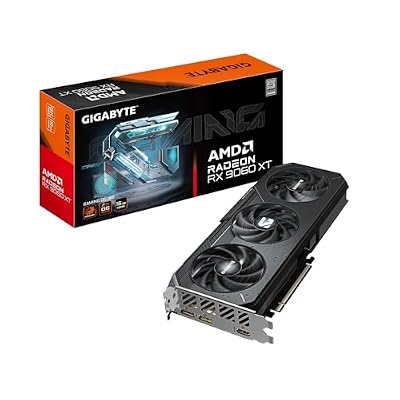
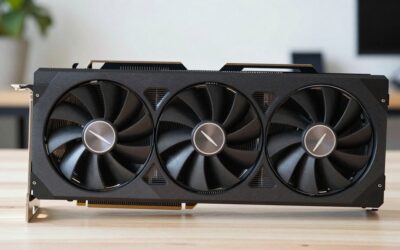
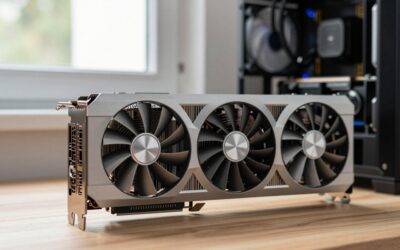
- Top Pick: GIGABYTE Radeon RX 9060 XT Gaming OC 8G Graphics Card, PCIe 5.0, 8GB GDDR6, GV-R9060XTGAMING OC-8GD Video Card
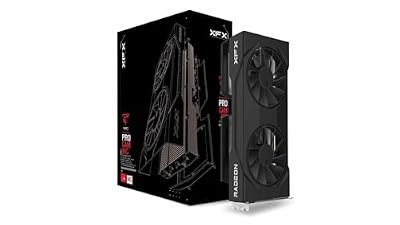
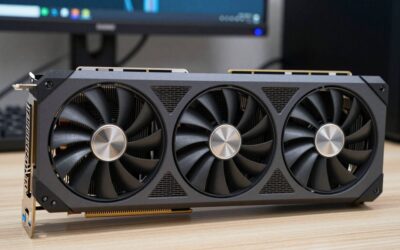
- Best Value: ASRock Radeon RX 9060 XT Challenger 16GB OC, RDNA 4, 3290MHz Boost, 16GB GDDR6 128-bit, PCIe 5.0, Dual Fans, 0dB Silent, LED Indicator, DisplayPort 2.1a, HDMI 2.1b
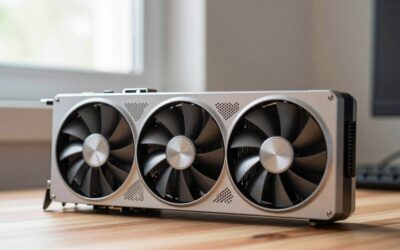
- Premium Choice: ASUS Dual Radeon RX 9060 XT 16GB GDDR6 Gaming Graphics Card

Prime
Editor's Pick
ASUS Dual Radeon RX 9060 XT 16GB GDDR6 Graphics Card, AMD, for Desktop (PCIe 5.0, HDMI 2.1b, DisplayPort 2.1a, 2.5-Slot, Axial-tech Fan, 0dB Technology, and More)
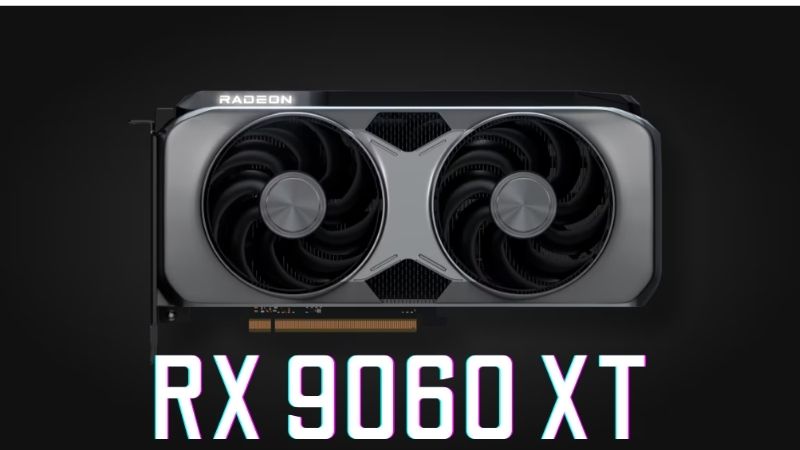
The rx 9060 vs rtx 5060 matchup is one of the closest fights in the entire budget bracket, with barely a couple of percent separating the two on raw frames. Both are 8GB cards built for 1080p gaming, both carry modern upscaling, and both land around the same $299 price. Yet there is one decisive practical twist most spec sheets miss: the RX 9060 is an OEM-only card that you cannot buy on its own at retail. That single fact shapes the entire recommendation, and this breakdown walks you through exactly what it means for your build.
Quick Verdict: RX 9060 vs RTX 5060 at a Glance
Here is the short version. On pure performance these two are effectively tied, with the RTX 5060 sitting roughly 2% ahead of the RX 9060 in average frames, a gap no player feels in real games. The deciding factor is not speed but availability: the RTX 5060 is a normal retail card you can add to any build, while the RX 9060 non-XT ships only inside prebuilt systems. For most self-builders, that makes the RTX 5060 the practical winner by default, as the table and mini-verdicts below explain.
As an Amazon Associate we earn from qualifying purchases at no extra cost to you.






Who Wins the RX 9060 vs RTX 5060 Value Race
On measured performance, this is as close as GPU comparisons get. Independent testing puts the RTX 5060 around 2% faster than the RX 9060 non-XT across a spread of popular 1080p titles, which is well inside the margin where driver updates and individual games swing the result either way.
The RX 9060 is a cut-down version of the RX 9060 XT, sharing the same RDNA 4 architecture but with fewer resources, and it lands about 6% behind the 9060 XT 8GB while comfortably beating the entry-level RTX 5050 by roughly 20%. In other words, it is a genuinely capable 1080p chip, just not a retail one.
The shortest answer: if you are buying a prebuilt system, the RX 9060 is a perfectly good GPU to find inside it, but if you are building or upgrading yourself, the RTX 5060 is the card you can actually purchase, and it matches or narrowly leads the RX 9060 anyway. That reframes the whole comparison: you are rarely choosing between these two in a store, but rather deciding whether a prebuilt with an RX 9060 is worth buying versus building around a retail RTX 5060 yourself.
The Full RX 9060 vs RTX 5060 Comparison Table
Specs settle arguments faster than paragraphs, so here is the core sheet side by side. Use it to sanity-check any prebuilt configuration or retail listing before you commit.
| Spec | RX 9060 (non-XT) | RTX 5060 |
|---|---|---|
| Architecture | RDNA 4 (Navi 44) | Blackwell (GB206) |
| Shaders | Cut-down Navi 44 | 3,840 CUDA |
| Memory | 8GB GDDR6 | 8GB GDDR7 |
| Bus width | 128-bit | 128-bit |
| Upscaling | FSR 4 | DLSS 4 + Multi Frame Gen |
| Board power | ~130W | ~145W |
| Availability | OEM / prebuilt only | Retail |
| Price context | Bundled in systems | ~$299 standalone |
The line that matters most is availability. The RX 9060 has no official standalone price because AMD sells it only to system builders, whereas the RTX 5060 sits on shelves at roughly $299, which is why the two rarely compete head to head in a real shopping cart. For a shopper, this means the RX 9060 is best judged as part of a complete system’s value, while the RTX 5060 is judged on its own merits against other standalone cards near $299.
Why 2026 Prices and Stock Reshape the Decision
Here is the context spec sheets skip: a tight 2026 memory market has pushed budget GPU prices up rather than down, and component prices across PC parts have trended higher. For a card like the RTX 5060 that you buy separately, that inflation directly affects your wallet, while the RX 9060’s cost is baked into the price of a whole prebuilt system where it is harder to isolate.
There is cautious good news, but it is weak and in the future. Prices have stopped climbing as steeply as they did in late 2025, and some hardware makers have reported a stretch of relative stability, while still warning that volatility is not over. For a budget buyer, the free-fall has paused rather than reversed.
Fresh supply is coming but is years away. New memory capacity, including DDR5 from Chinese suppliers and two Micron plants in Idaho, is not expected to run until 2027-2028. The practical takeaway: if you want a standalone card, a well-priced RTX 5060 near $299 with a warranty is a solid buy today, and if you are shopping prebuilts, a system with an RX 9060 inside is a reasonable pick rather than something to avoid.
Deep Dive Face-Off: Performance, Features and Efficiency
With raster a near tie, the decision leans on upscaling, ray tracing, efficiency, and the availability question that runs through this whole comparison. This section walks those battlegrounds with measured behavior rather than adjectives.
Raw Rasterization and 1080p Frame Rates
At 1080p, the resolution both cards are designed for, they are neck and neck. The RTX 5060’s roughly 2% average lead over the RX 9060 is the kind of gap that disappears the moment you change a single graphics setting or move to a different game.
The RX 9060’s RDNA 4 foundation gives it solid, consistent frame pacing, and reviewers note it performs similarly across different CPUs, so it does not demand an expensive processor to shine. That makes it a sensible fit for the mainstream prebuilt systems it ships in.
The analytical read is simple: neither card outclasses the other in raster. Choosing on raw frames alone is splitting hairs, which is exactly why features, efficiency, and how you can actually buy each card end up carrying the decision. When two cards finish within a couple of percent across a broad game library, insisting on the faster one is chasing a difference no human eye can register in motion, so the tiebreakers become the real story.
DLSS 4, FSR 4 and Ray Tracing Face-Off
Upscaling is the RTX 5060’s headline advantage. DLSS 4 with Multi Frame Generation can insert AI-generated frames in supported titles, and it still leads AMD’s newer FSR 4 on both breadth of game support and image quality, even though FSR 4 marks a big leap for Radeon this generation.
The RX 9060 is no slouch on features for a cut-down card, as it benefits from the same FSR 4 upscaling and RDNA 4’s improved ray tracing over the previous generation. In practice, though, the RTX 5060’s deeper DLSS ecosystem and stronger ray tracing hardware give Nvidia the edge when you turn those effects on.
The forward-looking angle favors whoever keeps their card longer. Both should gain from future driver and game updates, but the RTX 5060’s fifth-generation Tensor cores and broader DLSS 4 adoption mean it is better placed to keep improving, which matters for a budget buyer hoping to hold the card for several years. That said, both cards will need upscaling to stay smooth in the most demanding future titles, so neither is a long-term 1440p solution, and buyers should plan around their 8GB reality rather than around the badge on the box.
Power, VRAM and the Availability Question
On efficiency the RX 9060 edges ahead, drawing about 130W against the RTX 5060’s 145W, and as a cut-down chip it is not the kind of card that gains much from overclocking. Both are easy to cool and run happily on a modest 450W to 550W power supply.
The shared limitation is the 8GB frame buffer. It is adequate for 1080p today, but the most demanding modern titles at high textures can brush against it, so both cards are best treated as 1080p performers rather than 1440p machines, with upscaling as the bridge for heavier games.
The practical dealbreaker remains availability. Because the RX 9060 is sold only inside prebuilt systems, a DIY builder simply cannot choose it, while the RTX 5060 is a normal retail purchase. This is the single most important real-world factor in the entire comparison, and it tilts most buying scenarios toward Nvidia.
Pros, Cons, Alternatives and Final Buying Advice
With performance tied and availability decisive, the recommendation gets simple once you weigh the honest scorecard against how you plan to buy. This section covers the pros and cons, a stronger alternative if your budget can flex, and a clear verdict.
RX 9060 vs RTX 5060: Pros and Cons Breakdown
The RX 9060’s strengths are strong 1080p value inside a prebuilt, class-leading efficiency near 130W, full FSR 4 support, and improved RDNA 4 ray tracing. Its cons are the OEM-only availability that keeps it off the shelf, an 8GB buffer that limits higher resolutions, and limited overclocking headroom.
The RTX 5060’s strengths are retail availability, DLSS 4 Multi Frame Generation, faster GDDR7 memory, and a marginal raw-performance lead. Its cons are the same 8GB VRAM ceiling and a slightly higher power draw for a raster performance that is essentially a tie.
Put plainly: the RX 9060 wins on efficiency and prebuilt value, the RTX 5060 wins on availability and features. Neither is a bad chip; the wrong move is expecting to buy an RX 9060 on its own, or paying above $299 for a 5060 when stock is holding at MSRP.
A Smart Alternative If Your Budget Can Stretch
If you can add a little to your budget, the RX 9060 XT 16GB is the standout step up, available not far above $300 and offering more performance plus a 16GB buffer that ages far better than 8GB as game textures grow.
For those set on Nvidia and after more headroom, the RTX 5060 Ti 16GB adds capacity and grunt for a higher price, making it the natural upgrade path from the 5060 for anyone eyeing 1440p or light creation work.
Given the 2026 market, spending slightly more for a 16GB card is often the better long-term value than saving every dollar at the 8GB entry tier. Real price relief is years away, so a modest step up now pays off across the card’s life.
Final Verdict: Which Mid-Range GPU Should You Buy
Buy a system with the RX 9060 if you are shopping prebuilts and want an efficient, capable 1080p GPU inside a complete machine. It is a genuinely good chip, just not one you can pick off a shelf. Judged inside a well-configured machine with a balanced CPU and adequate cooling, it delivers exactly the smooth 1080p experience most mainstream buyers are after.
Buy the RTX 5060 if you are building or upgrading yourself, want DLSS 4, and value a card you can actually purchase today. For the vast majority of self-builders, that combination makes it the practical winner despite the near-tie in raw frames.
Whichever route fits you, timing and stock matter most at this tier. Compare live prices and prebuilt configurations before you commit, and grab the option that offers the best real value in your region. Follow the link to check current RTX 5060 pricing and lock in the better buy.
See more:
- amd driver auto-detect tool
- nvidia geforce rtx 5080 best buy
- TechPowerUp GPU-Z
- nvidia china
- nvidia etf price
Conclusion
The rx 9060 vs rtx 5060 verdict comes down to availability rather than raw speed: the two are effectively tied on frames, but the RX 9060 ships only inside prebuilt systems while the RTX 5060 is a retail card with DLSS 4 you can buy anywhere. In a 2026 market where budget GPU prices have merely flattened and real relief is still years out, self-builders should reach for a well-priced RTX 5060, while prebuilt shoppers can happily accept an RX 9060 inside a good system. Compare current prices through the link above and secure the mid-range GPU that fits your build and budget today.
Frequently Asked Questions
How do the RX 9060 and RTX 5060 compare on raw performance?
They sit in the same class, with results swinging by title. AMD RDNA 4 handles rasterised workloads efficiently and has improved ray tracing over RDNA 3, but NVIDIA Blackwell still leads in path-traced and heavy ray tracing games. In esports and older DirectX 11 titles the two are close enough that price should decide.
Which card handles VRAM limits better?
Both base models carry 8GB, which is the tier weakness. AMD offers higher capacity variants in this family, so if capacity matters you should compare against a 16GB option rather than the base card. When VRAM runs out the symptom is frame time stutter and texture pop-in rather than a smooth frame rate drop, which is far more noticeable in play.
What power supply do I need for each?
Both are efficient parts drawing roughly 130W to 150W from a single 8-pin PCIe connector, with a 500W to 550W recommendation from a reputable brand. Neither needs a 12V-2×6 cable or an ATX 3.1 supply, which makes them easy drop-in upgrades for older prebuilt systems with modest stock power supplies.
How do the encoders compare for streaming and recording?
NVIDIA holds the practical advantage. The ninth-generation NVENC encoder in Blackwell has excellent AV1 and HEVC quality and broad software support in OBS, Discord and video editors. AMD improved its AV1 encoder in RDNA 4 and the gap is smaller than it was, but NVENC remains the safer choice for serious streaming.
Which offers better value in 2026?
It depends heavily on street pricing, which moves constantly at this tier. If the AMD card is meaningfully cheaper and you play mostly rasterised games at 1080p, take it. If you want the strongest ray tracing, the widest DLSS support, or you stream regularly, the RTX 5060 justifies a modest premium.
Ready to decide? Our #1 pick for 2026 is the Architecture.
Live price & availability on Amazon.

Write Your Review
No reviews yet. Be the first to share your experience!