
3090 vs 5070 is a fascinating clash between an old flagship and a modern midrange card, and the result is closer than the names suggest. The RTX 3090 was a 24GB Ampere titan built for 4K and heavy workloads, while the RTX 5070 is an efficient new Blackwell card with DLSS 4 and a much lower price. Their raw gaming performance lands in the same neighborhood, but VRAM, efficiency, and features tell very different stories. This face-off gives you the numbers and a clear buy-this-if verdict, with a close look at when the 3090’s memory advantage actually matters and when it simply goes unused.


Prime
Limited Time
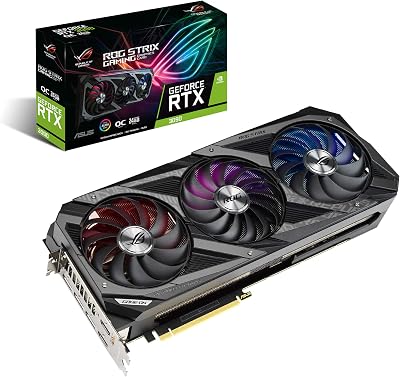
ASUS ROG Strix GeForce RTX 3090 OC Edition 24GB GDDR6X Gaming Graphics Card with Axial-tech Fans & Central Static Pressure Fan ROG-STRIX-RTX3090-O24G-GAMING (Renewed)
Quick answer: Our top pick in 2026 is the Architecture — our #1 rated choice. See the full ranked comparison, alternatives and buying advice below.
The Quick Verdict on the RTX 3090 vs 5070
Here is the short answer. The RTX 5070 is the smarter buy for most gamers thanks to DLSS 4, far lower power draw, and a much lower price, while delivering similar gaming performance. The RTX 3090 remains compelling only for its massive 24GB buffer, which matters for content creation and heavy AI workloads. For pure gaming value, the newer card wins clearly.
Who should buy or keep the RTX 3090
The RTX 3090’s headline asset is its 24GB of VRAM, which is far more than the 5070 offers. That buffer is genuinely valuable for content creators, 3D artists, and anyone running memory-hungry AI workloads at home.
If you already own a 3090 and use that VRAM, there is little reason to downgrade to a 12GB card for gaming alone. Its raw performance still holds up well in most titles, and for creators the 24GB buffer remains a genuine asset that no current midrange card comes close to matching.
As a gaming-only purchase, though, a used 3090 makes sense mainly when the price is very low and you specifically need the memory rather than modern features.
Who should buy the RTX 5070
The RTX 5070 is the choice for gamers who want a modern, efficient card with the latest features at a sensible price. At around 549 dollars and roughly 250W, it is far more efficient than the 3090’s 350W draw.
It unlocks DLSS 4 with Multi Frame Generation, a Blackwell-exclusive that can multiply frames in supported games and stretch performance well beyond raw specs. That software edge is a major advantage over the older card.
For a pure gaming build, the 5070 delivers similar frames to the 3090 while running cooler, costing less, and offering modern features the older flagship cannot match.
Specs and price at a glance: 3090 vs 5070
The data shows two very different design philosophies. Treat frame figures as representative ranges, since results shift by game, driver, and settings.
| Spec | RTX 3090 | RTX 5070 |
|---|---|---|
| Architecture | Ampere | Blackwell |
| VRAM | 24GB GDDR6X | 12GB GDDR7 |
| Memory bus | 384-bit | 192-bit |
| Board power (TDP) | ~350W | ~250W |
| Upscaling | DLSS (no Multi Frame Gen) | DLSS 4 + Multi Frame Gen |
| Launch MSRP | ~1499 dollars (2020) | ~549 dollars |
| Best fit | VRAM-heavy work | Efficient 1440p gaming |
The pattern: the 3090 offers double the VRAM and a wider bus, while the 5070 answers with far lower power, DLSS 4, and a much lower price for similar gaming performance. The deep dive explains where each advantage matters.
Deep Dive Face-Off: RTX 3090 vs 5070
A spec sheet only hints at real behavior. This section compares the two by the criteria that decide your experience: gaming performance, the VRAM and features divide, and the practical realities of power and platform, since a modern midrange card and a former flagship rarely differ where you would expect.
Raw gaming performance
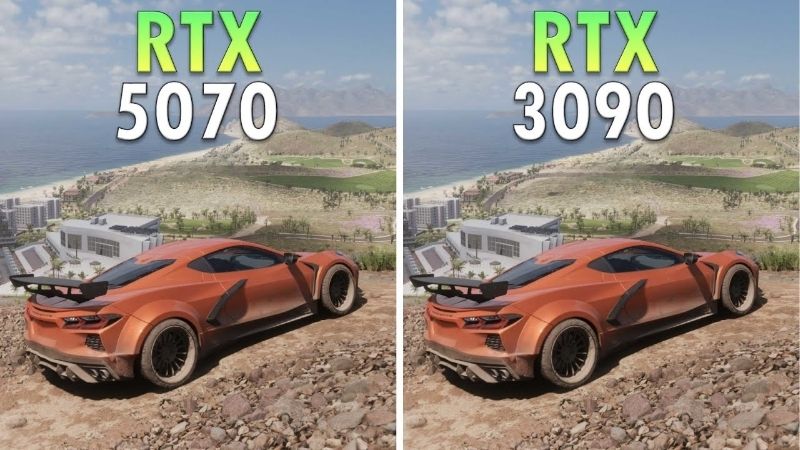
In pure gaming rasterization, the two land remarkably close, often trading blows at 1440p and 4K depending on the title. The 5070’s newer architecture keeps it competitive with the former flagship despite its lower tier and price.
That parity is the surprising heart of this comparison: a modern midrange card matching a previous-generation titan in gaming frames. For most players, the gaming experience feels similar between the two, which is a remarkable thing to say about a card that once sat at the very top of the stack against a modern midrange option, and it shows how much efficiency and features have advanced since then.
Where the 3090’s wider bus and larger buffer help is in the most memory-intensive scenarios, but in typical gaming, the 5070 holds its own comfortably, and its newer architecture often edges ahead once DLSS 4 enters the picture.
The VRAM and features divide
The clearest difference is VRAM. The 3090’s 24GB dwarfs the 5070’s 12GB, which is a decisive advantage for content creation, high-resolution texture work, and local AI tasks that need large memory.
For gaming, though, 12GB is generally sufficient at 1440p today, and the 5070 counters with DLSS 4 and Multi Frame Generation, which the Ampere-based 3090 cannot use. That software edge stretches the newer card further in supported games, and it tends to widen as more titles adopt the latest DLSS features over time.
So the divide is simple: the 3090 wins for VRAM-heavy work, while the 5070 wins for modern gaming features and efficiency, and knowing which of those two camps you fall into answers the entire comparison.
Power draw, platform, and real-world fit
The 5070 is far more efficient at around 250W versus the 3090’s 350W, so it runs cooler and quieter and pairs with a smaller power supply. Over years of use, that efficiency also trims your electricity cost.
There is a platform angle too. A new 5070 arrives with a warranty and current drivers, while a used 3090 carries second-hand risks and higher running costs, though its VRAM remains a genuine draw.
For a gaming-focused build, the 5070’s efficiency and modern platform make it the more practical everyday card despite the 3090’s memory advantage, since lower heat, a smaller power supply, and current features all ease the rest of the build.
Value, Pricing Trends, and the Smart Buy in 2026
Performance tiers rarely change; prices change constantly. To make a smart call on the 3090 vs 5070 today, weigh the pros and cons against where GPU and memory pricing is heading, because timing matters as much as the silicon, and because a used flagship’s price moves with the same memory pressures affecting new cards.
Pros and cons of each card
The RTX 3090’s strengths are its huge 24GB buffer, a wide memory bus, and strong value for VRAM-heavy work if bought cheap used. Its weaknesses are high power draw, no Multi Frame Generation, and the risks of aging second-hand hardware.
The RTX 5070’s strengths are efficiency, DLSS 4 Multi Frame Generation, a warranty, current drivers, and a much lower price. Its weakness is a smaller 12GB buffer that limits heavy professional workloads.
The deciding factor is your use case: the 3090 for memory-hungry creation, the 5070 for efficient modern gaming, with similar frames between them, so the choice is less about speed and more about VRAM versus features.
What rising GPU and memory prices mean for buyers
Here is the market context. Laptop and PC component prices have been trending upward, driven heavily by memory costs, and that pressure reaches both new cards and used listings. Expect used 3090 prices to reflect that pressure too.
The good news is real but weak and far off. Pricing has stopped climbing as steeply as it did in late 2025, and some makers report a stretch of relative stability while still warning of volatility. New supply is opening up, with Micron building two Idaho plants, but those fabs will not run until 2027 to 2028, so prices have plateaued rather than dropped.
The practical read: relief is not coming soon, so buy the card that fits your needs at a fair price now. For gaming, a new 5070 at MSRP is usually the smarter value than a used 3090 unless you specifically need the VRAM.
The alternative if neither fits
If you want more gaming performance than either, the RTX 5070 Ti steps up with a 16GB buffer and stronger frames. It is a natural upgrade path for buyers who find the 5070 a touch short on power or VRAM.
If you need maximum VRAM for work, a used 3090 Ti or a current high-VRAM card may serve better than either option here. Match the card to whether gaming or creation is your priority.
The smartest buy is the one that solves your actual bottleneck, whether that is frames, features, or memory, rather than simply the biggest number on paper, so define what is limiting you before you spend.
Which Card Fits Your Situation: 3090 vs 5070
Specs set the ceiling, but your workload decides the right buy. Here is how the two line up against three common situations so you can choose based on your real needs, since the gaming-versus-creation split matters more here than raw frame counts.
Best for pure gaming value
If you only game, the RTX 5070 is the smarter buy. It matches the 3090’s gaming frames while costing far less, running cooler, and adding DLSS 4, which makes it the better all-round gaming card.
For a gaming-first build, paying a premium for the 3090’s 24GB you will not use in games makes little sense, so the 5070 is the clear pick, and the money saved can go toward a better monitor or CPU that you will actually feel.
The efficiency, lower heat, and DLSS 4 support all reinforce the case, giving you a cooler, quieter, more modern gaming rig for far less money than a used flagship would cost.
Best for creators and AI workloads
If you render, edit high-resolution video, or run local AI models, the 3090’s 24GB buffer is a genuine advantage that the 12GB 5070 cannot match. Memory capacity often matters more than raw speed for those tasks.
For this user, a used 3090 at a fair price can be excellent value, delivering professional-grade VRAM without a flagship-new price tag, which is why it retains a loyal following among home creators and AI hobbyists.
Just weigh the higher power draw and the risks of used hardware against the savings, and make sure your workload genuinely needs the 24GB before paying for it.
Best if you already own a 3090
If you already own a 3090, there is little reason to move to a 5070 for gaming, since the frames are similar and you would lose 12GB of VRAM in the process. Holding on is the sensible choice.
The exception is if efficiency, lower heat, or DLSS 4 specifically matter to you, in which case the 5070’s modern advantages might justify the switch despite the VRAM reduction.
For most owners, though, the sensible move is to keep the 3090 until a game or project actually strains it, then reassess against whatever is current at that point.
See More:
Final Verdict: RTX 3090 vs 5070
The 3090 vs 5070 verdict depends entirely on what you do with the card. Choose the RTX 5070 for gaming, where it matches the 3090’s frames while costing far less, running cooler, and adding DLSS 4 Multi Frame Generation. Choose the RTX 3090, ideally cheap and used, only if you need its 24GB buffer for content creation or AI work. For most gamers today, the newer card is the smarter and more efficient value, and with component prices flat-to-rising rather than falling, buying the right card now at a fair price clearly beats waiting. When you have decided, check current listings and availability through the link below before pricing shifts again.
Frequently Asked Questions
Which is faster, an RTX 3090 or an RTX 5070?
They land close in rasterised gaming, with the RTX 5070 ahead in ray-traced titles thanks to Blackwell RT cores and exclusive access to Multi Frame Generation. The RTX 3090 wins in any workload that needs more than 12GB of memory, where the newer card simply cannot compete.
How different is the power consumption?
Dramatically. The RTX 3090 is rated at 350W and uses two or three 8-pin connectors with a 750W supply recommendation, while the RTX 5070 sits near 250W on a single 12V-2×6 or 8-pin connector with a 650W recommendation. That is roughly 100W less heat and noise for equal gaming performance.
Is the 3090’s 24GB of VRAM worth keeping it for?
If you do local AI inference, large-scene 3D rendering or high-resolution video work, absolutely. 24GB lets you load models and scenes that a 12GB card refuses outright, and no amount of extra shading speed compensates for insufficient memory. For pure gaming, the capacity advantage is largely theoretical today.
Which is the better buy on the used market?
A used RTX 3090 makes sense only if you specifically need the memory and can verify its history, since these cards ran hot GDDR6X on both sides of the board and many were used for mining. For gaming, a new RTX 5070 brings warranty, lower power draw and current feature support.
What about DLSS support on each card?
Both run the DLSS 4 transformer upscaler and Ray Reconstruction. Only the RTX 5070 supports Multi Frame Generation, which can substantially raise displayed frame rates in supported titles at the cost of some latency and extra VRAM. The 3090 can use the original Frame Generation only through AMD’s FSR 3 implementation.
Ready to decide? Our #1 pick for 2026 is the Architecture.
Live price & availability on Amazon.

Write Your Review
No reviews yet. Be the first to share your experience!