
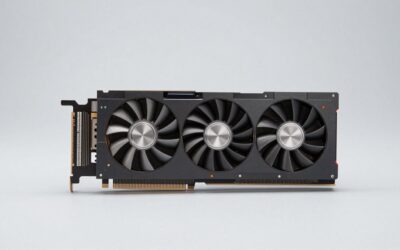
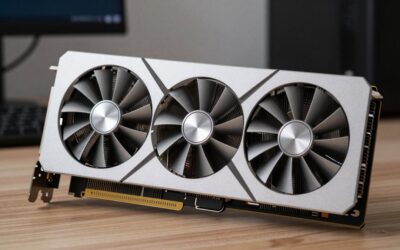
- Top Pick: ASRock Radeon RX 9060 XT Challenger 16GB OC, RDNA 4, 3290MHz Boost, 16GB GDDR6 128-bit, PCIe 5.0, Dual Fans, 0dB Silent, LED Indicator, DisplayPort 2.1a, HDMI 2.1b
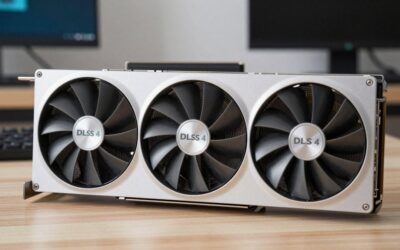
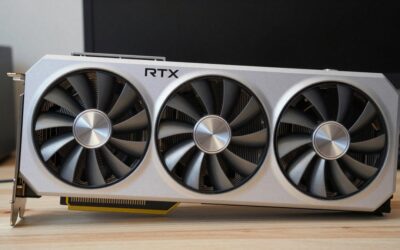
- Best Value: XFX Swift AMD Radeon RX 9060 XT OC Triple Fan Gaming Edition with 16GB GDDR6 HDMI 2xDP, RDNA 4 RX-96TS316B7, Graphics Card, Compatible with Desktop PCs
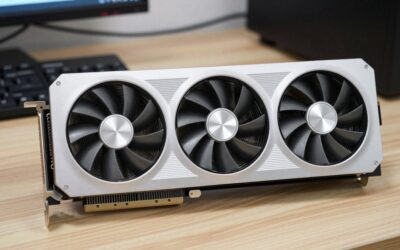
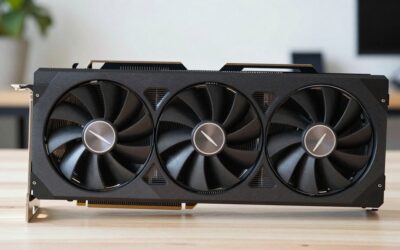
- Premium Choice: GIGABYTE Radeon™ RX 9060 XT Gaming OC ICE 16G Graphics Card (16GB GDDR6, 128-bit, PCIe 5.0, HDMI/DP 2.1, 2 Slot, Hawk Fan, Server-Grade Thermal Gel, Reinforced Structure)

Prime
Best Seller
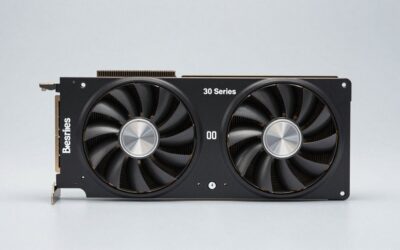
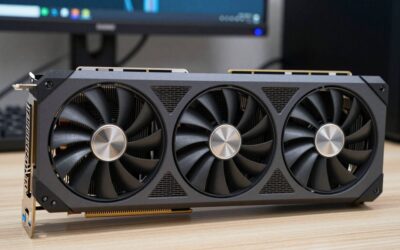
ASUS Dual Radeon RX 9060 XT 16GB GDDR6 Graphics Card, AMD, for Desktop (PCIe 5.0, HDMI 2.1b, DisplayPort 2.1a, 2.5-Slot, Axial-tech Fan, 0dB Technology, and More)
Editor's Pick
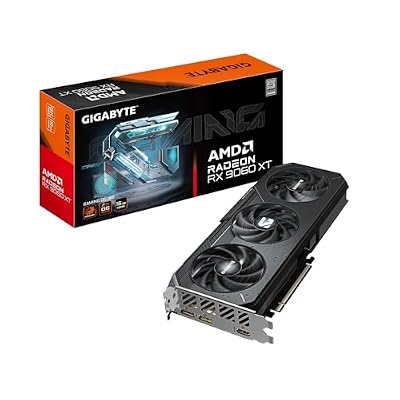
GIGABYTE Radeon RX 9060 XT Gaming OC 16G Graphics Card, PCIe 5.0, 16GB GDDR6, GV-R9060XTGAMING OC-16GD Video Card

The rx 9060 xt 16gb vs rtx 5060 ti 16gb matchup is the tightest value fight in the mid-range, and it splits neatly along one line: AMD sells value, Nvidia sells features. Both cards carry 16GB of memory on a 128-bit bus, both target 1080p and 1440p, and in raw gaming they finish within a few frames of each other. The real separation is price, ray tracing, and AI, where an $80 gap and Nvidia’s deeper feature stack decide who wins for your build. This breakdown settles it fast.
Quick Verdict: RX 9060 XT 16GB vs RTX 5060 Ti 16GB at a Glance
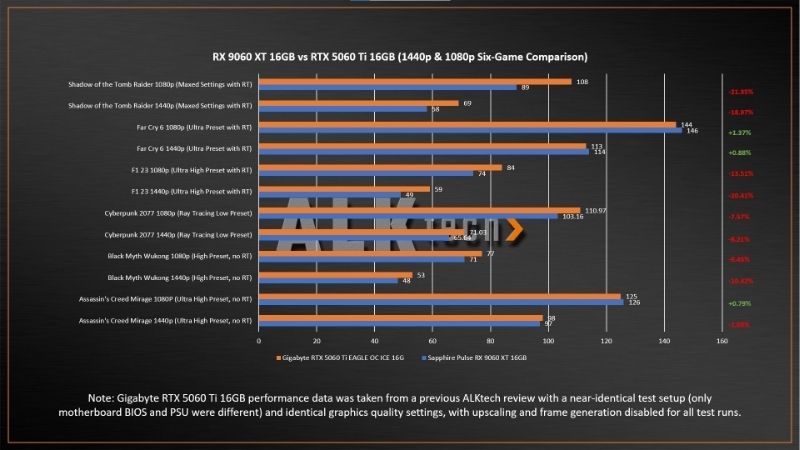
Here is the short answer. The RX 9060 XT 16GB is the better value and the smarter pure-gaming buy, delivering near-identical raster performance for about $80 less while drawing less power. The RTX 5060 Ti 16GB earns its premium only if ray tracing, DLSS 4 Multi Frame Generation, or AI and creator work matter to you. The table and mini-verdicts below make the call based on what you actually do.
As an Amazon Associate we earn from qualifying purchases at no extra cost to you.




Who Wins the 9060 XT vs 5060 Ti Value Race
On price-to-performance, AMD takes it. The 9060 XT 16GB launched at $349 against the 5060 Ti 16GB’s $429, and across large game suites the two trade blows within roughly a few percent in rasterized titles. That means AMD delivers comparable frames for meaningfully less money.
The nuance is which benchmark you trust. Some aggregate suites hand the 5060 Ti a 13-17% synthetic lead, while broad 100-game gaming samples put the pair within 1% and even nudge the 9060 XT ahead on value. The honest read: in real games they are effectively tied, and the price gap breaks the deadlock.
The shortest answer: pick the 9060 XT 16GB to maximize frames per dollar for gaming, and pick the 5060 Ti 16GB if you want the best ray tracing and AI features and will pay extra for them. Framed differently, you are deciding whether ray tracing and AI are hobbies you actively use or boxes you tick once and forget: if it is the former, Nvidia’s premium is justified, and if it is the latter, AMD hands you the same gaming experience for less.
The Full 9060 XT vs 5060 Ti Comparison Table
Numbers cut through the noise, so here is the core spec sheet side by side. Use it to sanity-check any listing before you click through to a retailer.
| Spec | RX 9060 XT 16GB | RTX 5060 Ti 16GB |
|---|---|---|
| Architecture | RDNA 4 (Navi 44) | Blackwell (GB206) |
| Shaders | 2,048 (32 CUs) | 4,608 (36 SMs) |
| Memory | 16GB GDDR6 (20 Gb/s) | 16GB GDDR7 (28 Gb/s) |
| Bus width | 128-bit | 128-bit |
| Boost clock | ~3.13 GHz | ~2.57 GHz |
| Ray tracing | 32 3rd-gen RT | 36 4th-gen RT |
| Board power | ~160W | ~180W |
| Launch MSRP | $349 | $429 |
Two lines stand out. The 5060 Ti’s GDDR7 moves data roughly 39% faster than the 9060 XT’s GDDR6, while AMD counters with a 22% higher boost clock. Those opposing strengths are exactly why raster performance lands so close in practice. AMD trades bandwidth for clock speed and Nvidia does the reverse, so on a shared 128-bit bus the two philosophies cancel out into a near dead heat in most rasterized games.
Why 2026 Prices Reshape the 9060 XT vs 5060 Ti Math
Here is the part spec sheets ignore: neither card reliably sells at MSRP right now. A tight memory market has pushed mid-range GPU prices above launch figures, and component prices across PC parts have trended up rather than down. Because the whole case for the 9060 XT rests on that $80 saving, an inflated price on the cheaper card can quietly erase its main advantage.
There is cautious good news, but it is weak and in the future. Prices have stopped climbing as steeply as they did in late 2025, and some hardware makers have reported a stretch of relative stability, while still warning that volatility is not over. For a buyer, the free-fall has paused rather than reversed.
New supply is coming but is years away. Fresh memory capacity, including DDR5 from Chinese suppliers and two Micron plants in Idaho, is not expected to run until 2027-2028. The practical move: compare live prices on both 16GB cards on the same day, and treat any listing near MSRP with a warranty as a strong deal rather than waiting for a drop the supply timeline does not support. Because the 9060 XT’s entire pitch is that $80 saving, this is the one comparison where checking the live price on the exact day you buy is not optional but essential to reaching the right decision.
Deep Dive Face-Off: Performance, Features and Efficiency
Raster is a near-tie, so the decision hinges on ray tracing, AI features, and how each card fits a real build. This section walks those battlegrounds with measured behavior rather than marketing adjectives.
Raw Rasterization and 1080p to 1440p Frame Rates
At 1080p both cards are strong, and the 9060 XT’s aggressive 3.13GHz boost clock keeps it neck and neck with the higher-shader 5060 Ti. In many titles the two are separated by only one or two frames, a difference no player feels without an overlay.
At 1440p the extra memory bandwidth of the 5060 Ti’s GDDR7 starts to help in the heaviest scenes, letting it edge ahead in some demanding titles. The 9060 XT stays close, and its 16GB buffer means it never runs short on VRAM at this resolution.
The analytical bottom line is parity: across broad game samples these two are effectively tied in rasterized gaming, and picking on raw frames alone is splitting hairs. That is precisely why price and features carry the decision. When two cards finish within a frame or two across a hundred games, spending more for raw raster is spending on a difference you cannot perceive, which is why savvy buyers pivot to what actually separates them.
Ray Tracing, DLSS 4 and FSR 4 Face-Off
Ray tracing is Nvidia’s clearest win. The 5060 Ti’s 36 fourth-generation RT cores and deeper DLSS 4 integration give it stronger performance in ray-traced titles, where the 9060 XT’s 32 third-generation RT units fall behind.
Upscaling is where the experimental gap lives. DLSS 4 with Multi Frame Generation can insert AI-generated frames for higher smoothness in supported games, and it still leads AMD’s newer FSR 4 on breadth of support and image quality, even though FSR 4 has closed the gap dramatically this generation.
AI and creation widen the divide further. The 5060 Ti’s 144 fifth-generation AI accelerators push it well ahead in workloads like Stable Diffusion, where it can run up to around 44% faster, making it the stronger pick for anyone who creates as well as plays. For a pure gamer those AI gains are largely academic, but for someone running local image generation, video effects, or machine-learning experiments alongside gaming, the 5060 Ti quietly justifies its price on productivity alone.
Power Draw, VRAM and Real-World Build Fit
Efficiency leans AMD. At roughly 160W the 9060 XT draws about 20W less than the 5060 Ti’s 180W, which means slightly less heat and a touch more flexibility with an older power supply.
Both cards want a quality 550W to 600W unit for a typical build, and both are compact enough for small-form-factor cases on many partner models. Confirm your case clearance, but neither is a demanding install compared with higher tiers.
The shared 16GB buffer is the practical star here. Both cards carry enough VRAM to keep textures happy at 1080p and 1440p and even dabble at 4K with upscaling, which future-proofs either choice against rising game memory demands better than any 8GB card in this price range. That shared 16GB safety net is the strongest argument for either card over cheaper 8GB rivals, since VRAM shortfalls, unlike raw speed, cause hard stutters and texture pop-in that no upscaling can fully hide.
Pros, Cons, Alternatives and Final Buying Advice
With raster tied and the feature gap clear, the recommendation comes down to an honest scorecard and your priorities. This section lays out the pros and cons, a fallback if both feel pricey, and a plain who-should-buy-what verdict.
RX 9060 XT 16GB vs RTX 5060 Ti 16GB: Pros and Cons
The RX 9060 XT 16GB’s strengths are its lower $349 price, class-leading efficiency near 160W, a high 3.13GHz boost clock, and full FSR 4, AV1, and DisplayPort 2.1 support. Its cons are weaker ray tracing, slower memory bandwidth, and a smaller AI and creator ceiling.
The RTX 5060 Ti 16GB’s strengths are stronger ray tracing, DLSS 4 Multi Frame Generation, faster GDDR7 bandwidth, and a big lead in AI and content creation. Its cons are the higher $429 price and slightly greater power draw for a raster performance that is often a tie.
Put plainly: the 9060 XT wins on value and efficiency, the 5060 Ti wins on features and AI. Neither is a mistake; the wrong move is paying the Nvidia premium for pure raster gaming you could get cheaper, or expecting the AMD card to match DLSS-driven ray tracing. Both companies have essentially agreed to disagree on where to spend the transistor budget, so your job is simply to buy the philosophy that matches how you play rather than to crown an overall winner.
A Smart Alternative If Neither Fits
If both feel expensive at inflated prices, the 8GB versions of each card trim cost, though 8GB is a real limitation as modern textures grow, so the 16GB models remain the wiser long-term buy in this bracket.
For a step up, the RX 9070 offers a clear performance jump for 1440p and entry 4K if your budget can stretch, and it is the natural upgrade path from either 16GB card for higher-resolution ambitions.
Given the 2026 market, buying the 16GB card that matches your feature priorities at a fair price beats chasing a cheaper 8GB option that ages faster. Real price relief is years away, so a well-specced card bought now holds its usefulness longer. In a market where the next meaningful price reset is still years out, longevity is worth paying a little for, and a 16GB card is the clearest way to buy it at this tier.
Final Verdict: Which 16GB GPU Should You Buy
Buy the RX 9060 XT 16GB if you mainly game at 1080p or 1440p, want the best frames per dollar, and value a cool, efficient build. It is the value champion of the 16GB mid-range.
Buy the RTX 5060 Ti 16GB if ray tracing, DLSS 4 Multi Frame Generation, or AI and creator workloads are part of your routine, and you are willing to pay roughly $80 more for that feature depth.
Whichever you choose, timing matters in this market. Compare live prices on both 16GB cards on the same day before stock shifts, and grab the one that fits your priorities the moment it appears near MSRP. Follow the link to check current deals and lock in the better buy.
See more:
- amd driver auto-detect tool
- nvidia geforce rtx 5080 best buy
- TechPowerUp GPU-Z
- nvidia china
- nvidia etf price
Conclusion
The rx 9060 xt 16gb vs rtx 5060 ti 16gb verdict is refreshingly clear once you accept that raster is a tie: the 9060 XT 16GB is the value and efficiency champion, and the 5060 Ti 16GB is the feature-rich pick for ray tracing, DLSS 4, and AI. In a 2026 market where prices have merely stabilized and real relief is still years out, the smart move is matching the card to your priorities and buying at a fair price rather than overpaying. Compare current prices through the link above and secure the 16GB GPU that fits your build and budget today.
Frequently Asked Questions
Which 16GB card is faster overall?
The RTX 5060 Ti 16GB is generally faster, with more shader throughput and a higher 180W power budget against roughly 160W for the RX 9060 XT 16GB. The gap is around ten to twenty percent in raster and larger in ray traced titles. AMD closes it in some rasterised games and usually undercuts on price.
Is 16GB actually necessary at this performance level?
It is more useful than critics claim. Neither card is a 4K contender, but at 1440p with high textures, ray tracing and frame generation active, VRAM use regularly passes 10GB to 12GB. Having 16GB avoids the stutter and texture pop-in that plague the 8GB versions of both cards, and it helps for local AI and video work.
How do the upscalers compare?
DLSS 4 with the transformer model remains the image quality leader and has multi frame generation plus far wider game adoption. FSR 4 on RDNA 4 is a large step up from FSR 3 and is genuinely competitive in supported titles, and AMD offers a driver toggle that upgrades many FSR 3.1 games. Breadth still favours NVIDIA.
What power supply and connectors do they need?
Both are single 8-pin cards in most partner designs, though a few RTX 5060 Ti models use 12V-2×6. NVIDIA recommends 600W for the 5060 Ti and AMD around 550W for the 9060 XT. A good quality 650W unit comfortably covers either card paired with a mainstream eight core CPU.
Which should I buy for productivity work?
The RTX 5060 Ti 16GB, without much debate. CUDA remains the default target for Blender Cycles, DaVinci Resolve acceleration, Adobe AI features and most local machine learning tooling. AMD support through ROCm and HIP has improved but is still narrower and more troublesome on consumer cards, especially on Windows.
Ready to decide? Our #1 pick for 2026 is the Architecture.
Live price & availability on Amazon.

Write Your Review
No reviews yet. Be the first to share your experience!