
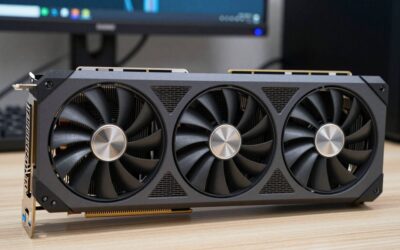
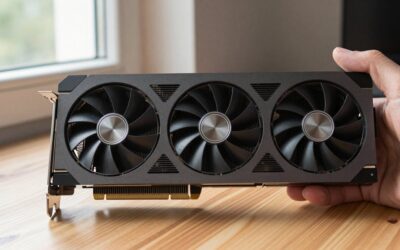
- Top Pick: ASUS Prime GeForce RTX 5060 Ti 16GB GDDR7 Gaming Graphics Card
- Best Value: ASUS Dual GeForce RTX 5060 Ti 16GB GDDR7 OC Edition Gaming Graphics Card
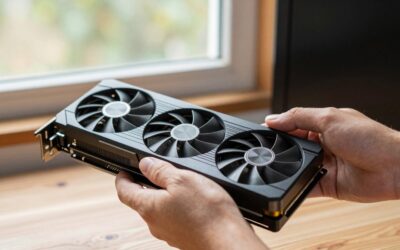
- Premium Choice: GIGABYTE GeForce RTX 5060 Ti WINDFORCE OC 8G Graphics Card, 8GB 128-bit GDDR7, PCIe 5.0, WINDFORCE Cooling System, GV-N506TWF2OC-8GD Video Card
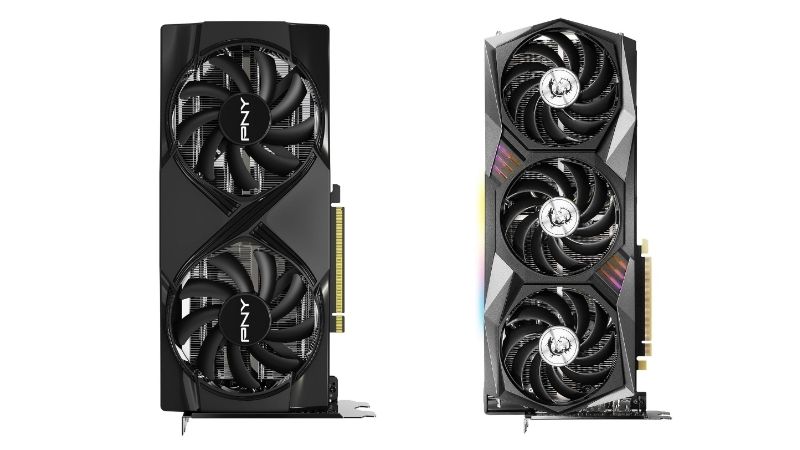
5060 ti vs 3070 is the upgrade question on the mind of everyone still running an older card or eyeing a used bargain. The RTX 5060 Ti 16GB is a current Blackwell card with a huge frame buffer and modern features, while the RTX 3070 is a beloved Ampere card from an earlier generation with only 8GB of VRAM. They land near each other in raw speed, but the gap in VRAM, efficiency, and software is where the real story lives. This face-off gives you the numbers and a clear verdict, with a close look at why 8GB versus 16GB increasingly decides how well each card handles modern 1440p games.


The Quick Verdict on the RTX 5060 Ti vs 3070
Here is the short answer. The RTX 5060 Ti 16GB is the smarter buy for anyone purchasing new, thanks to double the VRAM, lower power draw, and access to DLSS 4. The RTX 3070 remains a capable card if you already own one or find it very cheap used, but its 8GB buffer is increasingly a liability in modern games. For a fresh purchase, the newer card wins on longevity.
As an Amazon Associate we earn from qualifying purchases at no extra cost to you.




Who should buy or keep the RTX 3070
The RTX 3070 still delivers strong 1440p rasterization and holds up well in older and esports titles. If you already own one, there is little reason to rush an upgrade unless you are hitting VRAM limits.
As a used bargain, it can make sense for a budget 1080p or entry 1440p build, provided the price is low enough to reflect its age and 8GB buffer.
But buying one new today rarely makes sense when a modern card offers more memory and features for similar money.
Who should buy the RTX 5060 Ti
The RTX 5060 Ti 16GB suits anyone buying fresh for 1440p who wants the card to last. Its 16GB buffer removes the texture-related stutter that increasingly troubles 8GB cards in new releases.
It also draws less power, around 180W, and unlocks DLSS 4 with Multi Frame Generation, which stretches its effective performance well beyond raw specs. That combination of efficiency and modern software is its core appeal.
For a forward-looking purchase that you want to keep for several years, it is clearly the safer long-term pick between the two.
Specs and price at a glance: 5060 Ti vs 3070
The data highlights a generational shift more than a raw-speed chasm. Treat frame figures as representative ranges at 1440p high settings, since results vary by game and driver.
| Spec | RTX 5060 Ti 16GB | RTX 3070 |
|---|---|---|
| Architecture | Blackwell | Ampere |
| VRAM | 16GB GDDR7 | 8GB GDDR6 |
| Memory bus | 128-bit | 256-bit |
| Board power (TDP) | ~180W | ~220W |
| Upscaling | DLSS 4 + Multi Frame Gen | DLSS (no Multi Frame Gen) |
| Launch MSRP | ~429 dollars | ~499 dollars (2020) |
| Best fit | 1440p, future-proof | 1080p / older 1440p |
The pattern: raw rasterization is in the same neighborhood, but the 5060 Ti brings double the VRAM, lower power, and modern DLSS 4, while the 3070 counters with a wider bus that no longer offsets its memory limit. The deep dive explains why VRAM decides this one.
Deep Dive Face-Off: RTX 5060 Ti vs 3070
A spec sheet only hints at behavior. This section compares the two by the criteria that decide your experience: rasterization and the 8GB versus 16GB reality, ray tracing plus upscaling, and the practical realities of power and platform. Because these cards come from different generations, the comparison is as much about longevity and features as it is about raw frames.
Raw rasterization and the VRAM reality
In raw rasterization the two are surprisingly close, often trading blows at 1440p in games that fit within 8GB. Frame-for-frame, the 3070’s wider 256-bit bus keeps it competitive with the newer card in those scenarios.
The problem for the 3070 is modern VRAM demand. A growing number of new titles exceed 8GB at high settings and 1440p, triggering texture pop-in and frame-time spikes that the 16GB 5060 Ti simply avoids.
So the honest read is nuanced: similar averages in many games, but the 5060 Ti delivers a smoother, more consistent experience wherever memory pressure appears, which is increasingly often. Frame-time consistency, not just the average FPS counter, is what your eyes actually perceive as smoothness, and that is where the larger buffer quietly pulls ahead.
Ray tracing and upscaling: DLSS 4 vs older DLSS
Both cards support DLSS, but only the 5060 Ti runs DLSS 4 with Multi Frame Generation, a Blackwell-exclusive that can multiply frames in supported games. That is a meaningful experimental edge the older 3070 cannot match.
In ray tracing, the newer architecture and larger buffer help the 5060 Ti stay steadier, especially where RT increases VRAM use. The 3070 can still ray trace, but it runs out of memory headroom sooner.
For anyone who cares about future game support and frame-generation features, the 5060 Ti’s software advantage grows over time as more titles adopt the latest DLSS.
Power draw, platform, and real-world fit
The 5060 Ti is the more efficient card at around 180W versus the 3070’s roughly 220W, so it runs cooler and quieter and eases PSU requirements. Both fit standard builds, but the newer card is gentler on an older power supply.
There is also a platform angle. A new 5060 Ti arrives with a warranty and mature current drivers, while a used 3070 carries the usual risks of second-hand hardware and an aging support tail.
If you value reliability and low running temperatures, the newer card has the practical edge beyond just frames.
Value, Pricing Trends, and the Smart Buy in 2026
Performance tiers rarely change; prices change constantly. To make a smart call on the 5060 Ti vs 3070 today, weigh the pros and cons against where GPU and memory pricing is heading, because timing matters as much as the silicon. This is doubly true when one option is a used card whose price swings with the same memory-driven pressures affecting new models.
Pros and cons of each card
The RTX 5060 Ti’s strengths are its 16GB buffer, efficiency, DLSS 4 Multi Frame Generation, a fresh warranty, and current driver support. Its weakness is the 128-bit bus, which caps bandwidth in the most demanding native scenes.
The RTX 3070’s strengths are a wider 256-bit bus and strong value if bought cheap used. Its weaknesses are the 8GB buffer, higher power draw, no Multi Frame Generation, and the risks of aging second-hand hardware.
The deciding factor is VRAM: as games grow hungrier, 16GB ages gracefully while 8GB increasingly forces compromises. A card that averages the same frame rate but has to drop textures or stutter under memory pressure delivers a worse experience than the raw numbers imply, and that is exactly the trap an 8GB card falls into more often each year.
What rising GPU and memory prices mean for buyers
Here is the market context. Laptop and PC component prices have been trending upward, driven heavily by memory costs, and that pressure reaches both new cards and used listings. Expect the 5060 Ti to often sit above its roughly 429 dollar launch figure.
The good news is real but weak and far off. Pricing has stopped climbing as steeply as it did in late 2025, and some makers report a stretch of relative stability while still warning of volatility. New supply is opening, with Micron building two Idaho plants, but those fabs will not run until 2027 to 2028, so prices have plateaued rather than dropped.
The practical read: relief is not coming soon, so buy the card that fits your needs at a fair price now rather than waiting. If a used 3070 is not dramatically cheaper than a new 5060 Ti, the newer card is the better long-term value.
The alternative if neither fits
If you want more than the 5060 Ti, the RTX 5070 steps up in raw performance, though its 12GB buffer is smaller than the 5060 Ti’s 16GB. On the value end, an RX 9060 XT 16GB is worth checking if you mainly play at 1080p.
Match the card to your monitor and your budget. Upgrading from a 3070 makes the most sense if you have felt VRAM limits or want DLSS 4; if your current card still satisfies you, waiting is reasonable.
The smartest buy is the one that solves your actual bottleneck, not simply the newest badge available.
Which Card Fits Your Situation: 5060 Ti vs 3070
The right answer here depends heavily on whether you already own a 3070 or are shopping fresh. Here is how the two cards line up against three common situations so you can decide based on your actual position rather than raw averages.
Best if you already own a 3070
If you already run a 3070 and rarely hit its 8GB limit in the games you play, there is little urgency to upgrade. The card still handles 1440p well in titles that fit its buffer, and holding on saves money in a rising-price market.
The moment to move is when you start seeing texture pop-in, stutter, or forced setting reductions from running out of VRAM. That is the signal the 8GB buffer, not the raw speed, has become your bottleneck.
Until then, keeping a working 3070 is a perfectly reasonable and thrifty choice, especially with prices elevated across the board and no meaningful drop expected in the near term.
Best if you are buying a card new today
For a fresh purchase, the RTX 5060 Ti 16GB is the smarter buy in almost every case. You get double the VRAM, lower power, DLSS 4 Multi Frame Generation, a warranty, and current drivers, all of which point toward a longer useful life.
Buying a new 3070 rarely makes sense now, since it is an older design with a smaller buffer at a price that no longer reflects its age. The newer card simply offers more where it counts.
If you are spending money today, spend it on the card that will age gracefully.
Best for a cheap used bargain build
If you find a 3070 for a genuinely low used price, it can anchor a budget 1080p or entry 1440p build nicely, as long as you accept the 8GB ceiling and the usual second-hand risks. Value hinges entirely on how low that price is.
Compare it honestly against a new 5060 Ti: if the used 3070 is not dramatically cheaper, the warranty, VRAM, and features of the new card usually win. For bargain hunters, the math only favors the 3070 when the discount is steep.
Weigh the savings against the missing longevity before you commit, and remember that a warranty and years of driver support carry real value that a cheap used price does not always offset.
See More:
Final Verdict: RTX 5060 Ti vs 3070
The 5060 ti vs 3070 verdict favors the newer card for anyone buying fresh. Choose the RTX 5060 Ti 16GB if you want double the VRAM, lower power, DLSS 4 Multi Frame Generation, and a card that will age well through demanding new releases. Keep the RTX 3070 if you already own one and have not hit its 8GB ceiling, or if you can find it very cheap used for a lighter build. With component prices flat-to-rising rather than falling, buying the right card now at a fair price beats waiting, and if the 5060 Ti is your pick, the link below will show current availability and the latest pricing before it moves again.
Frequently Asked Questions
Is the RTX 5060 Ti actually faster than the RTX 3070?
In raw rasterisation the two are close, with the 5060 Ti typically a modest single-digit to low-teens percentage ahead at 1080p and 1440p. The real separation comes from ray tracing, where Blackwell’s newer RT cores pull further ahead, and from DLSS 4 multi frame generation, which the 3070 cannot run at all.
Should I upgrade from a 3070 to a 5060 Ti?
If you buy the 8GB 5060 Ti, no. The raster gain is too small to justify the money. The 16GB model is a different case, because it doubles your frame buffer and fixes the 3070’s biggest weakness, but it is still a sideways move in raw power. Most 3070 owners should target a 5070 or higher.
How much does the VRAM difference matter here?
The 3070’s 8GB is the card’s Achilles heel and already causes texture streaming problems in demanding modern titles at 1440p. The 8GB 5060 Ti repeats that mistake. Only the 16GB 5060 Ti resolves it, giving you headroom for ultra textures, ray tracing overhead and frame generation buffers for several more years.
Which card is more efficient and cheaper to run?
The 5060 Ti is far more efficient. It draws roughly 180W against the 3070’s 220W while performing slightly better, so performance per watt improves by around 30 percent. That means lower temperatures, quieter fans, less case heat, and a smaller power supply requirement of about 550W versus 650W for the older Ampere card.
What features do you gain by moving to Blackwell?
You gain DLSS 4 multi frame generation, which the 3070 will never support, plus the ninth generation NVENC encoder with improved efficiency and AV1 support, PCIe 5.0 and GDDR7 memory, and newer neural rendering features. You also move onto the current driver branch, which will receive Game Ready optimisation far longer than Ampere.
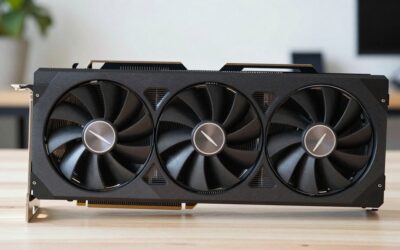
Ready to decide? Our #1 pick for 2026 is the Architecture.
Live price & availability on Amazon.



Write Your Review
No reviews yet. Be the first to share your experience!